Battery cases for electric vehicles are structural components designed to encase and protect power battery packs, typically made from aluminum alloys, high-strength steel, magnesium alloys, or composite materials, offering high strength, corrosion resistance, effective heat dissipation, and sealing performance. These cases provide mechanical support and protection against impacts, vibrations, moisture, and dust, while integrating thermal management systems, wiring interfaces, and safety devices to ensure stable temperature control and electrical safety during charging and discharging. The design of EV battery cases must balance lightweight construction, mechanical strength, airtightness, and serviceability to enhance driving range, crash safety, and overall energy efficiency, making them essential for battery electric vehicles, plug-in hybrid vehicles, and energy storage systems. Battery Cases for Electric Vehicle Market Overview
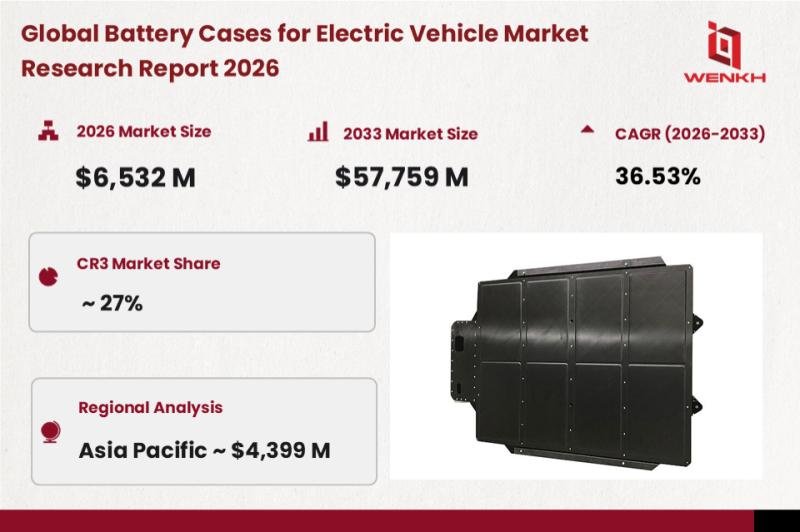
According to WENKH research statistics, the Battery Cases for Electric Vehicle market size is set to climb from $6,532 million in 2026 to $57,759 million by 2033, achieving a compound annual growth rate (CAGR) of around 36.53%. Driven primarily by the ongoing global push for electric vehicle (EV) adoption, the pace of vehicle market penetration continues to accelerate. As the demand for powertrain batteries in EVs rises, so does the need for battery cases, which serve as critical protective and