The Stock Market Is Doing Something Observed Just 3 Times Since 1871 — and History Is Crystal Clear What Happens Next

Wall Street’s bull market appears to be running on borrowed time.

In October, Wall Street celebrated the two-year anniversary of the current bull market. Since this year began, the mature stock-driven Dow Jones Industrial Average (^DJI -0.28%), benchmark S&P 500 (^GSPC 0.25%), and growth stock-powered Nasdaq Composite (^IXIC 0.81%) have respectively surged by 19%, 28%, and 31%, as of the closing bell on Dec. 4. They’ve also hit multiple all-time closing highs.

There’s no singular catalyst behind this outperformance, but rather a combination of factors lifting Wall Street’s sails. In no particular order, these catalysts include:

  • The rise of artificial intelligence (AI), which, according to PwC in Sizing the Prize, could increase global gross domestic product by $15.7 trillion come 2030.
  • Stock-split euphoria, with more than a dozen industry-leading businesses announcing or completing stock splits in 2024.
  • Better-than-expected corporate earnings, which are fueling investor optimism.
  • President-elect Donald Trump’s November victory, which has Wall Street anticipating a lower corporate income tax rate and plenty of stock buybacks from America’s most influential companies.

While things seemingly couldn’t be better for Wall Street, history would like a word.

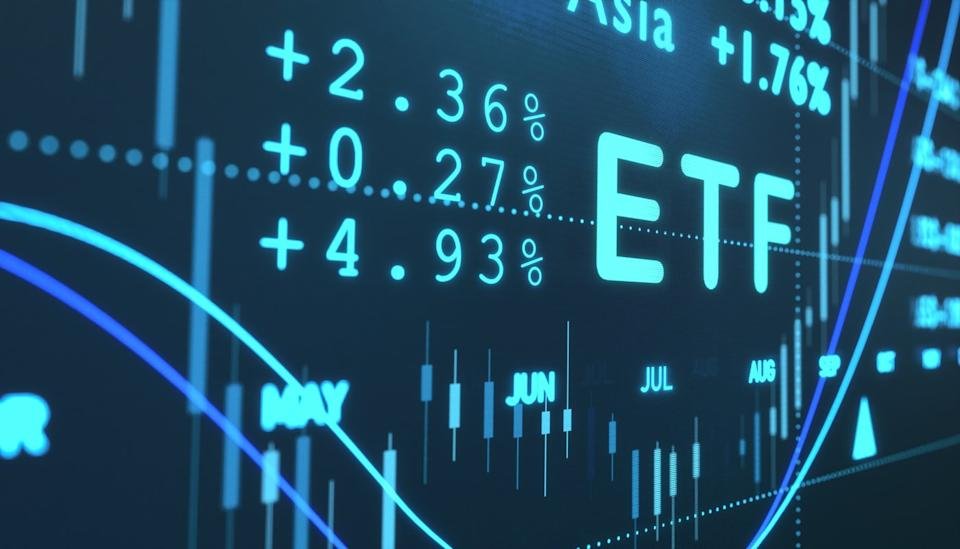
Image source: Getty Images.

The stock market has achieved this feat just three times in 153 years

For more than a year, there have been a couple of forecasting tools and predictive metrics signaling trouble for Wall Street and/or the U.S. economy. Examples have included the first sizable decline in U.S. M2 money supply since the Great Depression, and the longest yield-curve inversion in history, which has historically been a key ingredient for a U.S. recession.

But the indicator that’s the biggest harbinger of disaster for Wall Street just might be the S&P 500’s Shiller price-to-earnings (P/E) ratio, which is also commonly referred to as the cyclically adjusted P/E ratio, or CAPE ratio.

Whether you’ve been investing for multiple decades or a few weeks, you’re probably familiar with the traditional price-to-earnings (P/E) ratio, which divides a company’s share price into its trailing 12-month earnings per share (EPS). This valuation tool provides a quick and concise way for investors to determine if a stock is respectively cheap or pricey when compared to its peers and the broader market.

While the P/E ratio has been around for ages, it does have its limitations. For instance, it doesn’t factor in a company’s growth potential, nor does it do a particularly good job during shock events. The traditional P/E ratio was pretty useless during the early stages of the COVID-19 pandemic, when most publicly traded companies were adversely affected by a historic demand cliff.

On the other hand, the S&P 500’s Shiller P/E is based on average inflation-adjusted earnings from the prior 10 years. Because it accounts for a decade of earnings history, it’s able to minimize the effect of shock events, which allows for more accurate valuation comparisons dating back to the early 1870s.

S&P 500 Shiller CAPE Ratio Chart

S&P 500 Shiller CAPE Ratio data by YCharts.

When the closing bell tolled on Dec. 4 (and the S&P 500 closed at a fresh record closing high), the S&P 500’s Shiller P/E clocked in at 38.87. This marks the highest reading during the current bull market rally, and is more than double the 17.17 average for the Shiller P/E, when back-tested to January 1871.

Perhaps more importantly, this is only the third time in 153 years that the S&P 500’s Shiller P/E has neared or topped 39. It briefly surpassed 40 during the first week of January 2022, which was subsequently followed by a bear market. In 2022, the Dow Jones Industrial Average, S&P 500, and Nasdaq Composite all shed more than 20% of their value on a peak-to-trough basis.

The only other time since 1871 that the Shiller P/E has been even higher occurred prior to the dot-com bubble bursting in December 1999, where it hit a peak of 44.19. When the internet bubble finally popped, the S&P 500 lost 49%, and the Nasdaq Composite tumbled 78% before reaching its nadir.

When back-tested to 1871, there are only six occurrences, including the present, where the S&P 500’s Shiller P/E reached 30 during a bull market rally. All five prior instances were eventually followed by 20% to 89% plunges in one or more of Wall Street’s major stock indexes.

Although the Shiller P/E isn’t a timing tool — stock valuations can remain extended for weeks, months, or even years — it has flawlessly foreshadowed a major pullback in stocks for well over a century (when back-tested).

Person critically reading a financial newspaper.

Image source: Getty Images.

Time is a pendulum that changes everything for investors

Admittedly, this isn’t the rosiest of forecasts for Wall Street, and it probably isn’t what investors want to hear. But the interesting thing about history is that it’s a two-sided coin — and those sides aren’t necessarily the same.

For instance, neither working Americans nor investors look forward to recessions. The unemployment rate rises, wage growth slows or reverses, and stocks tend to perform poorly when the U.S. economy turns south. No amount of well-wishing can stop these normal and inevitable downturns within the economic cycle from occurring.

But at the same time, recessions are historically short-lived. Since World War II ended in September 1945, there have been 12 U.S. recessions, nine of which were resolved in less than a year. Of the remaining three, none endured longer than 18 months.

In comparison, a majority of the economic expansions since the end of World War II have lasted multiple years, including two periods of growth that stuck around for at least a decade. Although recessions and expansions are both part of the economic cycle, the economy spends a disproportionate amount of time growing, which is why corporate earnings tend to climb over the long run.

This same pendulum provides a favorable disparity between bear and bull markets on Wall Street, as well.

The data set you see above was posted on social media platform X by Bespoke Investment Group in June 2023. Though it’s a bit dated, this data set illustrates the importance of time and perspective when investing on Wall Street.

Bespoke calculated the calendar-day length of every bear and bull market in the broad-based S&P 500 since the start of the Great Depression in September 1929. Altogether, this worked out to 27 separate bear and bull markets.

Whereas the average bear market has lasted just 286 calendar days (about 9.5 months) over a 94-year period, the typical S&P 500 bull market endured for 3.5 times as long (1,011 calendar days). It’s also worth pointing out that more than half of all bull markets (14 out of 27, including the current bull market) have stuck around longer than the lengthiest bear market, which was 630 calendar days.

With time and proper perspective, even the direst of short-term forecasts can prove benign for long-term investors.



Source link

Visited 1 times, 1 visit(s) today

Related Article

Nvidia’s trillion-dollar run puts pressure on the bulls

BEIJING, CHINA – MAY 14: Nvidia CEO Jensen Huang (C) gestures as he prepares to depart following a welcome ceremony at the Great Hall of the People on May 14, 2026 in Beijing, China. President Trump is meeting with President Xi Jinping in Beijing to address the Iran conflict, trade imbalances, and the Taiwan situation

Permutations in Europe: What’s still at stake in final weeks of season?

There’s still plenty to play for across Europe as we head into the final matches of the club season. Here are all the title races, Champions League fights, and relegation battles left to be decided in the top leagues this month. This story will be updated until the end of the campaign. 👉 Jump to:EPL

Brewing a Better Half-Gallon Batch

Today I finally ran an experiment I’ve wanted to try for a long time. If you’re a professional barista—or you run a busy café—this may save you some time. Most coffee shops use 1–1.5 gallon batch brewers (Bunn, Curtis, Fetco, etc.). When I opened Short Sleeves Coffee, I intentionally avoided brewing full 1-gallon batches. I

5 Frozen Breakfasts Chefs Say Keep You Full All Morning

Chef-approved frozen breakfasts with more protein and better ingredients. Eating a healthy breakfast every morning is a great way to start the day, but most people don’t have time to cook. Whether you’re rushing out the door in the morning for work, taking the kids to school or both, there’s usually not much time in

CA scales back plan to ban student use of cell phones

By Carolyn Jones, CalMatters This story was originally published by CalMatters. Sign up for their newsletters. Until last month, California was poised to join nearly a dozen other states that ban cell phones in K-12 schools. But under pressure from school boards and administrators, lawmakers scaled back a bill that would have required such a

BulkQuant Launches AI Trading Bot for Crypto, Forex, and Stock Markets

BulkQuant Launches AI Trading Bot for Crypto, Forex, and Stock Markets

London, United Kingdom, May 15, 2026 (GLOBE NEWSWIRE) — BulkQuant has officially launched its AI trading bot platform designed for crypto, forex, and stock market traders seeking a simpler way to automate trading strategies across multiple financial markets. The platform combines AI-powered quantitative analysis, automated trade execution, portfolio monitoring, and adaptive risk management into a

IMF lauds resilient Hong Kong economy but warns of risks linked to Middle East war

IMF lauds resilient Hong Kong economy but warns of risks linked to Middle East war

The International Monetary Fund (IMF) has lauded the resilience of Hong Kong’s economy, noting a sustained recovery despite economic activity having yet to return to pre-Covid levels, while warning of downside risks stemming from escalating geopolitical tensions. It also urged Hong Kong to pursue medium-term financial reforms, including the introduction of a goods and services

Smithsonian Presidents Exhibit Reopens With Low-Key Trump Impeachment Mention

For the past year, the Smithsonian Institution has found itself in the awkward position of telling the nation’s story while being supported in part by a government that wants to narrow how that story is told. In December, the White House threatened to revoke funding to the institution if it did not hand over a

Marvel’s Daredevil Follow-up Is Already Dominating on Streaming

A follow-up to Daredevil: Born Again Season 2 on Disney+ has become a massive streaming success within days of its launch. The Punisher: One Last Kill has quickly climbed to the top of multiple charts, beating out other titles on the platform. The MCU television special follows the gun-toting vigilante, who finds himself targeted by

Is Now a Bad Time to Invest?

The market has been on a roll lately, with the S&P 500 (SNPINDEX: ^GSPC) setting new highs throughout May. If you think you missed your opportunity when the market bottomed in late March, don’t fret. The market hitting new all-time highs is not particularly rare and should not change your investment strategy. And if you

6 bids for Hong Kong land sale signal renewed confidence despite market caution

6 bids for Hong Kong land sale signal renewed confidence despite market caution

The Hong Kong government’s first land sale in the current financial year has drawn six bids, according to the Development Bureau, including those from the city’s largest developers, suggesting a more confident outlook for the residential property market. At the close of tender for Tung Chung Town Lot No 54 at Area 106A on Friday

Each Premier League team reranked: Man City rise; Chelsea, Liverpool collapse

Ryan O’Hanlon Close Ryan O’Hanlon ESPN.com writer Ryan O’Hanlon is a staff writer for ESPN.com. He’s also the author of “Net Gains: Inside the Beautiful Game’s Analytics Revolution.”  and  Bill Connelly Close Bill Connelly ESPN Staff Writer Bill Connelly is a writer for ESPN. He covers college football, soccer and tennis. He has been at

Trump departs China after two-day summit

Trump departs China after two-day summit

IE 11 is not supported. For an optimal experience visit our site on another browser. Trump Wraps China Summit With Xi Jinping: What Are the Results? 05:41 Xi gives Trump rare tour of secret garden at heart of Chinese government 01:04 Now Playing Trump departs China after two-day summit 01:01 UP NEXT Special Report: Trump

Carol Chow was facing a bankruptcy petition by five people over unspecified debts at the time of her death. Photo: Dickson Lee

Embattled Hong Kong developer sued for HK$130 million, days after founder’s death

A Hong Kong property developer has been sued for HK$130 million (US$16.6 million) over allegedly breaching guarantor obligations in two bond subscription agreements, becoming the latest lawsuit to implicate the embattled company and following its founder’s sudden death earlier this week. Lofter Group, known for its urban renewal projects across the city’s core districts, and

Trump’s China visit left chip export issue unresolved

This report is from this week’s The Tech Download newsletter. Like what you see? You can subscribe here. One look at the roster of U.S. execs that cozied up to U.S. President Donald Trump on the 20+ hours flight from Alaska to China on Wednesday and you get a sense of the American delegation’s key focus

Why the Cerebras IPO matters for the AI race with China

Why the Cerebras IPO matters for the AI race with China

Cerebras, an AI chipmaker, saw its shares nearly double on Nasdaq, closing up 70% with a $95B market cap. Cerebras’s powerful chips are key in the US-China AI tech race. Chris Buskirk, co-founder and chief investment officer of 1789 Capital, a key Cerebras investor, says the company’s IPO is geopolitically significant. On Thursday, shares of

Fitbit Air vs Whoop Strap Comparison: Price, Features and AI

The Google Fitbit Air is very much the talk of the fitness tracking town right now, not only because it’s the first new Fitbit device that we’ve had in years, but it’s also one of the first big brands to go head-to-head with the established Whoop Strap (if you don’t count the Polar Loop and

0
Would love your thoughts, please comment.x
()
x