The legacy of a thin market crash

This article is an on-site version of our Chris Giles on Central Banks newsletter. Premium subscribers can sign up here to get the newsletter delivered every Tuesday. Standard subscribers can upgrade to Premium here, or explore all FT newsletters

For those who have not been paying attention, here is a potted history of the recent market turmoil. At its Wednesday July 31 meeting, the Federal Reserve indicated it was set to cut rates in September with a soft landing in sight, while the Bank of Japan earlier that day raised its interest rate to 0.25 per cent with a hawkish message in defence of the yen. Market reactions were minimal, with stocks up a little both in Japan and the US.

Things kicked off on Friday August 2 after the yen had risen sharply and disappointing jobs figures in the US triggered the “Sahm rule” that had previously identified recessions. By the end of Monday August 5, the S&P 500 US stock market index was down 6 per cent with the Nikkei 225 down almost 20 per cent. Click on the chart to see these falls both in local currency and US dollar terms, where they are smaller because the yen was simultaneously appreciating.

US equities have now regained all the lost value and are trading higher than they were at the close on the day before the July 31 Fed meeting. The same is true of Japanese stocks valued in dollars, and they are down just over 3 per cent measured in yen.

For 2024 as a whole, the chart below shows equities have had a great year and are significantly higher, both in dollar and local currency terms. It is lucky, therefore, that the Fed did not heed the advice of many in early August that it needed an emergency rate cut because financial conditions had deteriorated so much. Nobel laureate Paul Krugman, for example, reasoned that because the markets were already alarmed, such a move was necessary and would not be a sign of panic in the Fed.

Other financial markets have also calmed down. The US forward interest rate market gave an 85 per cent probability of the Fed cutting rates in September by 0.5 percentage points on August 5, a probability that was down to just under 25 per cent when I last looked this morning.

But these markets have not quite regained the poise of late July. The forward US rate market still thinks there is a greater than 50 per cent chance of US interest rates ending the year at least 1 percentage point lower, which would imply the Fed implementing at least one large rate cut in the remaining three meetings of the year.

How did markets get things so wrong?

It should surprise no one that financial markets overreact to news sometimes, create plausible but often exaggerated narratives such as the unwinding of the yen carry trade and can be remarkably thin in August. Katie Martin is worth reading on the truth about the narratives, while the Bank of England in 2022 published a neat paper highlighting just how thin some of the forward UK interest rate markets were even outside summer holiday months, with 81 per cent of trades among the top three market participants. Of course, the US market will be bigger and deeper, but to assume these are efficient markets is quite a stretch.

One market narrative that was clearly important during the latest crash was that the US soft landing might be fading from view. The jobs data that set off a number of US recession warnings was a trigger. It is ironic, however, that while the US uses a recession definition that relies on a committee to look at all the evidence, financial markets reduced this to the movement of one indicator — unemployment — over a relatively short period. As the chart below shows, other labour market indicators have cooled, but are not flashing warning signals.

How will the Fed respond?

With financial markets back close to levels at the last Fed meeting, further good news on US inflation and better indications from weekly US unemployment claims, it is likely that Fed chair Jay Powell will deliver a “steady as she goes” message.

Other Fed officials, including Mary Daly and Raphael Bostic, have indicated a gradual move towards rate cutting from the Fed this year. Powell is more likely than not to follow suit in his big speech on Friday, although he probably will not give a definitive steer.

A half percentage point cut in September would indicate that the Fed previously made an error because in his July press conference, Powell said it was “not something we’re thinking about right now”. Central banks hate to admit to errors.

For sure, the median Federal Open Market Committee’s fourth-quarter unemployment forecast from June of 4 per cent looks as if it will need updating given the most recent reading of 4.3 per cent. That will allow the Fed to concentrate more on the labour market aspect of its dual mandate and cut rates more than the one to two times indicated in June. But there will be little urgency to do more, especially during an election season.

The main requirement from Powell will be for him to set out his thinking and the likely reaction to further movements in the data. That will be pretty different from and much better than how financial markets saw things at the beginning of the month.

How will Taylor cut his cloth?

The UK government has appointed Professor Alan Taylor of Columbia University to be an external member of the Bank of England’s Monetary Policy Committee, starting in September.

Given the finely balanced nature of the committee, his stance will be important to the path of UK monetary policy. He is replacing Jonathan Haskel, who has voted recently with the more hawkish members, and while I am hesitant to predict his current views, I can report that this Taylor has cut his cloth in a dovish direction in response to two big shocks in the past 15 years.

After the global financial crisis, Taylor was firmly on the side that thought there had been unnecessary demand destruction with too much fiscal consolidation. I criticised this stance about a decade ago. Early in the pandemic, he argued that that type of crisis was also more likely than not to lower the neutral rate of interest in the longer run.

Let’s be clear, none of this is remotely definitive and everyone is allowed to change their mind.

What I’ve been reading and watching

  • After a month of glowing headlines, Kamala Harris’s big economic speech on Friday did not land smoothly. Although the vibes of hinting at price controls are well understood, the Democratic presidential candidate’s policies came in for some criticism from economists and from me in my latest column

  • Soumaya Keynes effectively argued that simplified US recession indicators are flawed and the past might not be a perfect guide to the future, especially when the sample size is nine

  • Robin Harding warns that low yields in Chinese bonds are a sure sign that the country’s economy is flagging and requires fiscal stimulus, not a central bank fretting about a bubble in bond prices

  • In the Unhedged weekly interview, Jason Furman of Harvard covers a lot of ground and I loved his characterisation of those who claim we are returning to the 1970s on inflation. It’s a “self-unfulfilling prophecy”, Furman said, reasoning that the frequent warnings will prevent a return

A chart that matters

When central bankers think about scenarios, these are generally of the sort that warns about some external upward shock to prices. Following an excellent Bloomberg article on falling grain prices after good harvests, perhaps we need a scenario on plunging food prices. Here are some grain wholesale prices for your delight.

This is good for inflation, good for poorer families and good for poorer countries. Dare I say, it is much better than price controls.


Recommended newsletters for you

Free lunch — Your guide to the global economic policy debate. Sign up here

The State of Britain — Helping you navigate the twists and turns of Britain’s post-Brexit relationship with Europe and beyond. Sign up here

Source link

Visited 1 times, 1 visit(s) today

Related Article

Nvidia’s trillion-dollar run puts pressure on the bulls

BEIJING, CHINA – MAY 14: Nvidia CEO Jensen Huang (C) gestures as he prepares to depart following a welcome ceremony at the Great Hall of the People on May 14, 2026 in Beijing, China. President Trump is meeting with President Xi Jinping in Beijing to address the Iran conflict, trade imbalances, and the Taiwan situation

Permutations in Europe: What’s still at stake in final weeks of season?

There’s still plenty to play for across Europe as we head into the final matches of the club season. Here are all the title races, Champions League fights, and relegation battles left to be decided in the top leagues this month. This story will be updated until the end of the campaign. 👉 Jump to:EPL

Brewing a Better Half-Gallon Batch

Today I finally ran an experiment I’ve wanted to try for a long time. If you’re a professional barista—or you run a busy café—this may save you some time. Most coffee shops use 1–1.5 gallon batch brewers (Bunn, Curtis, Fetco, etc.). When I opened Short Sleeves Coffee, I intentionally avoided brewing full 1-gallon batches. I

5 Frozen Breakfasts Chefs Say Keep You Full All Morning

Chef-approved frozen breakfasts with more protein and better ingredients. Eating a healthy breakfast every morning is a great way to start the day, but most people don’t have time to cook. Whether you’re rushing out the door in the morning for work, taking the kids to school or both, there’s usually not much time in

CA scales back plan to ban student use of cell phones

By Carolyn Jones, CalMatters This story was originally published by CalMatters. Sign up for their newsletters. Until last month, California was poised to join nearly a dozen other states that ban cell phones in K-12 schools. But under pressure from school boards and administrators, lawmakers scaled back a bill that would have required such a

BulkQuant Launches AI Trading Bot for Crypto, Forex, and Stock Markets

BulkQuant Launches AI Trading Bot for Crypto, Forex, and Stock Markets

London, United Kingdom, May 15, 2026 (GLOBE NEWSWIRE) — BulkQuant has officially launched its AI trading bot platform designed for crypto, forex, and stock market traders seeking a simpler way to automate trading strategies across multiple financial markets. The platform combines AI-powered quantitative analysis, automated trade execution, portfolio monitoring, and adaptive risk management into a

IMF lauds resilient Hong Kong economy but warns of risks linked to Middle East war

IMF lauds resilient Hong Kong economy but warns of risks linked to Middle East war

The International Monetary Fund (IMF) has lauded the resilience of Hong Kong’s economy, noting a sustained recovery despite economic activity having yet to return to pre-Covid levels, while warning of downside risks stemming from escalating geopolitical tensions. It also urged Hong Kong to pursue medium-term financial reforms, including the introduction of a goods and services

Smithsonian Presidents Exhibit Reopens With Low-Key Trump Impeachment Mention

For the past year, the Smithsonian Institution has found itself in the awkward position of telling the nation’s story while being supported in part by a government that wants to narrow how that story is told. In December, the White House threatened to revoke funding to the institution if it did not hand over a

Marvel’s Daredevil Follow-up Is Already Dominating on Streaming

A follow-up to Daredevil: Born Again Season 2 on Disney+ has become a massive streaming success within days of its launch. The Punisher: One Last Kill has quickly climbed to the top of multiple charts, beating out other titles on the platform. The MCU television special follows the gun-toting vigilante, who finds himself targeted by

Is Now a Bad Time to Invest?

The market has been on a roll lately, with the S&P 500 (SNPINDEX: ^GSPC) setting new highs throughout May. If you think you missed your opportunity when the market bottomed in late March, don’t fret. The market hitting new all-time highs is not particularly rare and should not change your investment strategy. And if you

6 bids for Hong Kong land sale signal renewed confidence despite market caution

6 bids for Hong Kong land sale signal renewed confidence despite market caution

The Hong Kong government’s first land sale in the current financial year has drawn six bids, according to the Development Bureau, including those from the city’s largest developers, suggesting a more confident outlook for the residential property market. At the close of tender for Tung Chung Town Lot No 54 at Area 106A on Friday

Each Premier League team reranked: Man City rise; Chelsea, Liverpool collapse

Ryan O’Hanlon Close Ryan O’Hanlon ESPN.com writer Ryan O’Hanlon is a staff writer for ESPN.com. He’s also the author of “Net Gains: Inside the Beautiful Game’s Analytics Revolution.”  and  Bill Connelly Close Bill Connelly ESPN Staff Writer Bill Connelly is a writer for ESPN. He covers college football, soccer and tennis. He has been at

Trump departs China after two-day summit

Trump departs China after two-day summit

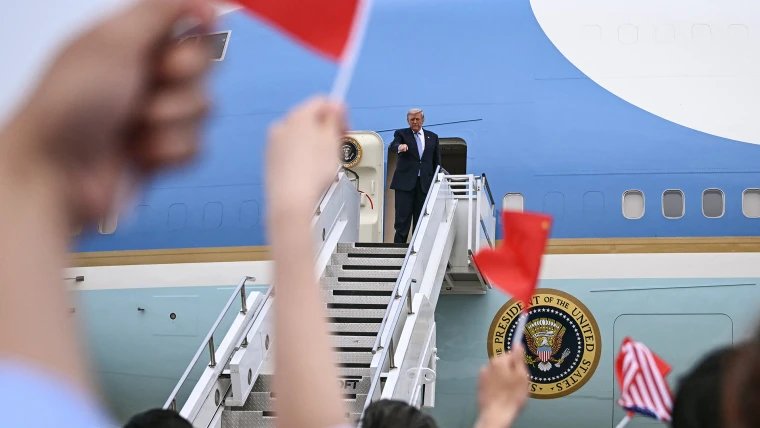
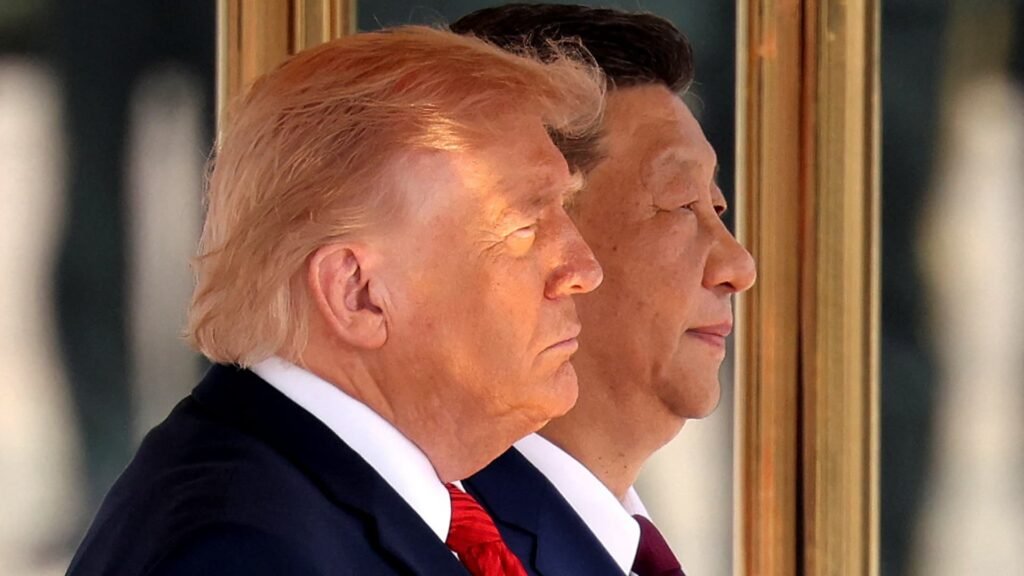
IE 11 is not supported. For an optimal experience visit our site on another browser. Trump Wraps China Summit With Xi Jinping: What Are the Results? 05:41 Xi gives Trump rare tour of secret garden at heart of Chinese government 01:04 Now Playing Trump departs China after two-day summit 01:01 UP NEXT Special Report: Trump

Carol Chow was facing a bankruptcy petition by five people over unspecified debts at the time of her death. Photo: Dickson Lee

Embattled Hong Kong developer sued for HK$130 million, days after founder’s death

A Hong Kong property developer has been sued for HK$130 million (US$16.6 million) over allegedly breaching guarantor obligations in two bond subscription agreements, becoming the latest lawsuit to implicate the embattled company and following its founder’s sudden death earlier this week. Lofter Group, known for its urban renewal projects across the city’s core districts, and

Trump’s China visit left chip export issue unresolved

This report is from this week’s The Tech Download newsletter. Like what you see? You can subscribe here. One look at the roster of U.S. execs that cozied up to U.S. President Donald Trump on the 20+ hours flight from Alaska to China on Wednesday and you get a sense of the American delegation’s key focus

Why the Cerebras IPO matters for the AI race with China

Why the Cerebras IPO matters for the AI race with China

Cerebras, an AI chipmaker, saw its shares nearly double on Nasdaq, closing up 70% with a $95B market cap. Cerebras’s powerful chips are key in the US-China AI tech race. Chris Buskirk, co-founder and chief investment officer of 1789 Capital, a key Cerebras investor, says the company’s IPO is geopolitically significant. On Thursday, shares of

Fitbit Air vs Whoop Strap Comparison: Price, Features and AI

The Google Fitbit Air is very much the talk of the fitness tracking town right now, not only because it’s the first new Fitbit device that we’ve had in years, but it’s also one of the first big brands to go head-to-head with the established Whoop Strap (if you don’t count the Polar Loop and

0
Would love your thoughts, please comment.x
()
x