As if the snow and the cold and the dark weren’t bad enough, a coyote sneaked into the cooking tent and chewed through the camp’s electrics. It blew the fuse on the fridge-freezer and ruined months’ worth of food. The three geologists who were living in the camp, just off the Dempster Highway, an ice road into Canada’s Northwest Territories, had to get a new generator. That meant a week-long round trip to the nearest town, Whitehorse, 900km away.

Hunting for Arctic minerals is rough, risky work. Any slip with heavy machinery, and medical help may be a three-hour flight away, on a plane that can’t take off in a blizzard. It is also lonely. Nathan, one of the three geologists, works 28 days at a stretch studying a zinc deposit. Lack of light saps the spirits. In November, when The Economist visited, the camp was snatching three hours of watery sun a day. “I guess there aren’t many guys who would like it,” says Nathan.
Governments and investors are increasingly excited about the Arctic. Its seas and tundra contain oil, gas and a host of minerals critical for green energy and modern armies. It holds the biggest known deposits of titanium (in Siberia), plus huge reserves of palladium (Norilsk, Russia) and iron ore (Nunavut, Canada). Until now these metals have largely remained in the ground, not because people did not know they were there, but because it was too costly to extract them.
But climate change and retreating ice are making it “much easier” to mine in the far north, says Mads Fredericksen of the Arctic Economic Council, a lobby. The Arctic is now 0.75°C warmer than it was a decade ago. Between 2013 and 2019, summer ice receded by 17% and shipping increased by 75%. By 2035 there may be no ice cover left in the Arctic Ocean in the summer.
Geopolitics lends urgency to the hunt. All the big powers want to reduce their dependency on China for “rare-earth” metals, tiny quantities of which are vital for everything from microchips to sonar systems. Billion-year-old solidified magma chambers under Greenland contain not only the West’s biggest deposit of rare earths but also the northern hemisphere’s biggest stores of nickel and cobalt, essential for batteries.
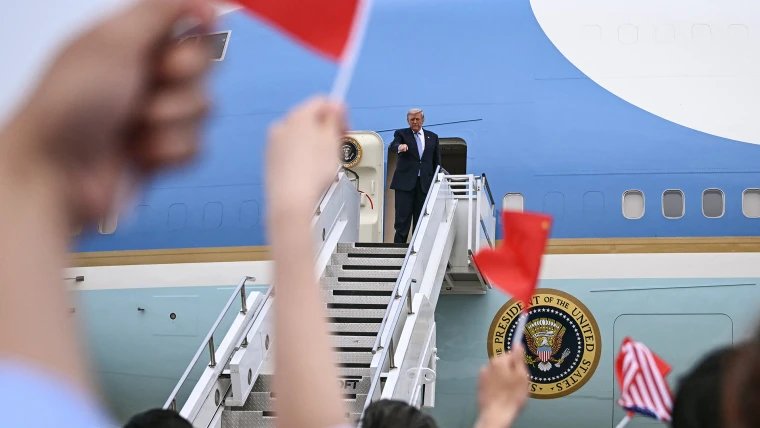
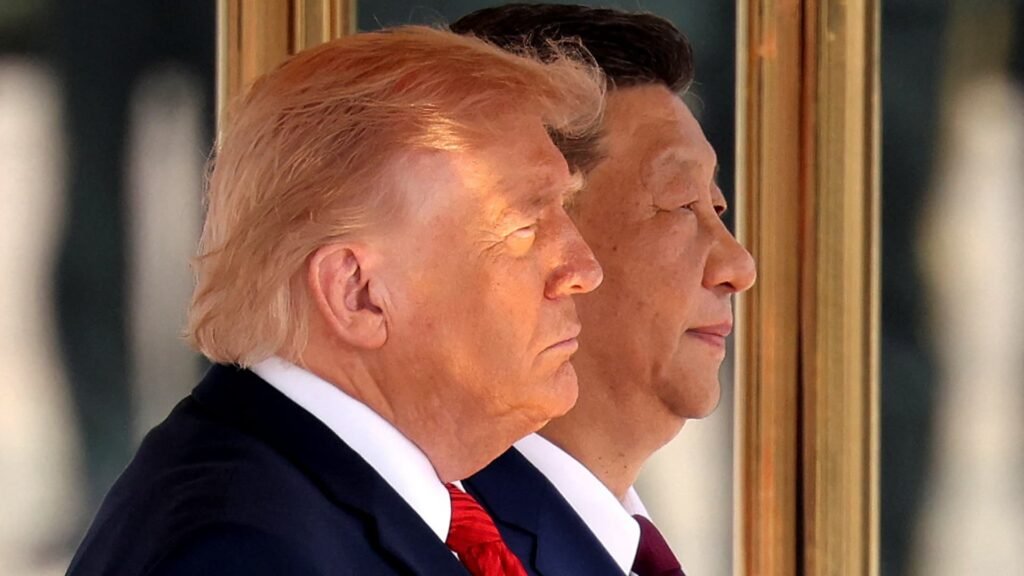
The atmosphere was frenzied at the most recent annual Arctic assembly, a talkfest for governments and investors held in October in Reykjavik, Iceland’s capital. Investors floated ideas for new mines. Officials from Greenland were so besieged by mining honchos that they barely had time to eat their canapés. Speculation is rife that Donald Trump, who once suggested that America should buy Greenland from Denmark, may revisit this improbable idea.
Yet extracting treasure from the top of the world is not simple. The hardest thing is persuading people to work there. Pay must be sky-high to compensate for the hardship. A blue-collar worker in the North American Arctic can expect to earn five times the average wage in Vancouver, according to Dalhousie University. A mechanic at Mary River, an iron mine on Canada’s Baffin Island, says he earns $170,000 a year—more than three times what he would make in Quebec.
The farther north you go, the harder it gets. Picture the Arctic Circle itself, which has a radius of around 2,500km. In the 400km-wide band just south of it, which is not quite so dark in winter, there are 124 operating mines and 9m residents. Inside the circle, there are a lot more minerals, but just 30 mines. Most of the circle’s 4m residents support themselves by hunting (caribou and seals), farming or drawing a government paycheque. Firms that want to dig or drill must typically import a workforce from thousands of kilometres south.
Early Arctic explorers routinely died of frostbite or scurvy, or were reduced to eating their own boots. Those days have passed, but in 2024 miners died in rock slides and floods in Russia and a plane crash in Canada. The number of people falling through melting ice sheets has also risen.
Good employers strain to keep workers safe, which is costly. Housing must often be designed so that living quarters are warm but the foundations are cool, so as not to melt the permafrost (frozen tundra). Softening it can trigger slumps (a kind of landslide). In August the Batagay Crater in Russia, the world’s largest slump, became visible from space. Since opening in the 1960s, it has swallowed surface land the width of 14 Giza pyramids (roughly 3.2km).
The darkness gets people down. The sun sets on Mary River at the end of November, and does not rise until the end of January, when temperatures fall to minus 60°C. “Some guys”, says Alan, a worker, “just get more and more deflated.” Some mines have installed pools and mess rooms to fight the claustrophobia and loneliness. But few miners use them, says Alan, as long shifts leave little time for much other than sleeping and eating. After 12 hours of isolation, another worker says, “You can’t remember how to talk to people.”
The pseudo-towns that house miners across the Arctic have a strict no-alcohol policy to avoid accidents. Staff are searched for contraband at the airfield. But “a little bootlegging” happens anyway, Alan says.
Arctic employers would love to attract more female staff, but few want to work in a frozen wasteland. Agnico Eagle, Canada’s biggest mining company, reckons only 15% of its workforce are women. This is normal for the industry—the atmosphere in Arctic camps is rather macho. Kathy Lane, a woman who used to work at Deadhorse, an oil complex in Alaska, is reluctant to get into specifics. “Let’s just say everyone knew who you were, but the men got to stay anonymous.”
Commercial mine workers are flown in and out every fortnight. (Alan spends his time off in Florida, gorging on sunshine.) The productivity of fly-in, fly-out workers is low, however. Canadian Arctic construction workers are a third less effective than their counterparts down south, found a study in 2023 from the University of Western Australia. This may be because the lifestyle makes them glum. And perhaps also because they are under-managed. Since it is impossible to bring families to the camp, almost no one’s boss lives on site, so easy fixes often go unnoticed.
The men in exploration camps, who take samples before commercial mining begins, are the most isolated of all. Nathan, Connor and Eg, the three geologists with the coyote problem, were dropped with three helicopter-loads of kit at a camp in Canada’s Northwest Territories in March. They have barely left since.
Between the coyote, the storms and the summer wildfires, there have been plenty of bad days, costing their employer a bundle of cash. But on a good day, the wilderness is glorious and the mood is lively. The men control their own timetable, unlike at a tightly scheduled mine, and booze is allowed. Working here is a little more dangerous, and a little more fun.
Many of these men (and every explorer The Economist met was male) have been bouncing around remote spots for a long time. “Greenland, Australia, Zambia, Congo,” says Connor, “and now here.” They bring their own kit, and can make $300,000 for a long season. Unlike mine workers, few have families.
All eight Arctic governments prop up polar business. The state is the biggest employer in Canada’s three northern territories, and public subsidies outstrip mining revenues. Greenland gets two-thirds of its budget from the Danish state. Russia subsidises a coal mine to buttress its spurious claim to parts of Svalbard, a Norwegian archipelago.
The Arctic resource rush has, unsurprisingly, affected the nearest towns. In Whitehorse, the capital of Canada’s Yukon territory, property prices have soared as outsiders pour in. Mining firms, eager to soothe the local First Nation (indigenous) population, offer lots of jobs but find few takers. At a job fair run by Kwanlin Dun, a First Nation group, only 20 jobseekers turned up to meet 200 would-be employers. Most young locals already have jobs, says Adrienne Hill, a First Nation spokesperson, and few think the trade-off of more money for grim working conditions is worth it.
Besides, as in previous gold rushes all over the world, there is money to be made providing services for miners, from selling shovels and steaks to leasing helicopters and tow trucks. There is an old Greenlandic saying: “We do not care if they find anything, as long as they keep looking.” They surely will.
Correction (December 31st 2024): An earlier version of this article incorrectly said the radius of the Arctic circle was 2,000km, when it is in fact around 2,500km. It also referred to Canada’s three northern territories as provinces. Sorry.