China’s swimming team only started competing in the Olympic Games in 1988, and won its first gold medal in the women’s 100m freestyle competition in 1992. Since then, China has produced many gold medallists in swimming, with the majority coming from Jiangsu and Zhejiang provinces, as well as Shanghai. How did China pull off this amazing feat and why have most gold medallists come from the coastal areas of the country?
In the early 1970s, China managed to produce less than one egg per person each week. But between 1978 and 1983 there was a 50 per cent increase in consumption of eggs, followed by continuous subsequent increases. As China became richer, its children grew much taller. Wang notes that at age seven, a boy in urban China was 5.2cm taller in 2002 than in 1992 and a girl was 5.7cm taller.
Parts of China’s east coast have a reputation of being the cradle of Olympic gold medallists, and for good reason. China’s east coast has long been its richest region; the people there are more well fed and physically fit than those elsewhere.
Geography is also important. Jiangsu and Zhejiang provinces are crisscrossed with lakes and rivers, fostering strong interest in swimming among residents from a young age. Wealthy cities in eastern China are able to build the sporting infrastructure necessary for nurturing young talent.
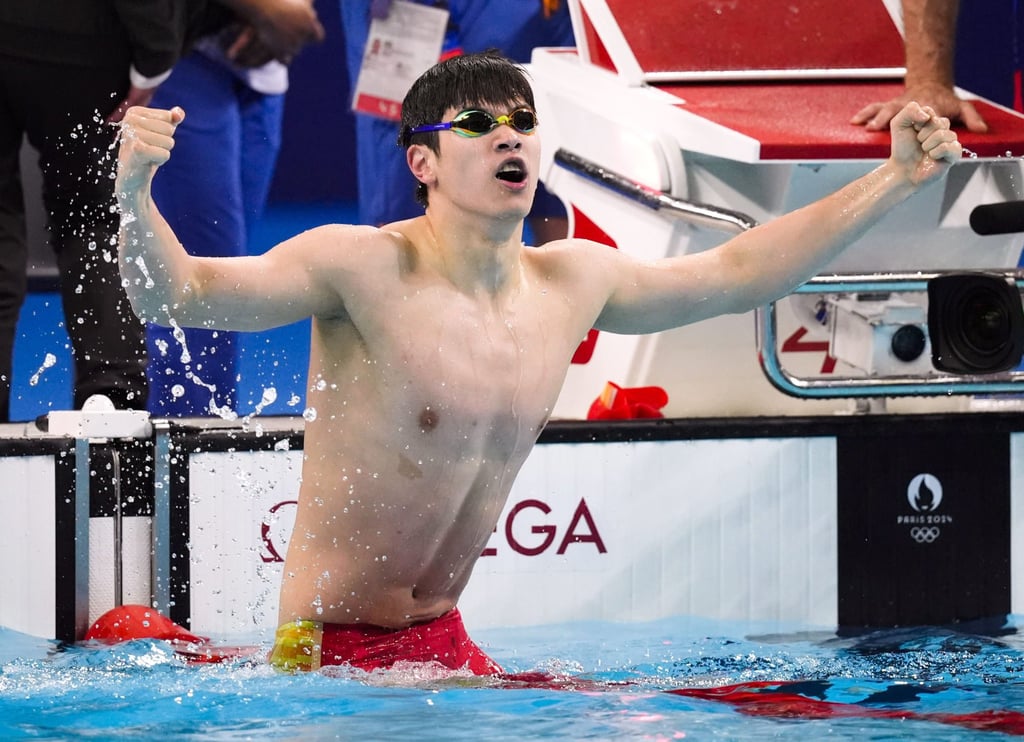
China’s large population and diversity enables it to source athletes with attributes that meet the requirements of different sports. Elite athletes are extremely disciplined and able to endure extreme hardship during training. But some sports prioritise a slender build and calmness of mind.
Diving, for example. As southern Chinese are generally smaller than those from the north, Zhanjiang, a relatively poor city in the southwestern part of Guangdong province, has the distinction of producing three Olympic gold medallists in diving since 2004.

05:55
China’s 17-year-old diving queen has 3 Olympic golds, but who is Quan Hongchan?
China’s 17-year-old diving queen has 3 Olympic golds, but who is Quan Hongchan?
Ranked 37th on the Paris Olympics medal table and outperforming other Asian economies with much larger populations, Hong Kong’s stellar performance is attributable not just to the determination and high calibre of its athletes, but also funding support from the government.
In 2024-25, the government has provided HK$5.7 billion in funding for recreational and sports facilities for the community. For elite athletes, the government has increased funding for the Elite Athletes Development Fund to HK$941 million, a 40 per cent rise over five years ago.
Since Cheung’s fencing win in 2021, the government and the Hong Kong Jockey Club have jointly established a Sports Science and Research Funding Scheme amounting to HK$300 million to help athletes enhance their performance. When it comes to supporting athletes, the government is unquestionably doing the right thing and spending its money well.
-Ønders_TrackClub.00_01_59_00.Still002.jpeg?itok=yPfun2YH)
02:15
Hong Kong’s ‘fencing queen’ Vivian Kong returns home after winning Olympic gold
Hong Kong’s ‘fencing queen’ Vivian Kong returns home after winning Olympic gold
Regina Ip Lau Suk-yee is convenor of the Executive Council, a lawmaker and chairwoman of the New People’s Party