Nasdaq enters correction, Dow falls 600 points as disappointing jobs report shakes investors

US stocks tumbled across the board on Friday after the July jobs report showed a further cooling in the labor market, fueling concerns the Federal Reserve’s “higher for longer” interest-rate stance might end in recession and that the central bank may have waited too long to start lowering rates.

The Nasdaq Composite (^IXIC) dropped 2.6% after the jobs report’s release. That plunged the tech-heavy index into correction territory, defined as a more than 10% drop from its recent high on July 10.

The Dow Jones Industrial Average (^DJI) slumped 1.5%, or more than 600 points. The S&P 500 (^GSPC) sank 1.8%.

All three major indexes recorded weekly losses. The S&P and the Dow fell 2%, while the Nasdaq shed 3%. The Russell 2000 (RUT) fared even worse, posting a weekly loss of about 6.8%.

On Friday, new data showed the US economy added fewer jobs than expected in July, while the unemployment rate unexpectedly rose to 4.3%, the Bureau of Labor Statistics’ nonfarm payrolls report showed. Those additional signs of a slowdown in the labor market are likely to feed recession fears and rate-cut expectations.

Traders are now pricing in three rate cuts this year — in September, November, and December — and bets are on a 50 basis-point reduction in September. The yield on the benchmark 10-year Treasury (^TNX) dropped further below the 4% level after the labor-market update, trading around 3.79%.

News on individual stocks was just as downbeat as the economic data. Chipmaker Intel’s (INTC) bruising earnings report added to the pressure on stocks amid questions about the payoff of AI investments for Big Tech.

The chipmaker said it will slash jobs and suspend dividends after its sales forecast fell short and it missed on earnings. Intel shares sank over 26%, dragging on other chip stocks.

Meanwhile, Amazon stock slid almost 9% on the heels of sales guidance that undershot Wall Street estimates. Apple (AAPL) shares were a relative winner, up less than 1% after the company beat on earnings even as it reported a slide in iPhone sales.

Stocks kicked off August trading on Thursday with a sell-off after a clutch of data on showed cracks emerging in the US economy, wiping out gains spurred by expectations for a September interest-rate cut.

This left Wall Street wondering whether the economic slowdown shown in recent data means the Federal Reserve has kept interest rates at historic highs for too long, risking an economic downturn.

LIVE COVERAGE IS OVER13 updates

  • The Nasdaq enters correction and the Dow sheds 600 points

    US stocks tumbled across the board on Friday after the July jobs report showed more cooling in the labor market, fueling concerns the central bank may have waited too long to start lowering rates.

    The Nasdaq Composite (^IXIC) dropped 2.6% after the jobs report’s release. That plunged the tech-heavy index into correction territory, more than 10% below its recent high in early July.

    The Dow Jones Industrial Average (^DJI) slumped 1.5%, or more than 600 points. The S&P 500 (^GSPC) sank 1.8%. All three major indexes recorded weekly losses. The S&P and the Dow fell 2%, while the Nasdaq shed 3%. The Russell 2000 (RUT) fared even worse, posting a weekly loss of about 6.8%.

  • A look at the week ahead

    Investors will greet the first full week of August following a volatile series of sessions, a disappointing July jobs report, and heightened chatter over the size of the Fed’s widely expected September rate cut.

    The tech giants posted mixed results in recent days. And the market will be looking to see whether the sector rebounds from correction territory, as the tech-heavy Nasdaq Composite (^IXIC) has fallen more than 10% below its recent high in early July.

    Meanwhile, a fresh slate of major names is on deck to report next week, continuing an earnings season playing out against a presidential election and fresh economic data that has rekindled discussion of a potential recession.

    Disney (DIS), Uber (UBER), Eli Lilly (LLY), and Novo Nordisk (NVO) are scheduled to report in the coming days.

    Here’s a look at the earnings calendar for next week:

    Anticipated earnings releases for the week of August 5, 2024.Anticipated earnings releases for the week of August 5, 2024.

    Anticipated earnings releases for the week of August 5, 2024. (Earnings Whispers)

  • Nvidia stock sinks as chips get hammered, on track to end week in red

    Nvidia (NVDA) stock fell on Friday while Intel (INTC) stock cratered over 27% and a broad decline in chip stocks led the tech sector lower as markets tumbled following a weaker-than-expected jobs report.

    The latest employment data showed job growth slowed last month and the unemployment rate reached a nearly three-year high. Meanwhile the Nasdaq slipped into correction territory, defined as a 10% drop from its most recent high.

    Intel results out late Thursday missed on the top and bottom lines as the company also announced a $10 billion cost reduction plan, which includes cutting 15% of its workforce.

    Nvidia and other chip stocks are set to end the week in the red after a volatile few days.

    The entire sector saw a massive one-day jump on Wednesday after chipmaker AMD (AMD) posted better-than-expected guidance and Microsoft (MSFT) revealed higher spending on data center infrastructure in its latest quarterly results. AI chip suppliers like Nvidia stand to benefit from Big Tech’s increased investments.

    Hedge fund Elliott Management sent a note to clients saying Nvidia was in “bubble land,” while the technology behind artificial intelligence is “overhyped with many applications not ready for prime time,” according to a report from the Financial Times published on Friday.

    Read more here.

  • Stocks trending in afternoon trading

    Here are some of the stocks leading Yahoo Finance’s trending tickers page during afternoon trading on Friday:

    Amazon (AMZN): Shares of the retail and cloud company fell 9% following a weaker-than-expected second quarter report that missed forecasts for both the top and bottom lines. For the current quarter, Amazon guided sales to a range of $154 billion-$158.5 billion compared to analyst forecasts for $158.43 billion, according to Bloomberg data.

    Intel (INTC): The chip giant plummeted more than 25% Friday afternoon after the company reported its second quarter earnings after the bell on Thursday, missing on the top and bottom lines and announcing a $10 billion cost reduction plan to cut 15% of its workforce and suspend dividend payments.

    Snap (SNAP): Shares of the social media company tumbled 26% following a quarterly report that failed to reverse a narrative of decline. Snap also forecast third quarter results below market estimates.

    Nvidia (NVDA): The AI chip designer shed more than 3% Friday amid a broad decline in chip stocks that led the tech sector lower. Markets tumbled following a weaker-than-expected jobs report. Nvidia is among the Magnificent Seven stocks losing ground. The company is the only Magnificent Seven stock that hasn’t yet reported its latest quarterly results, and an emerging theme this earnings season is that Wall Street’s patience with massive AI investments appears to be wearing a little thin.

  • Stocks slide in afternoon trading

    US stocks were poised to end the first week of August in the red after the July jobs report showed more cooling in the labor market, fueling concerns the Federal Reserve’s “higher for longer” interest rate stance might end in recession.

    The Nasdaq Composite (^IXIC) dropped 2.1% after the jobs report’s release. That plunged the tech-heavy index into correction territory, more than 10% below its recent high in early July. The Dow Jones Industrial Average (^DJI) slumped nearly 1.8%, or 700 points. The S&P 500 (^GSPC) sank 1.8%.

  • A Magnificent 7 meltdown

    Apple was the only Big Tech company that gained. Much of the tech world was in the red on Friday. Apple was the only Big Tech company that gained. Much of the tech world was in the red on Friday.

    Apple was the only Big Tech company that gained. Much of the tech world was in the red on Friday.

    Apple (AAPL) stood alone on Friday, a speck of green in a sea of red, as shares of every other Magnificent Seven company were sliding along with most of the market.

    The iPhone maker rose 2% Friday compared to heavy losses from everyone else. After the bell on Thursday Apple beating analysts’ expectations on the top and bottom lines despite a year-over-year decline in iPhone sales.

    Meanwhile, Amazon led the losses, losing 11% after the company shared a current quarter forecast on Thursday that fell short of expectations on both the top and bottom lines.

    The harsh reaction was magnified on Friday after the July jobs report showed the US economy added fewer jobs than expected while the unemployment rate unexpectedly rose to its highest level in nearly three years.

    The sell-off was pronounced in the tech world. Microsoft (MSFT) lost 2.6%; Alphabet (GOOG, GOOGL) shed 2.5%; Nvidia (NVDA) gave up 1.3%; Meta (META) slipped 1.5%; and Tesla (TSLA) fell 2.9%.

  • Oil tanks 3% as broader market slides amid deteriorating economic data

    Crude oil tanked along with the rest of the market on Friday after a weaker-than-expected jobs report pointed to more signs of cracks in the US economy.

    West Texas Intermediate (CL=F) dropped more than 3% to hover just above $73 per barrel while Brent (BZ=F) also tanked over 3% to trade above $76 per barrel.

    Economic weakness out of China also weighed on crude prices.

    Asian crude imports have been “sinking to the lowest levels in over two years, confirming the slowing Chinese economy is another demand concern for crude,” Dennis Kissler, senior vice president at BOK Financial, said in a note this week.

  • Wall Street will support heavy AI spending as long as everything else is going great

    This season’s Big Tech earnings revealed an evolution in the AI trade.

    Wall Street doesn’t mind heavy AI spending. But as soon as tech companies show some weakness in their core business, that’s when the trouble starts.

    Meta (META) showed that investors won’t automatically shy away from massive investments with an uncertain future. But the company’s peers showed the flip side of that dynamic. Reactions to earnings from Alphabet (GOOG, GOOGL), Microsoft (MSFT), and Amazon (AMZN) showed AI investments can become a liability when key business lines fail to meet expectations.

    Thursday’s report from Amazon, which disclosed a weaker sales outlook, wrapped a wave of Big Tech results that flashed warnings that investors have limited patience for massive AI spending. Its cloud rival and AI competitor Microsoft (MSFT) beat expectations on the top and bottom lines but missed on cloud revenue, sending shares lower. Prior to that disappointment, Google parent Alphabet (GOOG, GOOGL) posted lower-than-expected YouTube ad revenue, which also sent investors running.

    But Meta (META), on the other hand, earned the applause of Wall Street, delivering better-than-expected results for revenue and profit, even as executives warned they anticipate “significant” capital expenditures in 2025.

  • The new baseline for 2024 — 100 basis points

    Five months ago, Wall Street economists were aggressively revising expectations for rate cuts in 2024, as some believed a series of strong inflation readings in the winter would lead the Fed to hold rates steady throughout the year.

    Now, that calculus has changed dramatically.

    Softer inflation in the spring brought the prospect of a rate cut in September or December into focus, and the last month of data has made clear that rate cuts are coming this fall.

    Now, the conversation is about the magnitude of September’s rate cut — 25 or 50 basis points? — and what the rest of the year has in store rather than “will they or won’t they.”

    They will.

    And one of the leading voices on the Street when it comes to what the Fed ought to do next is Neil Dutta, an economist at Renaissance Macro, who wrote in an email on Friday that a new “reasonable baseline” for Fed cuts this year is 100-125 basis points.

    Indeed, data from the CME Group on Friday showed investors pricing in a 60% chance of a 50-basis-point cut next month, which already gets you halfway there.

    Take the rate cut conversation alongside Friday’s stock market action, which saw the Nasdaq enter a correction and investors take a squarely risk-off pose, and it seems the environment has become quite charged in just a few weeks.

    But while the Fed perhaps missed a window on Wednesday to be aggressive in cutting rates, this need not constitute a gross policy failure.

    “The Fed stepped on a nail,” Dutta wrote. “Thankfully, they have not stepped on a bed of nails.”

    “What we are dealing with now is the result of monetary policy being too tight. This means the solution is quite simple. Move policy to a less restrictive stance. If that does not work, keep doing more until the ship course corrects.”

    When the stock market is making a big whooshing sound and the Sahm Rule is being triggered, things can feel quite perilous. But an economic slowdown is what the Fed had hoped to engineer all along. Now, it has arrived.

  • Stocks lose steam after July jobs report

    US stocks lost ground on Friday as investors pulled back after the release of the July jobs report showed more cooling in the labor market, fueling concerns the Federal Reserve’s “higher for longer” interest rate stance might end in recession.

    The Dow Jones Industrial Average (^DJI) slumped around 1%, or around 300 points, as a flight from stocks accelerated. The S&P 500 (^GSPC) sank 1.5%, while the Nasdaq Composite (^IXIC) dropped as much as 2.3% after the jobs report’s release.

  • Bad news is bad news

    Yesterday, we noted the stock market’s sell-off following poor earnings from Arm Holdings (ARM) and two poor economic data reports — initial claims and ISM manufacturing data — was a signal to investors that we were in a “bad news is bad news” environment.

    That reminder is only more relevant this morning.

    After a poor jobs report, stock futures were down across the board with tech leading the way lower.

    A disastrous report from Intel (INTC) last night and weak profit guidance from Amazon (AMZN) didn’t help matters. Nor did reports that Nvidia (NVDA) is facing a probe from the DOJ on antitrust complaints from its rivals.

    But news flow, both good and bad, exists in all market environments.

    And so what is most notable is less the confluence of events than how investors receive them.

    And after an 18-month market environment when investors were eager to give companies, the economy, and any other bend in the road the benefit of the doubt, it appears there’s been a big shift in this meta as we enter August 2024.

  • The US labor market slowdown continues

    The US economy added just 114,000 new jobs last month and the unemployment rate unexpectedly rose to 4.3%, the highest since October 2021 as the July jobs report served as the latest sign of a summer slowdown in the US labor market.

    Notably, the BLS said in its release that there were no discernible impacts from Hurricane Beryl, which slammed the greater Houston area in early July, in its report, saying, “the response rates for the two surveys were within normal ranges.”

    Friday morning’s report also showed wage growth slowing to 0.2% month on month and 3.6% year over year, while the underemployment rate — which includes those out of work as well as those working part-time but who would prefer full-time work — rose to 7.8%.

  • What Intel’s CEO told me with the stock crashing

    I had a tough chat last night with Intel (INTC) CEO Pat Gelsinger following the company’s whopper of an earnings miss, shockingly bad guidance, a dividend suspension and a 15% headcount reduction.

    I appreciate he always steps up to the mic on Yahoo Finance (I have covered his entire Intel career) whether the quarter is good or bad, and this one was really not good at all. But wow with this one.

    “This is the biggest restructuring of Intel I’d say since the memory microprocessor decision four decades ago,” Gelsinger told me.

    Gelsinger says he is in it for the long haul despite being disappointed in the quarter and outlook.

    “This is what I signed up for [when I came in as CEO],” Gelsinger added.

    As no surprise, the Street’s reaction this morning is pretty brutal.

    I left my chat with Gelsinger thinking Intel may not show green shoots of any kind (sales, margins, cash flow) deep into 2025. It’s going to take some time to repair investor trust and drive a Street upgrade cycle on a stock that is now severely beaten down.

    Tough to see on such an iconic American company.

Source link

Visited 1 times, 1 visit(s) today

Related Article

Nvidia’s trillion-dollar run puts pressure on the bulls

BEIJING, CHINA – MAY 14: Nvidia CEO Jensen Huang (C) gestures as he prepares to depart following a welcome ceremony at the Great Hall of the People on May 14, 2026 in Beijing, China. President Trump is meeting with President Xi Jinping in Beijing to address the Iran conflict, trade imbalances, and the Taiwan situation

Permutations in Europe: What’s still at stake in final weeks of season?

There’s still plenty to play for across Europe as we head into the final matches of the club season. Here are all the title races, Champions League fights, and relegation battles left to be decided in the top leagues this month. This story will be updated until the end of the campaign. 👉 Jump to:EPL

Brewing a Better Half-Gallon Batch

Today I finally ran an experiment I’ve wanted to try for a long time. If you’re a professional barista—or you run a busy café—this may save you some time. Most coffee shops use 1–1.5 gallon batch brewers (Bunn, Curtis, Fetco, etc.). When I opened Short Sleeves Coffee, I intentionally avoided brewing full 1-gallon batches. I

5 Frozen Breakfasts Chefs Say Keep You Full All Morning

Chef-approved frozen breakfasts with more protein and better ingredients. Eating a healthy breakfast every morning is a great way to start the day, but most people don’t have time to cook. Whether you’re rushing out the door in the morning for work, taking the kids to school or both, there’s usually not much time in

CA scales back plan to ban student use of cell phones

By Carolyn Jones, CalMatters This story was originally published by CalMatters. Sign up for their newsletters. Until last month, California was poised to join nearly a dozen other states that ban cell phones in K-12 schools. But under pressure from school boards and administrators, lawmakers scaled back a bill that would have required such a

BulkQuant Launches AI Trading Bot for Crypto, Forex, and Stock Markets

BulkQuant Launches AI Trading Bot for Crypto, Forex, and Stock Markets

London, United Kingdom, May 15, 2026 (GLOBE NEWSWIRE) — BulkQuant has officially launched its AI trading bot platform designed for crypto, forex, and stock market traders seeking a simpler way to automate trading strategies across multiple financial markets. The platform combines AI-powered quantitative analysis, automated trade execution, portfolio monitoring, and adaptive risk management into a

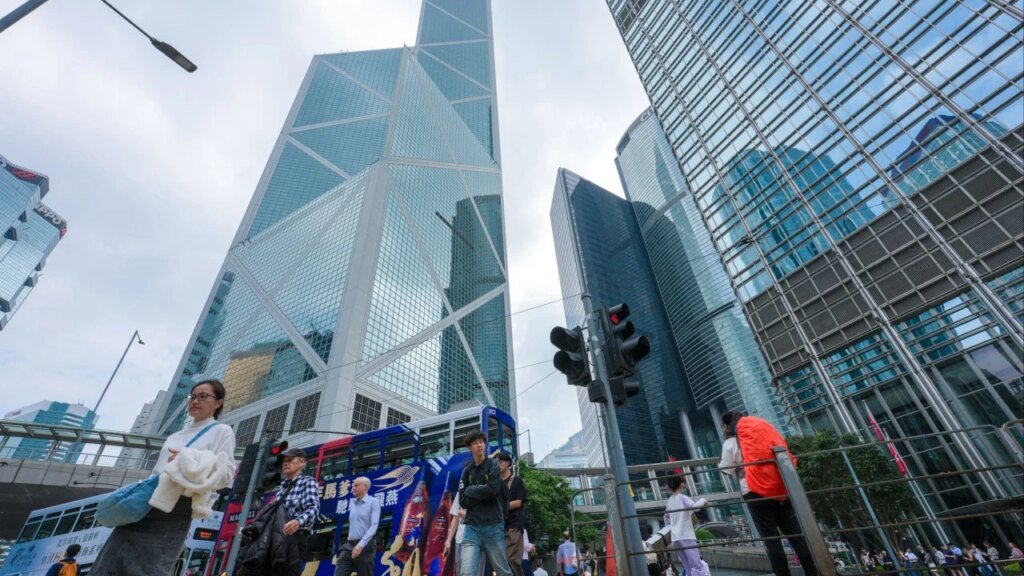
IMF lauds resilient Hong Kong economy but warns of risks linked to Middle East war

IMF lauds resilient Hong Kong economy but warns of risks linked to Middle East war

The International Monetary Fund (IMF) has lauded the resilience of Hong Kong’s economy, noting a sustained recovery despite economic activity having yet to return to pre-Covid levels, while warning of downside risks stemming from escalating geopolitical tensions. It also urged Hong Kong to pursue medium-term financial reforms, including the introduction of a goods and services

Smithsonian Presidents Exhibit Reopens With Low-Key Trump Impeachment Mention

For the past year, the Smithsonian Institution has found itself in the awkward position of telling the nation’s story while being supported in part by a government that wants to narrow how that story is told. In December, the White House threatened to revoke funding to the institution if it did not hand over a

Marvel’s Daredevil Follow-up Is Already Dominating on Streaming

A follow-up to Daredevil: Born Again Season 2 on Disney+ has become a massive streaming success within days of its launch. The Punisher: One Last Kill has quickly climbed to the top of multiple charts, beating out other titles on the platform. The MCU television special follows the gun-toting vigilante, who finds himself targeted by

Is Now a Bad Time to Invest?

The market has been on a roll lately, with the S&P 500 (SNPINDEX: ^GSPC) setting new highs throughout May. If you think you missed your opportunity when the market bottomed in late March, don’t fret. The market hitting new all-time highs is not particularly rare and should not change your investment strategy. And if you

6 bids for Hong Kong land sale signal renewed confidence despite market caution

6 bids for Hong Kong land sale signal renewed confidence despite market caution

The Hong Kong government’s first land sale in the current financial year has drawn six bids, according to the Development Bureau, including those from the city’s largest developers, suggesting a more confident outlook for the residential property market. At the close of tender for Tung Chung Town Lot No 54 at Area 106A on Friday

Each Premier League team reranked: Man City rise; Chelsea, Liverpool collapse

Ryan O’Hanlon Close Ryan O’Hanlon ESPN.com writer Ryan O’Hanlon is a staff writer for ESPN.com. He’s also the author of “Net Gains: Inside the Beautiful Game’s Analytics Revolution.”  and  Bill Connelly Close Bill Connelly ESPN Staff Writer Bill Connelly is a writer for ESPN. He covers college football, soccer and tennis. He has been at

Trump departs China after two-day summit

Trump departs China after two-day summit

IE 11 is not supported. For an optimal experience visit our site on another browser. Trump Wraps China Summit With Xi Jinping: What Are the Results? 05:41 Xi gives Trump rare tour of secret garden at heart of Chinese government 01:04 Now Playing Trump departs China after two-day summit 01:01 UP NEXT Special Report: Trump

Carol Chow was facing a bankruptcy petition by five people over unspecified debts at the time of her death. Photo: Dickson Lee

Embattled Hong Kong developer sued for HK$130 million, days after founder’s death

A Hong Kong property developer has been sued for HK$130 million (US$16.6 million) over allegedly breaching guarantor obligations in two bond subscription agreements, becoming the latest lawsuit to implicate the embattled company and following its founder’s sudden death earlier this week. Lofter Group, known for its urban renewal projects across the city’s core districts, and

Trump’s China visit left chip export issue unresolved

This report is from this week’s The Tech Download newsletter. Like what you see? You can subscribe here. One look at the roster of U.S. execs that cozied up to U.S. President Donald Trump on the 20+ hours flight from Alaska to China on Wednesday and you get a sense of the American delegation’s key focus

Why the Cerebras IPO matters for the AI race with China

Why the Cerebras IPO matters for the AI race with China

Cerebras, an AI chipmaker, saw its shares nearly double on Nasdaq, closing up 70% with a $95B market cap. Cerebras’s powerful chips are key in the US-China AI tech race. Chris Buskirk, co-founder and chief investment officer of 1789 Capital, a key Cerebras investor, says the company’s IPO is geopolitically significant. On Thursday, shares of

Fitbit Air vs Whoop Strap Comparison: Price, Features and AI

The Google Fitbit Air is very much the talk of the fitness tracking town right now, not only because it’s the first new Fitbit device that we’ve had in years, but it’s also one of the first big brands to go head-to-head with the established Whoop Strap (if you don’t count the Polar Loop and

0
Would love your thoughts, please comment.x
()
x