The flat is located in The Capitol at Lohas Park, a private housing estate in Tseung Kwan O.
With a saleable area of 681 square feet (63 square metres), the flat originally had three bedrooms.
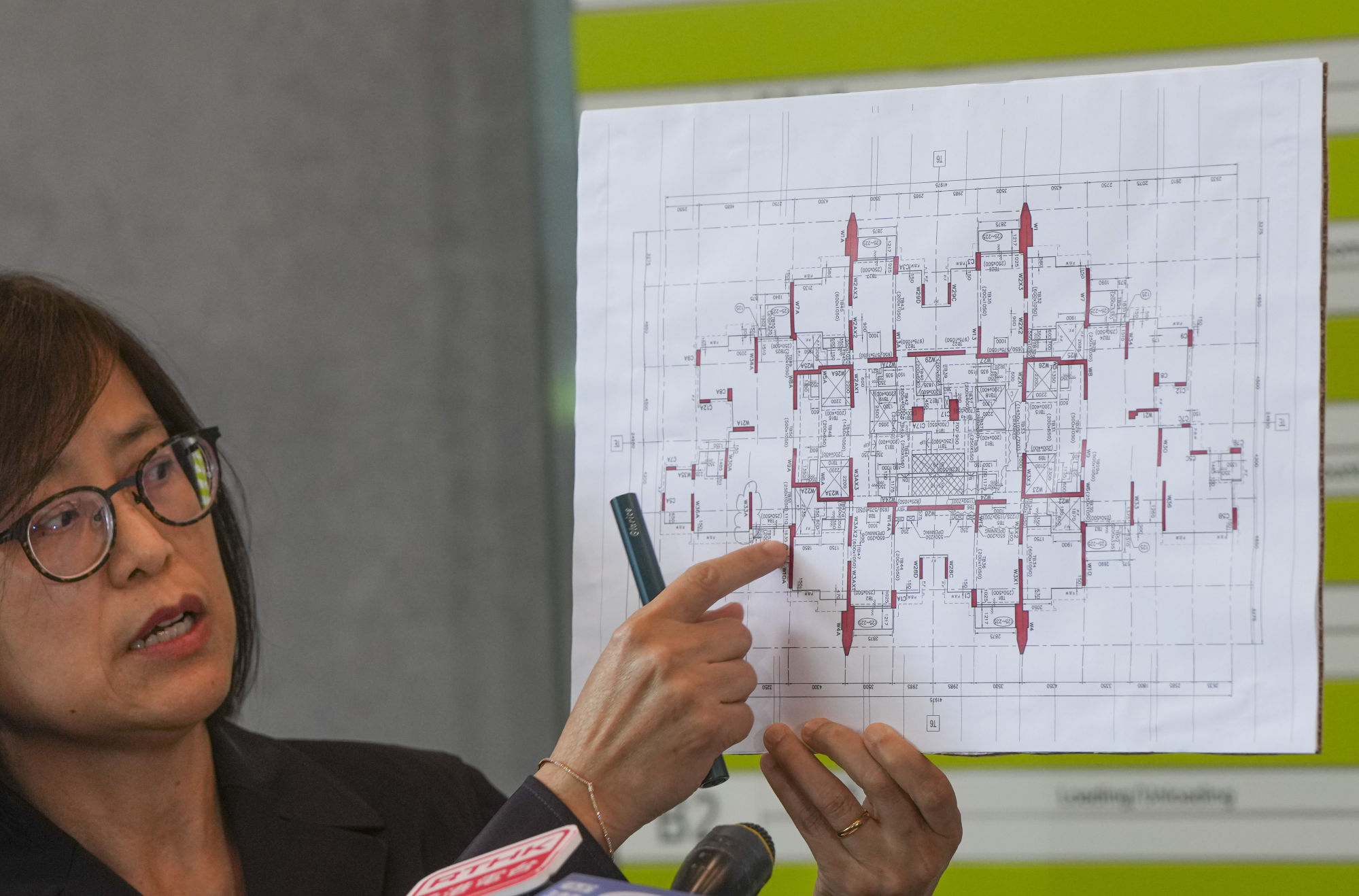
During renovation work last year, a number of walls and part of the load-bearing one were removed to create a bigger area.
Internet users suspected that the supporting structure was altered to create a door for the bedroom.
Compromised load-bearing walls would shift the burden to other walls. Overloaded walls could fail, causing building damage, according to building experts.
Subsequently, the owner was ordered to repair the wall by the department.
Under the Buildings Ordinance, construction work plans must be submitted to the department for approval in a private residence before it can commence, unless there is an exemption.
The maximum penalty for carrying out such work without authorisation is two years in prison and a HK$400,000 (US$51,230) fine.
If the work has led to or is likely to cause injury to a person or damage property, the offender can be jailed for three years and fined HK$1 million.
The department can also issue an order to correct the issue. Failure to comply can result in one year’s jail and a fine of HK$200,000, as well as a penalty of HK$20,000 for every day of non-compliance.
Legislative Council housing panel member Edward Lau Kwok-fan, said he hoped the court case could raise awareness of building safety and the need to seek approval even for interior renovation work.
“Very often, the contractors or designers will just do whatever flat owners want them to do, and to save the trouble, many will not apply to the government,” said Lau, who is also a lawmaker of the Democratic Alliance for the Betterment and Progress of Hong Kong.
“They tend to think that even if there are unauthorised modifications, officers can hardly know because they will not enter their flats to inspect,” he added.
His views were shared by Francis Lam Ka-fai, president of the Hong Kong Institute of Surveyors.
Asked about the implications of the contractor and designer also being prosecuted, Lam said: “It is time for a warning to prevent future offences.”
A study by the Consumer Council released in February also found that the home-renovation industry was faced with issues such as poor service and tricky sales tactics.
The Consumer Council received 1,205 complaints in the past seven years involving over HK$276.9 million. The council found 75 per cent of 59 companies offered restructuring without assessing, after the watchdog made inquiries disguised as consumers.