However, over time – partly because of China’s own growth and development and partly because of the growth of other economies, including India – we will see more dispersed manufacturing capabilities in many categories.
But it probably won’t happen in the extreme form, because it’s so expensive that everybody would wake up in the morning and say: “This is really ridiculous. We can’t do this.”
There was a point where the United States was pretty dominant in the global economy – then there was a steady decline. Similar things will start to happen with respect to China and manufacturing.
China is the largest trading partner of a very long list of countries. It’s probably appropriate to say it’s on a decline – a relatively slow decline.
The answer is partly yes and partly no. It’s “partly” because they have made heavy investments that will both alter the structure of the economy and increase its already very high innovative capacity.
If Sweden someday got up and started to tell people we are going to produce a wide range of the things we consume – including tradeable things, like manufactured goods – people would say that’s crazy because a country of 10 million people isn’t big enough to have an efficient full-scale presence in every sector.
China has the notion that they can drive a considerable amount of growth on the demand side. There’s a problem with aggregate demand now, but on the supply side it is plausible.
13:04
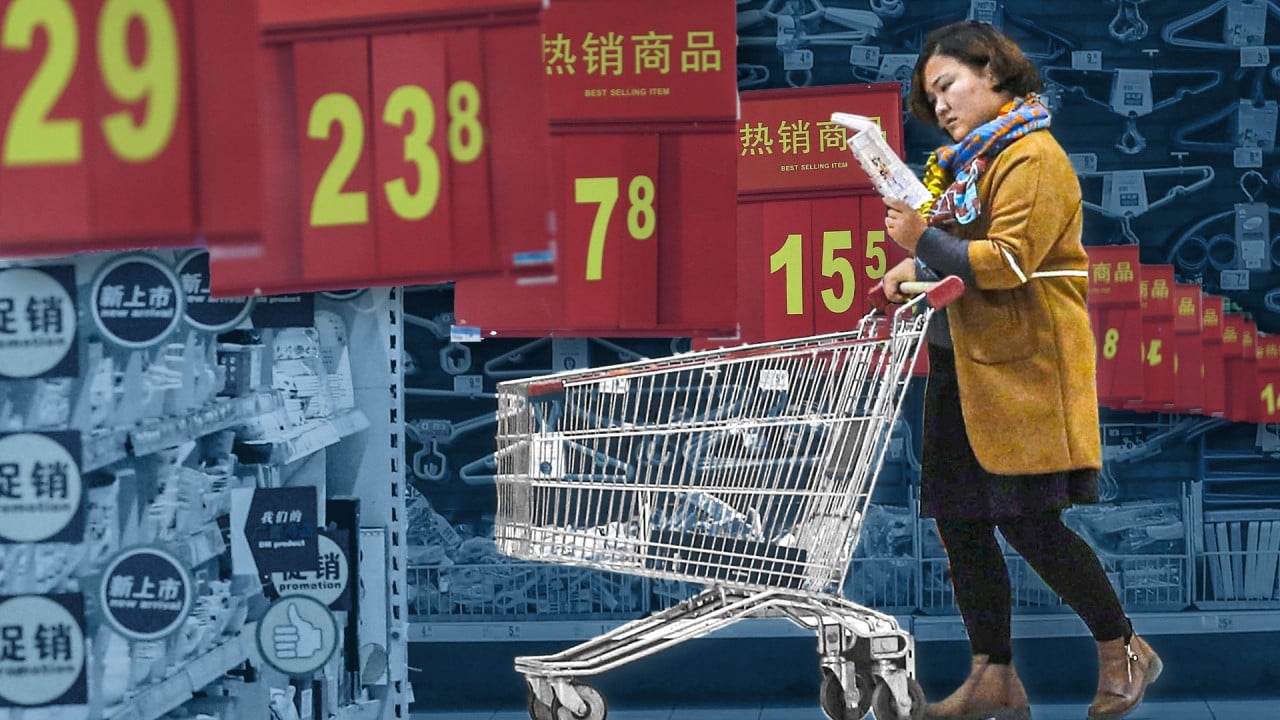
What does it mean for the world when Chinese consumers tighten their belts?
What does it mean for the world when Chinese consumers tighten their belts?
However, this is true not only of China but every economy in the world. Every country will suffer in terms of growth if it doesn’t benefit from specialisation, trade, flows of technology across borders, flows of capital across borders, all the things that go with what used to be called globalisation. If that’s contracting, those opportunities are contracting.
It’ll be less bad for China, but it’ll be bad for everybody. So that’s the “no” part of the yes and no. China can drive a lot of growth focusing mainly on what China calls internal circulation, but we’ll all pay a price – including China – if we close down the global economy beyond a certain point.
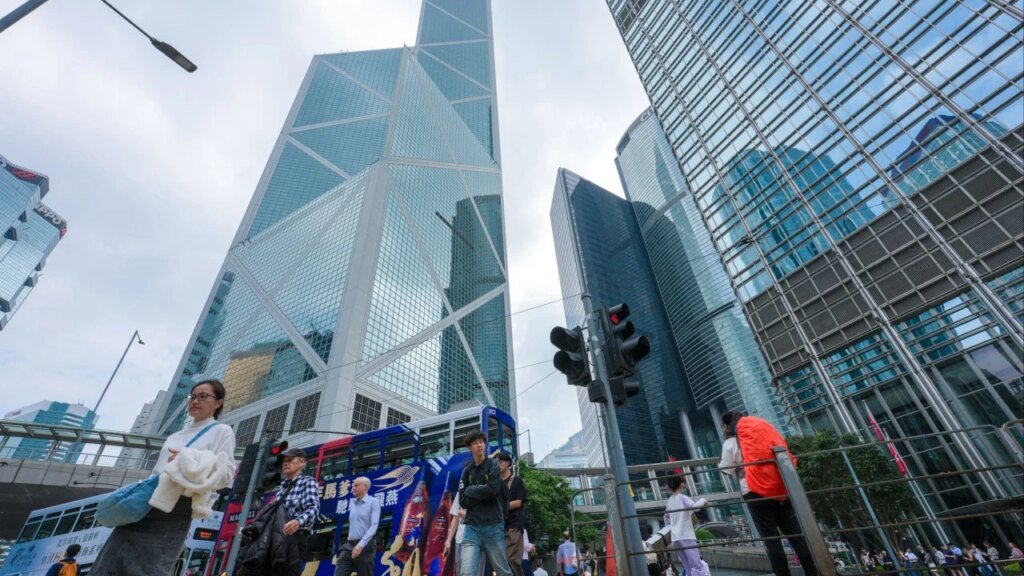
What do you think about the role of Hong Kong? Is it still the international city, “Asia’s World City”?
It’s a matter of degree. The most likely scenario is that Hong Kong will remain an international city. It will have distinctive characteristics relative to big cities in mainland China.
It has a currency of its own, it will behave economically and in the financial sector differently from China. The visa requirements are different. Pretty much everything is still different.
The China presence in terms of the way the place is governed – what’s tolerated and what’s not – is larger than it used to be. That doesn’t necessarily mean it is not an international centre, despite the geopolitical tensions and the external characterisation of the situation.
The last thing is that it’s really up to China. Hong Kong is a part of China. It’s a special administrative region, but it’s part of China. China decides, at some point, its distinctive characteristics.
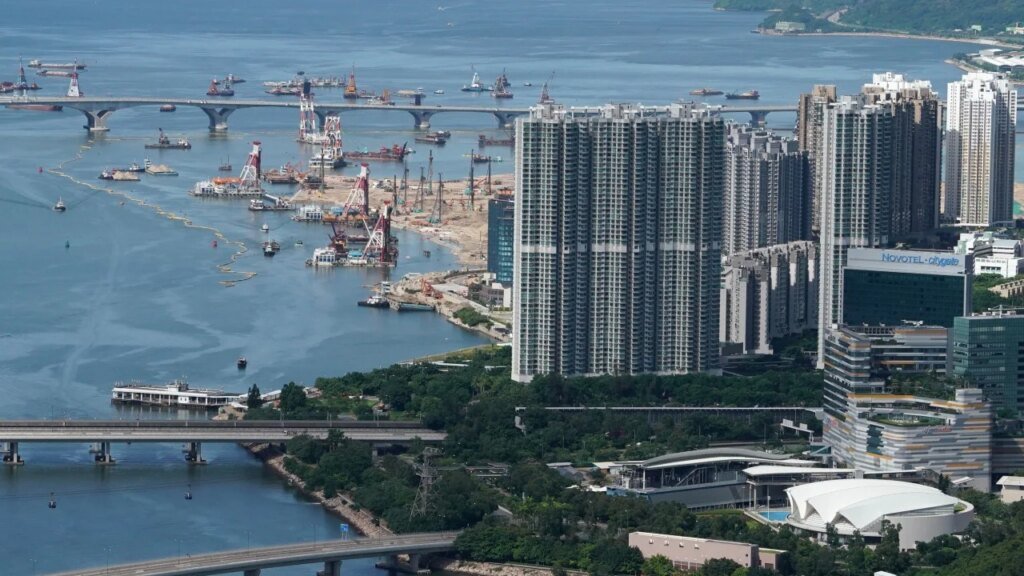
It has the capacity to simply absorb Hong Kong as one of the major cities in the Greater Bay Area. I don’t think they’ll do that. They haven’t said anything that sounds like that. And it probably wouldn’t be a good idea, but that’s where we are.
There is an aggregate demand problem in China. It’s almost the mirror opposite of what’s going on in developed countries, where we have for the most part a supply problem that’s not keeping up with demand. A shortage of aggregate demand, for China, is a deflationary environment.
And the solution to it is getting rid of, over time, the imbalances and overcapacity in the real estate sector. Chinese savers and consumers, once that’s passed, will feel better about consuming because a lot of their savings disappeared in real estate value assets.
In China, it is unusual in the amount of the household net worth that’s associated with the real estate sector. So that’s pretty important in restoring aggregate demand. It’s through the wealth/consumption channel.
The private sector – both on the investment side and the corporate side – is a little bit uncertain about its place
And the policymakers probably have a serious intent to clarify the position of the private sector and, over time, restore confidence. The effect of that will be to elevate the level of investment.
They have been inconsistent in messaging with respect to the private sector. Sometimes it seems like they feel it’s incredibly important. And at other times, the message seems to be that the state-owned sector is where the action is.
The private sector – both on the investment side and the corporate side – is a little bit uncertain about its place. My best guess is it will take two or three years before China’s back in a better-balanced situation and growing at whatever its full potential is, which is probably around 5 to 6 per cent.
It’s a little bit like the rest of the world’s growth, which is slowing. There are these forces that are operating in China. Probably that takes two to three years to fully get out of them.
And then the question is: What happens after that? China’s growth is powered by the positive things in the Chinese economy, like the capacity for innovation and, hopefully, trade relations – if they haven’t deteriorated too much – which will restore higher growth.
The property market situation is not just neutral. It’s a depressor of growth. So they need to remove the depression, but they also want an economy where the growth drivers are a diversified set and there is less reliance on the property sector and construction.
The reason it takes time is if you have a lot of additional capacity, you can’t absorb it quickly. It’s just sitting there. There are companies that are probably in shaky conditions financially because of extensive investments in real estate that are now not worth as much as they were.
So there are policies that can be undertaken to soften the blow. Don’t make households pay as high a price. People were financing highly speculative major real estate development projects by selling the units. And then they went broke. Basically, the investors were the people who ostensibly bought the flats.
One is trade settlement, and the other part is reserve currency. So, on the trade settlement part, because of China’s prominence in trade, there’s a noticeable increase in the use of the Chinese currency in trade settlement.
The situation on what is normally called the reserve currency side is a little bit different. The main reserve currency so far is the US dollar. It’s tarnished a little bit, because the American authorities are using the dollar for essentially foreign policy purposes via sanctions in response to the war in Ukraine.
With the dollar, you can trade in very large amounts of all things. It is a relatively stable store of value, but right now it’s a little less safe – depending on who you are – than it used to be.
There really isn’t, at the moment, a substitute for the dollar. On the Chinese side, the financial capital market is big enough, so that you could have very large inflows and outflows without having destructive volatility.
But the capital account isn’t completely open. I don’t think it will be in the near term, because there are reasons why the authorities maintain a certain amount of control over the capital account.
But in the next decade, the international role of the Chinese currency will expand. There will be an expansion of these digital central bank currencies. That’ll help that along.
It’s possible that an International Monetary Fund-sponsored currency would start to be a plausible alternative to the dollar, but it would have to be a huge expansion from where we are now on the strategic drawing rights. That doesn’t seem very likely, given the way the world is operating now.
So, for a while, it’s still the dollar. Not everybody’s happy with that. China is reducing its dollar reserves. The People’s Bank of China is apparently reducing its holdings of dollars at a measured pace according to reports, and they don’t publish them in a form where everybody has exactly the same data.
It is.
China learned some lessons about how to approach the investment process. China always likes to act on the premise that everybody’s an adult and they can negotiate on their own behalf, and whatever we end up with is probably mutually beneficial. So that’s consistent with “we don’t interfere with your affairs and vice versa”.
The problem with that proposition is that there are lots of countries in the world that aren’t very effective at negotiating on their own behalf.
Therefore, we ended up with a few investments that were characterised as taking advantage of the counterparty. I don’t think that was the intention. It just turned out that the other side didn’t do a very good job of negotiating on their own behalf.
The Belt and Road Initiative has the capacity to dramatically increase not only their development and infrastructure, but also their connectivity to the global economy.
At some point, there might have been some hope that it would become larger. But in view of the current geopolitical tensions, that’s probably unlikely because it is viewed as a huge Chinese investment programme.
Since there are lots of restrictions being put on investment these days, it seems that the development of the Belt and Road Initiative is at least in question at this point.
For example, Italy withdrew. That’s probably because they had their own reasons, perhaps pressure from inside Europe. I don’t know what they said when they did it.
But because of the Ukraine war and the position China has taken a vis-à-vis Russia’s position – I’m not talking about what they’re shipping and not shipping – from a public point of view, China is aligned with Russia on this, and that’s a very difficult proposition to accept in Europe.
Probably in certain sectors. If you have an aggregate demand problem and there’s a bunch of young people who are unemployed, there’s probably some excess capacity somewhere. Where exactly is it? It varies from sector to sector.
Now China is clearly the leader in solar, electric vehicles (EVs) and battery technology. Do expect a surge in exports of those things or foreign direct investment, which is the other channel it could take, because the world is supposed to be solving the climate sustainability problem.
And that would materially advance the agenda, but exports of these key elements of the energy transition are being blocked by Western countries. It’s hard to invent a national security argument for this. It is probably a mistake, certainly from the point of view of meeting sustainability targets.
If I were in the position, I would see if I can have some foreign direct investment that brings the technology and so the Chinese benefit from the investment, following the automobile model in the 1980s when the Japanese and Germans built a lot of plants.
They get your competitive advantages in knowing how to make them. But that’s not the direction we’re going. They’re being blocked, partly for the wrong reasons and partly to protect industries and jobs. The cost of that is very high in terms of the sustainability agenda.
The Europeans are ambivalent. They’re worried about domestic industries. They’re a little bit behind on some of the technologies and the industries of the future, especially digital, relative to both China and the US.
They’ve got old industries, and if they blow them away via trade, they would have political problems. So part of it is motivated by that and part of it is sector-specific.
When you get into the digital area, it gets more complicated because of the flow of information. Cybersecurity and issues in that terrain. The Europeans and the Americans are going to be cautious and just decide they have to accept some restrictions.
The Chinese are not going to employ Google Cloud. It’s like the way they run their big national security systems. The People’s Liberation Army is not going to have a foreign supplier of virtually anything, with the possible exception of semiconductor chips – if they can buy them. But they’re going to work hard at learning how to make the ones that they can’t make.
From the European point of view, part of it is like America, part of it is more ambivalent because of the importance of China as a trading partner, especially for Germany. They will have a more nuanced and balanced approach.
Europeans have more headwinds to growth because of the impact of the war in Ukraine, the energy crisis, and a very rapid and expensive pattern of diversification.
Part of the solution on the economic side is full integration of markets, including in the services area, which we have not achieved. And probably centralisation – a bigger European bond market, at least some increases in fiscal programmes, especially investing in research and technology, and probably some degree of integration of the capital market.
Instead of having a little stock exchange in Milan and a bigger one in Paris and others in Munich, Berlin and Madrid, we’d merge them together and now we’ve got something that looks like a real capital market.
Along with European centrally issued bonds, it would start to make it look like a real capital market. And all of that funding centrally investing in things like cloud computing and digital technologies. There’s a lot of talent here, but we’re just underinvesting.
It’s going to be everywhere in the economy. Systems and people are going to have powerful digital AI assistants. It has the potential to increase productivity enormously. There are big, complicated systems that we just need AI to run.
In the old days, we had maybe four power plants and transmission lines and then a bunch of people using electricity in a distribution system. In the future, we’re going to have thousands, even millions of sources of electricity, the solar panels on your roof, windmills all over the place.
People are going to be in charge of it, but they’re probably going to need AI systems that are able to keep track of something that complicated to help manage the grids.
There are sceptics about this, but to be perfectly honest the world is just ignoring the sceptics. I don’t think China is all that far behind. It’s being held up a little bit by restrictions on semiconductors and technology flows, but there’s no lack of talent. The AI innovators, five or 10 years ago, used to talk to each other. Now because of tensions, they can’t talk to each other. But AI people know what they’re doing in China.
By the end of this decade, we’re going to see large parts of the economy running with the benefit of artificial intelligence support mechanisms … We’ll see big productivity surges
China will find ways to overcome some obstacles in the computing power area with respect to training very large models. That’s the bottleneck. It’s not data. It’s computing power or what the technologists call “compute”.
Will these technologies spread to small and medium-sized businesses? Will they go through the economy? That’s not so assured.
We could have very different scenarios in terms of both the magnitude of the impact and the distribution aspects of the impact. And policy matters in this area. When you’re talking about big, important, potentially useful technologies diffusing through the economy, the government has a role to play.
By the end of this decade, we’re going to see large parts of the economy running with the benefit of artificial intelligence support mechanisms. We’ll see big productivity surges.
Hopefully it’ll spread around the world. There’s a lot of people in one way or another trying to make sure that’s the scenario that emerges. It’s wrong to think of this as just the US and China.
Maybe the high-powered development of new technologies will occur primarily in China and the US. But the footprint of the impact will be much larger than that in the global economy. There are spillover benefits of being one of the places that’s developing the most advanced versions of these technologies.
But not every place can do that. China can do it, maybe Europe will get there, the US can do it. But other places can be consumers and users and adapters of the technologies.
The digital ones are showing up everywhere. They’re showing up in biology, they’re showing up in agriculture, showing up in the energy transition.
Any cases for using AI technology to bring about more inclusiveness, to better the world? I’ve learned that you sit on the board of one such company, Surfin. Can you discuss social impact through disruptive technology?
One application sounds small, but it’s highly illustrative – you can detect skin cancer with AI. You take a picture of various parts of your skin. A couple of dermatology students at Stanford verified it and this has now been done. The AI is not better than trained dermatologists, but it is not bad.
This may help the 85 per cent of the world’s population that doesn’t live anywhere near a dermatologist. You can use this as one aspect of preventive primary care by extending it to people who probably won’t get on a train once a year and go 100km to a place that has dermatologists.
Surfin is one of a set of companies that are using advanced technology and AI to expand financial services for previously underserved populations. An important part of the fintech world is advancing inclusiveness in major ways.

05:03
How does China’s AI stack up against ChatGPT?
How does China’s AI stack up against ChatGPT?
It’s the same for education. It will detect the precise characteristics of learning, characteristics of individuals, children or even adults.
Robots, up until now, can’t talk to humans. There’s nothing inside a robot that enables them to have a chat with you. They’re either fully autonomous, and it works, or they don’t work.
The big breakthrough in robotics is that you can put large language models in the robot, so that you can interact with them, but also that they understand what you’re talking about. That changes the game enormously.
This hasn’t been written about much so far, in part because it’s just starting to happen. We just had the large language models. They’re just starting to be put in robots. Over the next three or four years, you’ll start to see more writing about this dimension of the breakthroughs in AI.
There are lots of downside risks. There’s copyright issues. There are fully autonomous weapons, which is one of the world’s worst fears. We need a treaty that bans these weapons.
There’s what those of us in the intersection between economics and AI call the automation bias. There’ll be some people who say this is great, I cut costs and get rid of a whole lot of people. Other people are going to say: No, the real potential of this is we’re going to have a transformation in the way we do business.
But at the end of it, we’re going to enhance the quality and experience for our customers. In the short run, there are going to be mistakes made.