Even Americans don’t want Trump’s barmy tariffs, writes Douglas Irwin | World News

ON “LIBERATION DAY” President Donald Trump upended more than half a century of American trade policy by imposing sweeping tariffs on imports. These are off-the-charts in their historic significance. From just 2.3% in 2024, the average American tariff on imports is now expected to rise immediately to about 30%—where it was in the late 1800s. Mr Trump is a 20th-century man presiding over a 21st-century economy who wants to take it back to the 19th century.
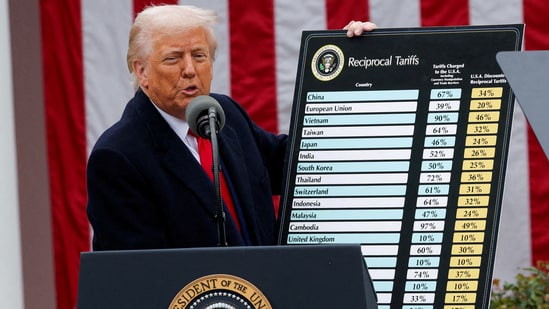
U.S. President Donald Trump delivers remarks on tariffs in the Rose Garden at the White House in Washington, D.C., U.S., April 2, 2025. REUTERS/Carlos Barria/File Photo(REUTERS) PREMIUM
U.S. President Donald Trump delivers remarks on tariffs in the Rose Garden at the White House in Washington, D.C., U.S., April 2, 2025. REUTERS/Carlos Barria/File Photo(REUTERS)

Not only is the magnitude of the hike unprecedented, but the tariffs will have a much more pervasive effect on the American economy than previous episodes. That is in large part because today merchandise imports are around 11% of GDP, more than twice their level in the late 19th century.

The tariffs blow an enormous hole in the liberal trade order that America has led and fostered since the second world war. They undermine every free-trade agreement America has ever signed. Those agreements were reciprocal: each country set zero tariffs on bilateral trade. Past free-trade-agreement partners now face stiff tariffs on their exports to America, among them South Korea (26%), Israel (17%) and Australia (10%). Canada and Mexico escaped this round of tariffs but still face the threat of 25% duties on their goods. If Mr Trump is willing to rip up his own agreement—known as the USMCA—with those two neighbours, then all past agreements are null and void, and future ones are of limited value. No one can sign any such deal with confidence if tariffs can be imposed on a whim.

Is there a principle behind the astonishing array of duties imposed on April 2nd? Mr Trump’s obsession with tariffs has long been known, but he offered a kaleidoscope of ever-changing rationales for them. They would raise revenue, reshore jobs, reduce trade deficits, ensure reciprocity by providing bargaining leverage, and so on. Economists took glee in pointing out the contradictions.

The president now touts his tariffs as mainly “reciprocal”: “whatever they charge us, we charge them.” This makes them sound fair. Far from it. The calculated tariffs did not measure tariffs or non-tariff barriers facing American exporters. They were, instead, based on the bilateral trade balance with each country—merchandise only, excluding services, in which America tends to run a surplus. According to the US Trade Representative’s office, the calculation of the tariffs “assumes that persistent trade deficits are due to a combination of tariff and non-tariff factors that prevent trade from balancing”. The implicit goal here is balanced trade on a bilateral basis.

This is bonkers, akin to an individual trying to have balanced trade with the local grocery store (with which she runs a large trade deficit) as well as with her employer (with which she runs a large trade surplus). There may be reasons to seek overall trade balance, but there is no rationale for balancing trade on a bilateral basis.

And seeking to balance overall trade through bilateral measures misses the macroeconomic nature of that imbalance, including the role of America’s large fiscal deficit in driving the flow of capital to the country. Of course, the trade deficit may narrow if America slips into a recession—hardly the outcome anyone hopes for.

Will this ignite a global trade war that sends trade volumes spiralling downwards, like the 1930s? That depends on the foreign reaction. The higher tariffs could spark retaliation. The EU is already prepared with “counter-measures”. A more optimistic view is that Mr Trump’s move may trigger a wave of foreign envoys descending on Washington in the hope of reaching deals that would satisfy the president and allow the tariffs to be removed. He loves to bargain and may yet be flattered into easing the tariffs.

Perhaps the most shocking aspect of this week’s events is the ability of one person to completely remake American trade policy. All previous major changes have involved building large coalitions and developing a social consensus over time— both of which required majority support in both houses of Congress.

But now Congress has delegated so much tariff-making authority to the president that it is, in effect, sidelined during this fundamental shift in trade policy. Mr Trump feels empowered to act unilaterally because he is. That may be acceptable under normal presidents, but this is not a normal presidency. A situation in which the occupant of the White House can make such momentous changes on his own, unchecked, reflects serious political decay in American politics.

What makes this all the worse is that the political constituency for the new tariffs is extremely small. Indeed, there is no consensus in Congress that such draconian steps are warranted; nor is there a general view among the American public that trade is a big problem. Mr Trump inherited an economy in decent shape. Congress was happy with the status quo and the public put trade far down its list of priorities, well below inflation, health care and the cost of living.

In other words, no one was asking for any of this. In fact, a Gallup poll released last month found that 81% of Americans surveyed believe trade is an opportunity for growth—the highest level since the poll began in 1992—and only 14% view trade as an economic threat.

The tariffs cast a dark cloud over the global economic outlook. But the damage they will do to America goes far beyond the national accounts. As Richard Cooper, an economist who served in the Carter and Clinton administrations, pointed out long ago, “trade policy is foreign policy.” These tariffs—on friend and foe alike, as Mr Trump likes to say—are almost certain to push friends away. It isn’t easy to have good diplomatic relations with a rogue power that flippantly and capriciously blocks trade. Co-operation with allies on all manner of issues, from security to public health, is likely to suffer. Mark Carney, Canada’s prime minister, was not being loose with his words when he said recently that the long-standing co-operative US-Canadian relationship is “over”. Europeans are thinking the same thing. And trust, once lost, is hard to rebuild.

Mr Trump has done a lot of damage—to America and the world. The president was right in at least one of his Rose Garden statements. With tariffs, he said, “we can be so much wealthier than any country, it’s not even believable.” He got that last bit right.

Douglas Irwin is the John French Professor of Economics at Dartmouth College.
Source link

Visited 1 times, 1 visit(s) today

Related Article

Nvidia’s trillion-dollar run puts pressure on the bulls

BEIJING, CHINA – MAY 14: Nvidia CEO Jensen Huang (C) gestures as he prepares to depart following a welcome ceremony at the Great Hall of the People on May 14, 2026 in Beijing, China. President Trump is meeting with President Xi Jinping in Beijing to address the Iran conflict, trade imbalances, and the Taiwan situation

Permutations in Europe: What’s still at stake in final weeks of season?

There’s still plenty to play for across Europe as we head into the final matches of the club season. Here are all the title races, Champions League fights, and relegation battles left to be decided in the top leagues this month. This story will be updated until the end of the campaign. 👉 Jump to:EPL

Brewing a Better Half-Gallon Batch

Today I finally ran an experiment I’ve wanted to try for a long time. If you’re a professional barista—or you run a busy café—this may save you some time. Most coffee shops use 1–1.5 gallon batch brewers (Bunn, Curtis, Fetco, etc.). When I opened Short Sleeves Coffee, I intentionally avoided brewing full 1-gallon batches. I

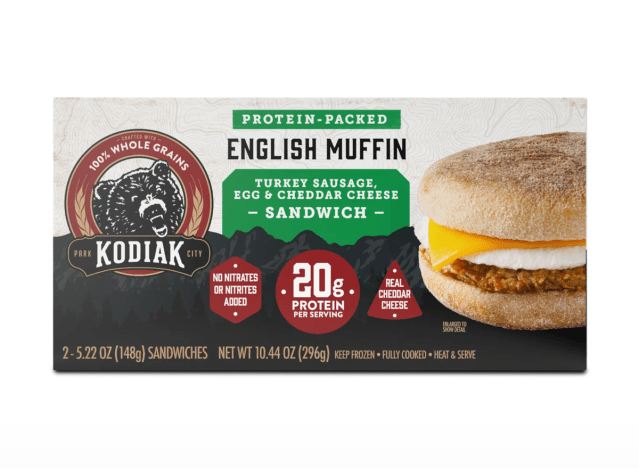
5 Frozen Breakfasts Chefs Say Keep You Full All Morning

Chef-approved frozen breakfasts with more protein and better ingredients. Eating a healthy breakfast every morning is a great way to start the day, but most people don’t have time to cook. Whether you’re rushing out the door in the morning for work, taking the kids to school or both, there’s usually not much time in

CA scales back plan to ban student use of cell phones

By Carolyn Jones, CalMatters This story was originally published by CalMatters. Sign up for their newsletters. Until last month, California was poised to join nearly a dozen other states that ban cell phones in K-12 schools. But under pressure from school boards and administrators, lawmakers scaled back a bill that would have required such a

BulkQuant Launches AI Trading Bot for Crypto, Forex, and Stock Markets

BulkQuant Launches AI Trading Bot for Crypto, Forex, and Stock Markets

London, United Kingdom, May 15, 2026 (GLOBE NEWSWIRE) — BulkQuant has officially launched its AI trading bot platform designed for crypto, forex, and stock market traders seeking a simpler way to automate trading strategies across multiple financial markets. The platform combines AI-powered quantitative analysis, automated trade execution, portfolio monitoring, and adaptive risk management into a

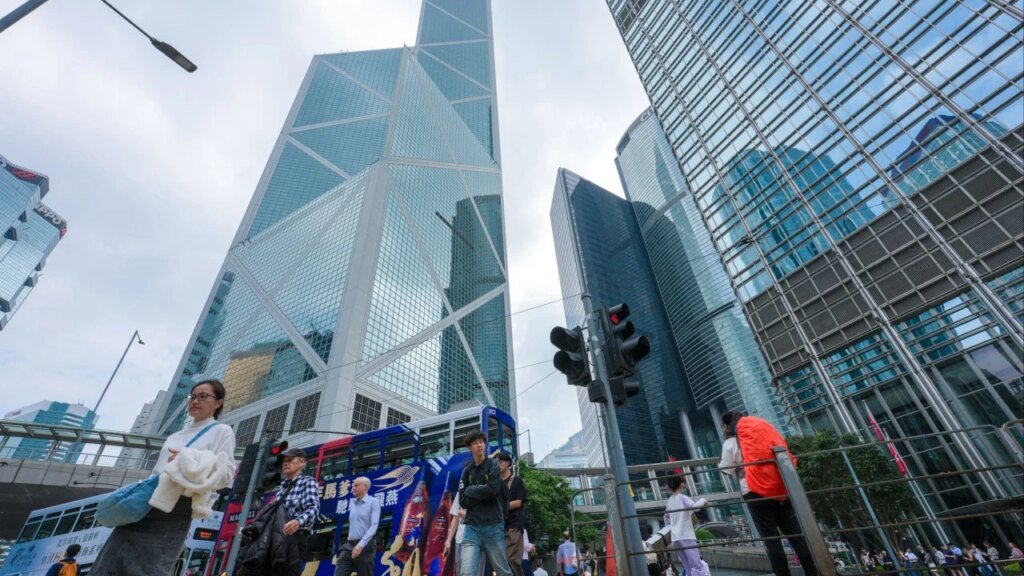
IMF lauds resilient Hong Kong economy but warns of risks linked to Middle East war

IMF lauds resilient Hong Kong economy but warns of risks linked to Middle East war

The International Monetary Fund (IMF) has lauded the resilience of Hong Kong’s economy, noting a sustained recovery despite economic activity having yet to return to pre-Covid levels, while warning of downside risks stemming from escalating geopolitical tensions. It also urged Hong Kong to pursue medium-term financial reforms, including the introduction of a goods and services

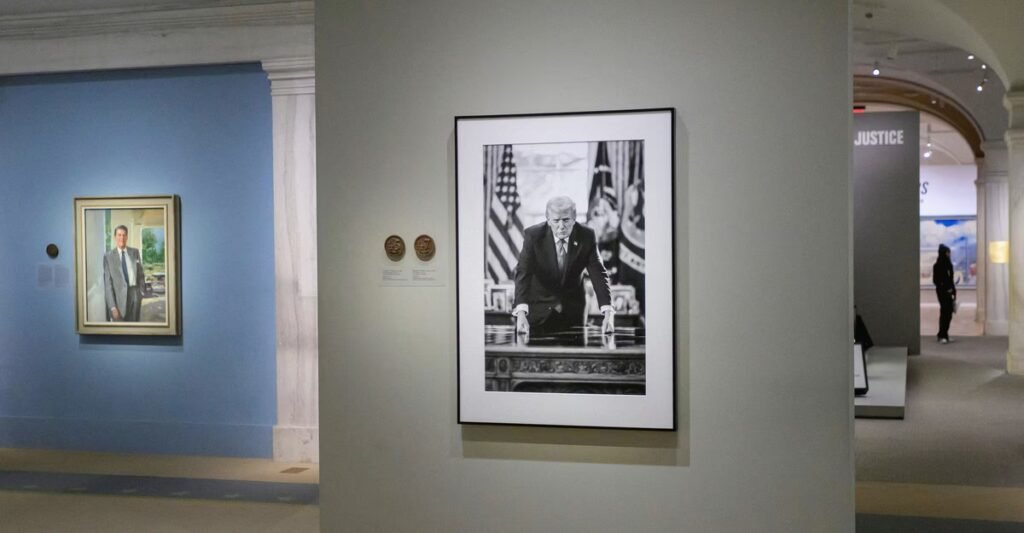
Smithsonian Presidents Exhibit Reopens With Low-Key Trump Impeachment Mention

For the past year, the Smithsonian Institution has found itself in the awkward position of telling the nation’s story while being supported in part by a government that wants to narrow how that story is told. In December, the White House threatened to revoke funding to the institution if it did not hand over a

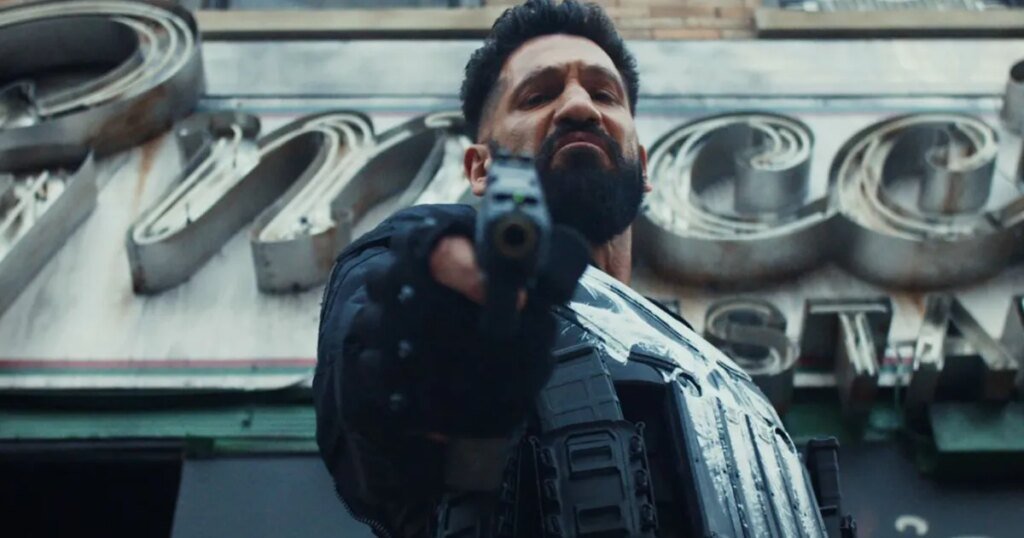
Marvel’s Daredevil Follow-up Is Already Dominating on Streaming

A follow-up to Daredevil: Born Again Season 2 on Disney+ has become a massive streaming success within days of its launch. The Punisher: One Last Kill has quickly climbed to the top of multiple charts, beating out other titles on the platform. The MCU television special follows the gun-toting vigilante, who finds himself targeted by

Is Now a Bad Time to Invest?

The market has been on a roll lately, with the S&P 500 (SNPINDEX: ^GSPC) setting new highs throughout May. If you think you missed your opportunity when the market bottomed in late March, don’t fret. The market hitting new all-time highs is not particularly rare and should not change your investment strategy. And if you

6 bids for Hong Kong land sale signal renewed confidence despite market caution

6 bids for Hong Kong land sale signal renewed confidence despite market caution

The Hong Kong government’s first land sale in the current financial year has drawn six bids, according to the Development Bureau, including those from the city’s largest developers, suggesting a more confident outlook for the residential property market. At the close of tender for Tung Chung Town Lot No 54 at Area 106A on Friday

Each Premier League team reranked: Man City rise; Chelsea, Liverpool collapse

Ryan O’Hanlon Close Ryan O’Hanlon ESPN.com writer Ryan O’Hanlon is a staff writer for ESPN.com. He’s also the author of “Net Gains: Inside the Beautiful Game’s Analytics Revolution.”  and  Bill Connelly Close Bill Connelly ESPN Staff Writer Bill Connelly is a writer for ESPN. He covers college football, soccer and tennis. He has been at

Trump departs China after two-day summit

Trump departs China after two-day summit

IE 11 is not supported. For an optimal experience visit our site on another browser. Trump Wraps China Summit With Xi Jinping: What Are the Results? 05:41 Xi gives Trump rare tour of secret garden at heart of Chinese government 01:04 Now Playing Trump departs China after two-day summit 01:01 UP NEXT Special Report: Trump

Carol Chow was facing a bankruptcy petition by five people over unspecified debts at the time of her death. Photo: Dickson Lee

Embattled Hong Kong developer sued for HK$130 million, days after founder’s death

A Hong Kong property developer has been sued for HK$130 million (US$16.6 million) over allegedly breaching guarantor obligations in two bond subscription agreements, becoming the latest lawsuit to implicate the embattled company and following its founder’s sudden death earlier this week. Lofter Group, known for its urban renewal projects across the city’s core districts, and

Trump’s China visit left chip export issue unresolved

This report is from this week’s The Tech Download newsletter. Like what you see? You can subscribe here. One look at the roster of U.S. execs that cozied up to U.S. President Donald Trump on the 20+ hours flight from Alaska to China on Wednesday and you get a sense of the American delegation’s key focus

Why the Cerebras IPO matters for the AI race with China

Why the Cerebras IPO matters for the AI race with China

Cerebras, an AI chipmaker, saw its shares nearly double on Nasdaq, closing up 70% with a $95B market cap. Cerebras’s powerful chips are key in the US-China AI tech race. Chris Buskirk, co-founder and chief investment officer of 1789 Capital, a key Cerebras investor, says the company’s IPO is geopolitically significant. On Thursday, shares of

Fitbit Air vs Whoop Strap Comparison: Price, Features and AI

The Google Fitbit Air is very much the talk of the fitness tracking town right now, not only because it’s the first new Fitbit device that we’ve had in years, but it’s also one of the first big brands to go head-to-head with the established Whoop Strap (if you don’t count the Polar Loop and

0
Would love your thoughts, please comment.x
()
x