CLAIM
“Covid vaccines may have helped fuel rise in excess deaths”

DETAILS
Misleading: The study by Mostert et al. did not include any findings to link vaccination with the trends in excess deaths. The overwhelming cause of excess deaths between 2020 and 2022 was due to COVID-19 itself. There are many possible explanations for the remaining excess deaths that were not directly caused by COVID-19; however, the evidence is clear that the vaccines saved millions of lives and they are not associated with excess deaths.
KEY TAKE AWAY

The COVID-19 vaccines are estimated to have saved 14 million lives worldwide within their first year. While there are extremely rare instances of heart inflammation and blood clots following vaccination, these risks are far outweighed by the lives saved. While excess deaths were observed from 2020 to 2022, the vast majority are due directly or indirectly to COVID-19 itself. The data that we have shows no association with the COVID-19 vaccines.
FULL CLAIM: “Covid vaccines may have helped fuel rise in excess deaths”
REVIEW
From early in the COVID-19 pandemic, reliable and comparable figures on the deaths due to the disease were difficult to obtain. A proxy way of measuring this was to use excess deaths figures, which are calculated based on the difference between recorded deaths from all causes and a projected estimate based on deaths from previous years.
In June 2024, researchers from the Netherlands published a study in the journal BMJ Public Health looking at excess mortality across 47 countries from January 2020 to December 2022. They identified that excess deaths were high during this period[1].
In its coverage of this study, the Daily Telegraph published an article with the headline “Covid vaccines may have helped fuel rise in excess deaths”. This article was widely shared online by people with a history of sharing misinformation, claiming that it was mainstream media recognition of the harms of COVID-19 vaccines. As this review will explain, the study provided no evidence that vaccines were responsible for these excess deaths and that the Telegraph’s headline runs contrary to findings from previous studies, which showed that COVID-19 vaccines saved millions of lives.
The BMJ, the publisher of the journal, issued a statement in response to what it described as misreporting of the research:
“Various news outlets have claimed that this research implies a direct causal link between COVID-19 vaccination and mortality. This study does not establish any such link. The researchers looked only at trends in excess mortality over time, not its causes. While the researchers recognise that side effects are reported after vaccination, the research does not support the claim that vaccines are a major contributory factor to excess deaths since the start of the pandemic. Vaccines have, in fact, been instrumental in reducing the severe illness and death associated with COVID-19 infection.
“The message of the research is that understanding overall excess mortality since the COVID-19 pandemic is crucial for future health policy, but that identifying specific causes is complex due to varying national data quality and reporting methods.”
The study looked at the number of excess deaths, not the cause
The study by Mostert et al. analyzed the excess deaths in 47 countries of the Western world (defined as countries in Europe, the U.S., Canada, Australia, and New Zealand) from 1 January 2020 until 31 December 2022. Science Feedback requested a comment from the lead author of the study in response to the Daily Telegraph article.
The study used figures from the “Our World in Data” database to show that there were more than three million excess deaths in these countries during this period.
The study didn’t analyze the impact of vaccination, nor did it examine the relationship between mortality and vaccination status. There is therefore no evidence from these findings to support the Telegraph headline’s claim that vaccines may have contributed to excess deaths. This is known as the ecological fallacy, where observations on the wider population are used to make inferences about smaller groups within that population.
In fact, research has found higher mortality rates in unvaccinated people, even after adjusting for demographic factors[2].
Jeffrey S Morris, Professor of Public Health and Preventative Medicine at the University of Pennsylvania, wrote on X:
“[T]his study does not accurately represent the existing understanding about sources of excess deaths, downplaying the COVID-19 deaths that are clearly the driving factor throughout 2020-2022, as I will show, and implicitly magnifying the potential role of vaccines beyond what is supported by the data.
“Also, many popular media articles about this study, including the Telegraph article […] blatantly misrepresent the content of the paper.
“They make it sound as if the paper was primarily about vaccines, which it is not, or provides evidence for vaccines being a potential driving factor, which it does not.”
Morris also questioned the journal’s classification of the study as “original research”, as he said there is “no primary data collection or original data analysis in this paper” and that the remainder of the paper more closely resembled a commentary.
The Mostert et al. study referred to vaccines several times in its introduction and discussion, but the results did not include data that supported a link to excess deaths.
The authors claimed that “Consensus is also lacking in the medical community regarding concerns that mRNA vaccines might cause more harm than initially forecasted. French studies suggest that COVID-19 mRNA vaccines are gene therapy products requiring long-term stringent adverse events monitoring.” To support these statements, the authors cited an article written by Hélène Banoun, a retired pharmacist-biologist, whose publications were previously used to support misinformation about COVID-19 vaccines. Banoun is a member of the “Independent Scientific Council”, an anti-vaccine campaign group in France.
The study also cites several other research publications that were previously reviewed by fact-checkers for their role in the spread of COVID-19 vaccine misinformation.
What are the causes of excess deaths?
The impact of the pandemic was felt in different ways at different times worldwide, which makes analyzing the causes of excess deaths complex. A 2023 analysis of excess deaths by Ioannidis et al. compared the characteristics of different countries to better understand the underlying factors[3]. The study found:
“Excess deaths during 2020–2023 were strongly inversely correlated with per capita GDP, strongly correlated with proportion of population living in poverty and modestly correlated with income inequality.”
In particular, it highlighted the U.S. as “a striking case, with extremely high cumulative excess death rates despite high per capita GDP”. This, the authors suggest, could be due to high income inequality and poverty.
The U.S. alone accounted for over 40% of the excess deaths included in the Mostert et al. study, and so dominates the trends in the figures. An analysis of excess deaths in the U.S. found that the vast majority were directly attributed to COVID-19[4]. This study further showed that official figures had undercounted the number of COVID-19 deaths, concluding that “many excess deaths reported to non-COVID-19 natural causes during the first 30 mo of the pandemic in the United States were unrecognized COVID-19 deaths”.
Figure 1 shows how the reported deaths deviated from the projected number of deaths for the U.S. As the study by Mostert et al. described, there was a large number of excess deaths from 2020 to 2022. These excess deaths appear to have reduced significantly since 2023.
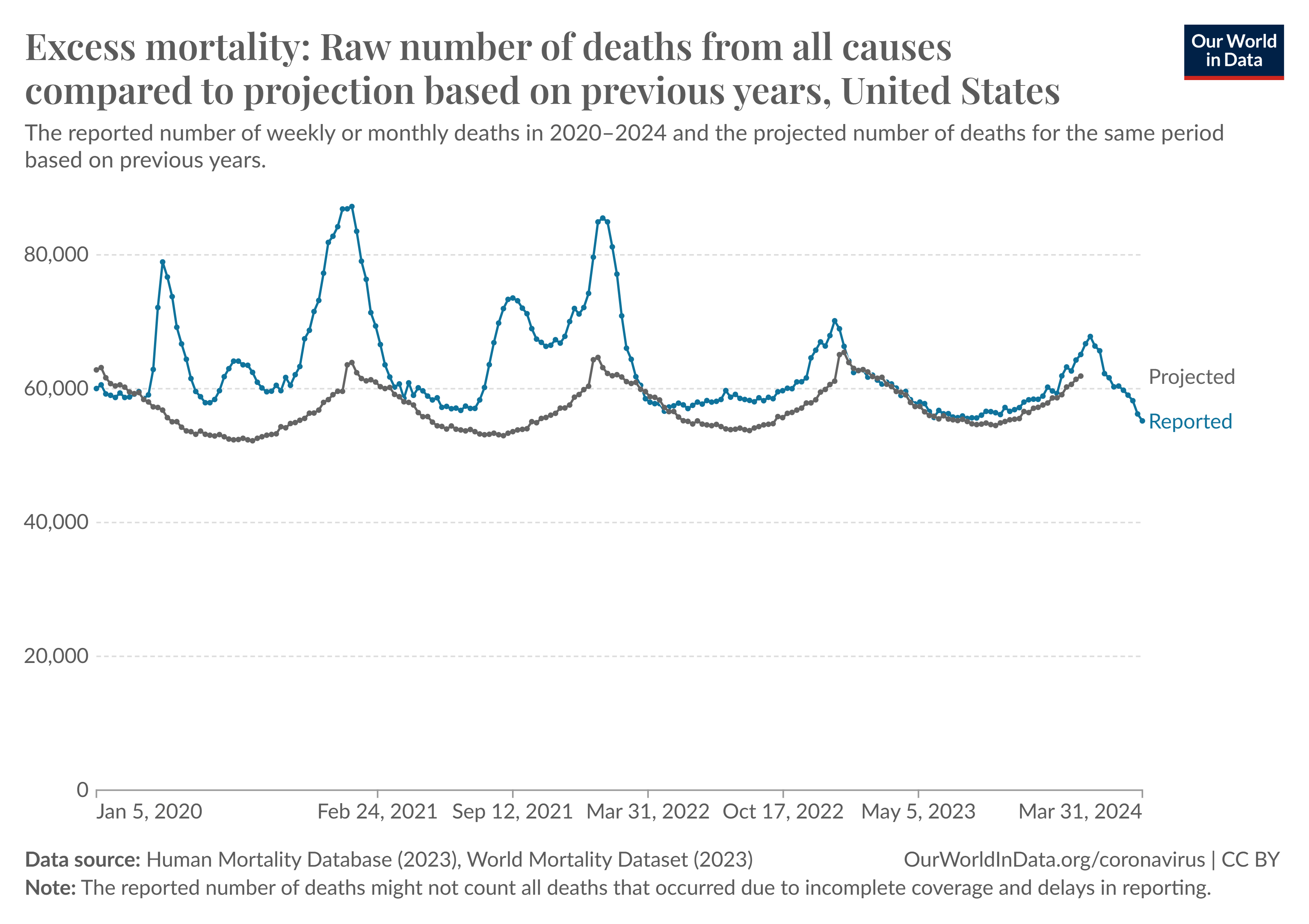
Figure 1 – Graph comparing numbers of deaths in the U.S. with projections based on previous years. From Our World in Data. Accessed 6 June 2024.
Figure 2 below shows how these trends in excess deaths in the U.S. closely overlap with confirmed COVID-19 deaths. This data is consistent with the view that COVID-19 was the direct cause of the vast majority of excess deaths.
Even in the periods where the COVID-19 confirmed deaths don’t account for nearly all of the excess deaths, the timings of these peaks indicate that the excess deaths were likely linked to waves of disease outbreaks. This could be, for instance, due to unrecognized COVID-19 deaths, overstretched health services, or people avoiding seeking urgent medical care[4,5].
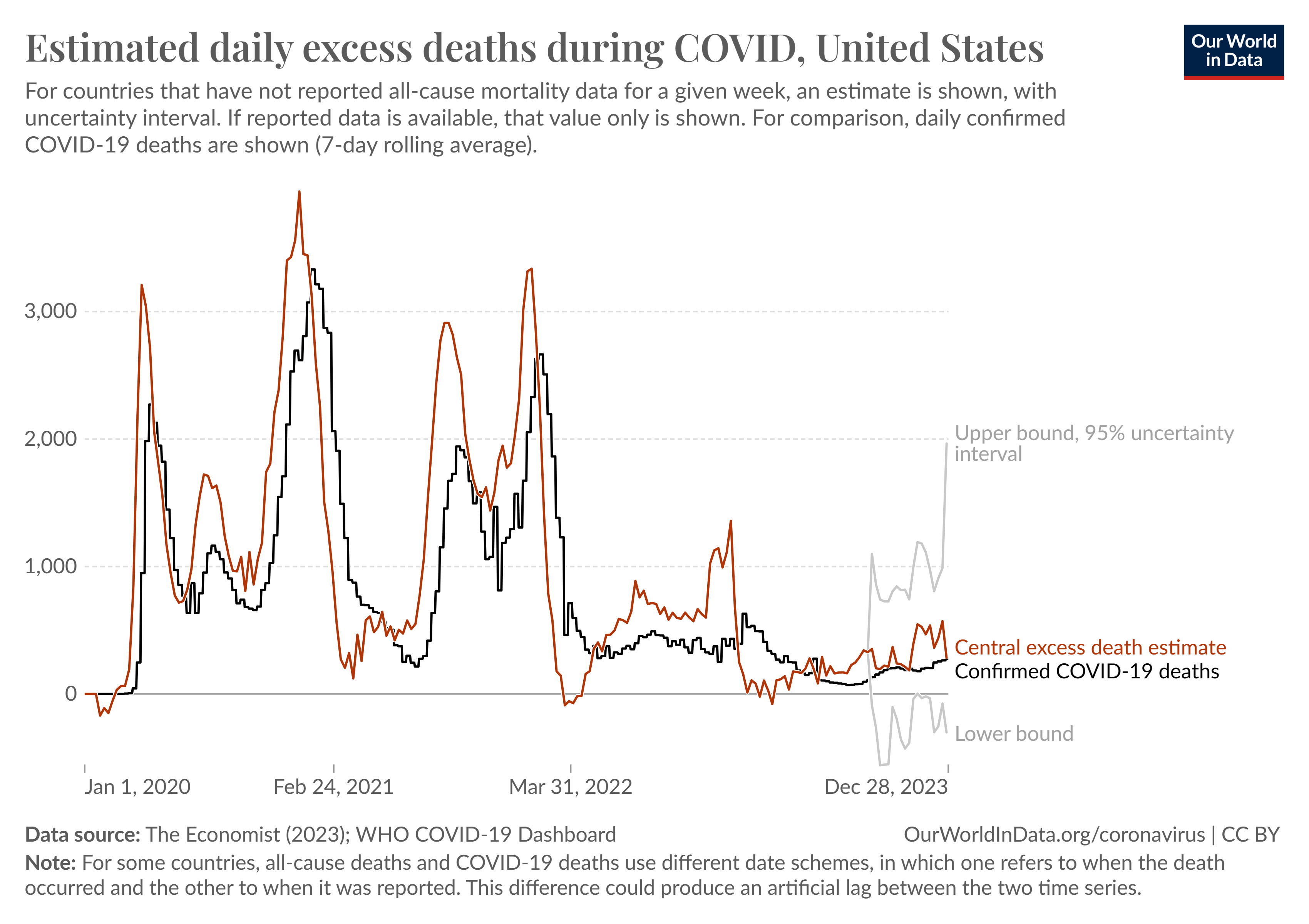
Figure 2 – Graph of confirmed COVID-19 deaths and excess deaths in the United States from 2020 to 2023. Taken from Our World in Data, using data from The Economist. Accessed 6 June 2024.
There also may be long-term health implications for patients after having COVID-19. Studies of U.S. veterans and the U.K. population showed a higher risk of cardiovascular problems after COVID-19[6-8]. This included stroke, heart inflammation and blood clotting disorders, as well as an increased risk of death, which may have been an important contributor to excess death figures.
The evidence shows that COVID-19 vaccines saved lives, reducing excess deaths
As explained in a previous Science Feedback review, studies have shown that higher vaccination rates correlate with lower excess mortality across countries and U.S. states[9,10]. This relationship can be seen in Figure 3 below.
While these correlations alone aren’t sufficient to claim that vaccines caused a lower number of excess deaths, this is precisely the opposite trend you would expect to see if vaccines were driving excess deaths, as claimed by the Telegraph.
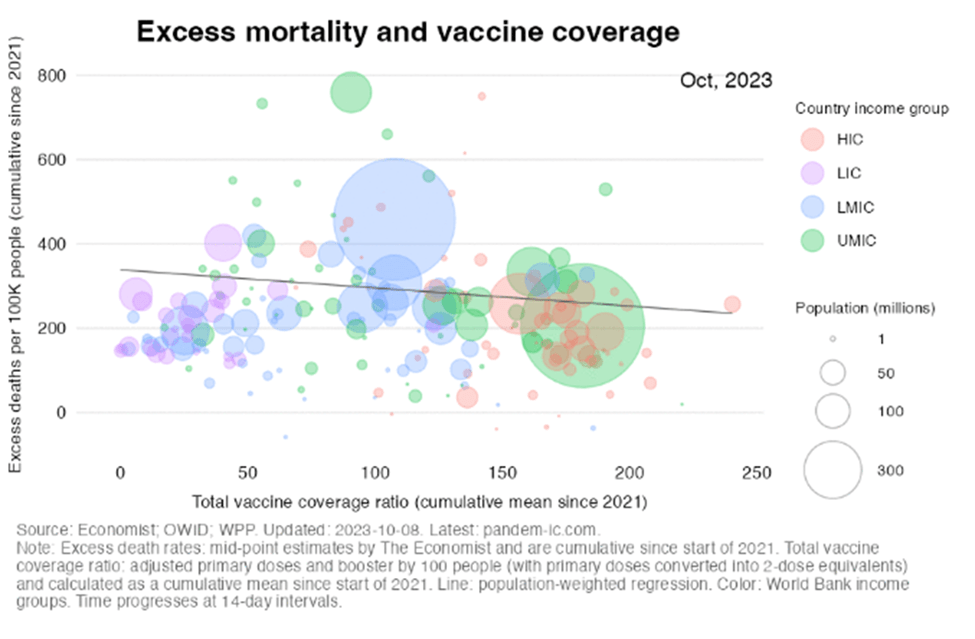
Figure 3 – Correlation of the cumulative excess mortality from January 2021 to October 2023 and the vaccine coverage by country. Excess mortality data was derived from The Economist’s excess mortality tracker. Vaccine coverage data was obtained from the site Our World in Data, which gathers data from health authorities across the world. Source: Phillipp Schellekens.
More detailed analysis by the World Health Organization (WHO) estimated that COVID-19 vaccines saved more than 1.4 million lives in Europe alone, according to a preprint study which has not yet been peer-reviewed[11]. This is more than the excess deaths that occurred in Europe in 2021-2022 based on calculations used in the study by Mostert et al. So, contrary to the Telegraph’s claim that the COVID-19 vaccines fueled excess deaths, it appears that the vaccines more than halved the potential excess deaths (had the vaccines not been available) during the pandemic.
Another analysis estimated that COVID-19 vaccines prevented over 14 million deaths worldwide from the first rollout on 8 December 2020 until 8 December 2021[12].
As explained in a previous Science Feedback review, rare cases of heart inflammation cannot explain the observed excess deaths. The mRNA COVID-19 vaccines have been linked to an increased risk of heart inflammation, known as myocarditis. This is thought to happen in 2.7 cases per 100,000 people, and most people quickly recover following treatment[13]. Myocarditis predominantly affects young men, a group that has a very low mortality rate—according to data from England, people aged 0 to 24 account for less than 1% of excess deaths. An extreme increase in the number of deaths among this group would be starkly present had myocarditis driven the observed excess deaths.
Conclusion
The available evidence shows that COVID-19 vaccines saved millions of lives. Although many countries experienced excess deaths up to 2022, this total would have been far higher without the vaccine rollout. The widespread disruptions and long-term health impacts caused by the pandemic are likely to have contributed to the lingering trend of excess deaths even after the risk from COVID-19 receded.
REFERENCES
- 1 – Mostert et al. (2024) Excess mortality across countries in the Western World since the COVID-19 pandemic: ‘Our World in Data’ estimates of January 2020 to December 2022. BMJ Public Health.
- 2 – Xu et al. (2021) COVID-19 Vaccination and Non–COVID-19 Mortality Risk — Seven Integrated Health Care Organizations, United States, December 14, 2020–July 31, 2021. Morbidity and Mortality Weekly Report.
- 3 – Ioannidis et al. (2023) Variability in excess deaths across countries with different vulnerability during 2020–2023. PNAS.
- 4 – Paglino et al. (2024) Excess natural-cause mortality in US counties and its association with reported COVID-19 deaths. PNAS.
- 5 – Lee et al. (2023) Direct and indirect mortality impacts of the COVID-19 pandemic in the United States, March 1, 2020 to January 1, 2022. eLife.
- 6 – Xie et al. (2022) Long-term cardiovascular outcomes of COVID-19. Nature Medicine.
- 7 – Yuk et al. (2023) Association of COVID-19 with short- and long-term risk of cardiovascular disease and mortality: a prospective cohort in UK Biobank. Cardiovascular Research.
- 8 – Raisi-Estabragh et al. (2022) Cardiovascular disease and mortality sequelae of COVID-19 in the UK Biobank. Heart.
- 9 – Bilinski et al. (2023) COVID-19 and Excess All-Cause Mortality in the US and 20 Comparison Countries, June 2021-March 2022. JAMA Network.
- 10 – Mendoza-Cano et al. (2023) Assessing the Influence of COVID-19 Vaccination Coverage on Excess Mortality across 178 Countries: A Cross-Sectional Study. Vaccines.
- 11 – The WHO European Respiratory Surveillance Network (2024) Estimated number of lives directly saved by COVID-19 vaccination programs in the WHO European Region, December 2020 to March 2023. MedRxiv. [Note: This is a preprint, which has not yet been peer-reviewed.]
- 12 – Watson et al. (2022) Global impact of the first year of COVID-19 vaccination: a mathematical modelling study. The Lancet Infectious Diseases.
- 13 – Barda et al. (2021) Safety of the BNT162b2 mRNA Covid-19 Vaccine in a Nationwide Setting. New England Journal of Medicine.