Earlier this month, Monica Bertagnolli, director of the NIH, issued a statement expressing support for Asian-American, Asian immigrant and Asian research colleagues.
According to the statement, the NIH is now working with universities and academic organisations to take steps to repair relations with Asian researchers, including research security training and the promotion of international scientific collaboration.
The vast majority of NIH cases involved researchers who received NIH-funding for suspected undisclosed links with Chinese institutions. Aside from termination of employment, some cases resulted in suspension of funding or criminal investigations.
Founded in the late 1880s and now part of the US Department of Health and Human Services, the NIH is the largest public funder of biomedical research in the world and is an important force behind America’s emergence as a world leader in life sciences innovation.
Wang Nianshuang, a principal scientist at US biotechnology company Regeneron Pharmaceuticals, said that researchers of Chinese descent accounted for a large proportion of scientists in the NIH and the broader US life sciences and biotechnology research community. Most research papers published in top journals today include researchers of Chinese descent.
17:30
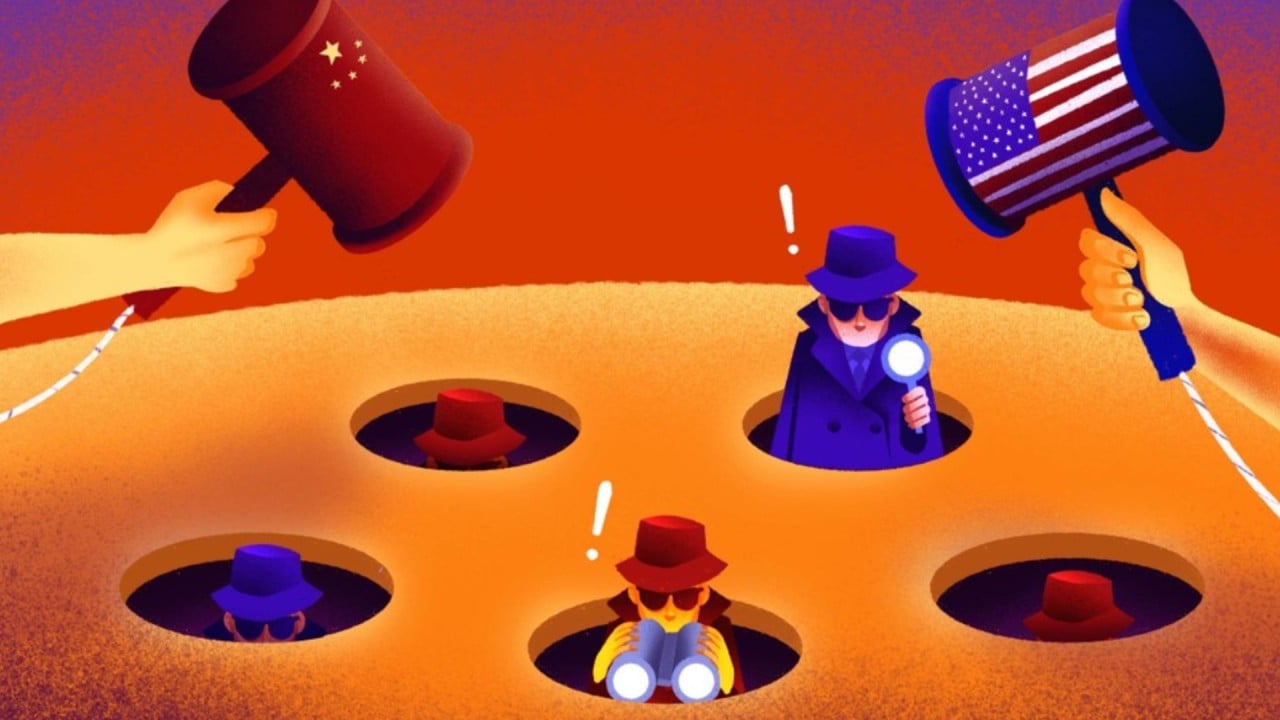
Why the US-China cold war is heating up in public
Why the US-China cold war is heating up in public
Wang, whose previous research on the coronavirus enabled the development of the two major mRNA vaccines, said that many researchers, including well-established senior scientists, left the US, sensing they were being targeted and bullied because of their race. Although the number of people actually investigated was relatively limited, the impact had rippled across many lives, he added.
The NIH was the first and the most frequent federal agency to conduct the investigations, according to a study published in April in the peer-reviewed journal PNAS by a group of political scientists with the University of California San Diego.
Amid the US-China push for dominance in science and technology, the professor said that the NIH’s investigations would “definitely” weaken the competitiveness of the US in life sciences research, a field in which China has become a fierce competitor.
For more than six decades, the US has been the prime destination for the world’s top researchers. There are 100,000 Chinese-born scientists in the US who make enormous contributions to America’s leadership in science.
“US science is perceived to be – and is – losing the race for global STEM leadership,” McNutt said, citing figures to demonstrate the shift in strength between the two countries. For example, China’s percentage of drug trials had risen to 28 per cent by 2021, from just 3 per cent in 2013, while the US share had declined.
As part of plans to reverse the trend, she called on the country to attract the best and brightest by reducing red tape for international students and lowering regulatory burdens on faculty members.