Benin’s military, which is fighting jihadists in the north of the country near the border with Burkina Faso and Niger, said in a statement that the equipment would “enable the units of the Beninese army to better respond to operational challenges on the ground in the fight against the terrorist threat”.
“This support from China is part of military cooperation between the two countries which is strengthening and diversifying every day,” it said.
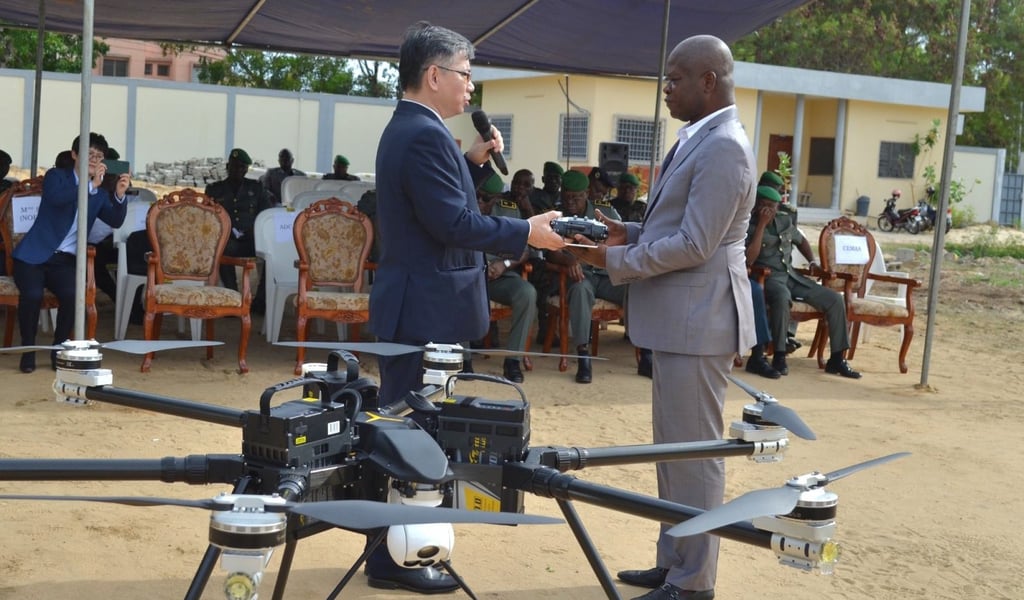
The donation comes about a year after China donated four Norinco PMR-50 drones to Benin to help it improve its security, as the West African nation faces a growing threat of terrorism.
Beijing has sought to boost military cooperation with African countries by donating or selling both lethal and non-lethal equipment, as well as providing training and financing infrastructure and aircraft.
Dr Ilaria Carrozza, a senior researcher at the Peace Research Institute Oslo, said China was using military donations mainly to pursue a strategy of economic alignment in Africa.
“Donating arms, training and equipment is viewed in Beijing as a way to foster mutually beneficial relations with African countries, and to promote economic and political exchanges in the long term,” Carrozza said.
“In the case of equipment that is, allegedly, being used to fight terrorism, this is also seen as an opportunity for boasting that China contributes to the provision of global public goods.”
China has in the recent past donated vehicles and engineering equipment to Kenya, while Zimbabwe last year received equipment worth US$28 million that included armoured vehicles, patrol boats, sniper rifles, machine guns and minibuses.
Nigeria and Sierra Leone have in the past few years received navy patrol boats from China, while Ghana early this year received rocket artillery and armoured vehicles from Chinese defence company Poly Technologies.
The report said China had provided military assistance to 47 African countries in the past two decades, with Zimbabwe and Angola being the top recipients of arms and training.
It said some of the security assistance provided by China appeared to be directly related to its economic ties with the recipient country, including with the aim of protecting Chinese interests and citizens.
For instance, Seychelles received transport aircraft and a patrol boat to be used for counter-piracy efforts, while Kenyan police were provided with training to protect a railway financed and built by Chinese companies.
Donations are just a small part of China’s military cooperation with African countries – it is now a major supplier of arms and weapons to the continent.
China sells every conceivable type of weapon to African nations, from small arms and light weapons to armed drones, heavy equipment such as armoured personnel carriers and tanks, naval ships, high-performance aircraft and missile systems.
From 2000 to 2022, China extended loans worth US$3 billion to eight African countries – Zambia, Ghana, Cameroon, Tanzania, Zimbabwe, Sudan, Angola and Namibia – to secure military equipment and improve military infrastructure for their armies, according to data compiled by Boston University’s Global Development Policy Centre.
Zambia borrowed the most in that period, including defence loans worth US$1.5 billion from China to buy military aircraft and build army housing and barracks. Ghana was also a top recipient of Chinese defence loans, receiving US$473.7 million between 2000 and 2012.
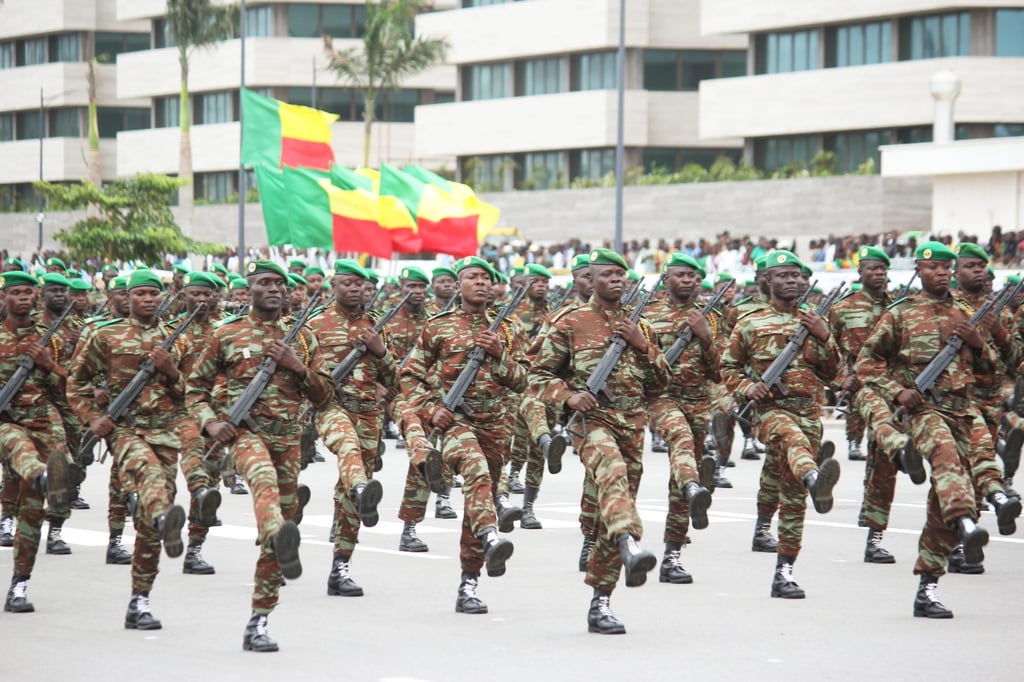
David Shinn, a China-Africa specialist and professor at George Washington University’s Elliott School of International Affairs, said Beijing earned the appreciation of African governments that bought or received donated arms.
“This is part of China’s strategy to build relations with the continent,” he said.
China and Russia remain the largest suppliers of military equipment to the continent, mostly through sales, which Shinn said had declined to sub-Saharan Africa in recent years. “China donates modest amounts of arms.”
He noted that while African nations welcomed the sale and donation of arms, they were likely to have little impact on curtailing the spread of terrorism.
“Only ending the root causes of terrorism will rein it in – not the provision of artillery howitzers,” he said.