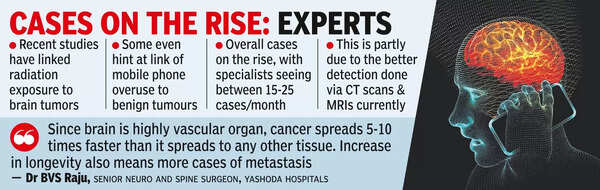
The numbers used to be less than five a decade ago. This is partly due to better detection rates due to more CT scans and MRIs being done and partly due to increase in incidence.
On World Brain Tumour Day (June 8) experts said awareness about tumours and their impact on patients is vital for research and support for those affected.
City-based doctors say that large number of cases of malignant brain tumors are actually found to be metastasis or secondary infection (cancer cells travelling to brain from elsewhere) due to more cases of overall cancers. “Increased lifespan after cancer is another reason. Since brain is a highly vascular organ, cancer spreads 5-10 times faster than it spreads to any other tissue. Increase in longevity of patients with cancer also means more cases of metastasis over a period of time,” said Dr BVS Raju, senior neuro and spine surgeon, Yashoda Hospitals, adding there is some understanding that benign tumours arising of the eighth cranial nerve could be due to high usage of mobile phones.
“Since these days mobile usage begins at an early age, radiation impact on the growing brain might have a positive correlation with brain tumours,” he said. Majority of the cases meanwhile reveal worsening headache, particularly on one side of the head accompanied by vomiting, blurring of vision and behavioural changes. “An increase in cases happens due to exposure to dangerous radiations like working in a nuclear power plant, high smoking exposure apart from genetic factors,” said Dr G Ranjith, consultant neurologist, Medicover Hospitals.
While almost all cases (benign and malignant) require a surgery, tumours seated in deep brain tissue — which come with the danger of causing permanent damage to important nerves affecting movement, vision, speech etc — are now being done with awake craniotomy (brain surgery when the patient is awake). “This is done to ensure minimal disability is caused due to surgery by giving stimulation to the patient during surgery and assessing whether any crucial nerve intended to be removed will cause disability,” said Dr Naveen Reddy, neurosurgeon RNC Hospital.
We also published the following articles recently
Brain tumors, whether cancerous or non-cancerous, present different risks. Malignant tumors are invasive, while benign tumors, though not cancerous, can still cause issues. Both types can affect intracranial pressure, neurological symptoms, and quality of life. Expert insights from Dr. Abhaya Kumar add value to understanding these conditions.
Brain health is crucial for optimal brain function, affecting decision-making, problem-solving, and emotional management. Aging brings changes, including brain tumor risks. Tumors, benign or malignant, can impact brain health, causing symptoms like headaches and vision changes. Conditions like stroke and depression also affect brain health.