Retrospective Ten years ago Microsoft absorbed the handset division of Nokia. The world’s biggest operating systems vendor was going mobile in a big way, and buying the erstwhile world leader in mobile phones to ensure its success.
It was Microsoft’s last push into the mobile market, and Nokia’s last grasp at the smartphone market – and it failed spectacularly.
Barely two years after it was announced, the whole thing fell apart and Microsoft wrote the whole thing off as a tax loss.
So what went so horribly wrong? It was a fatal combination of bad management, a market evolving in ways hidebound people didn’t predict, and some really (with a few superb exceptions) terrible products.
In 2007, Nokia was selling around half of the world’s mobile handsets. It had achieved this by getting into mobile early on, then maintaining a relentless engineering focus along with a sense of style. Nokia handsets were tough, reliable, and, above all, useful.
Nokia went all-in on SMS in the 1990s and built the first handset specifically designed to use it. At the time, one executive told this hack that they had learned SMS was going to be “a thing” by analyzing some unusual traffic. Specifically, they noticed there was a spike in European messaging late on Friday and Saturday nights – when people in nightclubs couldn’t talk on their phones.
Nokia was superb at engineering hardware, if sometimes a bit too obsessed. One Nokia engineer proudly showed me how one handset, if placed vertically, would wiggle across the table if you called it on vibrate mode. “It took us a week to work out how to do that,” he exclaimed proudly.
Nice kit, but coding calamities
But where Nokia failed was on the software side of things. For years it had run a basic OS that could make calls, handle some data, and allow a few games — like the legendary Snake.
Then at the end of the 1990s it created Symbian, the first smartphone OS, and enjoyed enormous initial success. Unfortunately, as so often happens in technology, the market evolved and Symbian was left behind.
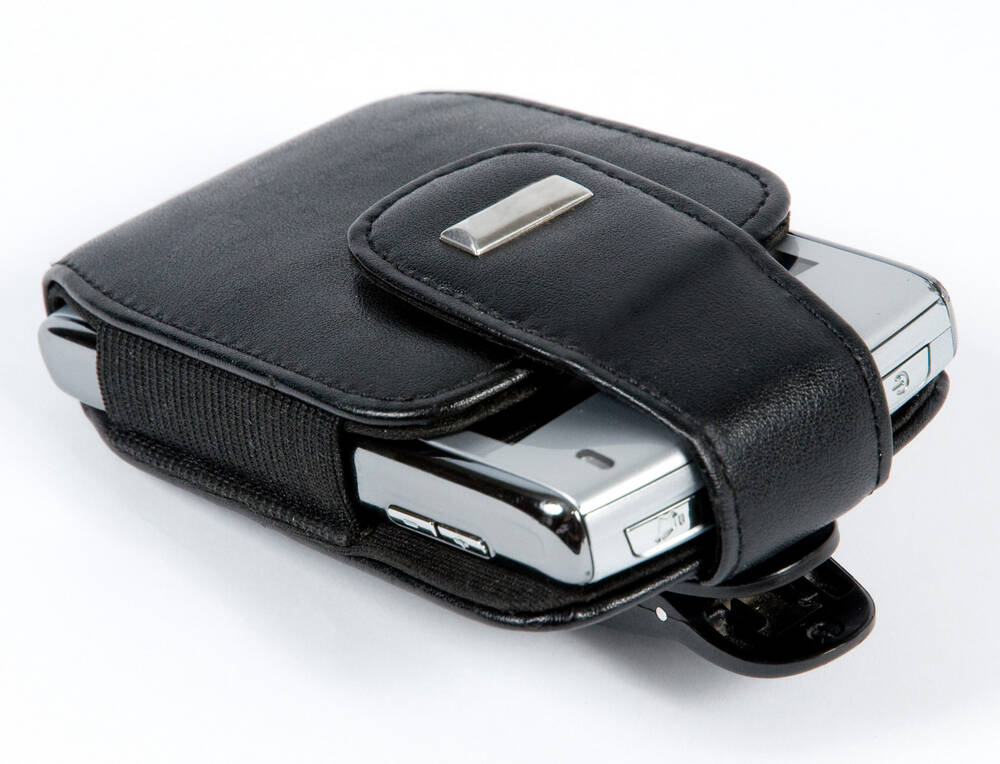
In 2002 Canadian startup Research in Motion launched a proper smartphone with a QWERTY keyboard (its BlackBerry two-way pager had existed since 1999 and already become a hit product) and before long you couldn’t attend a meeting without someone wearing one in a naff holster.
Nerd alert! – Click to enlarge.
Then in 2003 a group of engineers had an idea for a mobile phone operating system that was more flexible than Symbian or RIM and more app-focused. It was called Android – you may have heard of it.
Around the same time Steve Jobs started Project Purple to develop not only the exquisite iPhone hardware with Jony Ive, but also an operating system to run it. Initially Jobs wanted full control, and on launch in 2007 there were no third-party apps allowed on the handset. Today, it’s a multi-billion-dollar cash cow for Cupertino.
Meanwhile, Microsoft was lagging in mobile, in part because of Bill Gates’s suspicion that the platform might cannibalize sales from the desktop – a decision he later regretted. The Windows-maker had tried to get onto mobile devices in the 1990s with the terrible Windows CE – so bad it was often referred to as WinCE.
That OS was succeeded by Microsoft’s Pocket PC platform at the turn of the century, later rebranded as Windows Mobile. Microsoft did convince some vendors – notably HTC – to adopt the platform, and it was soon gaining a respectable market share. But users found it power hungry and difficult to use.
Like Nokia, Windows Mobile’s popularity peaked in 2007, then started to drop away. The iPhone was the tech item of choice for fashionistas, Blackberry was seen as essential for serious business, and Android – with Google as its new owner – was gaining traction.
Microsoft by that time had a new CEO in Steve Ballmer, who completely and famously failed to see the shifting sands in the mobile market. He dismissed the iPhone as a threat to what he thought was Windows Mobile’s unassailable market position, and was roundly mocked for it.
So the scene was set for a mobile standards war, and Steve Ballmer staked his professional pride on winning it. Microsoft recruited Nokia to help out.
Nokia soars … then stumbles
Nokia’s spectacular growth in the 1990s was largely the work of Jorma Ollila, who became CEO in 1992 and bet the business on communications.
When Ollila took the reins it was a bad time to be a Finnish CEO. A post-deregulation banking crisis and the collapse of the Soviet Union saw unemployment levels peak at around 17 percent. Nokia was in trouble – and its accounts were in the red.
Nokia had poured R&D efforts into GSM, making the biz a key player in the GSM mobile standards negotiations that allowed phones to operate across European networks. When the first telephone call using GSM was officially made in December 1991 by Finland’s then-prime minister Harri Holkeri, it was using Nokia kit – even though the Suomi nation hadn’t joined the EU yet.
That was of course the first public GSM call. Engineer Pekka Lonka has since claimed that he made the first test call a few hours before the press event, which seems plausible – you’re not going to arrange an international press event without someone with the skills checking first.
Nokia was well positioned to sell not only the networking hardware but also the phones.
Nokia went cheap and cheerful for mass-market appeal, but made its handsets reliable and with a long battery life. You could go a week without charging a Nokia 3310. Given charging the phone has become a daily – or hourly – event, we can only look back with nostalgia.
The strategy worked – big style. Cheap colorful phones started selling like iced water at a summer rave, and with Nokia providing both the front and back end it was time to make a killing. By 2000, Nokia’s share of the Finnish GDP [PDF] was 3.6 percent, and it accounted for 50 percent of the country’s R&D spending.
It also created some terrible phones too – such as the infamous Nokia 7280, aka the lipstick phone. A form factor so dumb that it was seldom seen outside of adverts.
But what looked like a mighty Finnish pine tree had a rotten core. Yes, Nokia phones and Symbian were popular – particularly in so-called developing nations – but then things started to get dicey.
As has happened to so many successful businesses, Nokia got lazy and competitors ate its lunch. When the iPhone came out in 2007 there was no reaction, and Android’s increasing pulling power was ignored. Then-CEO Olli-Pekka Kallasvuo, appointed in 2005, was a legal and finance guy, and oversaw a precipitous drop in Nokia’s market share.
To be fair, Kallasvuo did try to build a software environment for Nokia phones. The largely open source Maemo operating system failed to take off, however, and changes were clearly needed. Android would have been a smart choice since iOS was unavailable, but the board decided to go with Microsoft, and Stephen Elop.
We need to talk about Elop
In your list of top ten most famous Canadians (in the tech field at least), Stephen Elop must rank highly – if only as the man who decided to destroy Nokia to save it.
Elop was someone Nokia thought they knew. At Microsoft, he’d been working to port Microsoft apps to Symbian, was an apparently accomplished man, and a friend of Bill Gates. When the Nokia CEO slot came up in 2010, they gave it to him rather than a local – putting a non-Finn in the hot seat for the first time in Nokia’s history.
His appointment was a slap in the face for Anssi Vanjoki, the then-director of Nokia’s mobile phones division and expected heir to the throne. Vanjoki wasn’t a fan of the move to Microsoft and sold his Nokia shares shortly after leaving the firm. He declined comment on the matter to The Register.
On his first day as chief, Elop came out fighting for his cause. In the infamous Burning Platforms memo to Nokia staff, Elop told them a measure of the truth: Nokia was outgunned on software, failing to compete with competitors on hardware, and was in deep trouble.
“The first iPhone shipped in 2007, and we still don’t have a product that is close to their experience. Android came on the scene just over two years ago, and this week they took our leadership position in smartphone volumes. Unbelievable,” he told staff. It didn’t go down well.
On the software side he wasn’t wrong. Symbian was a bastard to code for – Android was much easier to use, and even iOS was bearable given that its users had cash to burn. Unfortunately, his solution to the problem was Windows Phone. So he killed Maemo and went all in on his former employer.
The rationale for the takeover was clear: Symbian has a great market share, so shift all those users to Windows and we’ll own the mobile OS market.
It didn’t work.
By 2010 Android had gobbled up the low-end market, iOS was making the big bucks with the cash-rich, and BlackBerry was holding onto its business market like a wolf with rabies (and plenty of patents).
Elop was right, but his solution wasn’t. Adopting Microsoft Windows Phone 7 wasn’t like joining the big broad Windows tent. Windows Mobile’s market share was tiny, and no one wanted to code for it – the real money was in Android and iOS.
Nokia produced some amazing hardware – that engineering talent hadn’t gone to waste. The Lumia range of mobile phones set the standard for handheld photography in the mid-Noughties, even if this meant unaesthetic choices on design.
They were great phones, but were designed around possibly Redmond’s worst OS since ME – Phone 8. Designed for tablets and, one suspects, by marketing departments, it was a disaster. To add insult to injury, when Microsoft “upgraded” to Windows Phone 8 it dumped the old WinCE kernel for one based on NT – meaning that apps developed for the earlier operating system needed to be rebuilt.
Doubling down on an off-suit two and seven
Under Elop’s leadership, a closer working relationship with Microsoft was a given – but in 2013 Redmond announced it was going the whole hog and buying Nokia’s handset business outright for $7.2 billion. The deal was done in April 2014, a decade ago from today.
Microsoft also got a ten-year license on Nokia’s patents and the option to renew in perpetuity.
It also got Elop back, as executive vice president of the Microsoft Devices Group. That meant stepping down as CEO of Nokia, for which he trousered an €18.8 million bonus package – a payoff the Finnish prime minister at the time called “outrageous.”
Nokia retained its networking business in Finland. It purchased Siemens’ half of the Nokia Siemens Networks joint venture and renamed in Nokia Networks. The Nokia board rolled the dice again on hiring another non-Suomi manager, Rajeev Suri, and this time hit a double D20 in D&D terms.
When Ballmer stepped down from the helm at Microsoft in 2014 – shortly before the Nokia deal completion – he left a hot mess to deal with. His plan had been to develop the mobile operating system in conjunction with Windows 10, and Windows Mobile 10 was supposed to be a part of a unified code environment.
While Windows 10 on the desktop wasn’t a bad operating system, Windows Mobile 10 really was. The promised synergy just didn’t happen – it was power-hungry, clunky, and about as popular as a rattlesnake in a piñata.
It was this mess that Satya Nadella faced when he took over the reins. Nadella was never very keen on the phone platform and spent more time in press conferences talking about cricket or the cloud than Microsoft’s mobile ambitions. It was clear to all that this really wasn’t working.
Elop was laid off by Redmond a year later.
And it all worked out unhappily ever after
It was clear that Windows Mobile wasn’t going to work. Android and iOS were drinking Microsoft’s milkshake, and Redmond realized the game was up.
Microsoft started shedding mobile jobs – both in Finland and Redmond. While mobile was still publicly touted as the way forward for Microsoft with Ballmer gone, the impetus wasn’t there and support for the mobile OS shriveled. In 2015 Microsoft declared it was writing off $7.6 billion on the Phone Hardware division as “goodwill and asset impairment charges” – $400 million more than it had originally paid for the Finnish firm.
Nokia bought European networking giant Alcatel-Lucent in a €15.6 billion ($16.7 billion) deal in 2015. Around the same time, Suri announced a move into tablets, since it had a non-compete agreement with Microsoft on mobiles.
Meanwhile a bunch of former Nokia execs who’d fled Elop and Microsoft had started a mobile biz of their own: HMD. It was Finnish, but outsourced production to Foxconn in China, and was planning to make cheapish Android devices.
In 2016 Microsoft sold its mobile hardware arm to HMD for an undisclosed – but probably not large – sum. Nadella clearly wanted out of the whole business and the Finnish startup concentrated on selling good-enough Android smartphones to Nokia’s traditional cheap markets.
The phones weren’t very good, and the biz branched out into defense, medicine and, bizarrely, a so-called “Smart hairbrush.” For the Finnish pioneer that once dominated the mobile sphere, it was a bad moment.
Meanwhile Nokia concentrated on its networking business and in 2016 demoed the first proper 5G backend network. It has since become a leader in building 5G networks around the world and even has a contract with NASA to build a 4G network for the Moon – when or if Uncle Sam ever gets back there.
Microsoft never got its taste back for mobile, recognizing that battle had been lost. While Redmond is now on a firm footing in its core businesses, I’ve heard more than a few engineers in Seattle and Finland talk long and hard about what could have been, if just a few more people had had their heads screwed on right. ®