All sides in the Gulf war are at risk of overplaying their hands
IN WAR, WHAT at first seems logical can, in hindsight, prove to have been foolhardy. Having repelled its Iraqi invaders in 1982, Iran spurned a ceasefire and pushed ahead with a counter-invasion. America overthrew Saddam Hussein within weeks in 2003, only to bog itself down in nearly a decade of counter-insurgency. Both had their reasons: Iran wanted to topple the Iraqi government; America wanted to install a friendly regime. Both overplayed their hands and wound up in long, inconclusive wars of attrition.
Iran has effectively kept the Strait of Hormuz closed, amid the US-Israeli conflict with Iran, (REUTERS/ Representative)
Now in its fifth week, the third Gulf war has already gone on longer than Donald Trump predicted at the start. America and Iran have exchanged proposals for a ceasefire, but their positions are far apart. Almost no one in the region is optimistic that their indirect talks will lead to a deal. Some are now talking of America deploying thousands of troops on the ground to seize Iranian territory; the Pentagon is reported to be preparing for weeks of ground operations. Further weeks of fighting seem likely—which would suit Israel, the third party to this war.
Once again, each side has its reasons for continuing. The risk is that they will overreach in turn. Iran may miss its best opportunity to end the war on favourable terms. Mr Trump may embroil himself in the sort of prolonged conflict he once railed against. And even as they fight alongside each other, Israel may cause deep damage to its most important relationship: the one with America.
In Iran, the regime now reckons it has the upper hand. It has endured a month of war and kept up a steady (if diminished) pace of missile-and-drone attacks on Israel and the Arab Gulf states. It has already inflicted enormous damage on the global economy. More pain is coming: Mr Trump may have talked down oil prices last week by exaggerating his progress towards a deal, but reality—a shortfall of some 10m barrels per day—is creeping back in. A barrel of Brent crude now fetches more than $112.
Meanwhile the damage to Iran, though extensive, is still mostly limited to military and nuclear targets. The regime even continues to export oil (and in some cases, it charges a premium over Brent).
This should be Iran’s moment of maximal leverage to try and end the conflict. It could offer to relinquish its control of the Strait of Hormuz in exchange for sanctions relief, throw in a few other modest concessions and promise to discuss the rest of America’s demands in the future, knowing that Mr Trump’s attention span is limited and such talks may never happen. That would be an imperfect deal for Iran—but it would be far better for the regime than for Mr Trump.
Yet the Islamic Republic seems unwilling to make such a deal. Iran has been attacked twice over the past year while negotiating with America, which puts its surviving leaders in a mood both vengeful and suspicious. They want not only to end this war but to deter another one, and they reckon further economic chaos might help to achieve the latter goal. Some officials hope to levy tolls on those using Hormuz, charging fees to vessels that pass through the strait. They also insist on terms that Mr Trump cannot agree to, such as closing American bases in the region and paying reparations for the war.
Should the war continue, though, two developments are likely. First, it will get harder for Mr Trump to declare victory. The closure of Hormuz is already a political embarrassment at home, and it is hardening the positions of key allies in the Gulf, particularly Saudi Arabia and the United Arab Emirates (UAE). If it continues for a few more weeks, selling a half-baked deal as a success may prove beyond even Mr Trump’s powers of persuasion.
Second, the damage to Iran will mount. On Friday Israel bombed large steel plants in the country, at least one of which subsequently halted production. The impact of a prolonged shutdown would be profound. Iron and steel are among Iran’s main non-oil exports, with revenue of almost $7bn a year—a vital source of hard currency, since oil exports have been hobbled by American sanctions. The plants also supply a range of domestic industries, from cars to construction.
For now, America is holding Israel back from additional such attacks, but it will not impose restraint forever. Iran’s control of Hormuz may thus be a wasting asset: if the regime does not trade it for a ceasefire, it will end up inviting further, more destructive conflict—which is likely to include a ground invasion.
The Pentagon has already dispatched around 7,000 marines and paratroopers to the region and may deploy another 10,000 troops. They may attempt to capture islands at the mouth of the strait, such as Abu Musa and the Tunbs, which are disputed between Iran and the UAE. A few officials in the Gulf are also urging America to impose its own blockade on the strait to curtail Iran’s oil exports (though that would probably have the effect of pushing up global oil prices further).
Such steps may not be enough for a president fond of theatrics (Mr Trump is said to watch a daily highlight reel of things going boom in Iran as part of his intelligence briefing). He might be tempted towards something more spectacular: seizing Kharg Island, the site of Iran’s main oil-export terminal, or dispatching commandos to secure Iran’s stash of highly enriched uranium. Both would be risky and operationally complex.
Whichever option Mr Trump chooses, his administration hopes it will be a knockout blow: either it will force Iran to reopen the strait, or it will give the president a chance to declare victory. It may do neither. If America seizes islands only for Iran to remain unbowed, its armed forces will have to hold them. Should American troops suffer heavy casualties, Mr Trump may feel compelled to send more. Far from ending the war, a ground invasion may suck America further in.
That in turn will present risks for Binyamin Netanyahu, the Israeli prime minister, and for Israel as a whole. The politician hopes the war will help him win a legislative election later this year. A long conflict may hurt him. Much of the country is still under restrictions that prevent businesses and schools from operating normally which the finance ministry estimates are costing more than $1bn (0.2% of GDP) a week. Public support for the war, though high, is already softening. Half of Jewish Israelis say they strongly support it, down from 74% at the beginning of March, according to the Israel Democracy Institute, a think-tank (Arab Israelis are overwhelmingly opposed).
A bigger worry for Israel is what will happen to its standing in America, which has already plummeted after two years of scorched-earth conflict in Gaza. A Gallup poll released just before the attack on Iran found that, for the first time, more Americans were sympathetic to the Palestinians (41%) than to Israel (36%). Though Republicans are still staunchly pro-Israel, a vocal minority within the party argues that the Jewish state has too much influence over American foreign policy. In the latest Economist/YouGov survey, 55% of Americans said Israel would benefit from the war in Iran; just 30% thought America would do so.
Imagine, then, that the war drags on for months. Scores of American troops are killed in combat. Inflation soars. A wounded Trump administration accuses Mr Netanyahu of leading it into a quagmire. The midterms in November become a referendum on America’s relationship with Israel. None of this is entirely far-fetched (indeed, the blame game has already begun). Each side thinks it has something to gain from continuing the war. In the end, though, the question may be which has the most to lose.
BEIJING, CHINA – MAY 14: Nvidia CEO Jensen Huang (C) gestures as he prepares to depart following a welcome ceremony at the Great Hall of the People on May 14, 2026 in Beijing, China. President Trump is meeting with President Xi Jinping in Beijing to address the Iran conflict, trade imbalances, and the Taiwan situation
There’s still plenty to play for across Europe as we head into the final matches of the club season. Here are all the title races, Champions League fights, and relegation battles left to be decided in the top leagues this month. This story will be updated until the end of the campaign. 👉 Jump to:EPL
Manchester United have opened talks with Michael Carrick over continuing as head coach beyond the end of the season. It is understood that, even though there is still much to complete in legal and contractual issues, an agreement could be reached before United’s game against Nottingham Forest on Sunday. The club’s hierarchy, director of football
Today I finally ran an experiment I’ve wanted to try for a long time. If you’re a professional barista—or you run a busy café—this may save you some time. Most coffee shops use 1–1.5 gallon batch brewers (Bunn, Curtis, Fetco, etc.). When I opened Short Sleeves Coffee, I intentionally avoided brewing full 1-gallon batches. I
Key Points The broader stock market is heavily dependent on a handful of stocks. Today’s leading companies have faster growth rates and higher margins than former market leaders. S&P 500 index funds don’t offer as much diversification as they used to. 10 stocks we like better than Nvidia › Will AI create the world’s first
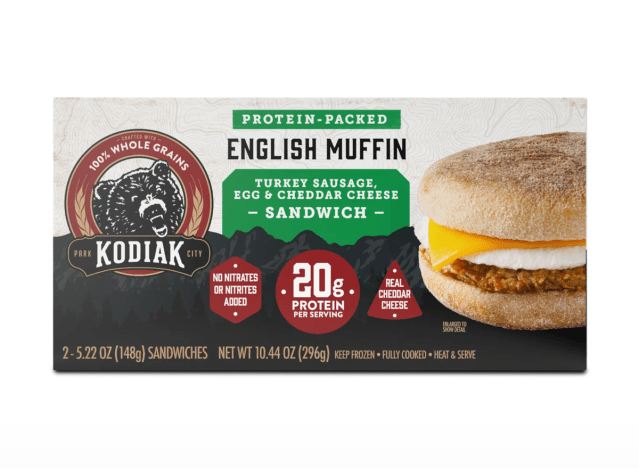
Chef-approved frozen breakfasts with more protein and better ingredients. Eating a healthy breakfast every morning is a great way to start the day, but most people don’t have time to cook. Whether you’re rushing out the door in the morning for work, taking the kids to school or both, there’s usually not much time in
By Carolyn Jones, CalMatters This story was originally published by CalMatters. Sign up for their newsletters. Until last month, California was poised to join nearly a dozen other states that ban cell phones in K-12 schools. But under pressure from school boards and administrators, lawmakers scaled back a bill that would have required such a
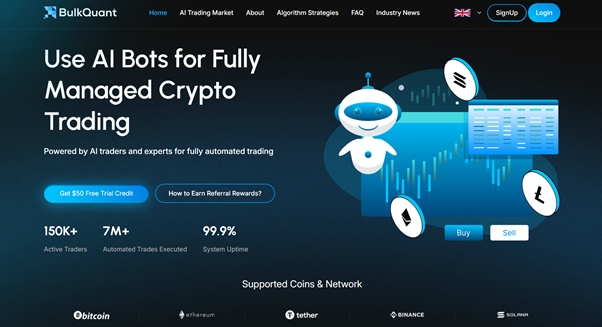
London, United Kingdom, May 15, 2026 (GLOBE NEWSWIRE) — BulkQuant has officially launched its AI trading bot platform designed for crypto, forex, and stock market traders seeking a simpler way to automate trading strategies across multiple financial markets. The platform combines AI-powered quantitative analysis, automated trade execution, portfolio monitoring, and adaptive risk management into a
The International Monetary Fund (IMF) has lauded the resilience of Hong Kong’s economy, noting a sustained recovery despite economic activity having yet to return to pre-Covid levels, while warning of downside risks stemming from escalating geopolitical tensions. It also urged Hong Kong to pursue medium-term financial reforms, including the introduction of a goods and services
For the past year, the Smithsonian Institution has found itself in the awkward position of telling the nation’s story while being supported in part by a government that wants to narrow how that story is told. In December, the White House threatened to revoke funding to the institution if it did not hand over a
A follow-up to Daredevil: Born Again Season 2 on Disney+ has become a massive streaming success within days of its launch. The Punisher: One Last Kill has quickly climbed to the top of multiple charts, beating out other titles on the platform. The MCU television special follows the gun-toting vigilante, who finds himself targeted by
The market has been on a roll lately, with the S&P 500 (SNPINDEX: ^GSPC) setting new highs throughout May. If you think you missed your opportunity when the market bottomed in late March, don’t fret. The market hitting new all-time highs is not particularly rare and should not change your investment strategy. And if you
The Hong Kong government’s first land sale in the current financial year has drawn six bids, according to the Development Bureau, including those from the city’s largest developers, suggesting a more confident outlook for the residential property market. At the close of tender for Tung Chung Town Lot No 54 at Area 106A on Friday
Ryan O’Hanlon Close Ryan O’Hanlon ESPN.com writer Ryan O’Hanlon is a staff writer for ESPN.com. He’s also the author of “Net Gains: Inside the Beautiful Game’s Analytics Revolution.” and Bill Connelly Close Bill Connelly ESPN Staff Writer Bill Connelly is a writer for ESPN. He covers college football, soccer and tennis. He has been at
Gabriel Gudmundsson could return for Leeds after a two-match absence with a thigh injury. Pascal Struijk is a doubt after hobbling off during Monday’s 1‑1 draw at Spurs. Full Leeds’ team news will be provided by the manager, Daniel Farke, in his press conference later on Friday. Kaoru Mitoma is set to miss the final
IE 11 is not supported. For an optimal experience visit our site on another browser. Trump Wraps China Summit With Xi Jinping: What Are the Results? 05:41 Xi gives Trump rare tour of secret garden at heart of Chinese government 01:04 Now Playing Trump departs China after two-day summit 01:01 UP NEXT Special Report: Trump
A Hong Kong property developer has been sued for HK$130 million (US$16.6 million) over allegedly breaching guarantor obligations in two bond subscription agreements, becoming the latest lawsuit to implicate the embattled company and following its founder’s sudden death earlier this week. Lofter Group, known for its urban renewal projects across the city’s core districts, and
This report is from this week’s The Tech Download newsletter. Like what you see? You can subscribe here. One look at the roster of U.S. execs that cozied up to U.S. President Donald Trump on the 20+ hours flight from Alaska to China on Wednesday and you get a sense of the American delegation’s key focus
Cerebras, an AI chipmaker, saw its shares nearly double on Nasdaq, closing up 70% with a $95B market cap. Cerebras’s powerful chips are key in the US-China AI tech race. Chris Buskirk, co-founder and chief investment officer of 1789 Capital, a key Cerebras investor, says the company’s IPO is geopolitically significant. On Thursday, shares of
The Google Fitbit Air is very much the talk of the fitness tracking town right now, not only because it’s the first new Fitbit device that we’ve had in years, but it’s also one of the first big brands to go head-to-head with the established Whoop Strap (if you don’t count the Polar Loop and