If you have a baby in the UK or move there with young children, then the cost and availability of childcare will be at the forefront of your mind. Most parents of dependent children in the UK work either full- or part-time, which means that unless you have retired relatives nearby who are willing to help with childcare, you will probably need to weigh up your local options.
To help you learn all about childcare in the UK, this article provides the following information:
Childcare in the UK
There are a variety of different types of childcare available in the UK. These include pre-school nurseries and crèches, childminders, after-school clubs, private nannies, and live-in au pairs. However, the availability and affordability of these can vary considerably depending on where you live.
Compared to some European countries, state-provided childcare in the UK is relatively low. In fact, the UK spends around 0.6% of GDP on early childhood education and care compared to the 0.8% OECD average. Although some Sure Start Children’s Centres still provide some state-funded childcare, most nurseries and childminding services are private. And while the government provides subsidies such as free hours and childcare vouchers to offset some of the costs, many parents continue to report that childcare in the UK has become unaffordable.
There were 72,044 childcare providers in England in 2020. In addition to private and public providers, you can also find voluntary and community organizations that offer free supplementary childcare in some areas. A small number of employers also offer on-site crèche facilities.
Childcare in the UK is available from the beginning of the child’s life. Mothers of newborns can take up to 52 weeks of maternity leave, although statutory maternity pay only covers the first 39 weeks. Paternity leave can be either one or two weeks. Once parental leave is over, all employees have a legal right to request flexible working arrangements that fit their childcare needs.
The Department for Education is the central UK government body responsible for childcare in the UK. Notably, the devolved governments of Scotland, Wales, and Northern Ireland operate slightly different systems. However, this article will focus on the situation in England.
Who can access childcare in the UK?
Anyone with dependent children can access childcare in the UK. However, to access state childcare subsidies such as free hours or vouchers, you will usually have to be a UK citizen, a permanent resident, or hold a UK visa that allows you to access public funds. But if you don’t have access to public funding and can’t afford to pay for childcare, you can search for free childcare options in your local area.
When it comes to registering your child with a nursery or preschool facility, there are no legal requirements concerning vaccinations. That said, parents are encouraged to enroll their children in the program of free NHS vaccinations for children.
Preschool and daycare
There are a number of different daycare options in the UK for children up to the age of five. Which one(s) you use depends on your preferences, availability in your area, and your child’s age. Importantly, providers of early years care should be registered with Ofsted in England, Care Inspectorate in Scotland, or CIW in Wales.
Day nurseries
Day nurseries provide childcare in the UK for children aged between naught and five years. Most providers are in the private sector but you can also find public and non-profit nurseries. Some workplaces also offer day nursery care. Regardless of the provider, you will usually need to pay for daycare, although you may be able to get some of it subsidized.

Day nurseries are open from Monday to Friday during normal work hours. Some open as early as 07:00 and close as late as 18:00. They typically follow an early years curriculum that mixes play with some developmental learning. Many also provide meals. Sizes vary from small facilities taking 15 to 20 children to large organizations that can accommodate more than 200 places. Children will normally be split according to age.
Preschools and nursery schools
Preschools and nursery schools primarily cater to children aged from two or three years up to five. They offer slightly more structured learning in classroom-based sessions and usually employ at least one qualified teacher.
Preschools and nursery schools are often linked to a specific primary school and may even be based within the school’s facilities. However, the school usually contracts the running of the nursery to another provider which can be from the private, public, or voluntary sector. These facilities are typically open from Monday to Friday, from 08:00 to 17:00, but are often closed during the school holidays.
Sure Start Children’s Centres
The Sure Start program set up Children’s Centres in the late 1990s as part of a government initiative to ensure that every family has access to free childcare. However, many have since closed or have become private nurseries. That said, you can still find children’s centers in many areas that provide a range of services for families and children under five years old.
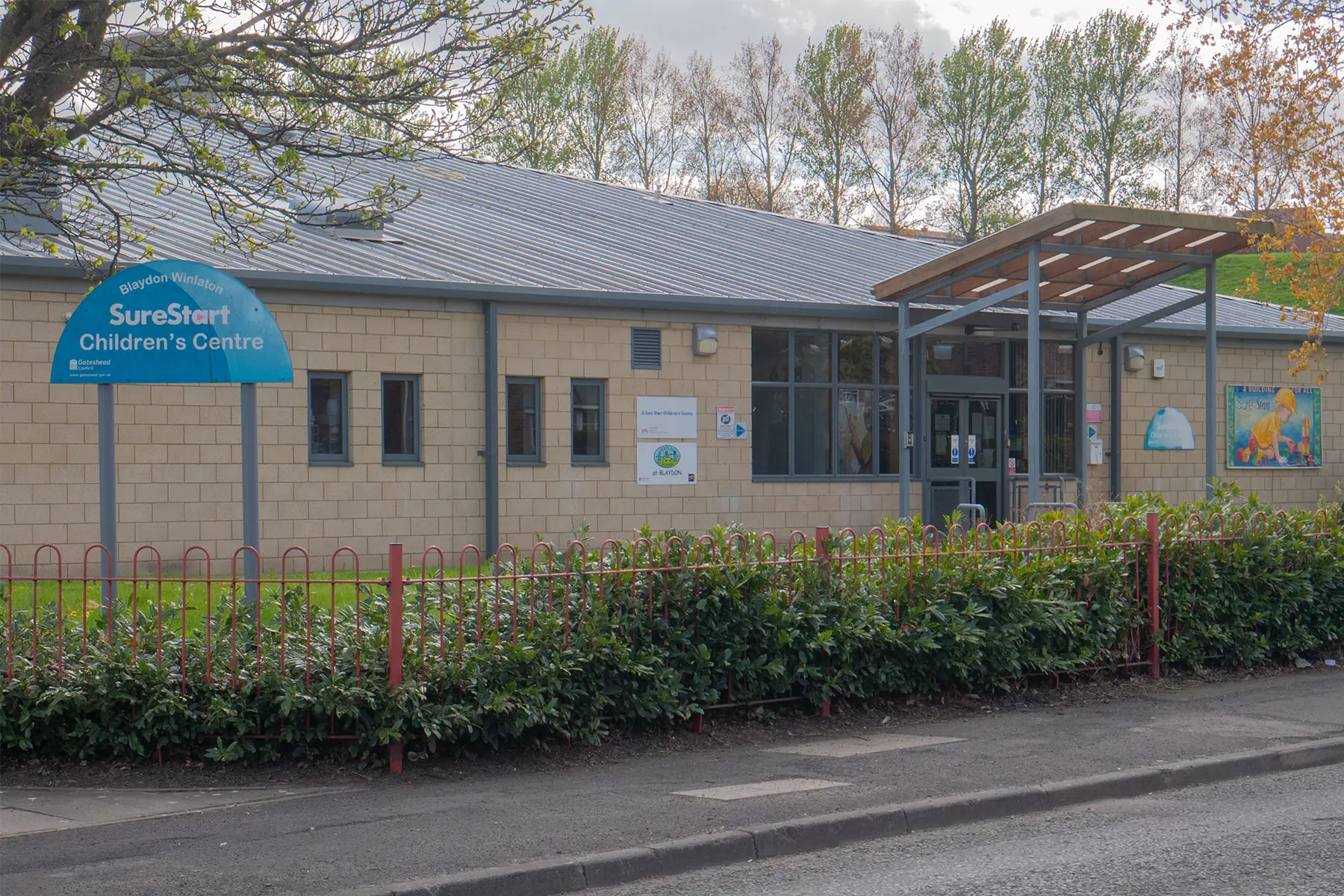
Most centers provide individual sessions and drop-in services, advice, and support rather than full daycare. However, some facilities do still operate as nurseries. Other services you are likely to find include parenting courses, child health services, and breastfeeding support. Opening hours vary but can be from 08:00 to 18:00.
Playgroups
These are usually more informal sessions for children aged two to five. Sessions typically last between two and four hours in either the morning or afternoon. They are smaller than nursery classes and offer play-based activities for children and a shorter respite for parents. While some private playgroups charge a fee per session (typically £5 to £20), there are also free voluntary sector groups that are often run out of community centers or religious buildings and are largely staffed by volunteers.
Crèches
These provide occasional time-limited daycare and are typically based within certain premises; for example, leisure centers or workspaces. They are usually staffed by qualified crèche workers and parents use them while accessing services or facilities within the premises where they are located.
International childcare in the UK
If you are planning to send your child to a fee-paying international school in the UK, you may find that they provide preschool nursery facilities for children aged two to three. These are usually more expensive than standard daycare centers in the UK, but provide the advantage of high-quality teaching in a globalized setting. They can also help make your child’s transition from nursery to primary school easier.
Childminders
Childminders are another childcare option in the UK. They are self-employed professionals who look after children in their own homes. As of 2019, there were 39,000 registered childminders in the country.
Childminders can provide daycare for preschool-age children as well as out-of-hours care for school-age children. However, they must be registered with Ofsted in England, Care International in Scotland, or CIW in Wales. They also need to complete certain training such as pediatric first aid, safeguarding, and child protection. And because they are self-employed, they should also have public liability insurance.

One advantage to employing a childminder is that they are often a more flexible option than using nurseries or pre-schools. For instance, some childminders offer their services in the evenings or at the weekends. You will typically sign a childcare agreement with a childminder that details hours, pay rates, what the childminder will provide, and general terms and conditions. Childminders will often provide meals and may offer a structured activity timetable based on an early years curriculum.
You can search for registered childminders on the UK government website or on childcare.co.uk.
Nannies in the UK
Nannies are another flexible option. They provide childcare in the parent’s home and sometimes live with the family. If you take on a nanny, you will be their employer and will be responsible for arranging their tax and National Insurance (NI) payments. They will provide you with childcare for agreed hours and will often also provide additional services such as washing children’s clothes and bed linen and putting children to bed at night.
Notably, nannies do not have to register with Ofsted, although they can do so voluntarily. Therefore, it is up to the parent as the employer to ensure that proper checks are carried out. For instance, it is strongly advised to conduct a DBS check as part of the process.
You can search for nannies in the UK on websites such as childcare.co.uk or Nannyjob.
Au pairs in the UK
Au pairs are young childcare providers from overseas. They are typically students who are taking a break from studying to learn the language and culture of another country. They live with a family and provide light childcare and housekeeping duties, usually for a period of between six and twelve months.
Au pairs are not classed as employees. Instead, they provide up to 30 hours per week of duties in exchange for accommodation and a minimum of £90 a week as ‘pocket money’. Because they are visiting the country on a cultural exchange program, hosting families need to allow them sufficient time to attend language classes. It is also important to understand that au pairs are not qualified childcarers and, therefore, duties should reflect this. For instance, they should not be left in sole charge of any child under the age of two.
If you take on an au pair, you will need to help arrange their UK visa if they need one. You can find au pairs, and information about what they do, on the British Au Pair Agencies Association (BAPAA) website. You can also search on sites such as AuPairWorld and GreatAuPairs.
Babysitters
Babysitters provide temporary childcare, usually for a few hours at a time, when parents need to be elsewhere. This is often in the evening so that parents can have a night out or attend a social event.
Many families use other family members or friends as informal babysitters. You can also find professional babysitters or advertise for someone to look after your children. As this is quite informal work, babysitters don’t need any formal qualifications or experience and don’t need to register anywhere.

In fact, it is common for teenagers to earn a bit of extra cash through babysitting. However, if you choose to take on someone that you don’t know as a babysitter, it makes sense to ‘vet’ them by inviting them for an informal interview and maybe asking for a couple of references.
You can search for babysitters on websites such as childcare.co.uk and sitters.co.uk.
Employer childcare in the UK
Some employers in the UK provide childcare provision or childcare support schemes. However, this is not a standard offer and it is up to employers whether or not they introduce any schemes. Support may consist of:
- Workplace nurseries – these are on-site nurseries or crèches where employees can place their children during work hours
- Directly-contracted childcare – some employers offer to arrange childcare for their employees with an external commercial provider as part of their benefits package
- Childcare vouchers – these are provided by employers so that workers can arrange their own childcare
Notably, directly-contracted childcare and childcare vouchers were formerly exempt from tax and National Insurance (NI) contributions as part of a government-backed scheme. However, this was closed to new applicants in October 2018. Your employer will be able to tell you what, if any, childcare support they offer.
Voluntary and community childcare provision exists in many areas as a supplement to statutory and private sector provision. This will typically consist of short sessions (around two to four hours) which are staffed by volunteers and usually take place during daytime hours. Some examples include:
- Baby and toddler playgroups
- Early learning activities
- After-school clubs or activities for school-age children
What is available varies across neighborhoods. Furthermore, spaces on projects may be limited or be on a first-come-first-served basis. You can check for free early years projects in your area on the UK government website.
Before- and after-school clubs
Out-of-hours school clubs provide childcare for parents who need to work outside of school hours. These will typically be:
- Breakfast clubs – 08:00 to 09:00
- After-school clubs – 16:00 to 18:00
- Homework clubs – 16:00 to 18:00
Since 2010, it has been a mandatory requirement of all schools to provide some sort of out-of-hours childcare. However, activities vary and schools are not obliged to provide the services themselves. Therefore, many UK schools outsource this to third parties such as private or non-profit organizations. But again, they need to be registered with Ofsted. Some clubs also take pupils from multiple schools within a local area.

After-school clubs can offer a range of activities including sports, arts, games, and trips to local attractions. Some clubs also provide meals or snacks. Parents are free to sign their children up for any before- or after-school club in their local area. You can search for clubs near to you on the UK government website.
According to the Childcare Survey 2021, the average cost of an after-school club for children aged five to 11 in the UK is £62.13 per week for each child. Notably, working parents who are eligible for the Tax-Free Childcare scheme can use the scheme to cover up to £2,000 of out-of-hours childcare costs per child.
Childcare during school holidays in the UK
Unsurprisingly, school holiday periods can be the most tricky time to arrange childcare. Children in the UK typically get around 13 weeks off per year, whereas statutory annual leave is only five and a half weeks if you are employed full-time. Therefore, if you don’t have family or friends who can look after your children, you will need to look into local holiday-time childcare options.
You can ask your child’s school or your local council what is available in your area. Schools normally provide holiday clubs or will be able to point you in the direction of local clubs or activities. Holiday clubs can involve all sorts of fun activities, from sports and games to arts and crafts and fun day trips. They will typically run from Monday to Friday, during daytime hours. Meals, snacks, and refreshments are often also provided. You can search for clubs in your area on the UK government website or on childcare.co.uk.

Another option is summer camps. These tend to be more expensive, are located further afield, and often combine fun activities with some academic learning. They can be either day camps or residential camps where children stay away from home for a few days or weeks. Most camps are run by private companies and places are often limited. You can find out more information on UK summer camps on World Camps and Holiday Extras.
According to the Childcare Survey 2021, the average cost of holiday childcare in the UK is £138 a week. However, if you are eligible for the Tax-Free Childcare scheme, you can use up to £2,000 to cover holiday childcare costs per child.
How to find childcare in the UK
You can use the following tools to search for childcare providers in the UK:
- The UK government website, where you can search for nurseries, childminders, and free childcare
- Your local council should have information on children’s centers, local nurseries, and other early years providers. Most councils have a Family Information Service department.
- The website childcare.co.uk, which allows you to search and find information on nurseries, childminders, nannies, babysitters, and more
- Coram Family and Childcare, which provides a Childcare Finder service
Whichever type of childcare you are looking for, it makes sense to do a bit of research, check for local feedback and reviews, and arrange a face-to-face meeting or visit before making your decision. You can also check the latest Ofsted inspection report for information on performance standards and areas of concern.
Childcare costs in the UK
According to the Childcare Survey 2021, the average current childcare costs in the UK are as follows:
- Nursery place for children aged 0-2 – £137.69 a week for part-time (25 hours) and £263.81 a week for full-time (50 hours) in Great Britain
- Full-time (50 hours) nursery place for children aged 3-4, after maximum free hours entitlement has been applied – £101.58 a week in England, £145.70 in Scotland, and £89.12 in Wales
- Part-time (25 hours) nursery place for children aged 3-4, after maximum free hours entitlement has been applied – £52.44 a week in England, £41.78 in Scotland, and varies in Wales
- Childminder for children aged 0-2 – £118 a week for part-time and £229 a week for full-time
- Full-time childminder for children aged 3-4, after maximum free hours entitlement has been applied – £91.68 a week in England, £151.72 in Scotland, and £89.69 in Wales
- Part-time childminder for children aged 3-4, after maximum free hours discount has been applied – £48.31 a week in England, £40.19 in Scotland, and varies in Wales
- Childminder for after-afters care of schoolchildren aged 5-11 – £71.06 a week
- Nanny – £400-650 a week including tax and NI payments for full-time, and £10-16 per hour for part-time
- Babysitter – around £11 per hour
- Playgroup – £5-15 for a three-hour session
According to an OECD study in 2019, the UK has the second-highest childcare costs relative to earnings in the world. Only New Zealand is higher. Costs are 35.7% of average wages, compared to the OECD average of 14.5%.
Child benefits and childcare allowance in the UK
There are a number of different benefits and allowances for children and childcare in the UK, including:
You can check what help you can get, along with childcare costs, on the UK government website. You can also calculate your tax credits entitlement.
Children’s healthcare in the UK
Children in the UK can access free healthcare through the National Health Service (NHS). You can register your child with your family GP and you will also be able to access a range of pediatric and specialist care.
The NHS provides a schedule of routine vaccinations for children as well as regular checkups that continue through primary school. Parents also have the option of private healthcare in the UK, which can sometimes mean shorter waiting times. However, you will need to either take out private health insurance or pay out-of-pocket for this.
Becoming a childcarer
You can apply to become a childcarer in the UK. However, regardless of the type of childcare you wish to offer, you will typically need to meet the following criteria:
Childminding
If you want to become a childminder looking after children in your own home, then you must register with either Ofsted (or the equivalent authority in Scotland or Wales) or with a registered childminding agency. There are two Ofsted registers:
You will also need to set yourself up as self-employed and take out public liability insurance. Childminders in the UK can look after up to six children. However, if you are caring for children under the age of five, you will need to follow the Early Years Foundation Stage (EYFS) framework.

To apply to become a childminder, you will need to provide your ID, National Insurance (NI) number, and personal details plus:
Notably, childminding applications can take up to 12 weeks to process. And as part of the application process, you will usually need to undergo an inspection of your home to make sure it is suitable. If successful, you will get a certificate of registration and can start advertising your services on websites such as childcare.co.uk. You will need to pay an annual registration fee of £35 (or £103 if you only look after children aged five and over).
Childminders can also apply to run playgroups and after-school clubs. However, they can only provide out-of-home childcare for 50% of their overall childcare hours.
Daycare facilities
If you want to set up an out-of-home daycare facility, such as a nursery, you will largely need to meet the same requirements and undergo the same processes as for childminding. You will also need to take into account other factors regarding starting your own business; for example, choosing a legal business structure, getting insurance, and employing staff.
Importantly, all daycare businesses for children aged under five need to register with Ofsted (or the equivalent authority in Scotland or Wales) and follow the EYFS framework. Additional staff may also need to register with Ofsted. You will need to follow Ofsted guidelines on record-keeping and reporting incidents, undergo periodic inspections, and meet all necessary child safety standards including food safety if you are preparing meals onsite.
You can advertise your daycare facility on websites such as childcare.co.uk.
Adoption and fostering in the UK
Adopting and fostering children are ways of providing more personalized full-time care. This is where the children you look after live with you, in your own home, and you have the responsibility of being their primary carer.

In the UK, you can legally adopt a child under the age of 18 if you are aged 21 or above and have been living in the country for at least a year. This needs to be done through either your local council or a registered adoption agency. As part of the application process, you will be assessed by a social worker and will have to attend a series of preparation classes. The process takes around 10 weeks. If you are successful, you can apply for an adoption court order to get your official certificate.
Fostering is a less permanent method of care than adoption. It can range from a few weeks to long-term care until the child reaches adulthood. You can choose to foster a single child or multiple children if you want to start a foster home. Similar to adoption, you need to undergo assessments to check suitability. You also need to register as self-employed and complete training. You can foster children through your local council or through a fostering agency.
If you foster or adopt a child, you will usually be entitled to childcare benefits plus some of the same allowances and subsidies as parents. Foster parents also receive a weekly allowance of at least £137 to help with the costs of looking after the child.
Useful resources
- GOV.UK – a UK government website that provides information about childcare in the country
- mygov.scot – provides childcare information for Scotland
- gov.wales – provides childcare information for Wales
- NI Direct – offers information about childcare in Northern Ireland
- childcare.co.uk – provides information on childcare and how to find services
- Coram Family and Childcare – a childcare resource for families in the UK
- Out of School Alliance – provides support and information on out-of-school clubs