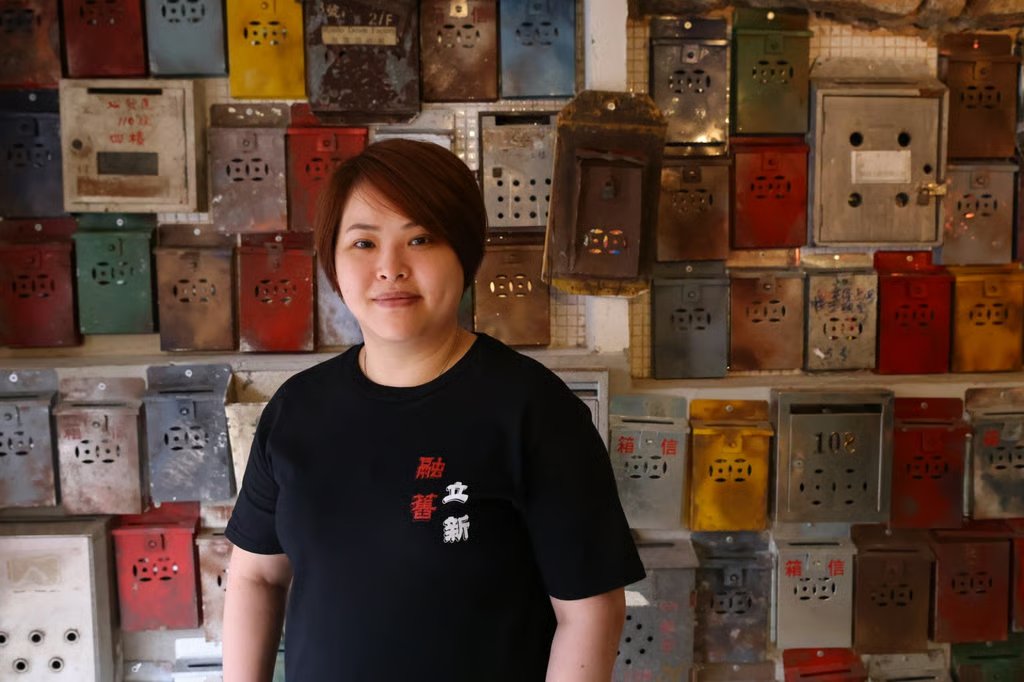
A deceptively minor but glaring difference in wording shocked Yoshiko Itashiki when a post from Japan’s Foreign Ministry popped up on her social media feed.
The 55-year-old resident of the Canadian province of Alberta was taken aback by the use of “dou reifujin” (and his wife) in a Feb. 24 announcement leading up to Canadian Prime Minister Mark Carney’s visit to Japan; during his March 6-7 trip he held talks with his counterpart, Sanae Takaichi.
The Japanese version read, “Canadian Prime Minister Mark Carney and his wife will pay a visit to Japan.” The ministry likewise uses “dou fukun” (and her husband) in the case of female leaders.
The English text referred to the first lady by name as “his spouse, Ms. Diana Fox Carney.”
“Her name has been erased, (with her existence) reduced to a relationship in which she serves as a foil, just like an accessory or even a garnish to sashimi,” Itashiki posted on X, formerly Twitter, the following day.
Itashiki’s reaction comes from a personal experience when she first encountered the term 30 years ago.
When she received a wedding invitation from a close acquaintance in the 1990s, she was listed as such alongside her husband’s name.
“It felt like my name disappeared,” she recalled. “I never imagined I would come across this word again after a quarter-century into the 21st century.”
‘FOLLOWING PRECEDENT’
In explaining the difference between the Japanese and English versions, the ministry’s Press Division said, “We comply with the protocol and follow the precedent.”
This is not the first time people have taken issue with a high-level institution using this type of phrasing.
The spring 2024 imperial garden party sparked controversy for omitting spouses’ first names on their name tags.
They were instead identified based on their relationship to the invitee as “Wife of (husband’s full name)” or “Husband of (wife’s full name).”
The Imperial Household Agency’s response was to change tact. Starting from that same year’s autumnal counterpart of the biannual garden party, it decided to list spouses’ full names on both the invitations and their name tags.
The Foreign Ministry has not adjusted its practices.
“It is possible that it will gradually change to correspond to the flow of the times, but nothing has been decided at the moment,” a Foreign Ministry official said.
The ministry previously switched from “Mrs.” and “Miss” to “Ms.” in its English text, the official added.
LANGUAGE REFLECTS PERSONHOOD
Momoko Nakamura, a professor emeritus at Kanto Gakuin University who specializes in language and gender issues, notes that dou reifujin and dou fukun are extremely polite honorifics with added weight compared to their translations as “wife” and “husband.”
She asserted that continuing the custom of assuming the use of polite language always makes things right can cement the idea that a spouse is an accessory in the framework of family relations and not an independent person.
Nakamura added names are associated with personal rights, and that, from the standpoint of respecting those rights, it is advisable to confirm how people want their names listed and which honorifics they prefer.
“It shouldn’t be neglected, saying that they are only documents,” she said. “Expressions used by public institutions are recognized as appropriate by society, and that is all the more reason why their influences and results must be deeply considered.”
Itashiki’s X post has garnered more than 1,770 likes as of March 10.
Contrary to her expectations, Itashiki said she has received hardly any criticism.
“The omission of names and use of words that hide people’s existence gives glimpses of how human rights are taken lightly,” she said. “I think many people now feel uncomfortable with it.”
(This article was written by Kazuki Uechi and Senior Staff Writer Tomoko Yamashita)