The ULI Health Leaders Network, established in 2017, connects ULI members across disciplines such as architecture, urban planning, real estate development, and public health. Through in-person convenings in global cities and monthly virtual sessions, the cohort program fosters cross-sector collaboration around healthier and more equitable communities. In November 2025, Cohort 8 traveled to Hong Kong to learn how that city’s built environment supports health, wellness, and equity.
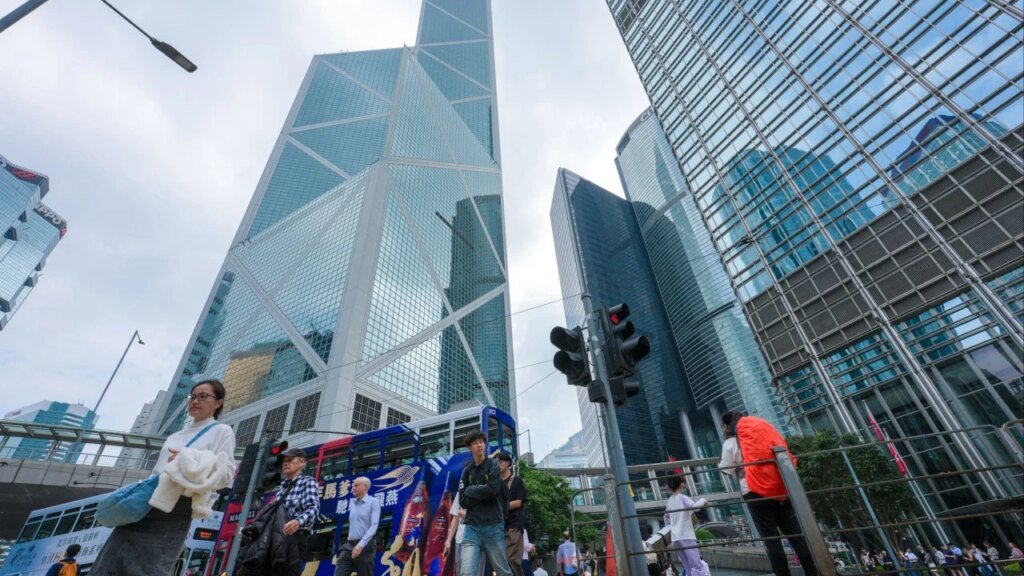
Home to 7.5 million people and constrained by surrounding mountains and sea, Hong Kong has evolved into one of the world’s most vertically and densely developed cities. These pressures have driven innovative approaches to transit-oriented development, public housing, and open space. The city served as an ideal setting for Cohort 8’s closing forum by offering both inspiration and critical lessons for cities grappling with similar challenges.
“Hong Kong is a master class in coordination—real estate development, transit, harbor activation, and housing, all moving in lockstep,” said Moe Magali, director of business development at Public Works Partners. “Getting an inside look at how this city works was inspiring and, honestly, a reminder of what’s possible when systems, vision, and execution align.”
Over four days, the members of Cohort 8 met with local experts and toured neighborhoods and projects across Hong Kong to explore how history, governance, and daily life intersect to shape the built environment. Together, they discovered actionable takeaways to inform their work back home.
1. Center transit-oriented development to support active daily life
Hong Kong’s Mass Transit Railway (MTR) ranks as one of the world’s leading public transit systems when it comes to density, efficiency, and rate of use. In fact, 90 percent of daily trips are made on public transportation, according to Mattijs Gevers, chief urban designer at Arup. For ULI Health Leaders, the MTR is a hallmark example of Hong Kong’s ability to execute urban design and planning with intention and efficiency.
Through its unique Rail plus Property model, the MTR is simultaneously a transit operator and one of the city’s largest developers. This duality allows the MTR to integrate transit operations with mixed-use real estate consisting of shopping malls, open space, and transit hubs. Moreover, the MTR then invests both transit and urban development profits back into system improvements, maintenance, and public infrastructure.
Pedestrian connectivity to amenities, services, and public spaces is key to the success of the Rail plus Property model. Proximity lets Hong Kongers participate in their community and stimulate the economy. Proximity to transit also reduces car dependency, improves air quality, and encourages physical activity as part of everyday life. Furthermore, a network of underground and shaded walkways integrated with public transit and mid-level escalators provides critical accessibility and relief from stifling heat and intensifying rainfall to make everyday travel safer and more comfortable by reducing heat stress and enhancing pedestrian access. This mix demonstrates what can happen when development revolves around a holistic approach for the end-user.
ULI Health Leaders experienced how transit-oriented development supports an active lifestyle firsthand during a tour of Admiralty Station, a major transit hub that serves more than a million passengers each day.
“The MTR showed how thoughtfully combining transit, housing, and amenities can create stronger, more connected communities,” said Sarah Carrillo, innovation project manager at The Port Authority of New York and New Jersey. “These insights help inform how we should think about real estate, mobility, and long-term planning.”

2. Design for aging in place across generations
Hong Kong’s rapidly aging population has pushed age-friendly design from a niche concern to a policy priority, supported through coordination between the Hong Kong Housing Authority (HKHA) and various other government departments. By 2039, nearly a third of the populace will be age 65 or older, per Ruby Yu, a senior research fellow with CUHK Jockey Club Institute of Ageing.
Citywide, a universal design approach is fundamental to creating accessible, intergenerational spaces both indoors and out. Throughout Hong Kong, one can find such amenities as parks that mix playgrounds for children and exercise equipment for elders, or restroom sinks intentionally designed to be suitable for any age and physical ability.
Cohort 8 experienced this approach firsthand through a workshop that simulated aging led by Eldpathy, a social enterprise. The workshop highlighted how experiential learning can inform more inclusive environments for older adults, caregivers, and people with varying abilities.
“The Eldpathy activity really sparked empathy and understanding not only from the [point of view of elders or people with physical impairments], but also of their assistants,” said Aradhana Gupta, senior principal at L’OEUF Architectes. “It helped me to look also at how I personally engage with the physical environment of cities and become more aware of how I react.”
3. Prioritize housing stability as a public health need
In Hong Kong, public housing is the primary housing system shaping health equity. Nearly half of the population lives in public or government-subsidized housing, which makes housing policy inseparable from public health outcomes.
Public housing tower blocks are dense mixed-use developments planned as complete communities, mainly by the Hong Kong Housing Authority governing agency and the Hong Kong Housing Society (HKHS) nonprofit. The proximity of daily resources within neighborhoods supports social cohesion and contributes to Hong Kong’s consistently high life expectancy rankings, given that walkability reduces loneliness and improves well-being, according to a study Yu conducted on older adults.
Furthermore, high-density living proves to be a positive health determinant in the city. Ka Yan Lai, a post-doctoral fellow at the University of Hong Kong and a Cohort 6 alum, shared that her studies found “higher liveable floor area and neighborhood scale density were associated with lower odds of hypertension.”
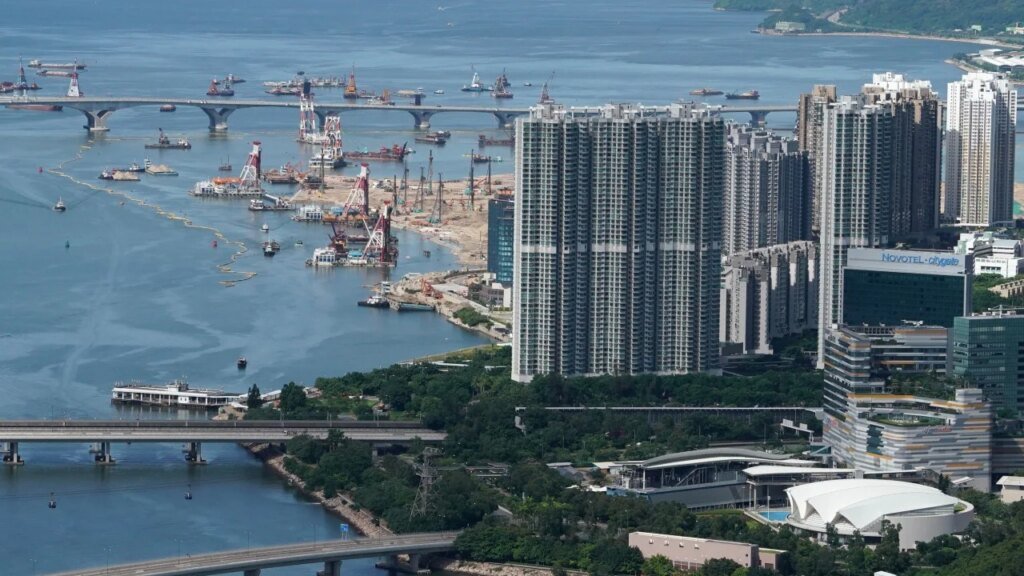
To meet the growing demand for housing that supports a healthier lifestyle for residents, the Hong Kong government has refined its ability to deliver units quickly and efficiently. Developments such as Nam Cheong 220 demonstrate how modular construction enables cost-effective, standardized housing delivered at scale on significantly reduced construction timelines.
Through a presentation of Nam Cheong 220 and site visits to public housing estates, including Mei Ho House and Shek Kip Mei Estate, ULI Health Leaders noted how seamlessly housing is mixed with health care, education, recreation, transit, and elder services.
“The history, culture, and [ways] design for public housing . . . developed over time will play an integral part of my understanding in housing overall as I continue to develop research in housing and health in my own work,” said Sem Lee, founder and director of OURI Labs. “It reinforced the importance of policy levers in delivering the appropriate type of housing.”

4. Activate public space as an outdoor living room
In a city where density calls for smaller homes, public space functions as the living room of daily life. Therefore, the spaces between buildings are
intentionally woven with parks, plazas, and promenades. Density lends a hand in fabricating multifunctional infrastructure that supports social cohesion. Hong Kong’s land restrictions and growing population led to the adoption of the mixed-use podium and tower block building design, starting in the 1980s.
Rosman Wai, a practicing architect and adjunct professor at the University of Hong Kong, said that the podium allows for 100 percent site coverage while integrating community and commercial facilities such as wet markets, schools, and shopping centers inside the podium. Moreover, rest areas, sky gardens, and residential housing sit atop the podium. The podium and tower block approach demonstrates how cities can stratify vertical living, thus turning density into an asset for social connection and well-being.
To match the rhythm of the city, developers such as the Mass Transit Railway are incentivized to design open areas that complement development plans while also enhancing connectivity. Holistic public spaces foster thriving communities and stimulate economic activity to create social and financial returns that support such long-term developments.
“Intentional design, especially in dense environments, can support physical health, mobility, safety, and social connection,” said Amanda Stephenson, founder of The Fresh Food Factory Market. “Seeing how transit, housing, and people exercising with access to equipment as permanent fixtures in public spaces were integrated at every level showed me that complexity can be an asset when decisions center people.”
5. Integrate green and blue spaces into daily life
Despite Hong Kong’s extreme urbanization, access to nature is an essential part of everyday life there. Approximately 75 percent of the city’s land is protected as country parks, rural areas, or green belts. This green space, plus the surrounding South China Sea, serves as a Hong Konger’s personal backyard.
With its limited developable land, Hong Kong has reframed constraint as opportunity. Dense development is intentionally concentrated, up to the edges of protected landscapes. When paired with an advanced public transit system, nature becomes highly accessible.
“Hong Kong’s approach to the greenbelt is directly applicable to Oregon’s land-use practices and is a great reference point when discussing whether to expand into our prime farm and forest lands,” said Jennifer Nye, managing director at Salazar Architect.
Regarding blue space, projects such as Kwun Tong Promenade aim to increase health, mobility, and well-being by reinvigorating East Kowloon’s waterfront, which was once a prominent manufacturing hub. Lead8’s HarbourLoop design concept takes this idea one step further by connecting Hong Kong Island to Kowloon with a 14 mile (23 km) cir-uit, lined with public spaces and paths for active mobility.
Research by Lai reinforces the idea that access to green space is associated with increased odds of better physical health and mental health outcomes.

6. Frame climate resilience as a public health investment and asset-level value add
Extreme weather is increasingly shaping how Hong Kong designs for health, safety, and the continuity of daily life. Record-breaking rainstorms, intensifying typhoons, and rising temperatures have elevated climate resilience from a long-term concern to an immediate public health priority.
As a result, Hong Kong’s built environment is investing in resilient infrastructure such as flood and heat mitigation, drainage systems, and operational preparedness. In this context, climate resilience is perceived not solely as an environmental issue but also as a critical determinant of health and equity.
Developed by Link REIT, The Quayside in Kowloon East demonstrates how resilient design is a value add. As the largest REIT in Asia, Link frames sustainability through a dual lens of value protection and value creation to shield its asset portfolio from uncertain economic climates.
The Quayside exemplifies this duality while still promoting health. Cohort 8 toured the development and interacted with an electricity-generating jogging track that provides energy savings—a value protection—while also experiencing Quayside’s 30 percent greenery coverage across its rooftop and building columns as a value add.
This bustling commercial building demonstrates how climate-responsive design can be a triple-pronged strategy to enhance asset value, environmental sustainability, and occupant health and wellness.
As a leader navigating both climate risk and client expectations, Barbara Benesh, founder and principal of B. Grace Design, emphasizes the importance of translating sustainability into financial terms: “When we can frame resilient, sustainable design choices in terms of avoided infrastructure costs, risk reduction, and asset longevity, we open the door to stronger alignment with owners, developers, and community stakeholders. This approach gives me a clearer pathway to advocate for better-built environments—showing that climate-focused investments aren’t just ethical, they’re financially strategic.”
7. Leverage public/private partnership for scalable development
Hong Kong’s built environment reflects its ability to design for speed, scale, and certainty.
Government land ownership and a long-term land-lease system help enable faster development while maintaining financial viability. Once land is leased, private developers can proceed in a largely laissez-faire manner, with limited government intervention in design and operations.
Because there is minimal government intervention, social services and community programming typically are outsourced through partnerships with nonprofits and philanthropic organizations, such as the Hong Kong Jockey Club. The nonprofit HKJC uses 73 percent of surplus revenue from horseracing to fund community development and better the lives of Hong Kongers.
Orchestration between public and private entities aligns housing, transit, and public space across sectors, creating an efficient framework for large-scale urban development that also integrates health and equity seamlessly. For ULI Health Leaders, the ability to execute projects with both intention and scale was a key lesson from Hong Kong’s approach.
“Hong Kong aligns policy, land activation, and development execution with remarkable precision,” said Jason Brown, president and CEO of Dallas City Homes. “[The city’s] coordinated approach across government, private developers, and community stakeholders highlighted what’s possible when the system itself is built for speed and clarity.”
8. Use structured tools to enable participatory design
In a context where vocal public participation is less common, practitioners rely on proactive, structured tools to surface community perspectives and needs.
Organizations and firms such as Architecture Commons use guided prompts, toolkits, and codesign methods to start dialogue that leads to more inclusive participatory design. In 2019, Architecture Commons launched a codesign initiative called the Neighborhood Innovation Lab to poll community members on the street, conduct focus groups, and interview individuals as a means of presentable data for government and for property developers.
Tyler Clark, an associate principal at MKSK, said, “Hearing the way public engagement is handled in various parts of the world is always intriguing and relevant to the work I do.”
Although much development in Hong Kong is driven from the top down, equal emphasis is placed on understanding the needs of residents and end users to bring their perspectives forward. Structured facilitation helps bridge a vocal gap by building trust and empowering community members, which ultimately ensures that lived experiences informs health-supportive planning and inclusive design decisions.

There was no shortage of lessons from Hong Kong. ULI is grateful to the local experts who shared their time and knowledge, grounding the trip in real-world lessons that Cohort 8 of the Health Leaders Network can take home.
Hong Kong is a living, breathing example of what can occur when efficient and intentional development is guided by both public and private entities. The result is a rich urban fabric that weaves together accessibility, community, health, and equity.
Support for this article was provided by the Robert Wood Johnson Foundation. The views expressed in the article do not necessarily reflect the views of the Foundation.