“I have also suggested new elements for the task force’s consideration and instructed it to submit further study findings within a month.”
Lee stressed that he would study those findings before announcing any decisions.
The Housing Bureau noted that the task force had discussed the flat size, height, lighting, ventilation and facilities of subdivided housing, and provided concrete suggestions.

24:45
The grim reality of life in Hong Kong’s ‘coffin homes’ | Talking Post with Yonden Lhatoo
The grim reality of life in Hong Kong’s ‘coffin homes’ | Talking Post with Yonden Lhatoo
The team had also hired a consulting firm to visit 2,600 subdivided flats across the city to collect information, organised more than 20 consultation sessions with academics, political parties, professional groups and welfare bodies, and received over 40 written opinions.
The formation of the task force was announced in Lee’s policy address last October, with the group told to set minimum standards for subdivided housing, suggest measures to eradicate substandard homes and propose orderly solutions.
Led by Deputy Financial Secretary Michael Wong Wai-lun, the task force also includes Secretary for Housing Winnie Ho Wing-yin and Director of Housing Rosanna Law Shuk-pui.
The chief executive said Wong’s team had reported on the data collected on subdivided housing and on suggestions raised by different stakeholders, including the minimum standards of flat sizes, as well as structural, fire safety and hygiene requirements.
He described the report as objective and specific, and said he hoped it could set up a mechanism to eradicate substandard subdivided homes and improve their residents’ living environment.
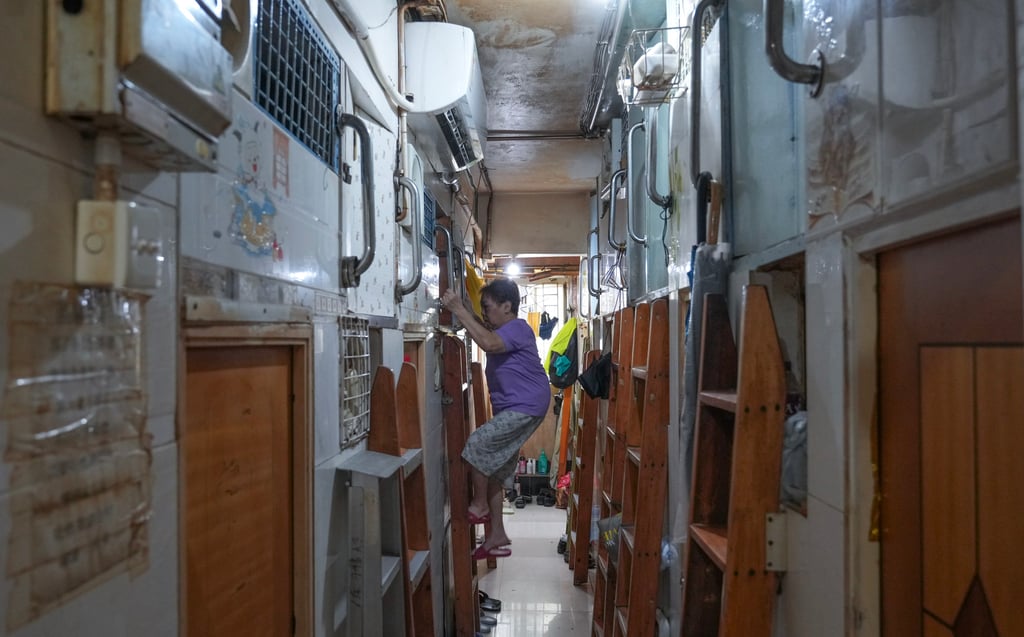
According to census figures in 2021, Hong Kong has 108,200 subdivided flats, 17 per cent more than the 92,700 in 2016.
Ho added that the new measures would only be enforced when temporary housing was made available to accommodate uprooted tenants.
The minister also revealed that landlords had to meet the new standards within a grace period and would face a penalty if they failed to comply.
According to official schedules, 30,000 temporary homes will be ready in stages by the 2026-27 financial year under the government’s “light public housing” initiative to accommodate families who have waited for a public rental flat for at least three years.
Another 19,000 transitional homes, built by developers collaborating with welfare groups, will also offer short-term housing options by the same financial year.