Xi Jinping’s focus on a linear process of innovation creates the challenge of making the transfer of scientific and technological achievements more effective, says Erik Baark.
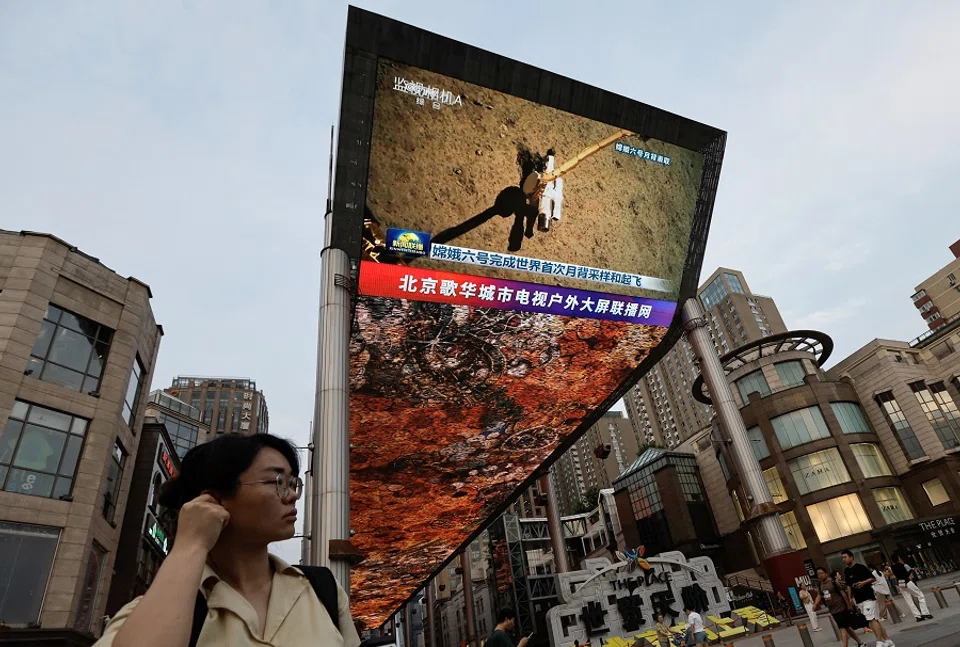
As the Chinese leadership prepares for the Third Plenum in July which sets China’s economic direction, a favourite theme has been how to promote science and technology (S&T) in China — in particular, in order to boost the development of “new quality productive forces”.
Chinese investment in research and development (R&D) has been expanding rapidly in the past decade. In 2023, China’s gross expenditure on R&D reached 3.33 trillion RMB (approximately US$458 billion), which corresponds to spending 2.64% of China’s GDP on R&D. Most of this expenditure, namely 76.6%, is spent by the business sector — which includes an unknown, but substantial contribution by state-owned enterprises.
Only one achievement in pure basic scientific research made it to the list…
The government has announced its intention to further increase government spending on S&T by 10% in 2024, reaching a total commitment of government expenditure of 370.8 billion RMB. Moreover, expenditures on basic science are expected to reach 6.3% of total R&D spending, while China has set a goal of raising that ratio to 8% by 2025. The commitment of Xi Jinping to promoting S&T has been evident for a long time, and the geopolitical tensions surrounding advanced technology have obviously added fuel to the fire.
China’s science and technology achievements
China’s achievements in S&T were the subject of General Secretary Xi Jinping’s speech at the national S&T conference on 24 June 2024, underscoring the theme that “when science and technology flourish, the nation flourishes; when science and technology are strong, the country is strong”.
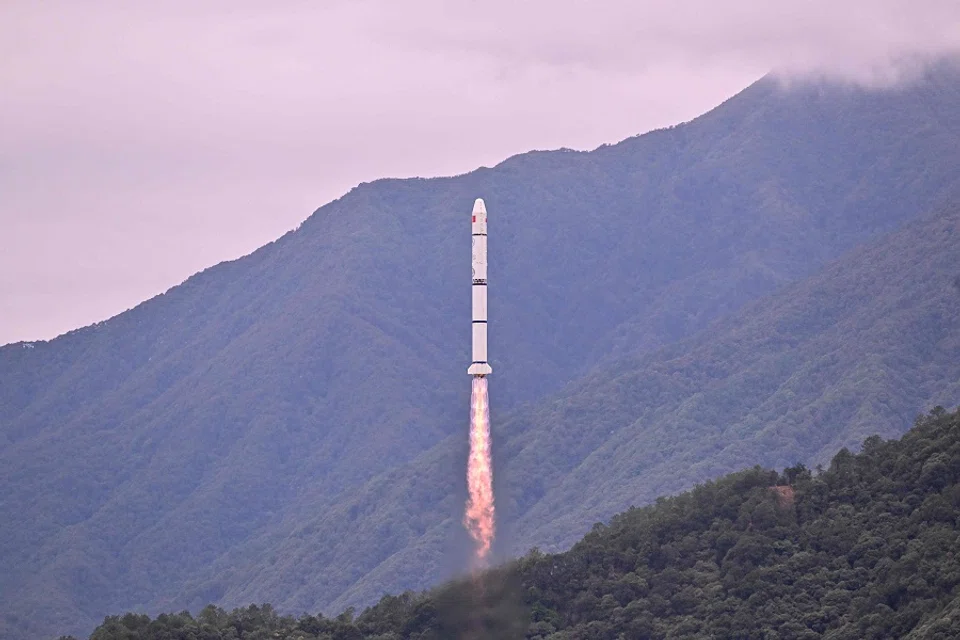
The speech highlighted breakthroughs in basic frontier research, including the fields of quantum technology, life sciences, material sciences and space sciences. The examples that Xi listed included strategic high-tech technologies such as the Chang’e mission exploring the moon, the submersible Fendouzhe making discoveries ten thousand metres below the surface of the ocean, and the world’s first fourth-generation nuclear power plant beginning commercial operations.
Only one achievement in pure basic scientific research made it to the list: an article by Professors Chen Xiuxiong and Wang Bing at the University of Science and Technology of China that was published in the Journal of Differential Geometry, was the first to solve the Hamilton-Tian conjecture and the partial zero-order estimate conjecture — two core conjectures that have been pending a solution in the field of geometric analysis for more than 20 years.
The opinions provided an unusual, frank description of free exploration as a characteristic of pure basic science activities…
Xi Jinping’s push for world-leading basic science
Xi Jinping has frequently called for support for basic science in recent years. In his report to the 19th CCP National Congress in October 2017, he took up the topic of promoting basic science as a component of innovation-oriented development:
“We should aim for the frontiers of science and technology, strengthen basic research, and make major breakthroughs in pioneering basic research and groundbreaking and original innovations. We will strengthen basic research in applied sciences, launch major national science and technology projects, and prioritise innovation in key generic technologies, cutting-edge frontier technologies, modern engineering technologies, and disruptive technologies. These efforts will provide powerful support for building China’s strength in science and technology, product quality, aerospace, cyberspace, and transportation; and for building a digital China and a smart society.”
This general statement of backing basic science was followed up with opinions on strengthening basic science published by the State Council in January 2018. The opinions provided an unusual, frank description of free exploration as a characteristic of pure basic science activities:
Respect the characteristics of scientific research inspiration, which is instantaneous, arbitrary, and uncertain, create an environment and culture conducive to innovation, and encourage scientists to imagine freely, make bold assumptions, and verify seriously. Promote the organic combination of free exploration and goal orientation. Free exploration-based basic research focuses on exploring unknown scientific problems and bravely climbing scientific peaks; goal-oriented basic research is closely combined with the needs of economic and social development, and strengthens forward-looking deployment in strategic areas.
The document also outlined China’s goals, namely, by 2035 to reach a position in which the country is leading global development in important fields, and by the middle of the century to become a major scientific centre and innovation base in the world.
The mission: solving chokepoints
Xi Jinping has high expectations regarding the contributions of Chinese scientists, as he laid out clearly during an inspection visit to the Chinese Academy of Science in July 2013 that was reported by Xinhua this way:
Xi Jinping stressed that having a strong sense of patriotism is the first requirement for our country’s scientific and technological personnel. Science has no borders, but scientists have a motherland. The vast majority of scientific and technological personnel should firmly establish the idea of innovating science and technology, serving the country, and benefiting the people, apply scientific and technological achievements to the great cause of realizing national modernisation, and integrate their life ideals into the struggle to realize the Chinese dream of the great rejuvenation of the Chinese nation.
… he [Xi] was quickly back to demanding that basic science should become useful for the need to solve technical problems!
Xi Jinping’s perspective can be illustrated with a discussion that he had with Fu Qiaomei, a scientist at the CAS Institute of Vertebrate Paleontology and Paleoanthropology who was engaged in research on human paleo genomics. Fu complained that people would often ask her “How useful is your research?”
It would often be difficult for her to raise funding to maintain her laboratory, and she would wonder whether or not she should change to do research on a “hot” topic. She therefore proposed that support for basic research should not be evaluated according to whether it is “useful” or not.
Xi Jinping responded: “How should we view neglected branches of science? In the popular view, some kinds of scientific stuff are useless. This kind of understanding may delay the development of a field. When evaluating scientific research, we must have a long-term vision, a global vision, and a scientific vision.”
Nevertheless, immediately after this statement he argued that he had long been concerned about how basic science is the source of scientific and technological innovation, and continued: “We must persevere in strengthening basic research. The root cause of many of the “chokepoint” technical problems facing our country is that basic theoretical research is not keeping up, and the source and underlying things have not been clarified.” So, he was quickly back to demanding that basic science should become useful for the need to solve technical problems!
Saving China with science
From the early 20th century, Chinese students went to the US and Europe to pursue postgraduate studies and on their return to China, they became influential in opening up new research fields and training new generations of scientists.
Many intellectuals who were mobilised by the May Fourth movement in 1919 also became strongly influenced by the call for “saving China through science” (kexue jiuguo 科学救国), including Chen Duxiu, who founded the Communist Party of China (CPC). The belief in the power of Mr Science and Mr Democracy to transform China became an ideology — a kind of scientism that cast a long shadow in Chinese intellectual life.
The May Fourth Movement helped Chinese intellectuals raise the prestige of scientific activities and education in Chinese society and, with the assistance of the China Foundation established with American support, became pioneers of key universities and research institutions in China.
Unfortunately, the effort to save China with science was not successful, being drowned out by civil war and the Japanese invasion. But the essence of the scientistic approach continued its influence in CPC, and was reinforced by advisors from the Soviet Union during the 1950s who introduced the concept of a Bolshevik “scientific-technical revolution” as a contemporary development of productive forces — not unlike the idea of new quality productive forces that Xi Jinping is promoting today.
It is certainly true that basic research has helped develop important innovations — but often this process will take 20-50 years, and probably Xi Jinping does not have that patience.
From basic science to advanced technology: the challenges
In China today, the messianic duty of basic science to create advanced technology is rooted in the linear model of innovation, a concept of an automatic sequence of knowledge flow from basic research, via applied research, via technology development to the final stage of commercial innovation. Xi Jinping has often described such a unidirectional linear process, for example in an article in the CCP journal Qiushi (《求是》) in July 2023:
First, strengthen the forward-looking, strategic, and systematic layout of basic research. Basic research is at the beginning of the scientific research chain from research to application and then to production. Only when the foundation is solid can the science and technology building be built high.
Xi Jinping’s focus on a linear process of innovation inadvertently creates a serious challenge for himself: how to make the transfer of scientific and technological achievements more effective. The problems related to the transfer and commercialisation of scientific results have plagued Chinese policy makers since the 1980s, and are not likely to go away in the immediate future.
Many issues impede this stage in the innovation chain: many “scientific results” cannot be “transferred” because they have not reached the stage where they can be produced by enterprises; often there are insufficient financial incentives for scientists as well as enterprises to undertake the “transfer”; and frequently, the technological capabilities of enterprises to even absorb and scale up production of new innovations are too weak.
It is certainly true that basic research has helped develop important innovations — but often this process will take 20-50 years, and probably Xi Jinping does not have that patience.
But while a pragmatic recognition that basic science is extremely valuable for humanity and societies across the world, it is problematic to enlist basic science as a saviour, or a warrior in a new cold or hot technology war.
It is also true that the development of advanced technologies for sectors like semiconductors, artificial intelligence, and pharmaceutics has increasingly been linked to advanced mission-oriented basic and applied research. But in countries like the US and Europe, these processes tend to take place internally in large firms or new start-ups, and more seldom as a basic science research result developed in an external public institution like universities or laboratories — after which it is immediately “transferred” as an innovation to industry.
It is praiseworthy that Xi Jinping and the Chinese leadership finally devote more resources and funding to basic scientific research that has for too long been overlooked in the Chinese science system. But while a pragmatic recognition that basic science is extremely valuable for humanity and societies across the world, it is problematic to enlist basic science as a saviour, or a warrior in a new cold or hot technology war.
Basic science thrives with free global cooperation and wide knowledge horizons, and perhaps does contribute less to humanity if tied down to demand for “transfer” to industry.