Mega-tech deals add momentum to a surging shekel

The shekel’s appreciation shows no signs of stopping. The recent closing of the Wiz-Google deal and the completion of the CyberArk-Palo Alto Networks transaction are expected to add further fuel to the trend unfolding in the foreign exchange market.

With all due respect to the global weakening of the dollar, the shekel’s story is different. According to the Bank of Israel’s review of the foreign exchange market published last week, in the fourth quarter of 2025 the dollar actually strengthened by about 0.1% on average against the 19 major global currencies. However, against the shekel it recorded its sharpest decline, 3.5%. In second place was the Thai baht, which strengthened 2.8% against the dollar.
1 View gallery

שקל דולר שקלים דולרים מט"חשקל דולר שקלים דולרים מט"ח

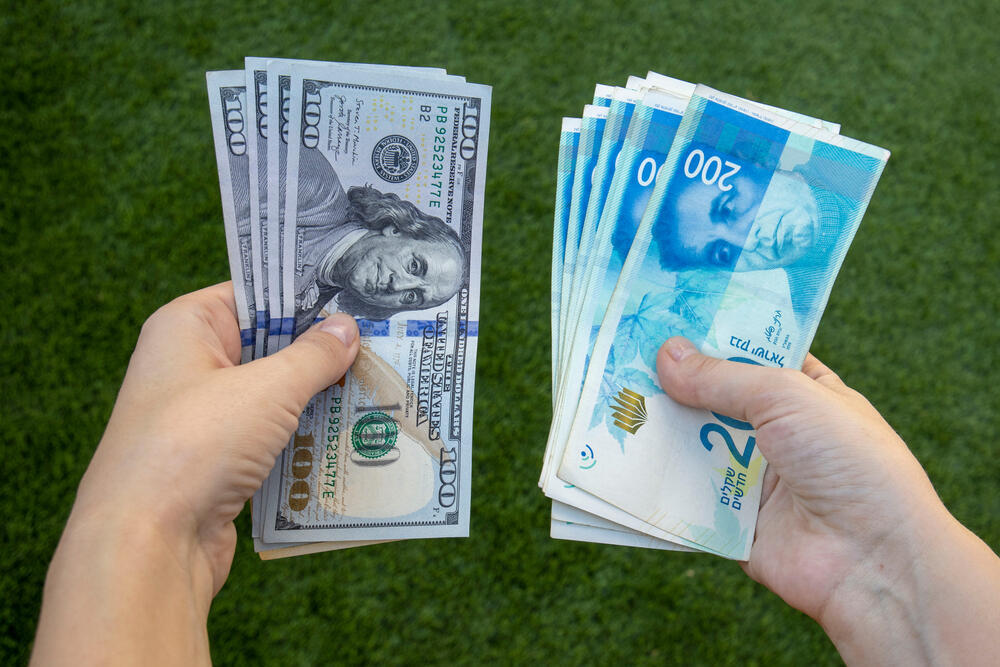
Dollar shekel exchange.

(Photo: Igal Vaisman / Shutterstock)

This means the shekel’s strength goes well beyond broad dollar weakness. As further evidence, during the same quarter the nominal effective exchange rate, which measures the shekel against the currencies of Israel’s main trading partners, appreciated by 3.6%, nearly identical to its rise against the dollar. Since then, it has strengthened by an additional 2.4%. And this occurred even before the closing of the recent multibillion-dollar high-tech deals.

The impact of those deals will likely be primarily psychological. They reinforce positive sentiment toward the Israeli economy, particularly the high-tech sector, its main growth engine. However, it is doubtful they will constitute a decisive event in the foreign exchange market, as the sums involved are still small relative to overall trading volumes.

The foreign exchange market is the largest and deepest financial market in the world. Bank of Israel data show that in the fourth quarter of 2025, conversion transactions totaled approximately $3.9 billion per day. In addition, swap and other exchange transactions amounted to another $10 billion daily, roughly three-quarters of total foreign exchange activity.

In other words, even the founders’ expected tax payments from the Wiz deal are smaller than a single day’s trading volume in the shekel market, assuming the state does not require part of the tax payment in dollars. A large individual foreign exchange transaction could move the dollar temporarily, but it would not alter the long-term trend. The main effect of the mega-deals, therefore, is psychological, strengthening confidence in Israel’s economy. That effect should not be underestimated.

An interesting figure in the Bank of Israel review shows that 77% of shekel-dollar conversion transactions are conducted between foreign entities. In other words, for every $4 traded, $3 change hands between non-Israeli institutions. This suggests that part of the activity is speculative, and that many global financial players are active in the shekel market. It is well known that speculative capital operates in Israel’s currency market, major foreign banks regularly publish analyses of the shekel.

The key question is the weight of these foreign players and whether they operate predominantly in one direction. The answer is less clear. Market assumptions hold that speculators both buy and sell, meaning that while they dominate transaction volume, they do not necessarily dictate the exchange rate. Moreover, not all foreign-to-foreign transactions are speculative. For example, when Google purchases shekels from Bank of America to pay Israeli salaries or fund local investments, the transaction is recorded as foreign-to-foreign, but it is not speculative in nature.

Bank of Israel data also highlight another factor: foreign investment in Israeli securities. The latest available data, through November 2025, show that after selling nearly $1.6 billion in Israeli stocks and bonds between July and September, foreign investors reversed course. In September they made net purchases of about $345 million; in October, $1.1 billion; and in November, nearly $1.4 billion. In total, foreigners purchased just under $2.5 billion in Israeli securities in the final months of 2025, even before December, when the Tel Aviv-125 index rose more than 5%.

The mirror trend, Israeli purchases of foreign securities, shows a sharp decline. Israeli investors bought $5.4 billion in foreign securities in September, $2.1 billion in October, and only $1.5 billion in November.

In a recent interview with Calcalist, Dr. Gil Bufman, former chief economist at Bank Leumi, explained that economic models show the surge in the Tel Aviv Stock Exchange is the variable that best explains the shekel’s appreciation. Some market sources argue that Israeli institutional investors have been the primary drivers of the exchange rate since the end of the war with Iran in June 2025, alongside the renewed correlation between the Nasdaq index and the shekel.

According to this view, institutional investors have become net sellers of dollars, both by reducing foreign currency exposure and by requiring less collateral on options positions. As a result, although foreign players account for most transaction volume, their influence on the exchange rate may be more limited than assumed.

In the long term, the appreciation trend appears intact, and there is no clear catalyst on the horizon, aside from political or geopolitical shocks, that is likely to halt the shekel’s momentum.
Source link

Visited 1 times, 1 visit(s) today

Related Article

Crude Oil Weekly Forecast - 19/04: Lower Value (Chart)

Crude Oil Weekly Forecast – 19/04: Lower Value (Chart)

Created on April 19, 2026 Day traders may feel as if last week was an opportunity to ride momentum lower in WTI Crude Oil, but be unsure of where things are going next. After essentially starting the past Monday with a spike higher that put the commodity at nearly $97, this after closing the prior

Weekly Forex Forecast - 19th to 24th April 2026 (Charts)

Weekly Forex Forecast – 19th to 24th April 2026 (Charts)

I wrote on 12th April that the best trades for the week would be: Long of the USD/JPY currency pair following a daily (New York) close above ¥160. Long of Brent Crude Futures in the small chance we get a daily close above $112.50. Neither of these trades set up. A summary of last week’s

GBP/USD Weekly Forecast - 19/04: Under Pressure (Chart)

GBP/USD Weekly Forecast – 19/04: Under Pressure (Chart)

Created on April 19, 2026 The GBP/USD went into this weekend near the 1.35177 mark, essentially near a ratio the currency pair was traversing just before the start of the Iranian war. The GBP/USD did touch a high of nearly 1.36000 earlier on Friday before stumbling back to marks it had traded on Thursday. The

Table of Prices Gold 19/04/2026

Weekly Pairs in Focus 19th to 24th April 2026 (Charts)

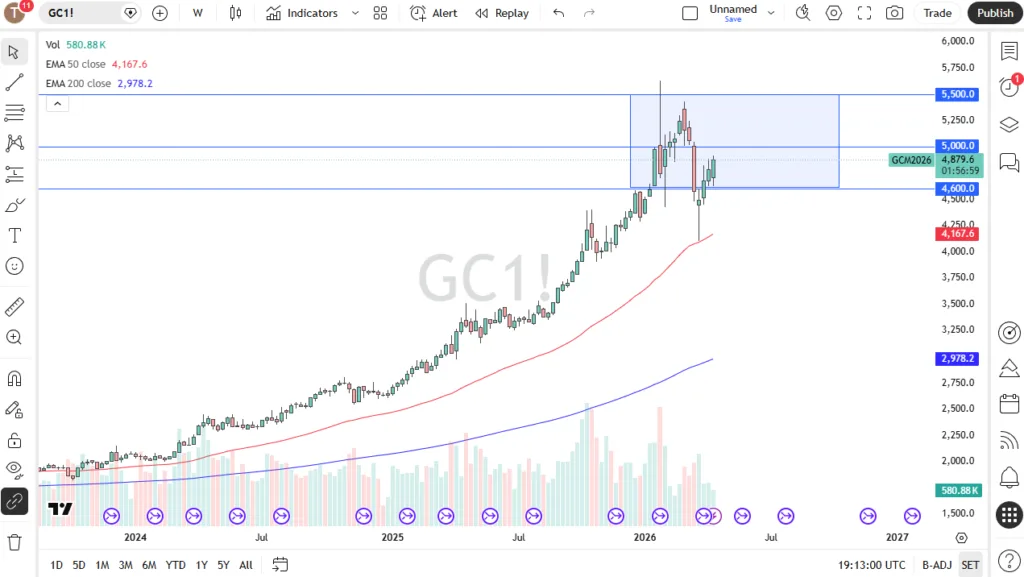
Created on April 19, 2026 The gold market initially fell during the week but found enough support at the $4,600 level to turn things around and jump above the $4,800 level. The interest rate situation in the United States continues to cool off and that of course is a major influence on what happens with

USD/JPY Mid-Day Outlook - ActionForex

USD/JPY Mid-Day Outlook – ActionForex

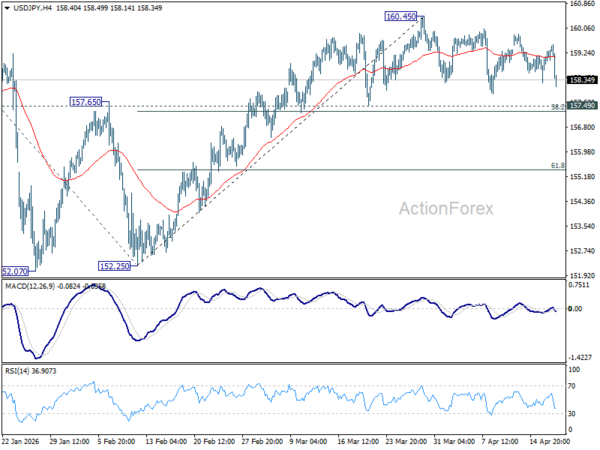
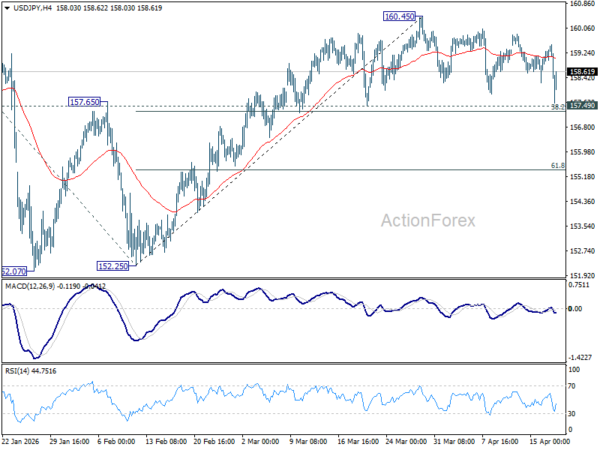
Daily Pivots: (S1) 158.48; (P) 158.90; (R1) 159.56; More… USD/JPY’s sideway consolidation from 160.45 continues and intraday bias stays neutral. Outlook will stay bullish as long as 157.49 cluster support (38.2% retracement of 152.25 to 160.45 at 157.31) holds. On the upside break of 160.45 will target a retest on 161.94 high. However, firm break

EUR/CHF Weekly Outlook - ActionForex

EUR/CHF Weekly Outlook – ActionForex

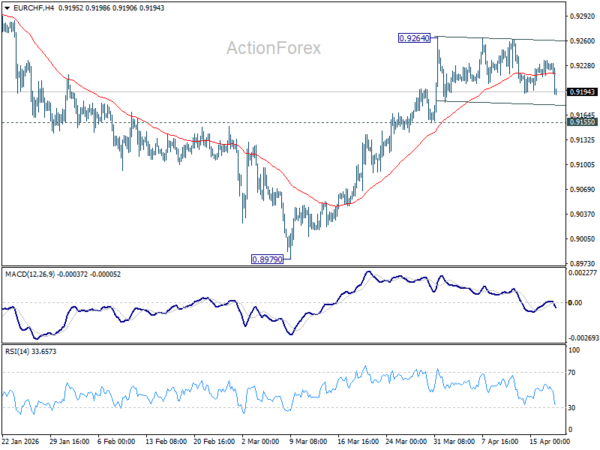
EUR/CHF’s sideway consolidation continued last week and outlook is unchanged. Initial bias remains neutral this week. With 0.9155 support intact, further rally is still expected. Firm break of 0.9264 will resume the rise from 0.8979 to 0.9394 resistance next. However, break of 0.9155 will turn bias back to the downside for deeper pullback. In the

EUR/AUD Weekly Outlook - ActionForex

EUR/AUD Weekly Outlook – ActionForex

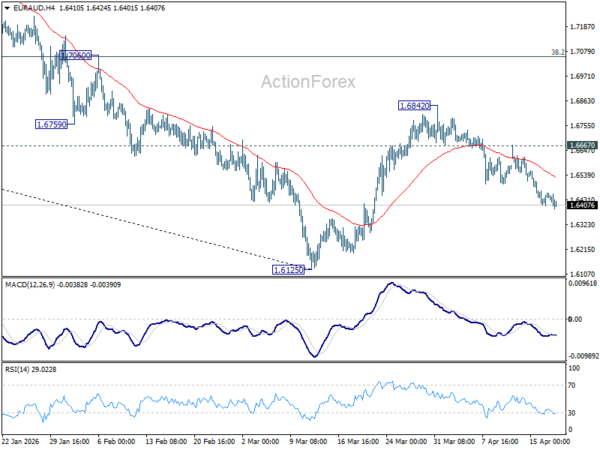
EUR/AUD’s fall from 1.6842 resumed last week. Outlook is unchanged that rebound from 1.6125 should have completed after rejection by 55 D EMA. Initial bias remains on the downside this week for retesting 1.6125 low. Firm break there will resume whole down trend from 1.8554 to 1.5913 fibonacci level next. For now, risk will stay

EUR/GBP Weekly Outlook - ActionForex

EUR/GBP Weekly Outlook – ActionForex

EUR/GBP gyrated in range below 0.8740 last week and outlook is unchanged. Initial bias remains neutral this week first. As long as 0.8675 support holds, further rise remains mildly in favor. On the upside, break of 0.8740 will resume the rally from 0.8610 to 0.8788 resistance. However, firm break of 0.8675 will turn bias back

EUR/JPY Weekly Outlook - ActionForex

EUR/JPY Weekly Outlook – ActionForex

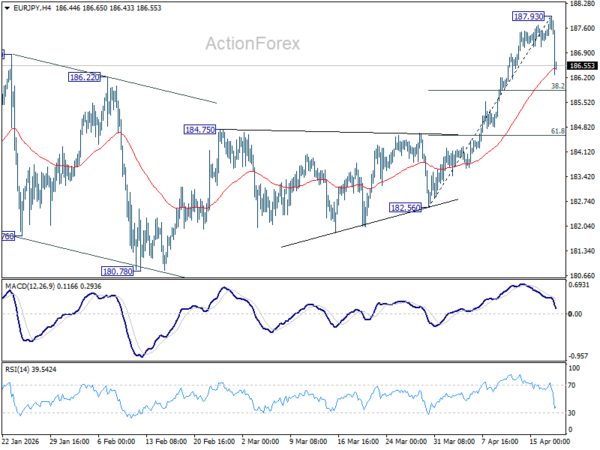
EUR/JPY’s sharp reversal last week suggests that a short term top was already formed at 187.93. Initial bias is mildly on the downside this week for 38.2% retracement of 182.56 to 187.93 at 185.87. For now, risk will stay mildly on the downside as long as 187.93 resistance holds, in case of recovery. In the

GBP/JPY Weekly Outlook - ActionForex

GBP/JPY Weekly Outlook – ActionForex

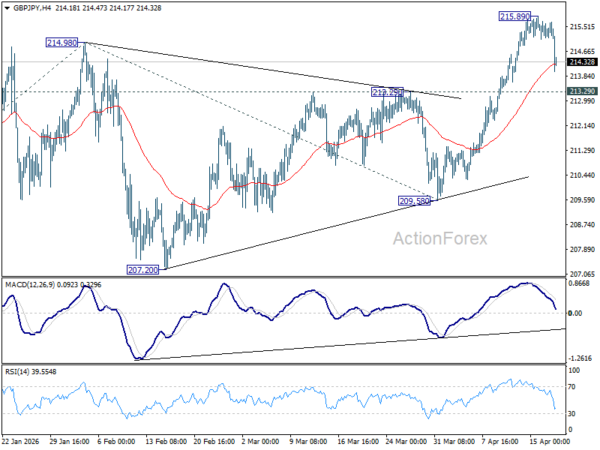
GBP/JPY’s pullback from 125.89 accelerated lower last week, but downside is contained above 213.29 resistance turned support. Initial bias stays neutral this week first. Firm break of 215.89 will resume larger up trend to 61.8% projection of 199.04 to 214.98 from 209.58 at 219.43. In the bigger picture, up trend from 123.94 (2020 low) is

USD/CAD Weekly Outlook - ActionForex

USD/CAD Weekly Outlook – ActionForex

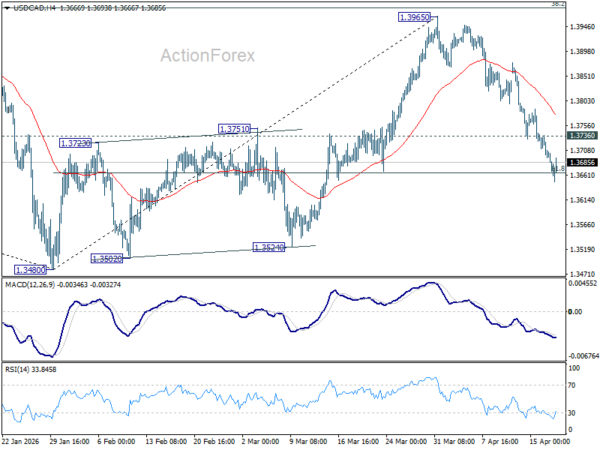
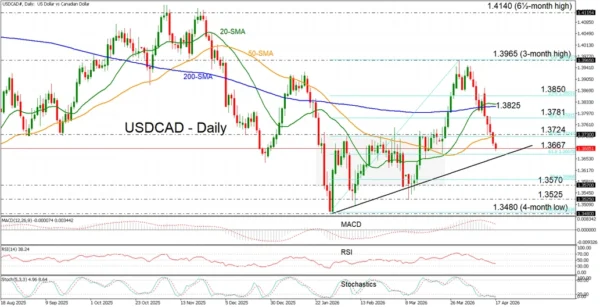
USD/CAD’s extended decline last suggests that rise from 1.3480 has completed with three waves up to 1.3965. Initial bias stays on the downside this week. Sustained break of 61.8% retracement of 1.3480 to 1.3965 at 1.3665 will pave the way to retest 1.3480 low. On the upside, above 1.3736 minor resistance will turn intraday bias

AUD/USD Weekly Report - ActionForex

AUD/USD Weekly Report – ActionForex

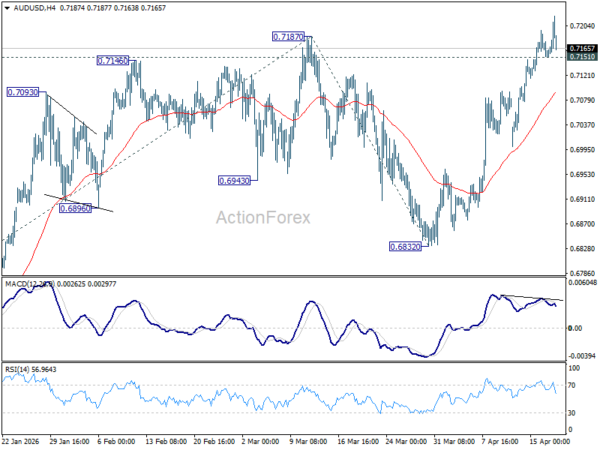
AUD/USD’s up trend resumed by breaking through 0.7187 last week. Initial bias stays on the upside this week for 61.8% projection of 0.6420 to 0.7187 from 0.6832 at 0.7306. On the downside, below 0.7151 minor support will turn intraday bias neutral and bring consolidations first, before staging another rise. In the bigger picture, rise from

USD/CHF Weekly Outlook - ActionForex

USD/CHF Weekly Outlook – ActionForex

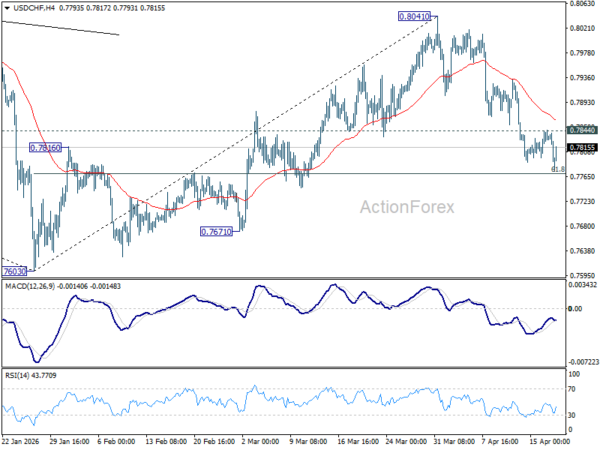
USD/CHF’s extended fall last week argues that rebound from 0.7603 has completed as a corrective move to 0.8041. Initial bias stays on the downside this week. Sustained break of 61.8% retracement of 0.7603 to 0.8041 at 0.7770 will pave the way to retest 0.7603 low. On the upside, above 0.7844 minor resistance will turn intraday

USD/JPY Weekly Outlook - ActionForex

USD/JPY Weekly Outlook – ActionForex

USD/JPY experienced some high volatility last week but after all, it’s still bounded in range trading below 160.45. Initial bias stays neutral this week first. Further rise is expected with 157.49 cluster support (38.2% retracement of 152.25 to 160.45 at 157.31) intact. On the upside break of 160.45 will target a retest on 161.94 high.

EUR/USD Weekly Outlook - ActionForex

EUR/USD Weekly Outlook – ActionForex

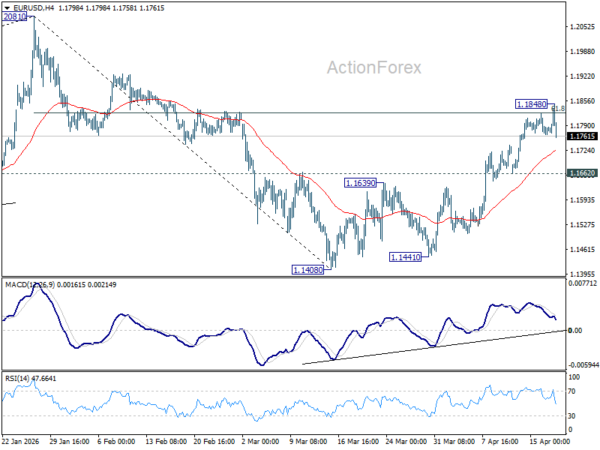
EUR/USD’s rise from 1.1408 extended higher to 1.1848 last week, but failed to take out 61.8% retracement of 1.2081 to 1.1408 at 1.1824 decisively. Initial bias is turned neutral this week first. On the upside, sustained trading above 1.1824 will pave the way to retest 1.2081 high. However, firm break of 1.1662 support will bring

USD/CAD Extends Pullback to Three‑Week Lows Below 1.3700

USD/CAD Extends Pullback to Three‑Week Lows Below 1.3700

USD/CAD extends almost two-week losing streak, drops below 50‑day SMA. Elevated oil prices underpin the loonie, weighing on the pair. RSI and stochastics slip into negative territory. USD/CAD is extending its corrective decline from the year‑to‑date high of 1.3965 reached in late March, sliding for a fifth consecutive session and marking nine down days in

EU Exports to US Drop 26.4% YoY in February, Down 16.1% to China

EU Exports to US Drop 26.4% YoY in February, Down 16.1% to China

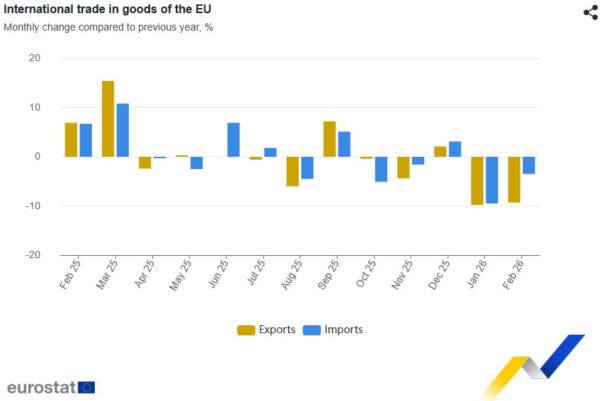
Eurozone trade surplus narrowed sharply in February, with the goods balance falling to EUR 11.5B from EUR23.1B a year earlier, as exports declined significantly. Total exports dropped by -6.7% yoy to EUR 232.4B. Imports fell more modestly by -2.2% yoy to EUR 220.9B, pointing to weakening external demand rather than a broad-based slowdown in trade

Economics Week Ahead - ActionForex

Economics Week Ahead – ActionForex

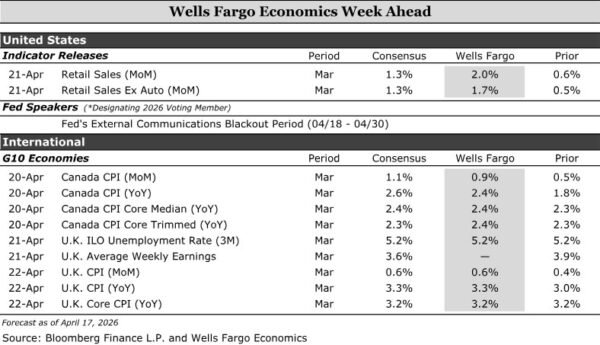
United States: Retail Sales (Tuesday), Kevin Warsh Confirmation Hearing (Tuesday) G10 Economies: Canada CPI (Monday), U.K. Labor Market & CPI (Tuesday & Wednesday) U.S. Week Ahead Retail Sales • Tuesday Consumers have largely been unfazed by the initial move higher in prices at the pump. High-frequency credit card data from Bloomberg suggests households have continued

Brent Oil Breaks Below $90 as Hormuz Reopens, Eyes $80 Next

Brent Oil Breaks Below $90 as Hormuz Reopens, Eyes $80 Next

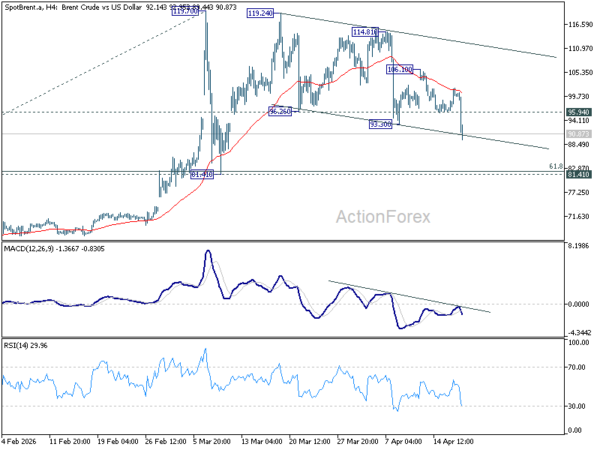
Brent crude has broken below the $90 mark, confirming a decisive shift in market sentiment as geopolitical risks ease. The move follows a sharp selloff triggered by news that the Strait of Hormuz has been declared fully open for commercial shipping during the ceasefire period. The development removes one of the most critical supply risks

0
Would love your thoughts, please comment.x
()
x