Movement is a ‘magic pill’
In modern American life, securing food might involve cruising through the drive-thru or tapping a delivery app. But the Tsimané, like our Paleolithic hunter-gatherer ancestors, expend a great deal of physical effort to meet their food needs.
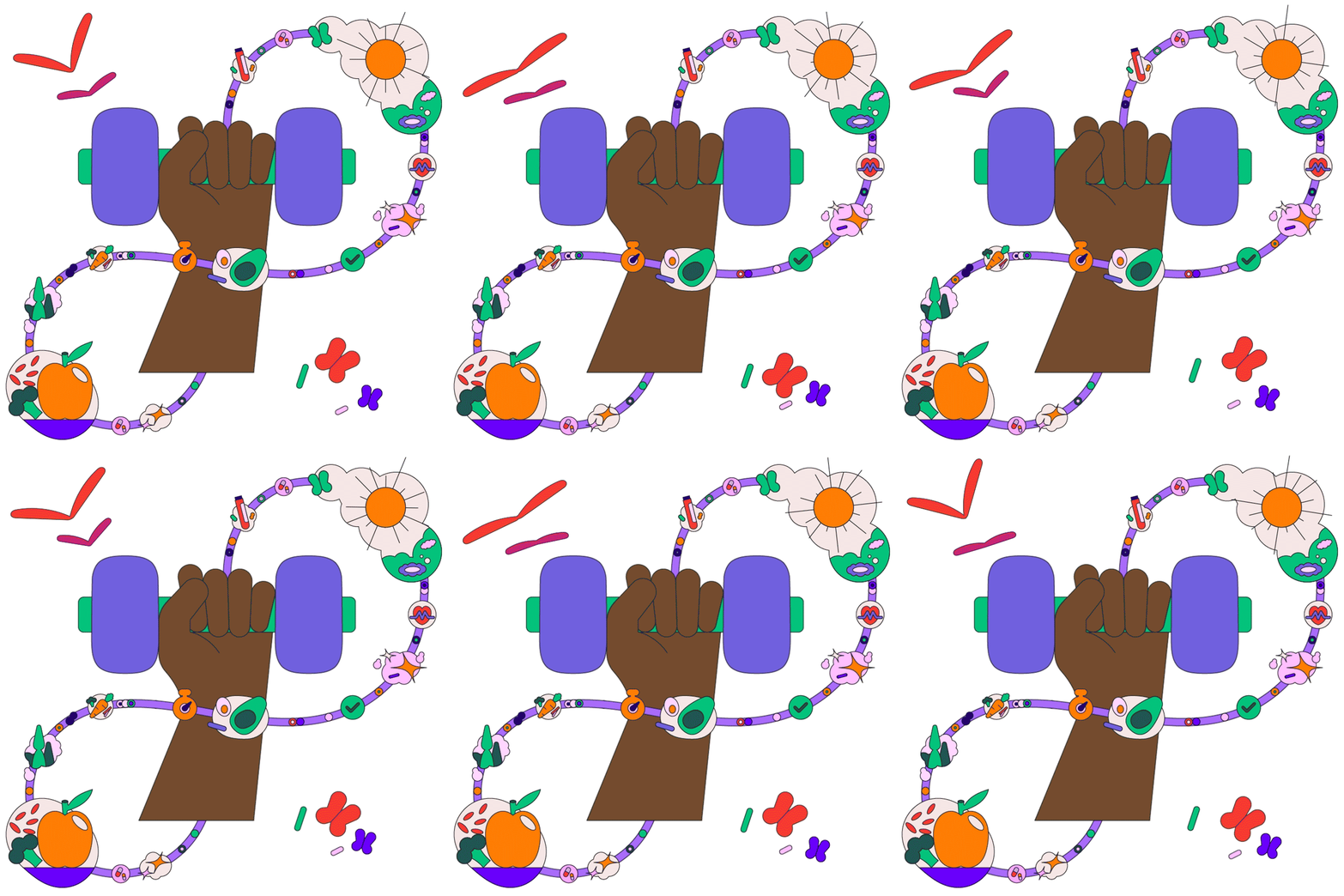
Research by David Raichlen, professor of biological sciences and anthropology at USC Dornsife, suggests that our brains and organ systems evolved to require a high level of physical activity to maintain their health. “Physical activity is about as close as we have to a magic pill because it benefits so many aspects of human physiology,” he says.
All forms of exercise have benefits for brain health and are associated with a reduced risk of Alzheimer’s and other dementias. “Any amount of exercise is better than none,” Raichlen says. “Whatever physical activity you really like to do, that’s what you should do.”
Movement forms that incorporate slow, controlled breathing, such as yoga and tai chi, may be particularly beneficial for protecting the brain from Alzheimer’s changes. Mara Mather, professor of gerontology at USC Leonard Davis, found that 20 minutes of slow-paced breathing twice a day for four weeks is associated with decreases in beta-amyloid 40 and 42 in the blood — biomarkers for Alzheimer’s brain changes. (You don’t even need to move while slow breathing to reap these benefits.)
Exercise reduces inflammation in the body and brain and activates brain-derived neurotrophic factor, a protein that nourishes neurons. “With aging and in Alzheimer’s disease, the production of BDNF starts to decline, and exercise can reactivate that,” says Constanza Cortes, assistant professor of gerontology at USC Leonard Davis.
Cortes’ lab is investigating how skeletal muscles communicate with the brain during exercise. In the development of Alzheimer’s disease, the brain’s ability to clear beta-amyloid and tau proteins is impaired, leading to their accumulation. Cortes compares these plaques and tangles to trash that builds up on city streets.
“One of the exercise pathways that we’re following reactivates the ability of the brain’s ‘trash trucks’ to get to where they need to be and get rid of these accumulated proteins,” she says.
In her lab’s research, Cortes and her team have pinpointed messengers between the muscles and the brain that govern this response. They’re working to develop what Cortes calls “exercise in a pill”: a drug that can mimic the activity of these messengers in humans. She envisions the drug being especially beneficial for older adults and others with mobility issues that impair their ability to exercise.