You can already put down a deposit for Huawei’s Mate 90 series in China, and Huawei still hasn’t said when it launches officially. Authorised shops in China are taking refundable deposits of CNY 200 to 300, about KES 3,900 to 5,800, for the regular models and CNY 1,000, about KES 19,300, for the Mate 90 RS Ultimate Design. On 26th September a booking page on Huawei’s own website showed a launch on 1st October. The page was pulled within hours, and a person familiar with the plans said the date was an internal test.
So the only official Mate 90 facts so far are the chip and one filing. The rest is leaks.
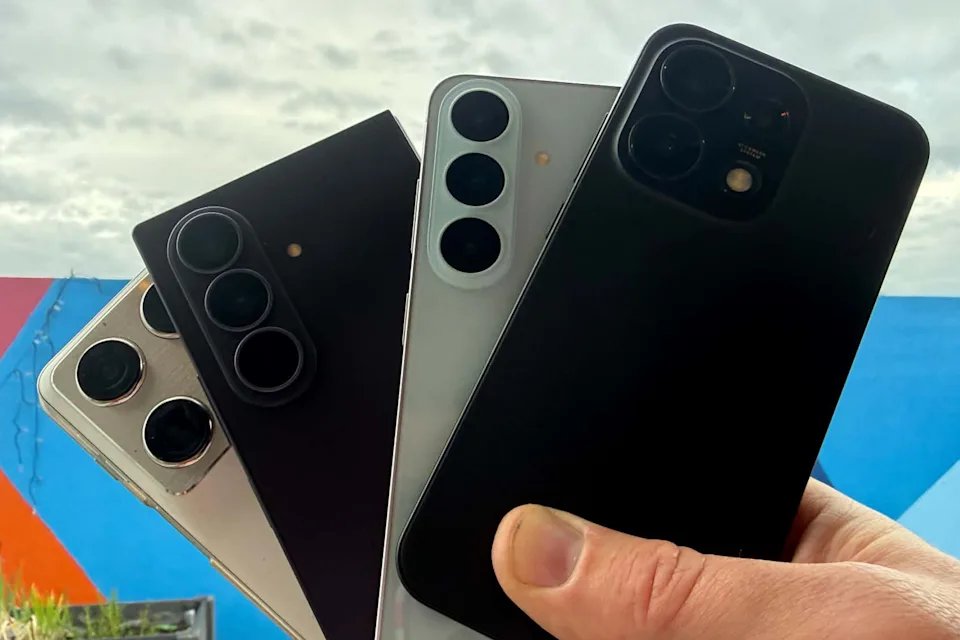
Four phones are expected:
- the Mate 90,
- Mate 90 Pro,
- Mate 90 Pro Max and
- Mate 90 RS Ultimate Design.
The Mate is Huawei’s top phone line, with a new generation every year in China. All four are expected to ship with HarmonyOS 7, the Huawei operating system that went live in early September, with no Google apps.

What Ultimate Design means


RS Ultimate Design is Huawei’s luxury tier. It sits above the Pro Max, cost 50% more than the Pro Max at launch last year, and gets Huawei’s most expensive materials and its octagonal camera surround, which Huawei calls the Star Diamond design.
The current one is the Mate 80 RS Ultimate Design, launched on 25th November 2025. It starts at CNY 11,999, about KES 232,000, and has a titanium frame, a Kunlun glass back and a 6.9-inch dual-layer OLED screen. Dual-layer means two stacked light-emitting layers, which make the screen brighter for the same power. It comes in purple, white and black.
What the Mate 90 RS looks like
On 24th September Richard Yu, who chairs Huawei’s consumer business, was photographed in Hefei holding an unreleased phone. One shot shows a two-tone back. Another shows a dark purple phone. Neither is sharp enough to tell whether the camera is round or octagonal, and that matters, because round is the Pro Max shape and octagonal is the RS.

Bloggers have since drawn renders of the RS from that photo: a bright red upper back, a pale lower section, and the octagonal camera kept. They’re fan artwork, not Huawei images. One tipster claims the back moves from glass to titanium.
If the renders are right, this is the first Mate RS Ultimate Design with two colours on the back. Every one so far has come in a single solid colour.
The chip is the one confirmed part
The top Mate 90 models are expected to use the Kirin 9050 Pro, and that chip is real. Huawei launched it in the Mate XT 2 tri-fold on 7th September.
US sanctions stop Huawei buying from TSMC, the Taiwanese firm that makes Apple’s and Qualcomm’s chips, and stop Chinese factories getting the most advanced chipmaking machines. The usual way to make a chip faster is to shrink its transistors so more fit in the same space. Huawei can’t shrink them as far as its rivals.
Huawei’s answer is what it calls the Tau law, first set out on 25th May by He Tingbo, president of its semiconductor business. The Kirin 9050 Pro uses “logic folding”: instead of spreading the chip’s logic units flat, Huawei stacks them in layers with vertical connections between them. Think of a bungalow rebuilt as a maisonette with a lift. Signals travel shorter distances, so the chip does more work for less power.
The numbers, on Huawei’s count: about 238 million transistors per square millimetre, up from about 155 million. Against the Mate XTs, single-core performance is up 24%, multi-core 52%, and the phone overall 42%. At the same performance as the Kirin 9030 Pro, the CPU’s fast cores use 41% less power.
So if you buy a Mate 90 Pro Max or RS, expect a faster chip than the Mate 80’s that, on Huawei’s numbers, uses less power for the same work. The cheaper models may not get it. Leaks say the Mate 90 keeps last year’s Kirin 9030 and the Pro gets a lightly updated Kirin 9035. None of that is confirmed.
The 5G label comes back
On 3rd September, two Huawei phones, model numbers CMM-AL00 and CMM-AL10, passed China’s telecoms certification listed as “5G digital mobile phones”. The filing gives a 6,615mAh rated battery, six cameras and HarmonyOS. Huawei hasn’t said which phones they are. The battery and camera count point to the Mate 90 Pro series.
The Mate 40, in October 2020, was the last Mate sold in China as a 5G phone. Mate phones since the Mate 60 reach 5G speeds, but Huawei never called them 5G, and the Mate 80’s status bar shows a Huawei-made “5A” icon. Outside China, Huawei brought 5G back on the Pura 90s Pro Max in July.
The lineup, as leaked
These configurations come from store allocation lists circulating in China, and the colours from the same leaks.
| Model | Chip (leaked) | Memory and storage (leaked) | Colours (leaked) |
|---|---|---|---|
| Mate 90 | Kirin 9030 | 12GB with 256GB, 512GB or 1TB | Black, white, pink, green |
| Mate 90 Pro | Kirin 9035 | 12GB or 16GB, 256GB to 1TB | Black, white, orange, green |
| Mate 90 Pro Max | Kirin 9050 Pro | 16GB with 512GB or 1TB | Black, white, gold, green |
| Mate 90 RS Ultimate Design | Kirin 9050 Pro | 16GB with 512GB or 1TB | Black, white, red |
A fifth model, a Pro Max collector’s edition, may also appear.
Mate 80 RS against Mate 90 RS
| Mate 80 RS Ultimate Design | Mate 90 RS Ultimate Design | |
|---|---|---|
| Chip | Kirin 9030 Pro | Not announced (leak: Kirin 9050 Pro) |
| RAM | 20GB | Not announced (leak: 16GB) |
| Storage | 512GB or 1TB | Not announced (leak: 512GB or 1TB) |
| Screen | 6.9-inch dual-layer OLED, 1 to 120Hz | Not announced |
| Main camera | 50MP, f/1.4 to f/4.0 variable aperture | Not announced |
| Telephoto | Two: 50MP macro telephoto and 50MP periscope | Not announced |
| Battery | 6,000mAh, 100W wired, 80W wireless | Not announced |
| Frame and back | Titanium frame, Kunlun glass back | Not announced (leak: titanium back) |
| Colours | Purple, white, black | Not announced (leak: black, white, red) |
| Starting price | CNY 11,999 (KES 232,000) | Not announced |
Funny, if the 16GB leak holds, the new RS has less memory than the old one. We’ll update this table on the same page when Huawei publishes the spec sheet.
For prices, expect higher retail prices than last year. Huawei raised Mate 80 prices on 1st September, as memory chip prices rose across the industry. The Mate 80 went from CNY 4,699 to CNY 5,499, about KES 91,000 to KES 106,000, and the Pro Max from CNY 7,999 to CNY 8,999, about KES 154,000 to KES 174,000. The RS price didn’t change. Price predictions circulating in China put the Mate 90 RS at CNY 12,999 to 14,999, about KES 251,000 to KES 290,000.