Trump announced a blockade of the Strait of Hormuz, but global markets outside the energy sector have generally shown restraint. Institutional analysts believe that the most panic-driven selling phase may have passed. Standard Chartered predicts that oil prices will retreat while the stock market is expected to rebound.
The United States’ blockade of the strategically vital Strait of Hormuz has once again triggered a familiar market response: a spike in crude oil prices, a rise in bond yields, and a strengthening of the US dollar.
However, this time, apart from the rise in oil prices, the overall market reaction has been notably subdued. The decline in stock markets on Monday was relatively moderate, indicating that investors have already priced in most of the geopolitical risks and are becoming less sensitive to headline news.
Billy Leung, an investment strategist at Global X ETFs, commented on Trump’s statement, saying, ‘The market views this largely as a negotiation tactic. Uncertainty has peaked, and market reactions are no longer as extreme as they used to be.’
Asian stock markets generally declined but with significantly moderate losses, with most major benchmark indices falling by about 1%. The decline in major U.S. stock index futures was also less than 1%.
Spot gold narrowed its daily loss to within 0.5%, holding near $4,730 per ounce, while the U.S. Dollar Index rose by approximately 0.3%. A stronger dollar makes dollar-denominated gold more expensive for holders of other currencies, thereby reducing its appeal.
Billy Leung stated that recent market movements suggest that investors are becoming increasingly accustomed to geopolitical shocks, with volatility easing compared to previous weeks. ‘I believe the market now has a more rational pricing and clearer understanding of Trump’s motivations.’
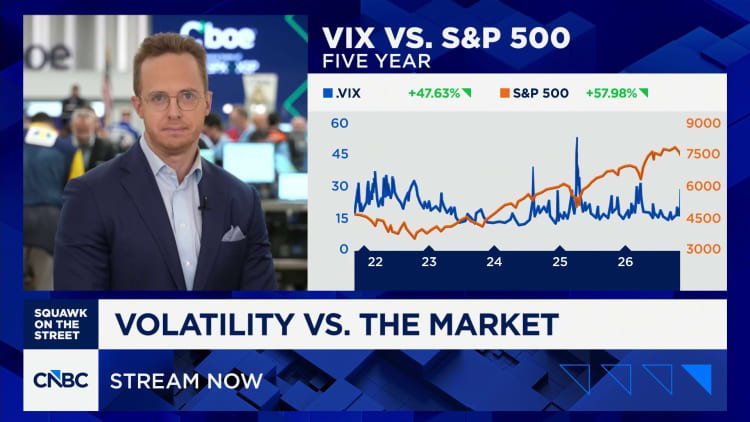
Similarly, Jun Bei Liu, Chief Portfolio Manager at Ten Cap, noted that volatility indicators suggest the worst of the panic may have passed. ‘A few weeks ago, we saw the VIX index rise, which might have marked the peak of panic and selling… From here on, the market will gradually self-correct.’
However, one key short-term risk stems from the political timeline of U.S. military actions. Billy Leung pointed out that the War Powers Resolution effectively grants the government a limited window to seek congressional approval. ‘In the coming weeks, the sense of urgency for the Trump administration will continue to rise.’ He added that the market may not yet fully appreciate this constraint.
It was reported that U.S. lawmakers are once again seeking to pass a resolution to block an Iran war and force Trump to obtain congressional approval before launching further attacks.
Oil prices are expected to retreat, and the stock market is likely to rebound.
The United States’ blockade of the Strait of Hormuz has further strengthened expectations of tightening energy supplies, driving up crude oil prices and exacerbating global inflation concerns. Since the outbreak of the conflict, shipping through the strait has been nearly interrupted.
Inflation concerns have also disrupted expectations of interest rate cuts, pushing bond yields higher while strengthening the dollar and causing stock markets to fall. Since the start of the conflict, the yield on 10-year U.S. Treasuries has risen by more than 333 basis points, with the dollar index climbing approximately 1.4% during the same period. Oil prices have surged over 55% since the onset of the conflict.
Analysts predict that even if short-term volatility persists, oil prices will eventually retreat as geopolitical tensions stabilize.
Michael Yoshikami, founder and CEO of Destination Wealth Management, stated: “I am highly confident that oil prices will retreat from this point… We will see prices return to around $80 per barrel.” He believes that the U.S. and Iran will ultimately reach a negotiated solution, which could quickly erode the current risk premium.
Steve Brice of Standard Chartered noted that high oil prices would delay the prospect of monetary easing, exerting upward pressure on bond yields and the dollar. “However, we view these as temporary phenomena, as we believe the U.S. is seeking ways to de-escalate the situation.”
Gold’s performance has been somewhat unusual, declining despite heightened geopolitical tensions. Brice attributed this to emerging market central banks selling gold to stabilize their currencies. However, he stated that if tensions in the Middle East ease, gold demand is expected to recover.
Currently, the market seems to be balancing between elevated geopolitical risks and expectations that the conflict will eventually ease, showing composure regarding Trump’s statements.
Brice remarked: “We believe equity positioning is favorable for a rebound, so as long as the situation does not deteriorate significantly, stock markets should continue to recover in the short term.” He added that even with a relatively positive macro environment, investors remain defensively positioned, meaning there is still room for a rebound if tensions begin to ease.
This creates a delicate environment for investors: geopolitical shocks remain important but no longer trigger panic selling as they did at the onset of the conflict.
Yoshikami remarked: “The outcome is no longer black and white. For the foreseeable future, the market will operate within a gray area.”