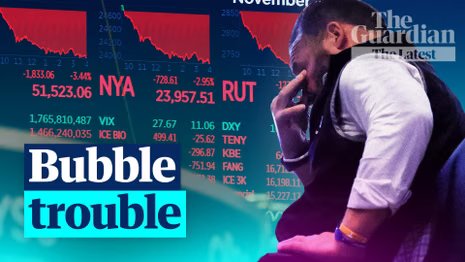
Wall Street partied the day after the midterms and woke up Thursday to tech’s worst day since the 2020 COVID crash. Strip out the AI trade, though, and most stocks barely noticed.
The equal-weight S&P 500 (RSP), a stand-in for the typical stock, closed at a record Wednesday and ended the week within about 1% of where it started.
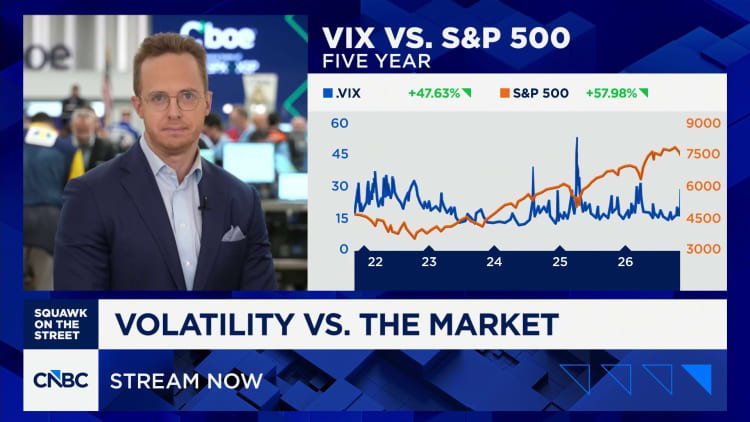
The headline indexes weren’t so lucky. The S&P 500 (^GSPC) and Nasdaq (^IXIC) each fell about 3% for a fourth straight losing week, capping a week of whiplash that ended with a Friday bounce in chip stocks.
The selling did something few investors would have bet on a year ago. It made tech cheaper than the broader market.
Tech stocks in the S&P 500 (XLK) traded at about 17 times expected earnings this week, below the broader index’s 18 times for the first time since 2017, Truist Wealth chief investment officer Keith Lerner wrote in a note Thursday. At the October 2025 peak, the sector fetched 32 times.
“At a 32.0x P/E last year, the market had baked in a lot of good news,” Lerner wrote. “Arguably, at almost half that level, the market is already pricing in a lot of bad news.”

Chips took the brunt of it. The PHLX Semiconductor Index (^SOX) fell for a fifth straight week and lost nearly 30% over that stretch, according to Yahoo Finance calculations. Micron (MU) and Sandisk (SNDK) each lost more than 20% this week alone.
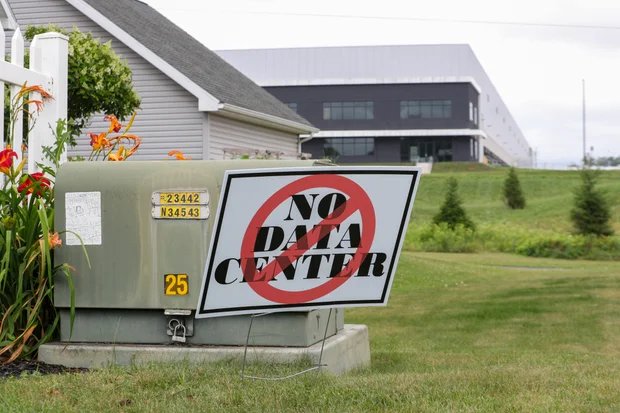
Lerner sees “something of a buyers’ strike in tech,” and he told Yahoo Finance Friday that chips are the first to feel any slowdown in data-center building, a risk that hung over the midterms. But a slower build-out could ease the cash drain on the biggest AI spenders.
“If this forces a little bit of a slowdown and maybe a little bit of positive in cash flow, I think that could actually elongate the cycle,” he said.
Truist’s advice is to stay overweight US large caps and add small caps “as a partial hedge against periodic sharp rotations away from megacap tech.” The firm also notes that stocks have risen in the year after every midterm since 1946.

History favors patience, mostly
The S&P 500 has had 33 streaks of four or more losing weeks since 1990. Three months later, it was higher about 80% of the time, with a median gain of 6%, according to Yahoo Finance calculations.
That’s better than the typical three-month return of about 3% after any week.
The exceptions came during the dot-com bust and the 2008 financial crisis, when the S&P 500 kept falling for another year.

Michael Martin, founder of TraderMindset.com, isn’t buying the dip. “It’s a time to harvest cash right now,” Martin, who runs a commodity futures strategy with Victor “Trader Vic” Sperandeo, told Yahoo Finance. “I don’t think these are buying opportunities. Everything’s in a downtrend.”