His interest in investing grew from there. Now, four and a half years later, he already has considerable experience investing in stocks, although he acknowledges that he still has much to learn and hopes to continue developing his skills.
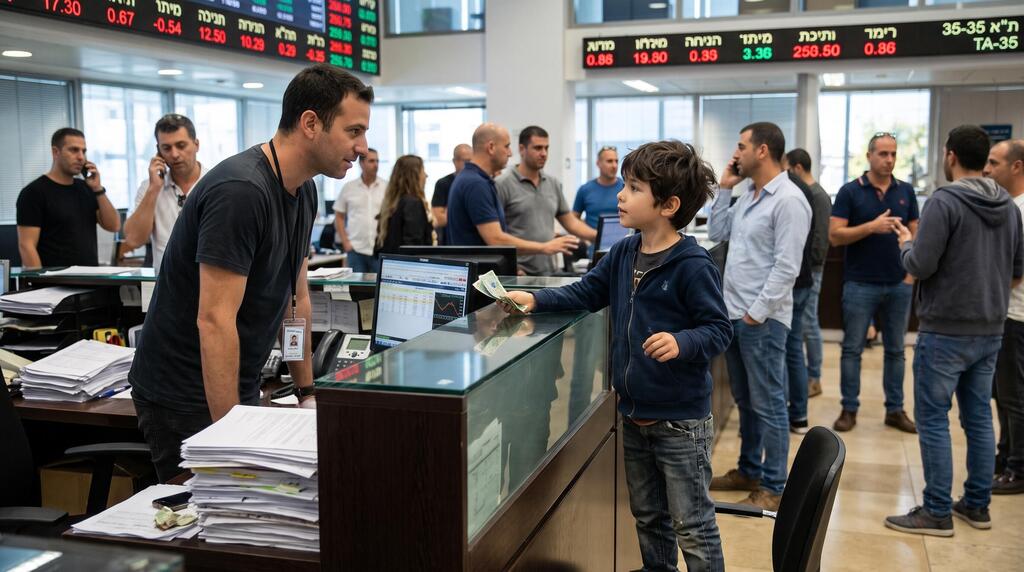
“I really love this world. It fascinates me,” he says. “I want to learn more and understand it better. I think children who want to start trading stocks should learn how to invest, read books on the subject, watch videos and start by investing a small amount in a relatively safe stock. They also need to understand that the stock market is constantly changing, so they shouldn’t panic when it goes down.”
His mother, Tal Izikowitz Raz, says Yotam now decides where to invest his money and which stocks to buy. “He reads Calcalist [Ynet’s financial news outlet], checks the stock market every day and keeps up with what’s happening. When he was 8, we decided to open an investment portfolio together on one condition: He would only make low-risk investments and wouldn’t engage in day trading.”
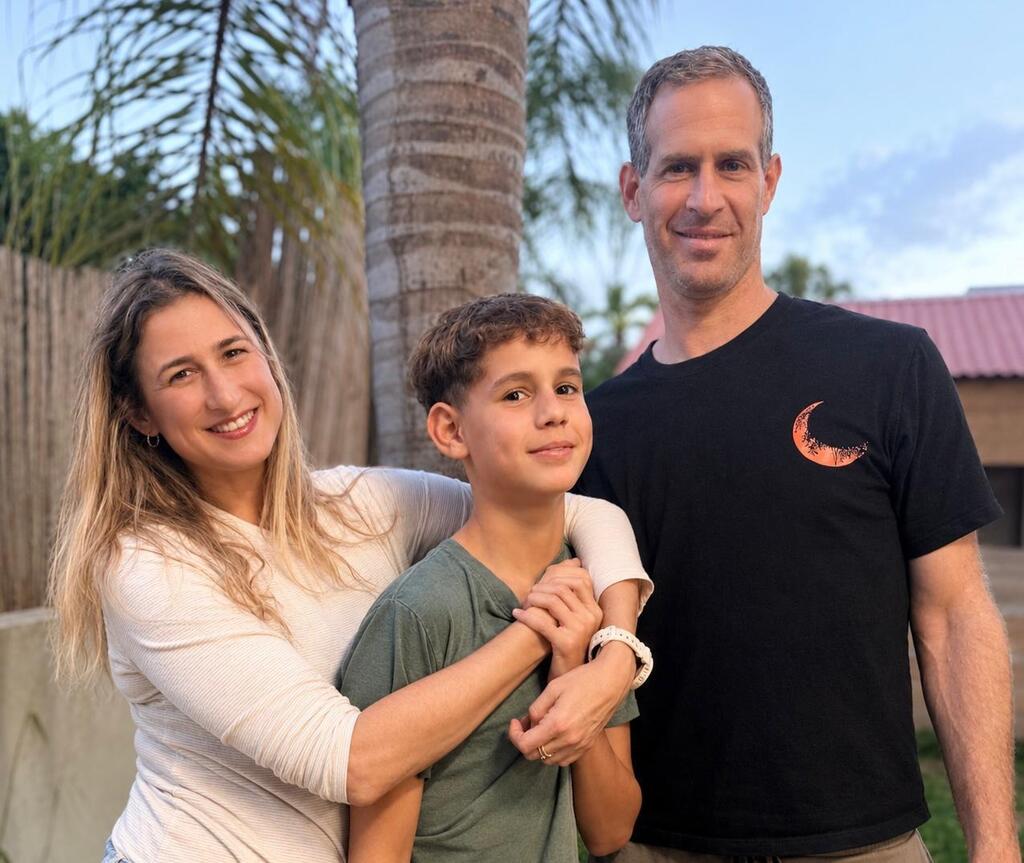
‘Yotam teaches us so much.’ The Raz family
(Photo: Noa Yitzhak)
Why rule out day trading?
“When a child so young invests in stocks, there are many challenges. Every time the market drops, he takes it very hard. When he was younger, he would actually cry whenever he lost money. It takes a great deal of patience and perseverance to learn that things eventually even out.”
So why not just settle on a conservative investment plan?
“Because there are also many advantages. He’s teaching himself about entirely new subjects, learning things that genuinely excite and interest him. He thinks ahead, calculates how much he might earn by age 20, invests in various interesting stocks and teaches us so much. For example, there was one stock he invested in after careful thought and consultation, and it went up 136%.”

‘I want to learn more and understand.’ Yotam Raz
(Photo: Courtesy of the family)
How different is it to raise a child who’s more interested in economics and money than in Roblox or FIFA?
“Actually, it’s quite complicated. On the one hand, it’s very exciting and fascinating. He’s teaching himself so much, he’s incredibly interested in the subject and he’s even started developing various apps to make the stock market more accessible to children.
“On the other hand, I wish Yotam weren’t so involved. He has so many questions: How much did the house cost? How much do we pay on the mortgage and in municipal property taxes? He does all kinds of calculations about our household finances, what’s worthwhile and what isn’t. For example, he calculated how much it would cost us to move to the United States.
“Sometimes I wish he could just be more of a kid, without thinking about stocks, money and what his future will look like. I wish he would focus more on having experiences and less on thinking about how much a trip abroad costs, for example, and what else he could do with that money. Incidentally, it has also made us take a look at ourselves. Because of him, we’ve started investing in stocks, too.”
In recent years, investing has become increasingly popular among young people. But while the trend was previously seen mainly among high school students, it is now reaching children in elementary school.
Amit Lewis of Mazkeret Batya, a town in central Israel, for example, started investing at age 12.
“My mom and I watched a TV series about money. They talked about the stock exchange and the capital markets, and interviewed kids who had started their own businesses and were also investing in the stock market,” he recalls. “I told my mom I wanted to invest, too, so she opened an account on a stock trading app because you have to be at least 18 to do that. I gave her 600 shekels I’d received for birthdays and holidays, and she deposited the money into the app.”
“I decide for myself what to invest in. I looked up different indexes on Google and checked their percentage gains over the past year and over the long term. I’m a Barcelona soccer fan, so I looked for Spanish stock indexes and chose to invest in the IBEX because it gained 33% over the past year and had also risen a lot over the long term. I also invested in a Tel Aviv stock index because it had gone up a lot.”
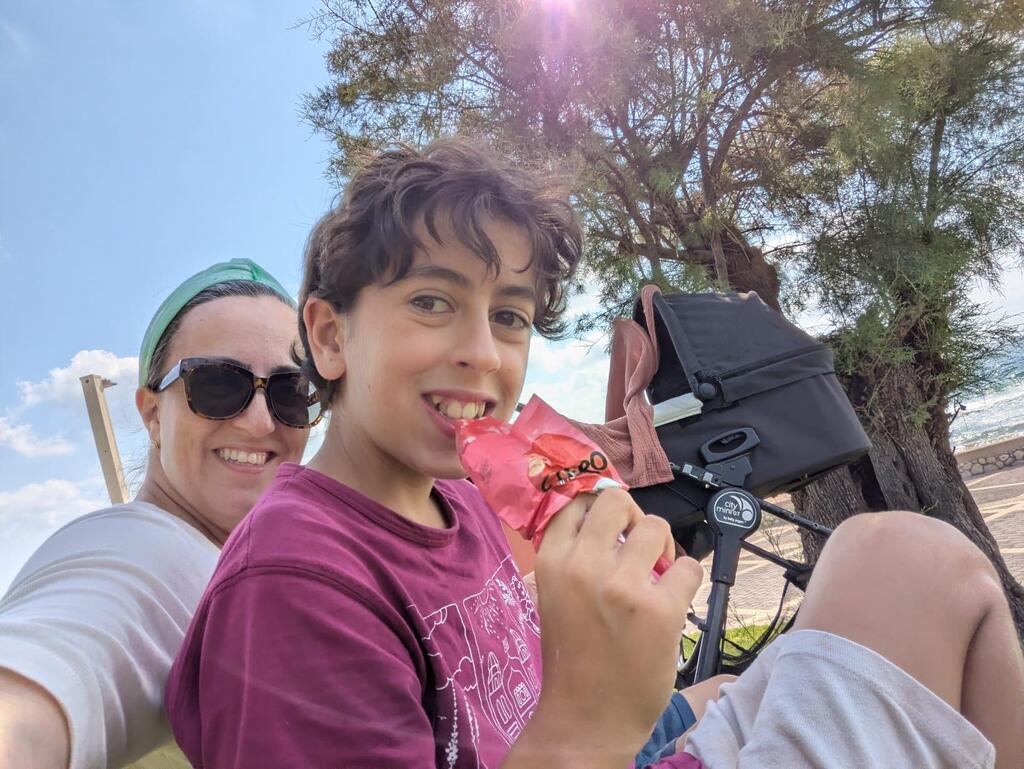
With his mother’s guidance. Tal and Amit Lewis
(Photo: Courtesy of the family)
How do people react when they find out you invest in stocks?
“When I told my grandmother about my investments, she said she’d never invested in her life, so she suggested I become her broker. She transferred $200 into the app, and I invested in an S&P 500 index fund. She said we should sign a contract saying I’d do my best to make her as much money as possible and that she wouldn’t complain if we accidentally lost a little or even a lot.”
Do you think there are any disadvantages to investing in stocks?
“There aren’t any disadvantages, but the advantage is that I’m young, so I’m investing for many years. That means I can make tons of money compared with adults who start later. It’s important for kids who invest in stocks to know that you can lose everything, and even billionaires can lose hundreds of millions of dollars in the stock market.”

‘It’s important for kids who invest in stocks to know that you can lose everything.’ Amit Lewis
(Photo: Courtesy of the family)
Tal Lewis, Amit’s mother, a pharmacist in the pharmaceutical industry and mother of five, says Amit has always been interested in money and economics.
“He has a long list of things he wants to achieve, like going to an Inter Miami game, attending a Barcelona game and buying a red Ferrari. We talked about how you need money to do those things and that to get money, you have to work. He thought about making lahoh [a spongy Yemenite flatbread] and selling it on Fridays, but then he discovered he didn’t actually like lahoh. We talked about how he already had money and how that money could generate more money.”
Were there disappointments along the way?
“At first, he checked every minute and got upset and disappointed, sometimes to the point of tears, whenever the numbers went down. His father explained that what happens every minute doesn’t matter, or even what happens every day or every month. Since then, he’s simply calmed down. Now he checks about twice a week.”
Osnat Garti, a clinical psychologist specializing in children and adolescents and director of the Garty Center, emphasizes that parents who allow their children to invest should provide close guidance and support.
“This isn’t a responsibility a child should carry alone. It’s important to make children feel that they’re doing it together with their parents, that the parent shares the responsibility and has their back. Feeling that they’re handling everything on their own can be very stressful. But when they feel their parent is there with them, the experience is different.
“With appropriate guidance, this can be an opportunity to practice delaying gratification, thinking long term, planning and understanding the value of money. There are many ways to develop these skills, and managing money can be one of them. But the amounts involved need to be appropriate, and the message should be that this is an experience meant for learning and enjoyment. If the parent is stressed or anxious, or invests amounts that are inappropriate for this kind of activity with a child, the child may experience stress as well.”

‘The message should be that this is an experience meant for learning and enjoyment.’ Osnat Garti
(Photo: Courtesy)
Are 12-year-olds really capable of dealing with these kinds of disappointments, such as when a stock they’ve invested in loses money?
“Children can cope with disappointment, but at that age, their thinking is more focused on the here and now. When they experience disappointment, it’s harder for them to look ahead and understand that the situation may change. They don’t yet have the life experience and perspective that adults have, so the disappointment they feel in the moment can be very intense. They need parental guidance to help them understand that markets fluctuate, put things in perspective and cope with the emotions that arise.”
What should parents say to a child when a stock loses money?
“It’s important to help children separate the loss from their sense of self-worth. Children may think the loss happened because of something they did, so parents need to explain that downturns are part of the investing experience and that losing money says nothing about their intelligence, their abilities or their capacity to understand finances.
“Alongside that explanation, it’s important to acknowledge their disappointment and help them put the event in perspective. It’s not the end of the world, but part of an experience that includes different periods and fluctuations.”
In the Barel family, the decision to start investing actually came from the father, Omer, a programmer at a high-tech company and father of three from Haifa.
“As someone who works in technology and is always looking ahead, I realized that traditional financial education — the idea of keeping a little money in a bank account — is no longer enough for the modern world. I wanted to give my 11-year-old son, Leo, real tools for understanding the world. And what better way than to learn by doing, discovering how money works, grows and accumulates over time?
“We started with small conversations about companies he knows and likes. From there, it developed into opening a dedicated savings and investment account, and since then it’s become a shared family adventure in which we learn together.”
Who decides which stocks to invest in, and why those particular stocks?
“We make the decisions together, as equals. We’re not looking to gamble on individual stocks or play Wall Street. Instead, we focus on broad exchange-traded funds, or ETFs, such as those tracking the S&P 500, which allow you to own shares in hundreds of major companies at the same time, from Apple to Disney.
“The logic is simple: Instead of putting all our eggs in one basket or trying to guess which company will come out on top next, we choose to grow alongside the global economy as a whole. It reduces risk, teaches the importance of diversification and, most importantly, reduces stress.”

‘A shared family adventure.’ The Barel family
(Photo: Courtesy of the family)
Has Leo made any investment decisions himself?
“Yes. For example, I explained to him who Warren Buffett is and his philosophy of investing in what you understand, and Leo chose to invest in gaming. He’s familiar with gaming companies and the games he plays, such as Microsoft, Minecraft, Fortnite and Roblox, and he made his choices based on that. He follows stock prices monthly, and we talk a little about the market and whether we should sell, invest more and so on.”
What are the challenges when a child this age invests in stocks?
“The biggest challenge is patience and understanding abstract concepts. Children live at a ‘here and now’ pace. They’re used to pressing a button and getting an immediate result. Explaining to a child that the stock market isn’t a video game and that you need to wait months or years to see meaningful results requires patient conversations.
“Another challenge is explaining the red days, when the market falls, and turning what could be a frightening lesson into a fascinating one about how these declines are natural and how the stock market and investments always move in waves.”

A lesson for life. Leo Barel
(Photo: Courtesy of the family)
Are there advantages, too?
“Enormous ones. Beyond the potential for future financial gains, the biggest advantage is a change in mindset. Leo no longer just consumes products or plays games. He’s starting to ask questions like, ‘How does this company make money?’ and ‘What’s a dividend?’ It gives him self-confidence, financial literacy that most adults acquire only much later in life and a sense of responsibility and capability.”
Leo himself says he finds the whole experience fun and, above all, interesting.
“I like investing, and I also like money, so it’s teaching me a life lesson. It’s a great feeling. But sometimes, when I have to decide whether to invest in a stock or use the money to buy a video game, it can be pretty hard.”
If all this has inspired you to get involved, Garti recommends starting by setting expectations.
“It’s worth explaining that investments don’t move in a straight line and that there are ups and downs. Children need to know in advance that losing money is also a possibility. It’s best to start with small amounts, without creating pressure or high expectations, and present the activity as a learning experience that also involves curiosity and enjoyment.
“The goal isn’t necessarily to make money or become wealthy, but to practice and learn. It’s also important to agree in advance that everyone can speak openly about the emotions that come up. It’s OK to feel disappointed, frustrated or angry.
“Parents also need to pay attention to the example they set. Are they constantly checking their investments, getting stressed over every decline or reacting critically toward their child? It’s also advisable to avoid investing inappropriate amounts, setting high expectations for profits or creating a situation in which the child feels solely responsible for the outcome.
“Although this may seem like a financial matter, when children are involved, it’s important to address the emotional side as well and tailor the activity to their ability to cope. When approached this way, the experience can be fascinating, enjoyable and educational.”
How can parents encourage children and help them develop a sense of confidence in their abilities?
“It’s best to focus on the process rather than just the outcome: on planning, long-term thinking and the ability to cope with disappointment. Just as we guide children in other areas, such as schoolwork or social challenges, it’s important for them to feel that their learning and experience are valued, even when the outcome isn’t what they hoped for.
“A sense of competence also comes from knowing they’re not alone. Their parent is there with them, thinking things through with them and sharing the responsibility.”