We believe we’re entering a new era of dispersion in the performance of financial assets. Behind buoyant index averages are sharply bifurcated cohorts of winners and losers. Equities are flying high but remain mostly propelled by a handful of AI superstars. Credit appears healthy in aggregate, but there’s a notable tail of unloved names. Economic growth looks robust but masks clear divergence in the experience of high- and low-income consumers, a phenomenon now termed the “k-shaped economy.” These dynamics serve as a reminder that averages shouldn’t be relied upon in a sophisticated investment process.
During the low-interest-rate environment of 2009-2021, credit was “bunched up,” with limited dispersion around the index spread. Now yields are much healthier, but a tougher backdrop (and perhaps the residual impact of the prior period being too easy) means we’re returning to a world where mistakes are punished – and potentially capitalized on. As Howard Marks recently wrote, the next phase is set to be more “interesting.”
The U.S. Economy: K-Shaped
U.S. economic data remains challenging to interpret, though the headline metrics appear mostly positive. GDP growth has certainly surprised to the upside, recording an annual rate of 4.4% in 3Q2025. Resilient consumer spending has been a big contributor, but there’s a more complex picture behind the headlines.
Aggregate consumption is reliant on a narrow cohort of high-income consumers, who’ve benefited the most from significant stock-market gains and continued to spend. (See Figure 1.) Meanwhile, the low-income consumer doesn’t look quite so buoyant. This segment benefited from strong salary growth in the wake of the pandemic, but this has now tailed off, down to 1.4% YoY compared to 4.0% for high-income households.1 Lower-income consumers have reduced their spending in several key categories, such as clothing and airlines, both categories in which high-income consumers have increased expenditure.2
Figure 1: Top Earners Increasingly Dominate Overall U.S. Consumer Spending
Source: Moody’s Analytics, Financial Times
Similarly, overall capital expenditure metrics have been propped up by a dramatic increase in AI-related spending. Hyperscalers’ capex is estimated to have reached around $400 billion in 2025 amid the well-publicized AI arms race.3 This represents an astonishingly high percentage of their revenue and remains complicated by a lack of clarity regarding return on investment. But right now, these companies are still soaring.
Equities: AI and Everything Else
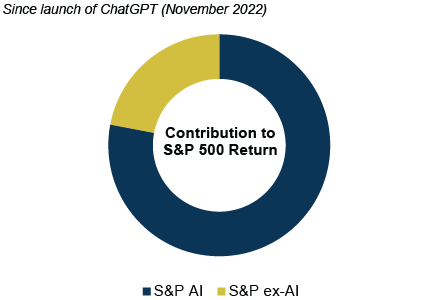
The S&P 500 once again confounded expectations to record a 16% return in 2025, marking its third consecutive year of double-digit gains. Where have the gains come from? AI: since the launch of ChatGPT in 2022, a relatively small group of AI-related stocks have driven a full three quarters of the S&P 500’s return.4 (See Figures 2 and 3.) It follows on that the major U.S. equity index has become very concentrated, with the 10 largest companies – mostly big tech – representing nearly 40% of the index.
This leaves a portion of the index comprised of many companies that haven’t dramatically increased earnings and aren’t contributing meaningfully to investor returns. It’s particularly visible when looking at the divergence in performance between sectors: the S&P 500 Info Tech index boasts a three-year annualized return of 33.8%, but Consumer Staples languishes at 6.5%, Energy at 1.8%, and Real Estate at 1.9%.5 In short, there’s only been one game in town.
Figure 2: AI-Related Stocks Have Been Red Hot…
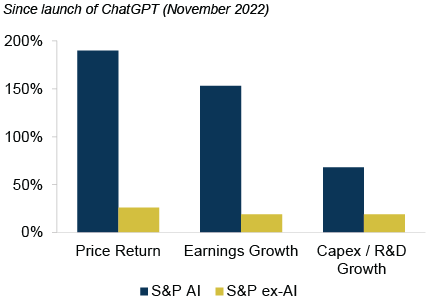
Figure 3: …Driving Over 75% of the S&P 500’s Return!
Source: JP Morgan, Bloomberg, as of December 22, 2025. “S&P AI” represents 42 companies within the S&P 500 identified by JP Morgan as being linked to generative AI
Credit: Haves and Have-Nots
“Tight spreads but good yields” has become the familiar refrain in the sub-investment grade credit universe. While that’s broadly accurate, looking under the hood gives a more nuanced perspective.
Mind the Spread Gap
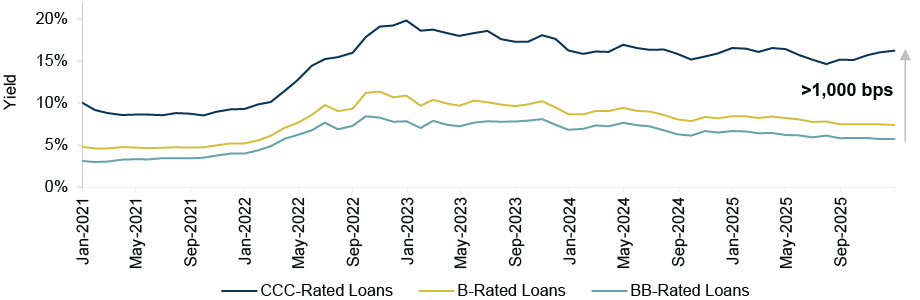
The senior loan index currently offers a yield of 7.9%, but BB-rated loans are at 5.7% and CCCs are at 16.1%!6 (See Figure 4.) It’s a similar story in the high yield bond universe, where index dispersion is the highest on record.7 Even within rating brackets, there’s meaningful dispersion: over 40% of CCC-rated high yield bond market value trades within a 400 bps spread – but 12% trades at over 1500 bps, reflecting the importance of a credit-by-credit investment approach.8
Figure 4: CCC-Rated Loans Trade More Than 1,000 bps Outside of BBs
Source: UBS Leveraged Loan Index, as of December 31, 2025
So why are unloved names falling so far through the cracks?
-
Weak credit documentation has heightened fears of poor recoveries, meaning struggling names can face immediate selling pressure. The data justifies this fear. While payment default rates remain low, recoveries are well below their long-term average: the recovery rate on first-lien loans stands at 37.7% versus the 25-year average of 62.3%.9
-
In the case of broadly syndicated loans, the dominant buyer – CLOs – has limited appetite for stressed loans. These managed vehicles must meet strict tests, including on CCC exposure, and must be relatively free of stress to secure economical financing from liability investors. This leads to structurally reduced demand for stressed credits.
-
Aside from technical pressure (i.e., fewer willing buyers for structural reasons), some credits are trading at elevated spreads because they’re fundamentally troubled. A good portion of CCC-rated credits are genuinely under significant strain: 40% of CCC-rated borrowers have operating cash flow coverage below 1.0x.10
Combine these factors, and it’s clear why certain names become pariahs. Encouragingly, part of the problem is that solid yields on performing names mean certain investors don’t need to reach for risk: performing credit investors can construct high-income portfolios without purposefully buying heavily discounted names. Meanwhile, more specialized investors might want to access oversold names, particularly if they have the capabilities to come out on top in a potential liability management exercise or restructuring.
Performing and PIKing
In the private credit world, dispersion is harder to map out. Without a developed secondary market, true price discovery is limited. However, it seems private credit loans are also increasingly bifurcated into fundamentally solid and fundamentally struggling, reinforcing the importance of selectivity.
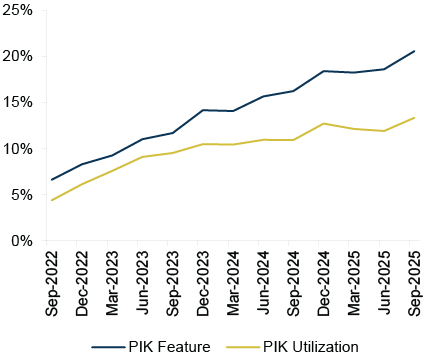
Earnings have been generally strong, with EBITDA growth of over 8% YoY in 3Q2025, and net leverage has trended down over recent quarters.11 (See Figures 5 and 6.) Default rates also remain very low, but there’s some stress under the surface, manifesting most evidently in the form of a reliance on payment-in-kind (PIK) interest as opposed to cash payment. Roughly 20% of private loans have PIK optionality and over half have ended up taking the option.12 But the good news is the instances where PIK emerges after the origination of a deal due to borrower stress remain relatively limited, representing around 4-5% of private loans.13
Figure 5: Earnings Have Been Strong…
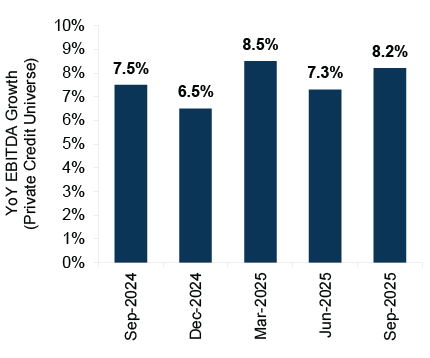
Figure 6: …But PIK Reliance Presents a Concern
Source: Houlihan Lokey Private Credit Databank, as of September 30, 2025
The direct lending market has expanded significantly (and rapidly) to reach a similar size to the more established broadly syndicated loan market. It continues to present excellent opportunities for income-seeking investors, but the next phase of direct lending is likely to be defined by selectivity and risk management as opposed to origination volume. Accessed prudently, the direct lending market remains a valuable core of private credit portfolios, augmented by less-tapped verticals such as asset-backed finance and various sectorial niches.
What Next?
A dispersed market requires a nuanced management approach, rewarding both prudent risk control and intrepid opportunism. Relying on index averages won’t be enough, as the performance of assets within the same universe drift apart. Part of the conundrum, as always, will be delineating between assets that are (a) unreasonably discounted due to psychological aversion and (b) appropriately discounted because they’re fundamentally flawed.
The vast scale of the sub-investment grade credit markets means both the performing bulk and stressed subset will each be of significant absolute volume. There’s potentially excellent income opportunity accessible through the performing side of the private and liquid credit markets, while the few percent of distress also creates a substantial dislocation opportunity.
Credit Markets: Key Trends, Risks and Opportunities to Monitor in 1Q2026
(1) Supply on the Horizon?
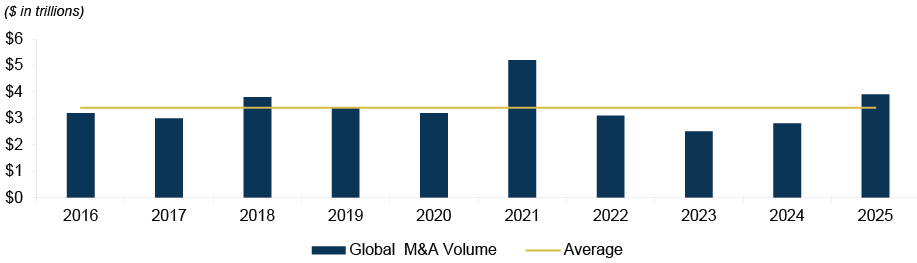
In today’s technically driven credit markets, the level of supply may be the defining factor determining the direction of spreads in 2026. New issuance has been limited over the past few years, putting downward pressure on credit spreads amid a sustained wave of demand from yield-seeking investors. There are positive signs that deal activity may be returning, with M&A trending upward in 2025. (See Figure 7.) However, depressed private equity activity remains the main barrier to serious credit issuance, and, consistent with our dispersion theme, timely exits remain much easier for high-quality portfolio companies, leaving less-desirable businesses held for an extended period.
We discussed the outlook for European credit supply in more detail in a recent podcast.
Figure 7: M&A Volume Appears to Be Recovering
Source: LSEG, Morgan Stanley, as of December 31, 2025; includes announced transactions of over $100mm and excludes terminated transactions
(2) Return of Term Premium
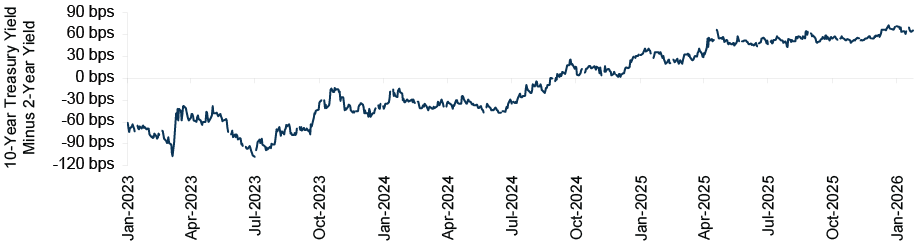
The yield curve was inverted for all of 2023 and most of 2024, with the two-year treasury yield briefly exceeding the ten-year by over 100 bps in 2023. (See Figure 8.) More recently, it’s been around 65-70 bps the other way, representing a dramatic swing. In short, it seems like term premium – the additional compensation for holding long-dated paper – has returned to the treasury market, as investors fret over sticky inflation and the potential unsustainability of the fiscal deficit.
Figure 8: The Yield Curve Has Steepened
Source: Federal Reserve Bank of St. Louis, as of January 26, 2026
(3) Angel Watch
Nearly $55bn of investment grade debt was downgraded to high yield in 2025, the highest volume since 2020 and far outweighing the volume of rising stars. Barclays predicts an even greater volume next year, at around $70-90bn: notably, this isn’t based on predictions of systematic strife, but a handful of large BBB-rated fallen angel candidates.