CBC Guide: Nicaraguan Coffee


Since its introduction to coffee in the 1800s, Nicaragua has been producing some great flavor. The coffee trade quickly became important to their economy as coffee plants flourished in the climate. Let’s take a deeper look at the Nicaraguan coffee industry and its coffee beans!

History of Nicaragua Coffee

European immigrants brought coffee to Nicaragua in the mid-19th century because of its ideal climate and soil. While political instability affected the coffee industry’s growth, coffee quickly became the country’s main export.

Over the course of the 20th century, the Nicaraguan coffee industry grew exponentially. The success of the trade allowed them to develop infrastructure to improve it. The government recognized this success and offered incentives for farmers to grow coffee.

The Nicaraguan government also began pushing trade with European immigrants. This led to many coffee estates (fincas) arising across the country. To this day, most Nicaraguan coffee is grown on these family estates.

In the late 20th century, some problems arose. Not only did the Nicaraguan Revolution and other natural disasters interrupt coffee production, but the cold war bans from the United States made coffee difficult to export.

The market has since recovered, and demand is steadily increasing. Fortunately, Nicaragua has the steady, established coffee trade to meet it.

Coffee Growing Regions

Coffee in Nicaragua is generally grown at high altitudes between 1,100 – 1,600 meters (approximately 3600 – 5250 feet) above sea level. There are several main growing regions, although the distinctions between them are subtle. Regardless of region, Nicaraguan coffee tends to be “shade grown”. Shade grown coffee grows slower, which allows for the development of more nuanced flavors.

Jinotega Region

The department of Jinotega—named so after its capital city—produces 80% of Nicaragua’s coffee. The hallmarks of the location are its high elevation and rich volcanic soil, coupled with a tropical climate and plentiful shade. Jinotega produces Caturra and Bourbon Arabica varieties.

Matagalpa Region

Like Jinotega, Matagalpa has rich volcanic soil and a tropical climate but it sits at a lower altitude. Matalgalpa also primarily produces Caturra and Bourbon Arabica varieties.

The department is named after its capital city of Matagalpa. The city is known as the coffee capital and houses the National Coffee museum, making it a great destination for coffee tourists.

Segovia Region

Las Segovias encompasses five northern Nicaragua departments: Estelí, Jinotega, Madriz, Matagalpa, and Nueva Segovia. Beans from Nueva Segovia provide the most flavor variety compared to the others mentioned. Instead of the common citrus notes, Nuevo Segovia coffee is known for more sweet, floral notes. Unfortunately, it’s difficult to come across coffee from this region.

Other Regions

There are a couple other growing regions in Nicaragua: Estelí and Madriz. These are less prominent and less commercially produced but worth knowing for their unique flavors. Madriz and Esteli both produce floral notes that are often associated with Segovia.

Nicaraguan Coffee Bean Varieties

There are a few things worth noting about the variety of beans in Nicaragua. First, beans coming out of this country will be Arabica, most commonly Bourbon (Caturra). Some other varieties are Pacamara, Catimor, Maracaturra, Red Catuaí, and Yellow Catuaí. These varieties are the reason Nicaraguan coffee is well-balanced with a good acidity.

Second, Nicaragua also provides the perfect environment for a fairly unique bean to thrive: the elephant bean. Maragogype (the elephant bean) is called this because of their shear size, making them the largest on earth. Initially growing in Brazil, these beans are mutation of Typica beans.

Flavor Notes

The flavor of Nicaraguan coffee can be similar to other Central Americn coffees, though often milder in acidity. Nicaragua is known for prominent fruity and citrus notes in their beans. This is accompanied by a caramel sweetness and chocolate or nutty flavors.

The contrast between the bitter and the sweet give Nicaraguan beans their distinctive flavor profile. Within the country, as noted previously, there is some variety. Beans from Segovia taste more floral than citrus.

The body of the brew is smooth, and the acidity is bright and citric. These attributes cause it to be a well-balanced coffee. Nicaraguan coffee is also aromatic in that you can distinctly smell the bitter and sweet notes in the brew.

The Best Roast for Nicaraguan Coffee

Because the coffee beans are so well-balanced, there is a lot of flexibility regarding the best roast for them. Maragogype (the elephant bean) is best with a light roast that allows the complexity of the bean to come through.

For the rest of the beans, it is often recommended to use a medium roast. This deepens the already present flavors and adds a richness to the brew. Of course, if you enjoy that dark brew flavor, you can also do that. Segovia beans go well with a dark roast as it can increase the nutty and cinnamon flavors.

The Best Brewing Method for Nicaraguan Coffee

Because of the flexibility with roasting the beans, there are a lot of ways that you can brew Nicaraguan beans. Check out our guide to determine good brews for each roast level. The best brew also depends on the grind of the coffee, so keep that in mind if you buy pre-ground or grind your own.

Two great ways to have Nicaraguan coffee are cold brew and milk-based drinks. Cold brew (or Japanese style iced coffee) gives the complex flavor profile a chance to really shine. And the sweetness of the beans lends itself towards milk-based drinks, like a latte.

Conclusion

Today, Nicaragua is the 12th largest coffee producing country in the world. Last year they output 2.7 million 60-kilogram bags of delicious coffee. Known for their well-balanced flavor, it’s sure to give you a delicious brew.




Source link

Visited 3 times, 1 visit(s) today

Related Article

Daily Market Price Updates and Commentary 17th November 2026

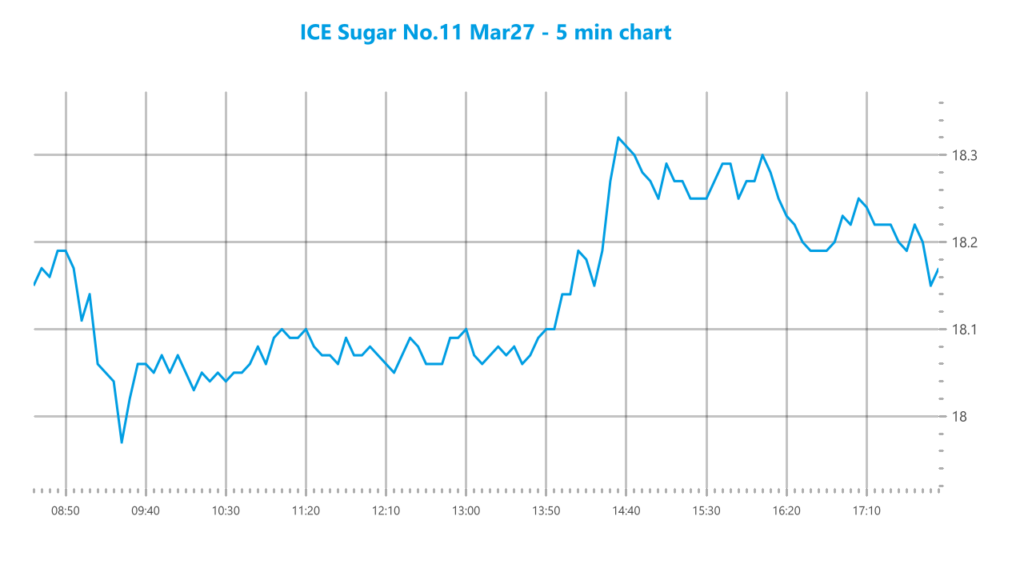
  ICE Futures U.S. Sugar No.11 Contract Settlement (cUS$/lb) Open High Low Last Volume O/I Life High Life Low Mar27 18.17 0.07 ▲ 18.14 18.33 17.97 18.17 55,783 540,886 21.29 14.42 May27 17.60 0.01 ▲ 17.60 17.78 17.44 17.60 24,605 224,913 20.40 14.29 Jul27 17.24 -0.02 ▼ 17.26 17.40 17.11 17.23 15,295 146,817 19.81 14.27

Consumer staples stocks benefiting from a powerful rotation as tech gets slammed

Investors continue to find comfort in boring consumer staples stocks as growth expectations for the tech giants driving the AI boom come under closer scrutiny. The S&P 500 (^GSPC) tech sector’s (XLK) forward price-to-earnings (P/E) ratio is currently 17.2 times, its lowest level since 2020, according to data crunched by Duality Research. The S&P 500’s

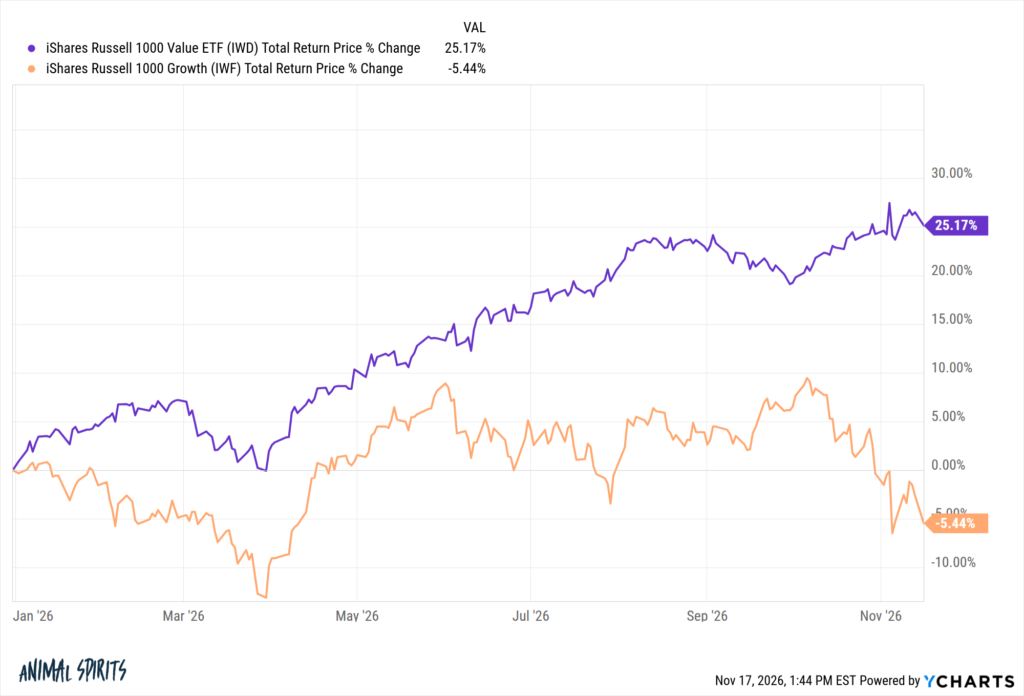
A Strange Year in the Stock Market

For years now it felt like the only game in town was U.S. large cap growth stocks. That’s changed somewhat in the past few years. Growth stocks have still done fine, of course, what with the AI boom and all. But other areas of the market have come to life. Emerging markets have outperformed. International

SPCX Stock In Focus: SpaceX To Reportedly Launch $4B Bond Sale This Week

According to Bloomberg, Goldman Sachs and Apollo Global Management are expected to underwrite the offering. Funds associated with BlackRock and KKR have also made financing commitments Microsoft, Meta and Oracle recently announced plans to raise funds for AI expansion. SpaceX (SPCX) could begin selling bonds worth around $4 billion this week as part of its

LVMH: Share transactions disclosure | MarketScreener

Paris, November 17th, 2026 The disclosure of share transactions carried out from November 9th to November 13th, 2026, was sent to the AMF on November 17th, 2026. As required by current law, this document is publically available and can be consulted on the Company’s website (www.lvmh.com) under the section «regulated information». LVMH LVMH Moët Hennessy

Ipsos: Disclosure of trading in own shares under a share buyback programme (9 to 13 november 2026)

17 November 2026 Disclosure of trading in own shares under a share buyback program Period: From 9 to 13 November 2026 Issuer’s registered name: Ipsos Issuer’s Identification code: 9695002OY2X35E9X8W87 Financial instrument reference: Ordinary shares – ISIN code FR0000073298 Reporting of transactions in aggregated form (per day and per trading venue) Issuer name Issuer Code Transaction

Prediction: Dec. 9 Will Mark a Turning Point for the S&P 500

Suddenly, the S&P 500 (^GSPC -0.36%) doesn’t look so hot anymore. It has declined by 3% over the past month as bearishness in the tech sector has been weighing on the broader markets. Plus, with interest rates on the rise and questionable economic conditions, investors have been more eager of late to sell stocks, especially

3 Wall Street predictions for the stock market in 2027

Morgan Stanley’s “max overweight” call on stocks for 2027 is getting some attention this week. As it should, because you often don’t see this type of extreme call — bullish or bearish — from a reputable Wall Street shop. The investment bank’s strategists say the AI spending boom will help keep the global economy humming,

5 Unstoppable Stocks to Buy According to Analysts

AI stocks had a brutal week. Last Thursday, the S&P 500 fell 4.4%, its biggest one-day drop since the April 2025 tariff shock. The Dow Jones Industrial Average lost more than 1,800 points, and the Nasdaq Composite tumbled 5.5%. The slide erased the market’s gain from the day before, its best in three months. Stock

Prediction: Nov. 18 Will Be a Huge Day for AI Power Stocks. Here’s Why.

Nvidia (NASDAQ:NVDA) is coming off a huge week, and for all the wrong reasons. Founder Jensen Huang was forced to resign as CEO after the company’s board began probing allegations that he had a relationship with a Chinese businesswoman who U.S. intelligence officials suspect was spying for Beijing. Congress is investigating, too. Now Nvidia steps

Markets Are Starting to Act Like They Fear a Crisis is Ahead

A broad liquidation swept stocks, commodities, and metals as the US dollar and Japanese yen surged. Unlike last week, Fed rate hike bets are fading. Is a whiff of crisis in the air? Stocks, commodities, and precious metals sold off together as correlations tightened Treasury bonds rose and Fed rate hike bets eased, pointing to

SPCX Stock Dethrones Intel As Nvidia’s Biggest Holding — Druckenmiller Buys In And Tepper Ups His Stake Over 1,600%

SpaceX overtook Intel as Nvidia’s largest disclosed holding after Nvidia added 7.71 million SpaceX shares and cut its Intel share count by 25%. Stanley Druckenmiller’s Duquesne opened a $30.5 million SpaceX position. Two of Cathie Wood’s ARK funds bought 378,515 SpaceX shares and sold 543,092 Nvidia shares on Monday. Shares of SpaceX (SPCX) overtook Intel

ASML reports transactions under its current share buyback program

ASML Netherlands BV ASML reports transactions under its current share buyback program VELDHOVEN, the Netherlands – ASML Holding N.V. (ASML) reports the following transactions, conducted under ASML’s current share buyback program. Date Total repurchased shares Weighted average price Total repurchased value 09-Nov-26 75,799 €1,324.03 €100,360,173 10-Nov-26 70,000 €1,355.01 €94,850,644 11-Nov-26 70,000 €1,394.30 €97,600,706 12-Nov-26 70,000

Nvidia Stock Is Down 32%. Is It a No-Brainer Buy at $163 or a Value Trap?

Nvidia (NASDAQ:NVDA) has gone from one of Wall Street’s hottest artificial intelligence stocks to one of its biggest sources of anxiety. Shares of the chipmaker have plunged roughly 30% from their October peak amid concerns about AI spending and the unexpected departure of longtime CEO Jensen Huang. That sell-off has pushed Nvidia’s valuation down to

0
Would love your thoughts, please comment.x
()
x