The Stock Market’s Biggest Risk Isn’t a Crash. It’s What Investors Might Do When One Arrives.

Imagine seeing your nest egg lose 30% of its value. In this scenario, the market has already delivered a painful setback. Selling may seem like the obvious way to regain control, but selling also creates a new problem: When will you get back into the market?

In reality, panic selling — and delaying reentering the market — can lead to enormous opportunity costs for investors. Let’s explore why.

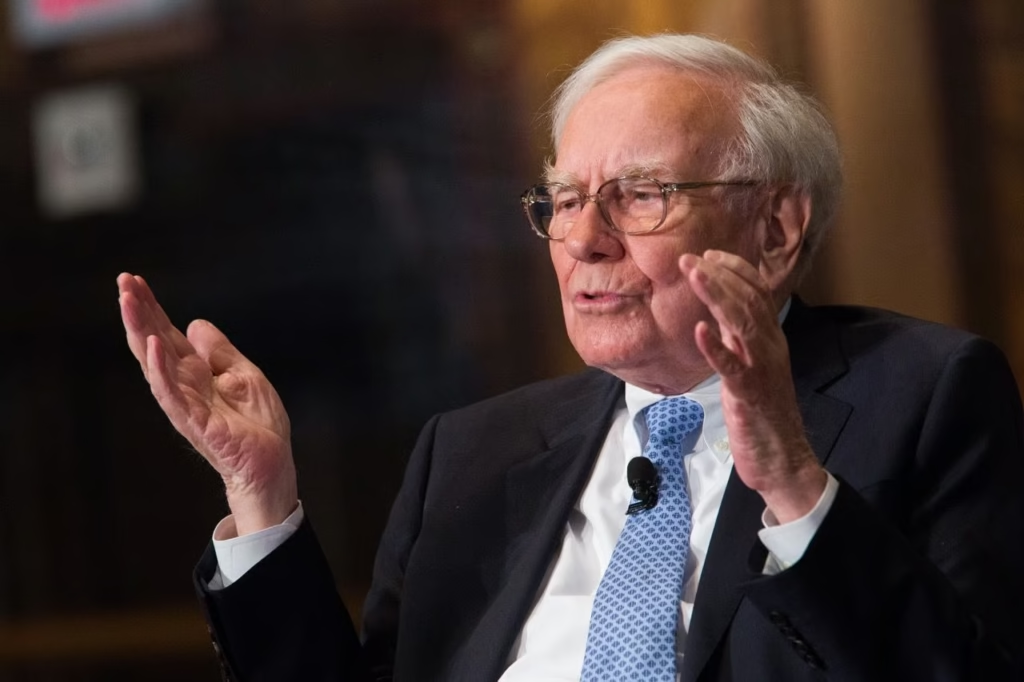
Image source: Getty Images.

Selling creates a new problem

Seeing your portfolio lose value is never fun. Indeed, psychological studies have shown that investment losses have a greater psychological impact than equivalent gains, a phenomenon known as loss aversion. Therefore, it’s completely understandable that many people seek immediate relief when the market enters a sell-off, correction, or crash.

However, the psychological relief of liquidating investments creates a new problem: determining when “it’s safe.”

In practice, most investors simply wait too long. Many wait for recessions to end or for bullish headlines to appear. But bullish headlines often lag positive price action. As a result, investors on the sidelines often miss out on massive recovery rallies. As we’ll see next, that can have a significant impact on long-term growth.

The recovery math is less forgiving than it looks

Consider a $10,000 portfolio. If it drops 30%, its value will fall to $7,000. To get back to $10,000, the portfolio will need to gain $3,000. Since the overall value has fallen, it will need to generate approximately a 43% return on $7,000 to reach $10,000. So to wipe out a 30% drop, it needs to gain 43%. These amounts differ because the starting amounts differ.

Beyond the arithmetic, there are other costs. Transaction costs, lost dividend payments, and taxes have to be considered. In short, selling might ease one type of headache but create several others.

A falling stock price doesn’t automatically equal a broken business

Despite understanding the math and the other implications of selling, many investors can’t resist the urge to sell when the stock market is falling. One way to train yourself not to sell is to imagine a similar situation in a different market.

For example, let’s say you own a house. Now imagine that another house in your neighborhood sells for half of what might normally be expected. That sale will decrease the value of all homes in the neighborhood, perhaps significantly. But even if the price of your own home falls 10%, 15%, or even 25%, that doesn’t mean one of the bedrooms in your home disappears.

Stock portfolios work the same way. Prices can fall, but that doesn’t necessarily mean that the businesses behind the stocks have deteriorated to the same degree.

Patience works best when the portfolio is built for it

For a buy-and-hold strategy to work, investors must build a portfolio that can withstand periods of volatility. Leveraged positions and meme stocks can wreck a portfolio during a stock market correction or crash. Therefore, savvy investors know to limit their exposure, or, better yet, avoid such investments altogether. By building a diversified portfolio based around well-run businesses, an investor can avoid much of the worst effects of a market downturn.

What to do when a crash arrives

Market crashes are terrible, but thankfully, they’re also rare. However, to prepare for them, it’s best to have a plan. Writing it down can help you manage your emotions, think carefully, and avoid panic. At the end of the day, the math and the studies are clear: It’s best to ride out market downturns rather than sell and try to time reentry perfectly.

If you can keep a cool head and remember this in the moment, you’ll likely come through the next financial downturn in better shape than many other investors.

Where to invest $1,000 right now

When our analyst team has a stock tip, it can pay to listen. After all, Stock Advisor’s total average return is 823%* — a market-crushing outperformance compared to 209% for the S&P 500.

They just revealed what they believe are the 10 best stocks for investors to buy right now, available when you join Stock Advisor.

See the stocks ›

*Stock Advisor returns as of November 17, 2026.

Source link

Visited 1 times, 1 visit(s) today

Related Article

SPCX Stock Dethrones Intel As Nvidia’s Biggest Holding — Druckenmiller Buys In And Tepper Ups His Stake Over 1,600%

SpaceX overtook Intel as Nvidia’s largest disclosed holding after Nvidia added 7.71 million SpaceX shares and cut its Intel share count by 25%. Stanley Druckenmiller’s Duquesne opened a $30.5 million SpaceX position. Two of Cathie Wood’s ARK funds bought 378,515 SpaceX shares and sold 543,092 Nvidia shares on Monday. Shares of SpaceX (SPCX) overtook Intel

ASML reports transactions under its current share buyback program

ASML Netherlands BV ASML reports transactions under its current share buyback program VELDHOVEN, the Netherlands – ASML Holding N.V. (ASML) reports the following transactions, conducted under ASML’s current share buyback program. Date Total repurchased shares Weighted average price Total repurchased value 09-Nov-26 75,799 €1,324.03 €100,360,173 10-Nov-26 70,000 €1,355.01 €94,850,644 11-Nov-26 70,000 €1,394.30 €97,600,706 12-Nov-26 70,000

Nvidia Stock Is Down 32%. Is It a No-Brainer Buy at $163 or a Value Trap?

Nvidia (NASDAQ:NVDA) has gone from one of Wall Street’s hottest artificial intelligence stocks to one of its biggest sources of anxiety. Shares of the chipmaker have plunged roughly 30% from their October peak amid concerns about AI spending and the unexpected departure of longtime CEO Jensen Huang. That sell-off has pushed Nvidia’s valuation down to

Could Nvidia Be the Next Super Micro?

Nvidia (NVDA -4.12%) has suddenly become the stock no one wants to buy. Its co-founder, Jensen Huang, has resigned and is no longer the company’s president and CEO. The big concern is that Huang has been involved in an affair with a Chinese spy, which has potentially resulted in billions of dollars worth of Nvidia

Jensen Huang and Wife Transferred More Than $10.5 Billion to Family Trust in March 2026

Jensen Huang and his wife, Lori, reportedly transferred more than $10.5 billion in Nvidia stock to an irrevocable family trust in March 2026, months before the former Nvidia CEO’s alleged affairs dominated the news cycle and tanked the company’s stock. According to Barron’s, citing filings with the Securities and Exchange Commission (SEC), the couple’s transfer

Why Micron Stock Keeps Going Down

The Nvidia (NASDAQ:NVDA) fallout just keeps… falling out. And once again, it’s dragging down tech names Monday, even if they’re only tangentially related to Nvidia itself. Image source: Getty Images. Missed Nvidia in 2009? This Rare Signal Is Flashing Again. In 2009, a “Double Down” signal flashed for a little-known chipmaker called Nvidia. For the

Rolling Outages Rock U.S. Bank Stocks

Rolling Outages Rock U.S. Bank Stocks – Moby BREAKING NEWS Our analysts just identified a stock with the potential to be the next Nvidia. Tell us how you invest and we’ll show you why it’s our #1 pick. Tap here. A wave of outages hit some of the biggest banks in the country Monday. Chase,

The S&P 500’s shot at 4 straight double-digit years is in Nvidia’s hands

Stocks are within reach of their fourth straight year of double-digit gains, the first since the 1990s dot-com boom. Apple (AAPL) is doing the heavy lifting, while Nvidia (NVDA) could still cost the S&P 500 (^GSPC) its four-peat. The S&P 500 closed Monday up about 8% for 2026, roughly 110 points shy of the 7,530

Daily Market Price Updates and Commentary 16th November 2026

  ICE Futures U.S. Sugar No.11 Contract Settlement (cUS$/lb) Open High Low Last Volume O/I Life High Life Low Mar27 18.10 -0.31 ▼ 18.41 18.43 18.07 18.10 53,922 544,768 21.29 14.42 May27 17.59 -0.32 ▼ 17.93 17.93 17.56 17.59 19,654 225,320 20.40 14.29 Jul27 17.26 -0.30 ▼ 17.56 17.56 17.23 17.24 18,502 147,699 19.81 14.27

Prediction: A Stock Market Crash Is Coming Eventually. Here’s What Investors Should Do Based on What Happened in the Last 3 Crashes.

Over the last few years, both the S&P 500 (^GSPC -1.26%) and Nasdaq Composite (^IXIC -1.94%) have benefited enormously from enthusiasm surrounding artificial intelligence (AI). History suggests a downturn is inevitable at some point, though. While this doesn’t mean a crash is coming tomorrow, one useful valuation metric suggests investors should prepare for the possibility

Ambu A/S : TRANSACTIONS UNDER AMBU’S SHARE BUYBACK PROGRAM

Real-time Estimate 08:52:36 2026-11-16 am EST 5-day change 1st Jan Change 92.10 DKK +0.49% +5.81% +4.49% Published on 11/16/2026 at 06:05 am EST Publicnow English Published: 2026-11-16 11:59:02 CET Ambu A/S – Changes in company’s own shares TRANSACTIONS UNDER AMBU’S SHARE BUYBACK PROGRAM 16.11.2026 11:59:02 CET | Ambu A/S | Changes in company’s own shares

S&P 500 Risks 15% Drop Due to an Unsustainable Divergence, Strategist Says

The pain in AI stocks may stretch on for a while, one longtime strategist is warning. Jim Paulsen, the former chief investment strategist at The Leuthold Group, says he sees a deeper stock correction looming, even as the market aims to regain its footing after a brutal sell-off in Nvidia jolted investors this week. Paulsen

Warren Buffett’s Successor, Greg Abel, Just Dropped a $426 Million Bombshell on Wall Street

This has been a year of immense change for Berkshire Hathaway (NYSE:BRKA)(NYSE:BRKB), the trillion-dollar conglomerate that Warren Buffett built. Following the Oracle of Omaha’s retirement as CEO on Dec. 31, oversight of the company’s day-to-day operations and its closely monitored $368 billion portfolio fell to his successor, Greg Abel. During the first quarter, Abel wasted

0
Would love your thoughts, please comment.x
()
x