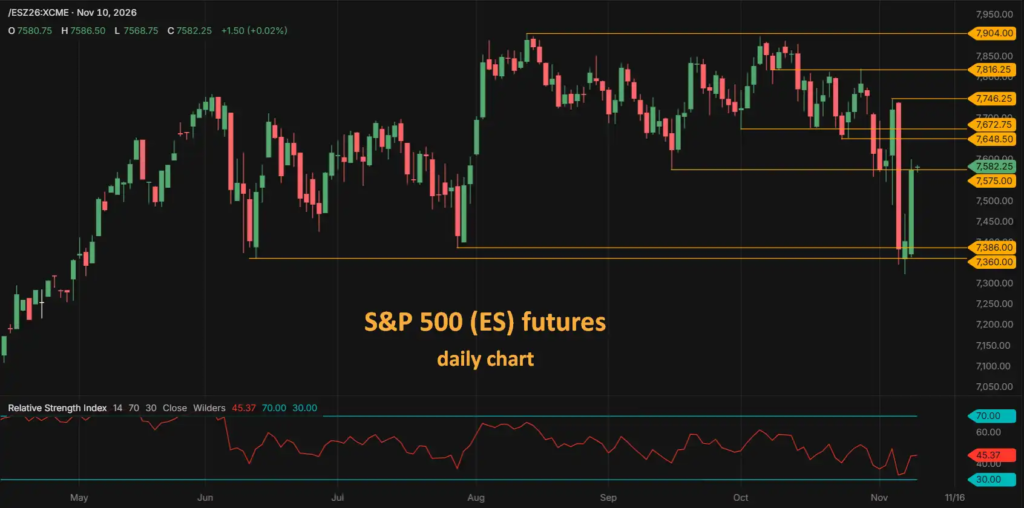
The Nasdaq Composite index briefly entered correction territory last week, dropping by more than 10% from its peak as the prices of artificial intelligence (AI)-related stocks collapsed. Memory and storage giant Sandisk (SNDK -0.16%) has fallen 64% from its highs set only in June, after rising more than 10 times in value.
Sandisk management has scheduled a stock split to take place on Nov. 19. The flash memory maker trades at a cheap-looking price-to-earnings ratio (P/E) right now, but it just might be the most expensive stock you could buy today. Here’s why I am not buying Sandisk stock despite the price dip and the upcoming stock split.
Image source: Getty Images.
Strong trailing financials amid the AI boom
Data storage giant Western Digital bought SanDisk in 2016, but then hived it back off (with a slightly different name) in early 2025. Since then, the rapid pace of the AI infrastructure build-out has driven a massive increase in demand and a deep worldwide shortage of memory chips. Because of that, Sandisk and its peers have been able to raise their prices sharply.
SNDK Sandisk
$885.13-$1.38 (-0.16%)
NASDAQ · As of 9:57 AM ET 11/10/26
Last quarter, its revenue was $11 billion, up 378% year over year, with a gross margin of 85%. Gross margin was below 30% in the same quarter a year ago. This boom has led to massive earnings growth, with $8.78 billion in earnings last quarter alone, up from barely breaking even a year prior.
That earnings inflection is why Sandisk stock was at one point up by more than 6,000% since Western Digital spun it off. Now, though, it has fallen by more than half from that peak in conjunction with the Nasdaq correction.
A cyclical memory market
Many news items have accumulated since Sandisk’s stock peaked in June that have caused investors to become nervous about the AI infrastructure theme.
OpenAI delayed its IPO. Neoclouds such as CoreWeave are reportedly having trouble raising funds in the debt markets. The midterm elections could have sweeping impacts on AI regulation and the pace of data center construction.
The less capital that flows into the AI companies, the less they will have to spend on memory chips from Sandisk. This narrative has taken hold of Wall Street at the moment, and it’s why Sandisk stock has been falling.
When Sandisk reported its fiscal 2027 first-quarter results on Oct. 29, management guided for sequential revenue growth of around 10% in its fiscal Q2. This suggests that memory demand continues to grow, but that would be slower than fiscal Q1’s 23% sequential growth. Wall Street hates slowing revenue growth.
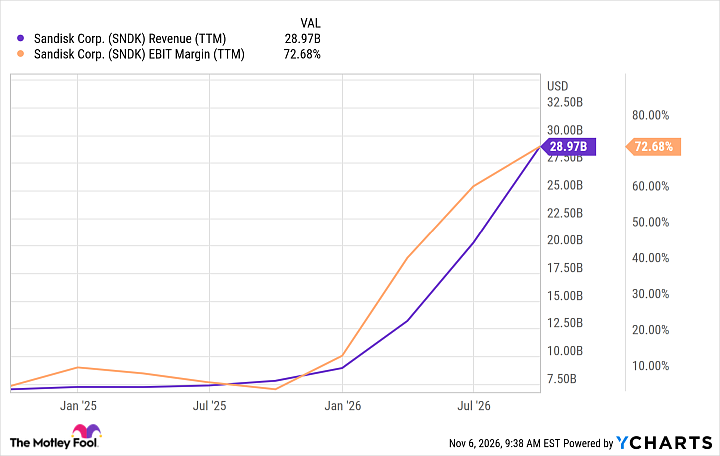
SNDK Revenue (TTM) data by YCharts.
Why I wouldn’t buy Sandisk stock even at a cheap forward earnings multiple
Sandisk and its peers are all in the midst of building new facilities to manufacture more memory and grab more of the growing market. But eventually, as that additional production comes online in the quarters and years ahead, the supply of memory chips will come back in balance with demand. It may then exceed demand, creating a glut, at which point Sandisk and its cohort will run into trouble.
Sandisk’s ability to implement significant price increases across its product lines over the past year and a half has led to massive earnings growth. The sharp shift in its gross margins illustrates the wild cyclicality in the memory chip market. Historically, the memory chip sector has experienced many periods of high demand and prices that were followed by equally deep declines as the supply-and-demand dynamic reversed. I don’t think this time will be different.
For investors, the stock split is a meaningless event. It only increases the total number of shares outstanding, but it changes nothing about either the stock’s valuation or the underlying business. Never buy shares in a company just because of a stock split.
Right now, Sandisk trades at what looks like a dirt-cheap forward price-to-earnings ratio (P/E) of 3.5. It is possible that Sandisk will generate the expected level of earnings that ratio is based on over the next 12 months. However, over a longer time horizon, a downturn in the memory chip market could significantly affect this earnings ratio.
If Sandisk’s annualized revenues fall back to $10 billion (which is what the company was reporting less than a year ago) and its operating margin collapses from 73% to 10% as it loses its shortage-driven pricing power, its earnings will fall to $1 billion. That would give it a P/E ratio of 100 relative to the current market cap of around $100 billion. That makes Sandisk stock look wildly expensive for anyone thinking about holding it beyond the next few quarters.