Key Takeaways
- What’s behind the artificial intelligence selloff and rally in Treasury bonds.
- Expectations for the October Federal Reserve meeting.
- What to watch in upcoming earnings from Alphabet GOOG/GOOGL, Microsoft MSFT, and Amazon.com AMZN.
- Is Hasbro HAS still a buy after earnings?
- What slowing growth at Netflix NFLX means for the stock.
- How to incorporate Morningstar’s stock ratings into your investment strategy.
- Stocks to buy while they’re trading at big discounts.
In this new episode of The Morning Filter podcast, co-hosts Dave Sekera and Sarah Hansen unpack a very bumpy week in the markets, from a dramatic selloff in AI-linked names and an ongoing rotation from growth to value to a huge rally in the Treasury market. They cover what to watch for in upcoming earnings reports from Alphabet, Microsoft, Amazon, and more. They also recap a busy week of earnings and new research on SpaceX SPCX, Meta Platforms META, and Tesla TSLA.
They answer a viewer question about Morningstar’s star ratings for stocks, and Dave explains how to incorporate those ratings into a broader investment strategy. They wrap up with five stock buys that are trading at big discounts.
Got a question for Dave? Send it to themorningfilter@morningstar.com.
Transcript
Sarah Hansen: Hello, and welcome to The Morning Filter podcast. I’m Sarah Hansen with Morningstar, sitting in for Susan Dziubinski, who is out on leave for a few more weeks. I’m here on Monday mornings to talk with Morningstar Chief US Market Strategist Dave Sekera about key takeaways for investors in today’s market, what to keep on your radar this week, some new Morningstar research, and of course, stock ideas. Dave, it’s great to be here with you.
David Sekera: Good morning, Sarah.
Market Recap: AI Selloff and Bond Rally
Hansen: Good morning. We’ve got a really big show and we’re sitting down after a very bumpy week last week in the markets. Maybe let’s start there and let’s talk about stocks first. What happened last week? Walk us through it.
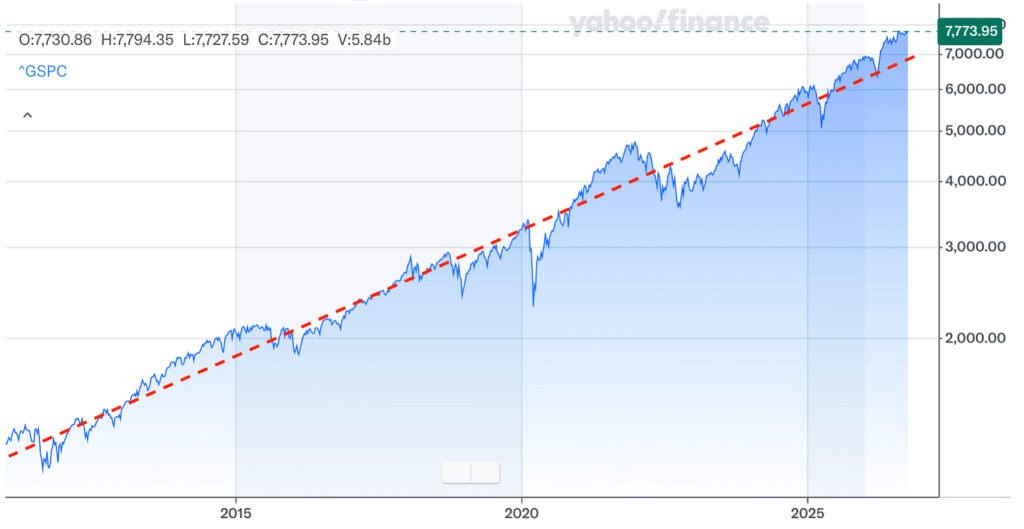
Sekera: It’s interesting to think about the stock market this year. We had the big selloff at the beginning of the year. That started once the US started the conflict with Iran. Since then, the market’s really been, I mean, just bulletproof ever since then. And just going down the list of some of the risks that I highlighted this year, I mean, the market’s taken monetary policy in stride. That really hasn’t interrupted the market. The market really hasn’t cared about rising interest rates. It’s shrugged off higher inflation. It’s been ignoring all the smoke that we’ve been talking about in the private credit markets, and it’s just completely disregarded some of the dislocations that we’re seeing in the international markets. For example, the bubble in Korea that we had talked about a number of months ago has essentially popped. It’s down 40% from its highs. It’s still up 40% year to date, so I wouldn’t be surprised to see that negative momentum still continue downward there. China stock markets are officially in bear markets, down over 20% from their highs. Some of the other markets that have had some issues—France, India, Japan—I mean, they’re all down 10% or more. But again, the market really just hasn’t cared about any of that. It’s all been about the AI buildout boom.
Last week, what we saw, and I think it was on Thursday, wasjust what I would consider to be panic selling across the board in AI stocks. For some reason, I think it was really Meta was the big catalyst after their earnings came out. We’ll talk about Meta earnings later, but I think what it was is it was just the realization that Meta META may need to raise tens of billions to a hundred billion dollars of new capital, including equity, just to be able to fund the negative free cash flow based on the amount that they might be spending on AI. In fact, just hit this tape a little bit earlier. It looks like they’re now planning on raising $95 billion of equity to fund the AI buildout boom. Just a huge number in my mind. It’ll be interesting to see where all the cash is going to come from to be able to take down that amount of new stock.
Now, when I look at the action, it wasn’t just panic selling across the board in AI, but I would note that those stocks that were hit the hardest were the ones that we’ve been recommending investors to steer clear of in our fourth-quarter outlook. For example, SpaceX SPCX—that’s one of the ones we’ve really kind of said that, as much as we like the company and there’s a lot of growth there, it’s really emblematic of those types of stocks that we think are most at risk in today’s marketplace. Significantly overvalued, very long duration growth stock, free cash flow negative. They also need to continue to keep raising capital in order to build out their capital expenditure program. We’re just in an environment where capital is relatively scarce and getting more and more expensive. Now, interestingly, it doesn’t really look like the market knows exactly what it wants to do this morning. A little while ago, it was unchanged. It’s a little bit further in the green right now, but with everything going on between Meta with this capital raise, with earnings coming out, we’ll see what this week has yet to bring us.
Hansen: Yeah, I suspect it won’t be dull. There will be something to watch, and that is just a staggering amount of money for Meta. Like you mentioned earlier, the signs that the AI buildout is slowing—we’re not seeing those yet. OK, let’s move on to bonds. While that was all happening in the stock market, what were you seeing in the bond market and fixed income?
Sekera: Well, when there was that huge selloff among all of those AI stocks, it resulted in just a huge flight-to-safety rally in the Treasury market. In fact, if you look at the 10-year, that tightened 20 basis points on Thursday just in one day. That’s a pretty rare move. I mean, it’s not that you’d never see that, but it’s not very often you see a 20 basis point move in the 10-year just in one day. Away from Treasuries and the corporate bond market, corporate credit spreads there are widening overall, but especially for the hyperscalers and the neoclouds; those are the ones that are taking the brunt of it.
I think, to some degree, the other question that’s going on is: Have the credit markets started to run out of dry powder to continue to keep funding the data center buildouts? When you go down the list here and you think about the hyperscalers and the neoclouds, I mean, to some degree, they’ve already saturated the bond markets with new issues over the course of this year. The private credit markets still have capital, but I think they have less and less capital available for investing in new artificial intelligence deals. I think that’s not necessarily going to be an area where you see a lot of new money. And then, if you look at what’s called special purpose vehicles, a lot of asset-backed deals, these are the chip deals where they’re using the chips as the actual collateral for the financing. I think those are just seeing more and more scrutiny as well. I think there’s probably less cash available there.
I’m also seeing a lot more people focus on the balance sheet implications of all of the off-balance-sheet leases. Those will start needing to get paid in 2027 and 2028. Again, I think a lot of what has really funded the market over the past two years is under increasing a lot of pressure. And then once you get away from the US, seeing some cracks in a lot of other international markets. We’ve talked about how we’ve been watching Japanese government bond yields increasing over the course of the year for quite a while now, but we’re also seeing in Europe, like the French 10-year, that’s been going higher and higher. It’s currently trading at about 175 basis points over German bonds. That’s the widest spread you’ve seen there in, I can’t even remember, how long of a time. And it’s interesting that those French bonds are now even trading at wider spreads than Italian bonds. A lot of concern in the international markets about the credit quality of France.
Fed Meeting on Deck
Hansen: OK. Moving back home to the US and speaking of interest rates, we’ve got a Federal Reserve meeting on the docket this week. Tell us what investors should be expecting there and what are the odds that we’ll see a rate hike again?
Sekera: Well, the odds are pretty low that we’re going to see a rate hike this month. I think the market right now is only pricing in about a 9% probability of a hike here in October, but that increases to well over 75% of a probability of at least one hike and potentially even two by the time we get to December. Looking into next year, the market is still pricing in more cuts yet to come. Looking at December 2027, it’s pricing in a 50% probability that the federal-funds rate ends next year at over 4.5%. That’s at least one more hike after this one, if not even potentially more. Now, I know our economist is still only looking for the one rate hike this year. He thinks that will be the end of this tightening cycle. In fact, he thinks that by the end of next year, in 2027, we probably start seeing the Fed begin to cut rates.
I think really the thought process there is that we’d be looking for a slowing rate of increase in new capex spending on AI, and as such, that would then have some negative implications on the economy overall. By the end of 2027, we might be in the position, if the economy’s slowing too much, the Fed may start going the other way. We do have PCE coming out this week. However, it comes out on Thursday. Essentially, a day late, dollar short because that’s after the Fed will have already made its decision. That print, in and of itself, not all that important, not going to impact this Fed meeting, but at least we’ll have several more inflationary indicators coming out before the December Fed meeting to try and gauge what they might do at that point.
Earnings Ahead: GOOGL, MSFT, AMZN
Hansen: Great. Thank you. Let’s move on to earnings, and this is going to be the start of our marathon episode. Are you ready? You had some water; you’re good to go?
Sekera: I’m good to go.
Hansen: Great. First, we have three hyperscalers this week. We have Google GOOGL, Microsoft MSFT, and we have Amazon AMZN all reporting. It seems like the question on everyone’s mind, no surprise, is the outlook for all that AI spending. How much is coming down the pike? What signals will they be sending about 2027? Walk us through it.
Sekera: Sure. I mean, first of all, fundamentals on these stocks still do matter. I mean, how much is the underlying growth of the business? Is it still on pace? Trying to understand where the growth is in each of their individual business lines. But at this point, I would say I don’t know of any reason why each of these probably shouldn’t at least meet, if not necessarily beat, whatever their guidance was coming into the quarter. So, really no concern as far as how that goes. Now, I don’t think they’re going to give any official guidance for 2027 just yet. I think we’re going to have to wait for the beginning of next year for that. But as you mentioned, certainly we’ll be listening, just like everyone else, for any kind of hints that they might give for capex spending for 2027. They may still be debating it themselves, just how much they’re going to be spending. I think a lot of us are going to be looking at this new raise from Meta and seeing what kind of guidance Meta gives for exactly how much they’re going to spend in 2027 and how they’re going to spend it themselves.
But I think when I’m looking at the big hyperscalers, I’m also really trying to gauge from there what signs we’re seeing that we’re really getting into the transition between not just who can spend the most, the fastest on the artificial intelligence buildout, but who’s really utilizing AI in order to be able to create new economic value that the customers are willing to pay for? How quickly is that going to come so that we can actually start getting a return on all of this AI spending? This is just something that we’ve been talking about on the show for quite a while; that really the AI story this year has been turning more into that show-me story. It’s more about how we’re moving away from just who can spend the most the fastest and really who’s now going to be able to start generating returns on it in 2027 and 2028.
SNDK Earnings: All Eyes on AI
Hansen: Great. Well, maybe moving back to the beginning of the cycle, to generate returns on AI, you need the hardware that helps you build all that technology. We’ll have earnings from SanDisk SNDK this week also. What will you be watching for there?
Sekera: Well, SanDisk is also really kind of the one that’s just emblematic of what’s going on with all of these commodity-oriented tech hardware companies. And what the story has been here is how long will shortages last among these products before you get into some sort of equilibrium for supply and demand? Now, when we’ve been looking at the story here, we’ve been much more focused on the supply side of the story than the demand. Essentially, our forecast is that 2028 will be the year that enough new supply is coming online to be able to meet that demand. And that, as such, once that happens, the margins will start to contract. In fact, we’d even look for that to be the peak year that you see for revenue, and revenue to start coming down thereafter as well.
But I think maybe the other part of that dynamic is now starting to get questioned, or at least as recently as the end of last week, which is how long is this insatiable demand really going to last? We may be getting closer to the point that we’re at the peak of that demand now, as opposed to people continuing to expect that demand growing at these just crazy rates for the past couple of years. If we’re now starting to question that demand, I would say I could see a lot more downside in the short term on not just this stock, but all of these commodity-oriented hardware stocks.
NOW’s Round Trip
Hansen: OK. Something to watch. Moving to software, we have ServiceNow NOW reporting this week, and this stock I know has been a pick of yours before. What should investors know going into earnings?
Sekera: Well, I think this is an interesting one in that it shows just how much stocks can trade on a story irrespective of what might necessarily be happening in the short term with the underlying fundamentals versus what that story is expecting, but then also showing just how quickly that market sentiment can change if people start to doubt that story. What the story in software was, and I think it started last winter, was that AI was going to come in and it was going to displace all of these software providers or certainly be able to disrupt their ongoing businesses. Everyone was thinking that companies were going to be able to use artificial intelligence to be able to vibe code their own systems. They were going to bring a lot of this stuff in-house.
Our thesis was essentially the opposite, that we did not think that was going to happen. The software providers would not necessarily be displaced, but that they were also using artificial intelligence just to be able to create new products, new features, create new economic value for their clients, which they of course can then charge more for. Largely, we thought it was going to be much more a story about how they would necessarily have to change their pricing on their products going forward, as opposed to their business really being disrupted.
As you mentioned, ServiceNow has been one of our go-to picks— Salesforce CRM, Workday WDAY, some of our other picks in the software space. In this case, with the earnings report, I think we’re still looking for the same thing we’ve been looking for for the past couple of quarters. Looking for that evidence to support the thesis: How much of their revenue is now being generated by these AI-enabled services, how much is it growing? I still think that there’s probably a lot further upside from here. Having said that, this stock has almost doubled from its April lows. While it is still undervalued, it’s now trading in 3-star territory.
FTNT Earnings Preview
Hansen: OK. And last, ahead of earnings, let’s talk about cybersecurity and Fortinet FTNT. What will you be watching in that stock?
Sekera: And it’s not just Fortinet. I think it’s really going to be interesting listening to all of these cybersecurity company earnings reports and trying to understand really what’s going on fundamentally. Some of the feeds that I watch out there, I’m starting to see a lot more anecdotes that AI is finding new exploits in software in order to be able to hack different systems. And I think that a lot of those exploits are now being found in a legacy software, which, in some cases, this software is decades old and you don’t even necessarily have people that are still really proficient in being able to reprogram all of those old legacy systems. As those stories were hitting the tape last week, I just saw all of the cyber names screaming higher last Friday. To some degree, it just supports the investment thesis we’ve had on cybersecurity overall that AI just generally makes cybersecurity ever more important.
Now it also needs to investigate and be able to mitigate legacy software code. It’s all looking at the cybersecurity stocks. I mean, they’ve all had just phenomenal runs. They’re generally now all 3-star-rated stocks. In fact, they’re all bumping up close to the top of that range, getting into 2-star territory. These would be ones where I would let that momentum run for a while, but I think it’s also probably getting close to the time to start thinking about what areas would you want to start taking profits to the upside?
Earnings Review: SOLS
Hansen: OK. That’s a long list of earnings ahead, and we have a long list of earnings behind. Let’s get into some new research. First, why don’t we talk about Solstice Advanced Materials SOLS? Tell us what we learned there last week.
Sekera: Yeah, so this was a recent stock pick, and it’s actually nice to see that there are other people out there seeing the value that we’re seeing. What happened was an activist investor by the name of Starwood Partners ended up taking a pretty large position in the company, and they presented a plan to the board, really trying to help the board look at ways to unlock the shareholder value that they see there as well. That plan really included a couple of things like cutting operating expenses, investing more and more into the nuclear growth of the company, and divesting a couple of their other different business lines. We did see the stock rally on that news immediately. I know our analyst team doesn’t think that those divestments are necessarily needed, but they certainly agree with the plan to be able to invest more and more into the uranium conversion capacity there just as we start seeing more and more demand for nuclear power. Now that stock did give back that gain with the selloff, with a lot of the other AI stocks. Ultimately, it’s still a 4-star-rated stock trading at a 32% discount that looks attractive to us.
SPCX: What to Know
Hansen: OK. Moving on to SpaceX. We’ve talked about this stock quite a bit. You spoke with our equity analyst who covers it. That was a great conversation. After we filmed our episode, it made some big waves in the market with, I think it was its second earnings report ever since the IPO. Walk us through those numbers and tell us what Morningstar thinks of that stock.
Sekera: Yeah. I mean, as far as the numbers go, I mean their numbers just easily beat everyone’s expectations coming into the quarter. I think AI revenue was really the biggest driver of that outperformance, but yet Starlink is still growing exceptionally quickly in and of itself. Our analyst went back to our model. I know he ratcheted a number of his forecasts a bit higher here and there, so he did increase his fair value, but our fair value is still only $70 a share. When you think about it, here’s what we have in our model. We’re looking for 2026 revenue of $41 billion. That’s already doubling last year’s revenue. We’re looking for a five-year compound annual growth rate of 65%. By 2030, we’re looking for revenue of $228 billion, so essentially 5.5 times what they’re projected to do in 2026. 2026, we’re looking for negative earnings per share of 12 cents. We’re looking for an op margin to expand to 28%. That gets them to an earnings per share of $2 in 2030.
If you’re buying the stock here, I mean, I think you have to be able to assume that not only are they going to be growing much faster than what we’re currently modeling in, I mean, they almost have to double what we’re currently modeling in, and that’s just to get to fair value. That’s not even to think about saying that the stock is cheap here. Again, you would really have to see just gigantic amounts of earnings growth over the next five years and even thereafter just to be able to get to that fair value today, and much less say that that stock’s cheap.
TSLA Earnings Recap
Hansen: OK. In the same universe, let’s move on to Tesla TSLA. We raised our fair value estimate there too. What was behind the change last week?
Sekera: I mean, overall, I’d say that the earnings in and of themselves were what we called solid. I think we were a bit surprised that they were free cash flow positive, but our analyst also noted that a lot of that free cash flow that was positive is probably a difference in timing when that cash is actually being spent, not necessarily a change in how the company’s going to be spending capex going forward. The company did note that their long-term growth plans still remain intact. I think there’s really no change there. Looking at some of the individual levers on the growth here, we expect that they’ll begin production of the Optimus robots. Pretty short term here. I think they’re going to use those in the Tesla factories first, but we expect that by the end of next year, by the end of 2027, they’ll probably be selling those robots externally. Looking at the robotaxi business, just looking for ongoing expansion there. I think they noted they’re going to be in Dallas next month, and there’s a whole list of cities in 2027 that they’re planning on expanding into. I’m personally waiting for them to expand into the Chicago market myself.
As far as the fair value goes, I mean, we did bump it a little bit higher. We increased it by 5%. I think that was just really dialing in on some higher full self-driving adoption assumptions and maybe a slightly lower short-term capex forecast, but really no change in the investment thesis. Of course, the other big news with Tesla and SpaceX last week was the discussion of the two companies looking into whether or not a merger between them makes strategic sense. I know our analyst here thinks that it does make strategic sense. Specifically, he said that in a combined entity, Tesla would then be what he’d think is their key battery and solar provider for SpaceX. You could use Grok, which is the AI engine from SpaceX, to be the interface with Tesla’s autonomous driving software and the humanoid robots. Lastly, Starlink will just be able to connect it all, so that will allow Tesla to monitor the vehicles and the robots and really be able to communicate across its entire product base.
META Sells Off
Hansen: Yeah. Wow. That would be a fascinating story to follow if it plays out like that. OK. And Meta, you teased this at the beginning. Those shares took a real hit after their earnings report. I think the stock was down some 7% when results came out. What do you make of that?
Sekera: As we talked about pre-earnings last week, yes, the market is interested in the fundamentals and the fundamental performance, but it’s still really all about the AI growth and the utilization here. I think in this case, we also noted that the stock rallied a lot going up into this earnings announcement. The company really needed to put up some big numbers; otherwise, I think you’d be at risk of disappointment and seeing a selloff.
Now, as far as the revenue numbers go, I mean, it was strong. It was up 26% for the third quarter. They’re guiding fourth quarter to be up really that same kind of range, up 21%-27%. Now, unfortunately, in this case, the operating margin contracted by about 400 basis points due to those higher AI expenses, but we’re still seeing a lot of strength in the underlying fundamentals. The advertising business is doing very well, strong adoption for Muse. That was their new personal assistant that they put out. Overall, we still think there are a lot of indicators that the company is using AI in order to be able to generate new economic value, which over time will ultimately bolster earnings.
The problem is the market is getting increasingly concerned about just how much money they are spending. It used to be you couldn’t spend too much on AI fast enough, but the market is now looking for more and more evidence for the utilization to be able to generate those returns. I think, as far as what we can tell, the big stock selloff was based on the fact that Meta is going to have to come out and dilute shareholders. They’re going to have to fund a lot of this negative free cash flow. I think that started the anything-but-AI rally on Thursday, just as people were then extrapolating that to all of the other hyperscalers and neoclouds and the other AI investors—those people that are going to be free cash flow negative.
It just hit the tape this morning. They’re raising up $95 billion of new equity. That’s going to be in Class A; preferreds are the new Class C, but that’s a lot of the new cash that they’re going to have to absorb from the rest of the marketplace to be able to fund that. I think the market’s really going to have to get a good story just to make sure that they understand how quickly the company not only is going to put that to work, but be able to generate returns on that capital, really to be able to support this growth story and the stock valuation.
Defense Stock Earnings
Hansen: Yeah, that’s just the story that keeps on evolving. It’s a new development every week there. All right, let’s switch gears. Out of tech, let’s move over to defense stocks. We had three reports last week from companies you’ve been watching. What stood out to you?
Sekera: Well, and it’s interesting too. Each of these companies’ stocks has been a pick at one point in time over the past couple of years. I think first of all, we started with RTX RTX a couple of years ago; that one moved up. And then, depending on which one was cheaper at the time, we’ve also recommended both Lockheed [Martin] LMT and Northrop [Grumman] NOC a couple of times. Each of these stocks still looks relatively undervalued here. Just running down the numbers quickly. I mean, Lockheed: good top-line growth, up 11%. Margin performance also doing a little bit better, is doing well enough that the guidance from the company was kind of ticked up a little bit in order to take that into consideration. The company announced some new contracts for F-35, so we ended up bumping up our fair value to $680 from $650, still at an 11% discount to fair value. It’s a 4-star-rated stock.
RTX: also good top-line growth at 11% as well. They also had some pretty good margin expansion. They beat our forecasts, and this is one where it’s really much more of a blend between the civilian aerospace business as well as the defense business. It’s not necessarily as pure as the other two companies as being a defense play. But again, once we took the earnings into consideration in our model, we bumped up our fair value there slightly as well to $227 from $214. It’s at a 16% discount to fair value, so also a 4-star-rated stock.
And then Northrop, I’d say the results were just OK. Their top line only came in at 7%. They only got a little bit of margin expansion as well. But I mean, we saw some good things here as well. I mean, the outlook looks a little bit better. They talked about the accelerating production for the Sentinel and the B-21 programs, seeing some increased volume for their munitions program. All of that really works to help support our longer-term forecasts here. This one, that same kind of range, 12% discount, also 4-star-rated stock. Overall, I think if you’re interested in defense stocks, I’d still check out L3Harris LHX. That’s one that we recommended last week. That one’s trading at a much bigger discount at 25%. That one puts that well into 4-star territory, whereas the others are really kind of more on that 3-star, 4-star border.
HAS Results
Hansen: OK. Let’s keep moving down our list. New industry, Hasbro HAS. This stock was a pick last year, and it has had a big run since then. How did things look last quarter?
Sekera: Well, it was a pick on the April 28, 2025 episode of The Morning Filter. Honestly, I mean, this one’s really surprised me just how much it’s moved up since then. I mean, it’s up 91% for a company that granted it was undervalued. Granted, we saw a lot of good growth here in the short term, but I didn’t think we’d see it move like this to some degree. I think it’s just one of the few consumer cyclical stocks that’s really working right now. If people are involved in that sector, I think this one’s just had a lot of upside momentum, which has really pushed it as far as it has at this point.
Quarter, very good. Revenue up at 15%. The operating margin is hitting new highs. They’re now forecasting revenue to grow 7%-8%. Their prior forecast or prior guidance was 5%-6%. Their new guidance puts us in line with our 7% forecast. We bumped up our operating margin a little bit in 2026 to get to the management guidance of 27%-28%. We were only at 25% before. We bumped up our fair value to $106. It was at $100. It’s still a 3-star-rated stock, but it’s right on that border of going into 2-star territory. This would be one that, if you got involved in it, I would say watch the momentum, but if that momentum looks like it’s starting to slow or maybe roll over, probably a good time to take some profit on this one.
NFLX: Growth Is Slowing
Hansen: Right. Well, speaking of taking some profit, we have Netflix NFLX next on our list. You singled this one out last month as a place to consider some tax-loss harvesting. Maybe that’s the opposite of taking profit, but the stock fell after earnings. Walk us through it. What happened?
Sekera: Yeah. I mean, the stock fell even further since we highlighted it as a good stock to be able to get some of that tax-loss harvesting on the April 12 edition of The Morning Filter. It’s not that the results in and of themselves weren’t OK, but our analyst really noted that the outlook here is getting to be very disheartening. He noted that the engagement has been relatively disappointing. Ad sales look like they’re falling short of what their targets were for 2026, and it sounds like management really wouldn’t recommit to their 2027 double-digit growth targets as well. I think a lot of disappointments. While there is still growth to be had at Netflix, it is just generally becoming a more mature business. I think there’s less of a path toward the long-term growth performance they’ve had the past couple of years, and you just can’t extrapolate that into the future at this point.
I’d say the good news on this one is it has now fallen enough. It’s actually starting to enter 4-star territory. This is one I’d probably maybe put on your watchlist if it’s one that you’re interested in. I’m just concerned that there’s just enough negative market sentiment on this name right now that you could see this one get pushed down even further until management can really kind of stem the negative disappointment here and turn the tide to the upside.
AAL Fair Value Cut
Hansen: OK. Thanks, Dave. And last one. We lowered our fair value last week on another one of your sell recommendations, which is American Airlines AAL. What’s the story there?
Sekera: Yeah, this was one of our sell recommendations on the June 29 episode of The Morning Filter. As you mentioned, it’s down; I think it’s down 32% since we aired that episode. But as you mentioned, we also lowered our fair value by 39% to only $6.10 per share. At this point, we still think that stock has further to fall. The real reason here is just because their operating margins are so thin at this point that, granted, only a little bit of operating margin performance expansion really could make the valuation go up here. But right now they only earned $115 million on $13.6 billion of revenue. That’s an operating margin of 0.7%, so 70 basis points of margin.
I think the big concern we have with this one right now is that at such a thin margin, the current valuation is only a couple billion dollars above the amount of debt that they have on the balance sheet. If we had any kind of worsening conditions here in the short term, that could wipe out the equity valuation of this company altogether. We’re not necessarily looking at this as being a bankruptcy candidate anytime soon, but again, very volatile, and really only small deterioration here really could send the stock down a lot further.
Hansen: I see. So, it wouldn’t take much.
Sekera: Exactly.
Morningstar’s Star Ratings
Hansen: All right. Well, that’s the end of our marathon. You did awesome. We can put earnings on pause until next week, when I know there will be more, but now let’s switch gears to the question of the week. If you have a question for us, as a reminder, you can send us an email at themorningfilter@morningstar.com.
Today, we have a viewer who wants to know how they can follow Dave’s star ratings, excuse me, for stocks. I think this is just a great thing to talk about because it’s a really rigorous process on our end. All our analysts put a ton of thought and work into it. Dave, maybe you can walk us through it a little bit. Tell us about the star ratings, how viewers can see them, where they can see them, and how they might incorporate changes in those ratings into an investment strategy.
Sekera: Sure. So, just as a reminder for people that might not be familiar, what is a
? It’s a rank order, 1 to 5; 1-star stocks being those that we think are the most significantly overvalued, 5-star-rated stocks being those that we think are the most undervalued as compared with our long-term intrinsic valuation. The rating, in and of itself, is really a risk-adjusted way to identify which of those stocks we think are trading far enough away from that intrinsic valuation based on the Uncertainty of the underlying cash flows of the company to either be able to start selling that stock if it moves into 2-star and 1-star territory and conversely, start buying into that stock if it moves into 4-star and 5-star territory.
It’s really that
which really changes the band around the intrinsic valuation. For example, if something’s a Very High Uncertainty, you want a big margin of safety beneath the intrinsic valuation before you start to buy that stock. But conversely, you also want to let a stock like that run a lot longer and a lot higher over intrinsic valuation before you’d start looking to sell it. Now, unfortunately, I mean, we talk about a lot of different stocks on the podcast, so I can’t really always highlight every single week what those star ratings changes may be on any of those stocks that we’ve talked about in the past. I mean, the market moves very quickly. We also make adjustments to our fair values over time. I think that’s a good reason, whether it’s your individual stock holdings or just those that you’re watching, for setting up a portfolio of those stocks on Morningstar, whether it’s morningstar.com, whichever other Morningstar platform you use. That way you can see when those ratings are changing up or down in any one individual case.
The way that I like to think about using these ratings is really just to be able to position your portfolio into those stocks that we think have the best risk-adjusted long-term return potential based on the intrinsic valuation. Again, they’re not necessarily for trying to trade around. They’re not a great signal for trying to short stocks. But the way I think about it is if it’s a 4-star-rated stock, that’s a good indicator that it’s probably trading at enough margin of safety below that intrinsic valuation, maybe to start a partial position, whether it’s a third or a half-size position. And then that way you have the dry powder. That way, if it moves down, goes into 5-star territory, that’s a good indication of dollar-cost averaging in and being able to buy more stocks.
That way, your average purchase price goes lower and lower. And then when it recovers, goes back up to 3 stars, gets back to fair value, that might be a good point to take some profit off the table. If it keeps moving up from there, goes into 2-star territory, that’s a good indication that it’s probably time to sell some more, lock in a little bit more profit to the upside. Once it gets into that 1-star territory, that’s probably the indication that maybe if it’s really running, you got a lot of momentum, maybe you let it run, but that’s when you want to use probably more technical analysis that if that momentum starts coming to an end, that’s when you want to go ahead and exit altogether.
Hansen: Great. Thanks, Dave. Be sure to check everything out on whatever Morningstar platform you use. There’s a ton of resources. And while we’re on this topic, I know the podcast gets a ton of questions from viewers about how they can measure and track the performance of your picks, Dave. Let’s talk about it. Is there any kind of Dave report card index out there so we can see how you’re doing?
Sekera: Yeah. It’s a really hard question to answer, and I don’t mean this as a cop out, but there really is no good way to measure individually all of the stocks that we highlight on The Morning Filter, both the buys, the sells, and sometimes when we bring different swap ideas. Ideally, if you were going to try and do that, you’d need to build an index of all of those individual recommendations. Personally, I do keep a file of all of my prior recommendations, and I do go back to that to see where we’ve been right, where we’ve been wrong, and be able to use that as a learning tool. But ideally, you would want to build an index of all of the individual recommendations, and you’d have to be able to start with some sort of position sizes, but then have the index change those position sizes as a stock trades around.
For example, you’d want to necessarily increase the position size within the index if the stock trades down as you move from 4 stars to 5 stars and as you dollar-cost average to the downside. And then conversely, that index would also then have to take profits to the upside and exit that position altogether. This isn’t something that we can actually do on a week-to-week basis when we talk about the stocks that we highlight on The Morning Filter, which is why you really need to set up your own portfolio on Morningstar.com or whichever platform you use. Of course, it’s not just the changes in the stock price, but also changes in our fair value. I mean, there will be instances where maybe it’s a 4-star-rated stock. We talked about it, recommended it on the podcast, but maybe the stock has fallen, maybe we’ve cut our fair value, maybe we cut our fair value enough that it was a 4-star stock, but we cut it so much that it’s a 3-star- or a 2-star-rated stock after that fair value cut because our intrinsic valuation analysis was wrong or there was some catalyst that changed the story there. In that case, that also would need to get incorporated into that index view as well.
I guess what the good news is here is I know we’ve had our quant team doing a lot of work on our star rating system overall and looking at our intrinsic valuations. I think we are getting pretty close to finishing up an efficacy study, which will get published hopefully here in the short term. Now, that’s not just the stock picks that are brought to the podcast, but it will be an efficacy study of all of our star ratings. Once that efficacy study is released and it’ll be published publicly, at that point, we’ll conduct a special podcast to review that. But I think people will be relatively pleased with what the efficacy is over the long term.
Stock Pick: AVGO
Hansen: Yeah, I’m really looking forward to seeing those results. There’s just so much data. It’ll be fun to dig through. All right, moving on to our pick section. Today, Dave, you’ve brought us five names that are trading at big discounts, some on the order of 20% or more. First up on your list is Broadcom AVGO. Walk us through Morningstar’s view.
Sekera: Broadcom currently trades at a 50% discount to our long-term intrinsic valuation. More than enough to put it well into 5-star territory, not necessarily one for dividend investors; it only pays a 0.8% dividend yield. It is a stock we rate with a High Uncertainty, which, of course, pretty much everything in that tech sector is going to be a High Uncertainty, but we do assign it with a wide economic moat, that moat being based on switching costs and intangible assets, specifically their IP.
Hansen: Why is Broadcom a buy? What’s the investment case there?
Sekera: The investment case here is that the company makes what’s called custom AI accelerators. They’re known as XPUs, and XPUs are used to optimize artificial intelligence workloads. Generally, we think right now the market is underestimating the growth prospects for XPUs. In fact, I really think this is probably the next wave of upside that we’re going to see in AI chips following Nvidia’s NVDA GPUs, which are more general-purpose use chips. I think, to some degree, what the story is is that we think the market right now is overly concerned that Google, which is one of their biggest customers, is multisourcing its TPUs, which are a type of XPU from other vendors, and that could then erode Broadcom’s business over time. We just don’t think that’s true. We think this is just much more of a natural multisourcing from Google than it is necessarily trying to replace Broadcom over time.
If we look at our forecast here, I mean, right now we’re looking at 67% revenue growth, and that’s using the management guidance for 2027 and 2028. So, huge growth over the course of the next two years. Our five-year compound annual growth rate for revenue and earnings is 46% and 53%, respectively. We’re looking for the company to do $18.85 in earnings in 2027, which means that the stock is only trading at a 19-times forward multiple. Look at our 2028 earnings of $30 forecast, the company’s only trading at 12 times a two-year forward multiple. We think that the company has just significant growth prospects over the next couple of years. There’s a lot more to the story. I did do a deep-dive podcast with Will Kerwin a couple of weeks ago. I think it was on September 24. The title of that is Why Broadcom is Worth $650. If that’s one that you have an interest in, I’d highlight that podcast to go watch and really listen to Will’s investment case on the stock overall.
Stock Pick: MRVL
Hansen: Great. Thanks, Dave. In the same industry, let’s talk about Marvell MRVL, your second pick. This one comes up all the time on the show. It’s very closely tied to the AI trade, and it’s also extremely undervalued. What are the key metrics there?
Sekera: Yeah. I mean, as far as AI goes, I mean, it’s really Marvell and Broadcom are the two that I think trade at the largest discounts to our long-term intrinsic valuation. Marvell’s currently at a 37% discount. It’s enough to put it in 4-star territory. Again, not necessarily one if you’re looking for a dividend yield—only a 0.10% dividend yield, a High Uncertainty, and we also rate this one with a narrow economic moat based on switching costs and intangible assets.
Hansen: And what’s the case for owning it?
Sekera: Marvell is a fabulous chip designer focused on wired networking, and I believe they have the second-highest market share, so very well positioned for networking for the buildout for data centers going forward. Our analyst team thinks they have a differentiated portfolio of silicon across data centers, so a lot of different ways that their products are used, and we’re just seeing broad-based demand across custom chips, interconnect, and switching products, which will all benefit this company over the next couple of years. They recently announced an agreement with Google that adds even further upside, I think, to the longer-term growth forecasts. Again, just a huge growth story over the next couple of years. We’re forecasting 49% top-line growth in fiscal 2027 to $12.2 billion. We’re looking for that to increase 66% in 2028, getting up to $20 billion, and then up 77% in fiscal ’29 to $36 billion.
Now, of course, with that kind of growth, you’re going to get a lot of fixed cost leverage as well. We’re looking for an operating margin of 20% this year, expanding to 27.8% next year, getting up to 34% in 2028. The stock does look expensive on a
multiple basis. We’re looking for the company to do $4.28 per share in fiscal ’27, so that would put the company at 50 times earnings. But for a company with a five-year compound annual growth rate of 64%, that actually makes a lot of sense. It’s really kind of a growth-at-a-reasonable-price stock. We’re right now projecting $8.03 in earnings in 2028, so that means it’s trading at only 28 times 2028 earnings. In 2029, that P/E multiple drops all the way down to 14 times. But I’ll tell you what, if you look at our model in 2029, we’re still looking for very significant growth even thereafter.
Hansen: Yeah, what a growth story. Those are some big numbers.
Sekera: Yeah. I think with both of these, I think, as I said, it’s also that’s where the next wave is of AI semiconductor growth is really going to be coming from. I think that’s why those two stocks, at least in our models, certainly look very undervalued today.
Stock Pick: EXE
Hansen: Makes sense. All right. Number three, Expand Energy EXE. This is a natural gas producer. Give us the rundown there.
Sekera: Yeah. Expand is a 4-star-rated stock at a 34% discount to fair value, 2.5% percent dividend yield. It’s a High Uncertainty Rating with no economic moat.
Hansen: Why do you like this one?
Sekera: I mean, it’s really just very few undervalued energy plays left. I mean, we always try and look for stocks, even in a commodity sector like energy, with an economic moat, which this company doesn’t have. But like I said, it’s hard to find undervalued energy plays with as much as they’ve moved up this year. To some degree, you’re at the point now where if you want to be involved and you’re looking for further upside, you need to reach into some of these stories that you wouldn’t necessarily have played otherwise. In fact, this one has got a pretty good amount of hair on it. I mean, the board recently fired their CEO. I don’t know exactly what happened there, but again, you never like to see that kind of management turnover when it isn’t something that was planned for in advance.
As you mentioned, this one is a nat gas provider, so to some degree, it’s a play on our forecast for natural gas pricing to increase over the next couple of years. Nat gas right now I think is around like $280. We’re forecasting our midcycle price there to go up to $370. Good growth as far as where we expect prices to go. Plus it’ll just also benefit from your higher LNG exports and I think also be able to benefit as data centers come online. Most of those new data centers are going to be powered by natural gas facilities, at least for the next couple of years. Of course, we’re also seeing growth in LNG facilities down in the Gulf under construction. As those start getting built out, we think that they’ll start operating in probably the second half of 2027 and 2028. That should drive good short-term demand as well.
As far as the actual valuation of the stock, we’re looking for earnings this year for 2027 of $9.32. So, stocks trading under 10 times this year’s earnings. We’re looking for $10.34 in 2028, so under 9 times. We’re looking for average earnings growth from 2027 to 2030 of over 8%. This is one where I think it’s a good play on a couple of different ways that net gas prices can move up at a relatively reasonable growth rate and pretty reasonable valuations.
Stock Pick: ONON
Hansen: Great. Thank you. Moving on to number four, you’ve talked about Nike NKE quite a bit on the show, but today you’ve brought us a competitor. Tell us about On Holding ONON. What’s Morningstar’s take on that stock?
Sekera: Yeah, and this has kind of been our go-to pick here. I mean, yes, we’ve talked about Nike for quite a while and why we’d steer clear of that stock, but On Holdings is a 4-star-rated stock, 36% discount. Now it doesn’t pay any dividend. It’s still in a Very High growth mode, so it’s reinvesting that cash flow back into its own business. It’s one that is a Very High Uncertainty, so it’s going to be more for people that can take a little bit higher risk in their portfolios, but we do assign it a narrow economic moat.
Hansen: Why does this one earn the buy recommendation?
Sekera: A couple of different reasons, but if you look at the recent investor day that they had, they provided their road map for the next three years, and that road map includes expanding into new categories, a lot of brand expansion into categories like apparel, which are very good margin businesses. I think it’s really that they’re taking their core running shoe business and the attraction of that brand and being able to expand that into a lot of other areas to be able to generate a lot of growth in the future.
Right now, in our model, we’re looking for 18% growth in revenue year over year in 2027. Our five-year compound annual growth rate is 15.5%. We’re looking at a five-year compound annual growth rate of over 25% for earnings. I like this one too, that, unlike Nike, where you’re really reliant on that turnaround plan working in order to get to this evaluation, this one just needs to continue what they already have as their established growth track record and be able to expand that into a couple of different areas. I think this is one where there’s even further upside; we don’t even include that much margin expansion as to what the analyst day guidance was. I think there’s a lot of upside in this one just in just doing what they say they’re going to do.
Stock Pick: APH
Hansen: Great. Last one, we made it. Amphenol APH. This is one where I hear that name, and I think AI “picks-and-shovels,” that theme that we just can’t get away from.
Sekera: Exactly.
Hansen: Walk us through the numbers there.
Sekera: Yeah. Amphenol is a 4-star-rated stock trading at a 26% discount to fair value, only 0.7% of a dividend yield, but we rate this one with a Medium Uncertainty and a wide economic moat, that wide moat being based on switching costs and intangible assets.
Hansen: Now, is Amphenol a stock to buy for the long term, or is this a rental stock while certain market forces are at play?
Sekera: I would say this is probably one that’s going to be much more in that rental category than it is necessarily a long-term kind of buy-and-hold type of stock. This is one where, if you want to play that continued AI buildout boom thesis, this is really the last one that we see of the commodity tech hardware stocks that’s still undervalued. Now, I do have to caution: Their earnings come out, I think, this week on the 28th before market open. Granted, it is trading at a pretty good discount to fair value, but I think this is one you could probably wait and see what the numbers are before you’re buying, see if maybe there’s any change to their guidance here.
Right now in our model, we’re looking for the company to do $36 billion in revenue this year. We’re looking at a 21% compound annual growth rate over the next five years, so that would get them up to $60 billion in top line by 2030. We’re looking for an operating margin this year of 28%, looking for some expansion there to 30% by 2030. Right now, the stock’s trading at 26 times this year’s earnings projection of $2.84. That drops to 21 times our earnings projection of $3.60 next year. Assuming everything kind of comes out as we expect this quarter, I think there’s still enough upside in this one that even if the stock pops a couple percent after earnings, there’s still enough margin of safety that you could play this one to the upside. But like I said, I wouldn’t necessarily get ahead of earnings on this one.
Hansen: OK. That’ll be one to watch on Wednesday, I think, is the 28th. And that is the end. That was a big, big docket. Big week last week and a big week coming up. Thank you so much for your time, Dave. Viewers and listeners who’d like more information about any of the stocks that Dave talked about today can visit morningstar.com for more details and more star ratings if you want to take a closer look at those. We hope you’ll join us next Monday on The Morning Filter podcast. That’s at 9 a.m. Eastern, 8 a.m. Central. In the meantime, please like this episode and subscribe, and thank you so much. Have a great week.