Will Labour lose Welsh Senedd? Could a SNP win bring forward another independence referendum? Can the Conservative Party hold off Reform in home counties?

Picture:
Getty
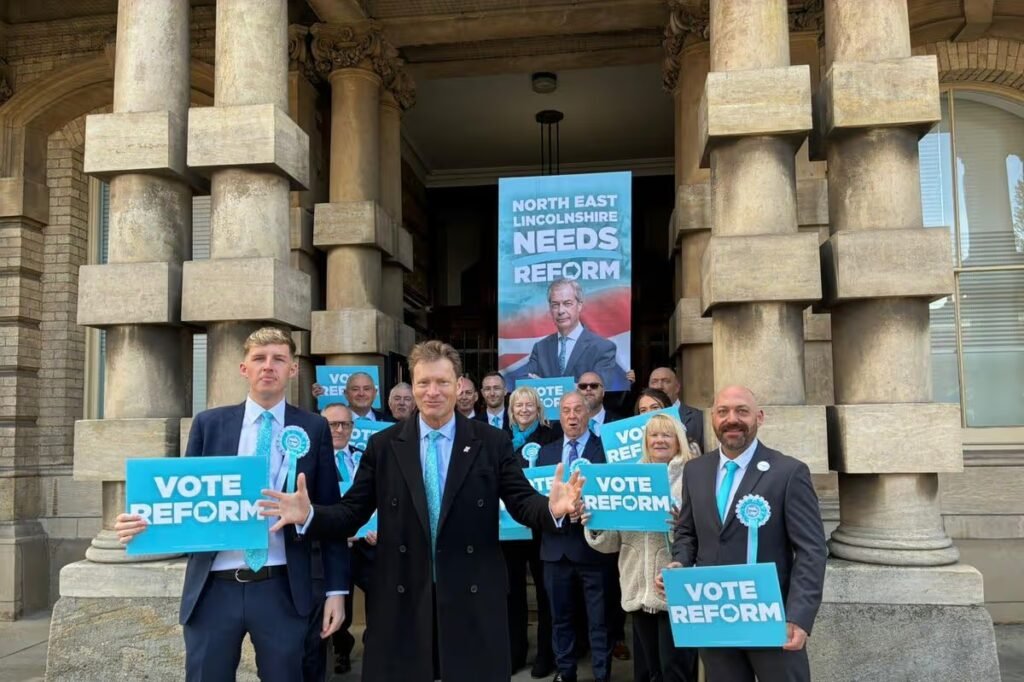
Sir Keir Starmer’s Labour is battling Reform and the Green Party at both sides in this week’s local election as he fights for his future, while Scottish and Welsh nationalists are looking to make history.
Labour MPs are reportedly discussing plans to push for Sir Keir Starmer to resign in an open letter if the party is drubbed in the votes on Thursday.
The Reform and Green parties are looking to make massive inroads into Labour seats in the vote to pile pressure on the prime minister, two years after he was elected in the general election.
Elections are scheduled to take place for all 32 London borough councils, 32 metropolitan boroughs, 18 unitary authorities, six county councils, 50 district councils, and six directly elected mayors in England.
Meanwhile, voters will elect 96 members to the Welsh Parliament and Scottish voters will elect 129 MSPs. A win for the Welsh nationalists, Plaid Cymru, could end 27 years of Labour rule, while the SNP is looking to use the election as a springboard for an independence push.
Here we pick out five of the biggest battlegrounds.
Welsh Senedd: Could Labour lose power after 27 years?

Picture:
Alamy
Labour is the only party to have ever ruled the Senedd, winning Welsh elections in all six of the country’s elections since the devolved government’s formation in 1999.
The party won 30 of the 60 seats in 2021, and going into the election, is defending 29 of these, ahead of the Conservatives and Plaid Cymru, which both have 13.
But it is Plaid, the Welsh nationalists, that are topping the polls, with 29%, ahead of Reform, which has 27%, with Labour adrift on only 13% in third.
With Plaid Cymru and Reform considered too ideologically removed to consider a power-sharing arrangement, it could be that Labour ends up propping up the nationalist party.
However, it would still be a massive change in the scene as Labour has also been the dominant party at general elections as well since the 1920s.
London: Labour projected to lose control of six councils

Picture:
Alamy
Labour is on track for its worst performance in London for 50 years and could lose as many as six borough councils, according to polls.
A projected win of 15 councils would be six fewer than in 2022, with the Greens projected to win the highest vote share on four London councils, all of which are held by Labour.
YouGov said: “Across the whole of London, our model paints a highly fragmented picture, with all five of England’s largest parties registering double-digit vote shares in our central projections.
“While Labour is expected to top the London ballot once more, this will be off only around a quarter of the city-wide vote (26%), down a full sixteen points since the 2022 London elections, with the Conservatives dropping nine points to 17%.”
Home Counties: Tories face battle for Hampshire, Essex, East Sussex and West Sussex

Picture:
Alamy
This week will have the final ever local elections for Hampshire, Essex, East Sussex and West Sussex county councils, which will no longer be the top tiers of local authority under government reforms.
The Conservative Party controls all of these authorities and this vote will be a test to see how the core support is holding up, with Essex, especially, having a large majority.
At national level, a number of Tory MPs have joined Reform and it will be interesting to see if voters do the same.
South London: Can Lib Dems convert minority councils into majorities, or will they lose power?

Picture:
Alamy
The Liberal Democrats control 75 councils across the UK and, for many of these, at least one third of the seats are being contested on Thursday.
There are historically few places that would be considered a safe seat for Sir Ed Davey’s party, yet the leader has been vocal in targeting overall control of London’s Merton council and making gains in Southwark, Lambeth and Camden around the capital.
But YouGov has the Lib Dems on 13% overall for voting intentions, meaning that if there are to be local gains, the polls suggest that a national vote count might be down overall.
Scotland: A meh election, or time for change?

Picture:
Alamy
The key question in Scotland is whether the SNP is able to take complete control and get on with its plan to hold a second referendum.
At the previous election, the SNP won 64 seats, one short of the number needed for a majority, while the Conservatives won 31 seats, Labour 22, the Greens eight and the Liberal Democrats four.
SNP leader and Scottish First Minister John Swinney has said he would pursue another independence referendum if his party wins a majority of the 129 seat.
“That’s his prerogative of course,” LBC’s Gina Davidson wrote. “In the same way as it is of the UK PM to say no. We’ve done this particular dance before.
“No wonder then that pundits and pollsters alike are describing this campaign as the meh election.
“Voters are shrugging their shoulders and declaring dismissively “whatever” when they hear the promises and pledges made by the parties. The resounding vibe on the doorsteps is “we’ve heard it all before… nothing changes… what is the point?”
She added that turnout could be low, although any major win would be seized upon by the SNP to push for independence, even if Labour has ruled out another vote.