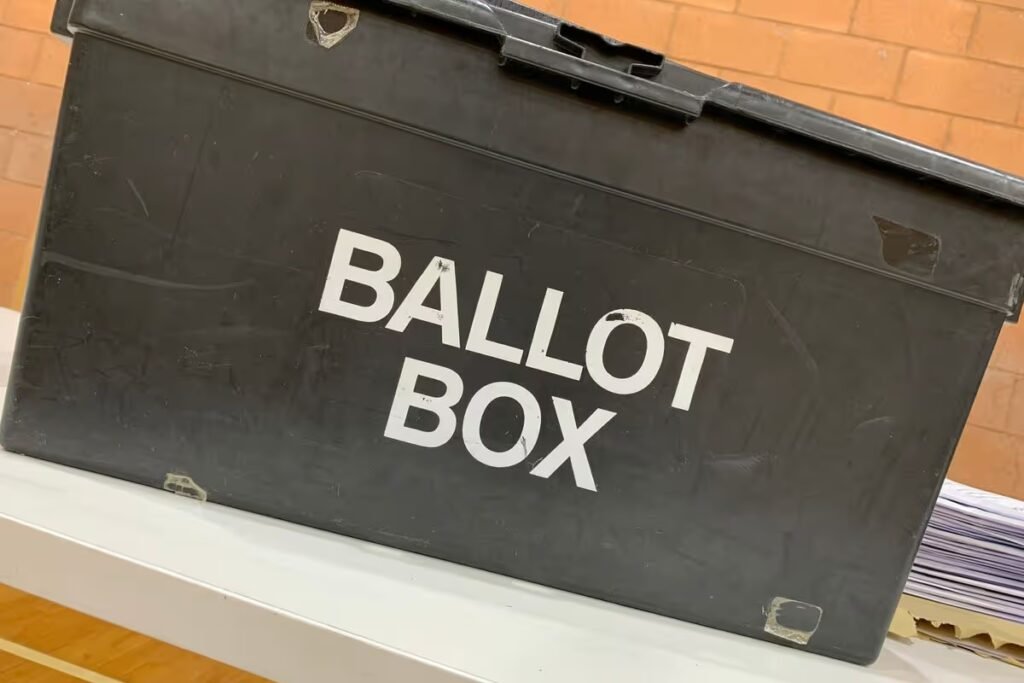
Elections are taking place in 136 local authorities across England on Thursday

BLACKPOOL, ENGLAND – MAY 03: Labour Leader Keir Starmer and Deputy Leader Angela Rayner meet new Labour MP for Blackpool South, Chris Webb, and party activists at Blackpool Cricket Club on May 3, 2024 in Blackpool, England. Labour’s Chris Webb was announced as the winner of the Blackpool South by-election. Former Conservative MP for Blackpool South Scott Benton resigned in the wake of a lobbying scandal triggering the by-election, which is held on the same day as the local and mayoral elections in England. (Photo by Christopher Furlong/Getty Images)
With just two days to go until the 2026 local elections get underway across England, we’re taking a look at what happened the last time the country went to the polls.
The last major set of local elections took place on May 2, 2024.
They were widely seen as a significant indicator of the political landscape ahead of the general election that followed later that summer, which saw Labour come into power.
Click here to get the biggest stories straight to your inbox in our Daily Newsletter
Here is a breakdown of what happened and why it mattered:
A Labour Surge
The Labour Party was the clear winner of the May 2024 local elections, making substantial gains across the country. They seized control of several key councils that were previously held by the Conservatives or were under “no overall control”.
Labour won control of councils like Hartlepool, Thurrock, Milton Keynes, and Rushmoor (a historic win in a traditionally Conservative area), and won the vast majority of mayoral races – including the newly created positions in the East Midlands, North East, and York & North Yorkshire.
In London, Sadiq Khan secured a historic third term as mayor, comfortably defeating his Conservative challenger.
The Conservative Struggle
The Conservative Party suffered heavy losses this time two years ago, losing nearly 500 council seats. One of the most stinging defeats was in the West Midlands mayoral race, where the high-profile Conservative incumbent, Andy Street, narrowly lost to Labour’s Richard Parker.
One of the few bright spots for the Conservatives was Ben Houchen retaining his role as the Tees Valley Mayor, which provided a small morale boost for the party amidst otherwise dismal results.
The Rise of Smaller Parties
The Liberal Democrats had a strong showing, overtaking the Conservatives in total council seats for the first time since the 1990s and gaining control of councils like Dorset and Tunbridge Wells.
The Green Party, on the other hand, continued their steady growth, gaining dozens of seats and becoming the largest party on Bristol City Council (though without an overall majority).
While Reform UK didn’t win many seats, they achieved high vote shares in several areas, signalling their growing influence on the right of the political spectrum.
Considering the 2024 local elections formed a narrative for the political landscape that took shape just a couple of months later, the results of Thursday’s polling should have a lot to say about where public sentiment sits in the current climate.
With over 5,000 council seats up for grabs, this set of elections is being viewed as a critical mid-term test for all of the political parties and a pulse-check on the national mood.