Xi Jinping’s plan for a China-centric world order

When Donald Trump, Vladimir Putin and nearly 20 other national leaders gather in Shenzhen next week, they will be treated by Xi Jinping to displays of China’s marvels. Drones will swarm and sparkle overhead, fleets of humanoids will usher delegates through conference halls and ultrafast-charging electric vehicles will shuttle them between venues. The message to the annual summit of the Asia-Pacific Economic Co-operation forum—that China’s technology is cutting-edge—will be clear to all.

FILE - In this photo released on July 18, 2024, by Xinhua News Agency, members of the Politburo Standing Committee from left, , Li Xi, Cai Qi, Zhao Leji, Xi Jinping, Li Qiang, Wang Huning and Ding Xuexiang attend the third plenary session of the 20th Communist Party of China (CPC) Central Committee held from July 15 to 18 in Beijing. ((Xie Huanchi/Xinhua via AP, File))
FILE – In this photo released on July 18, 2024, by Xinhua News Agency, members of the Politburo Standing Committee from left, , Li Xi, Cai Qi, Zhao Leji, Xi Jinping, Li Qiang, Wang Huning and Ding Xuexiang attend the third plenary session of the 20th Communist Party of China (CPC) Central Committee held from July 15 to 18 in Beijing. ((Xie Huanchi/Xinhua via AP, File))

But there will also be a subtler message, signalling Mr Xi’s idea of how the world should look. The summit’s theme, “building an Asia-Pacific community to prosper together”, is a deliberate echo of his main foreign-policy doctrine: “building a community with a shared future for mankind”. Ma Zhaoxu, a vice foreign minister, has made the link explicit, tracing the theme back to Mr Xi’s calls since 2013 for an “Asia-Pacific community with a shared future”.

To many observers, this language may seem obscure. It is certainly a mouthful. Even China hawks face a challenge in explaining to the public why a “shared future” is threatening (the literal translation, “common destiny”, has a more chilling, deterministic edge, which is presumably why a switch was made to softer wording in English). Yet this is not just a casual slogan. It has been written into China’s constitution and tied to every big diplomatic initiative that Mr Xi has launched for more than a decade. So it is worth asking what, exactly, he means by it.

A natural place to start is the Chinese government’s white paper, published in 2023, that tried to explain Mr Xi’s doctrine. Running to nearly 13,000 words, it might seem to cover a lot of ground. Alas, the content is overwhelmingly vague. Among its exhortations: countries ought to “work together in harmony and unity” and should “strengthen dialogue” while promoting “peace and development”. Hard as it is to disagree, it comes across more like a general wish list than a specific, operable plan. Chaguan found only four forward-looking commitments. China will not seek hegemony, China will cut carbon emissions, China will modernise its economy, China will work with other countries. All are restatements of existing policy and, again, not much to go on.

Chinese scholars have tried to put meat on the bones. Yang Jiemian of the Shanghai Institute for International Studies made a notable attempt this year when he declared that the doctrine deserves to be seen as a full scientific system. It offers specific goals (eg, lasting peace), has a road map defined by Mr Xi’s four global initiatives (on development, security, civilisation and governance), and is delivered concretely via Mr Xi’s Belt and Road Initiative for global infrastructure-building.

The trouble with such elaborations is that they peel back abstraction to reveal yet more abstraction. In the parlance of our times, it is turtles all the way down. What is Mr Xi’s “shared future”? Why, it is the embodiment of his global initiatives. And what are those? They are vehicles for principles like sovereignty, multilateralism and dialogue—which, in turn, bring us back to the definition of “shared future”. At least belt-and-road projects are tangible, such as railways in South-East Asia and roads in Africa. But they do not amount to grand strategy; they are overseas investments, some productive, some not. You must feel a twinge of sympathy for diplomats in Beijing when they are asked by their home governments for concise notes on Mr Xi’s “shared future”.

A recent book by Steve Tsang and Olivia Cheung of, respectively, the School of Oriental and African Studies and King’s College London, cuts through the ambiguity. They argue that the shared-future talk is a formal expression of Mr Xi’s true aspiration: the creation of a Sino-centric world order. But they also see an essential truth in Mr Xi’s repeated assertions that China is not seeking hegemony: Mr Xi, they say, does not want to be burdened by global policing. He just wants recognition of China’s pre-eminence and other countries to defer to it, even when China’s behaviour impinges on their interests. His ideal world is one where sovereign leaders can do as they please within their borders—a world safe for autocrats and free of high-minded Western pontificators about rights and wrongs in other lands.

Common destiny’s children

Students of Chinese history may feel they have seen this “shared future” before. It sounds a lot like the professed principle of mutual non-intervention that has been the much-touted lodestar of China’s foreign policy since the 1950s. The usual criticisms apply to both concepts. China has a history of meddling, such as backing African rebel movements in the Mao era or grabbing disputed territory—look at recent encroachments on waters close to the Philippines and across the unsettled border with India. Chinese officials do little when their closest partners mess with others. They have, in effect, enabled Russia’s invasion of Ukraine.

What has changed since the 1950s is the context. China’s economic and military power is orders of magnitude greater. It can put real muscle behind its demand for non-interference in its own politics. That is worrying—especially if it ultimately gives China cover to do whatever it wants with Taiwan. But for now, governments and businesses around the world are more consumed by fallout from America’s war against Iran and from Mr Trump’s tariffs. The immediate uncertainty is not what Mr Xi might say in Shenzhen but how Mr Trump will behave as a gravely wounded president after the Democrats’ triumph in the midterms.

Set against that, talk of a shared future is less threatening precisely because it is not a bold new vision for the world. Rather, it is a rebranding of a long-standing strategy: deeply conservative, occasionally hypocritical and focused on China’s own betterment. Other countries may not love it. But they know it.
Source link

Visited 1 times, 1 visit(s) today

Related Article

Jensen Huang

The Spy Scandal That Lays Bare Nvidia’s Governance Vacuum

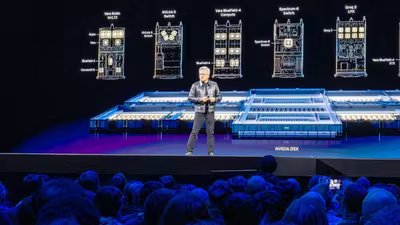
Revelations that Nvidia CEO Jensen Huang had an affair with an executive suspected of spying for China are laying bare corporate governance practices nearly as extraordinary. Jensen Huang The $4.3 trillion chip giant lacks a chairman and a succession plan. It denied Huang’s relationship only for him later to acknowledge it. And in announcing an

Protesters forced open a gate at the Constitutional Tribunal in Warsaw.

Poland’s Political Divisions Puncture Its Influence on World Stage

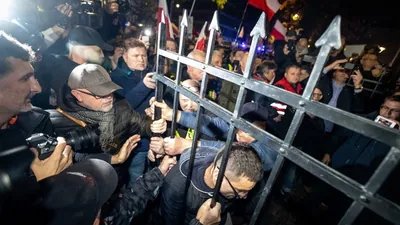
WARSAW—Poland has one of the strongest economies in Europe, one of NATO’s highest rates of military spending and a nearly unmatched understanding of Russia’s threat to the continent. Yet the country punches below its weight on the world stage. Protesters forced open a gate at the Constitutional Tribunal in Warsaw. The reason? A divided political

trump

World News Live Updates: Trump says Iran war ‘effectively over’ as Tehran demands US ‘surrender’ to its conditions | World News

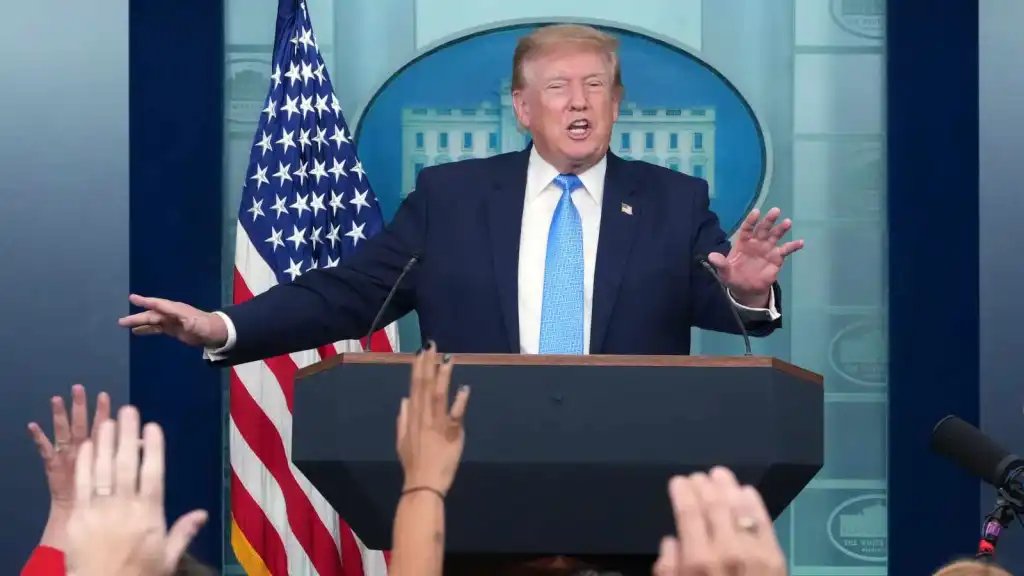
President Donald Trump speaks in the James Brady Press Briefing Room at the White House Monday, Nov. 9, 2026, in Washington. (AP Photo/Alex Brandon) US (Press Association via AP Images) US President Donald Trump has declared that the US-Israel war on Iran is now militarily “effectively over” and a resumption of strikes is “quite unlikely”.

Qatar, Saudi Want Peaceful Iran Deal, US Ready For Strikes If Needed: Trump

Qatar, Saudi Want Peaceful Iran Deal, US Ready For Strikes If Needed: Donald Trump

Donald Trump said United States was ready to resume military strikes if necessary. President Donald Trump told Reuters on Monday that Qatar and Saudi Arabia were eager for a peaceful solution on the Iran conflict but the United States was ready to resume military strikes if necessary. Trump, who met Qatar’s prime minister earlier on

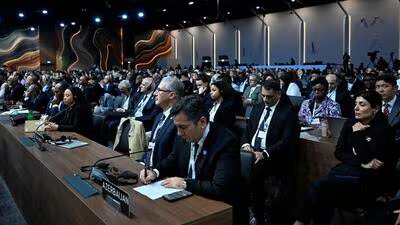
Representatives from various countries attend the opening session of the COP31 UN Climate Change Conference at the Antalya Expo Center on Monday. (AFP)

Nations must turn climate promises into practical action: COP31 prez

The UN climate summit (November 9-20) opened in Antalya, Turkey on Monday, with COP31 president Murat Kurum calling on countries to turn promises into practical action, as the world confronts increasingly interconnected climate, economic and geopolitical challenges. Representatives from various countries attend the opening session of the COP31 UN Climate Change Conference at the Antalya

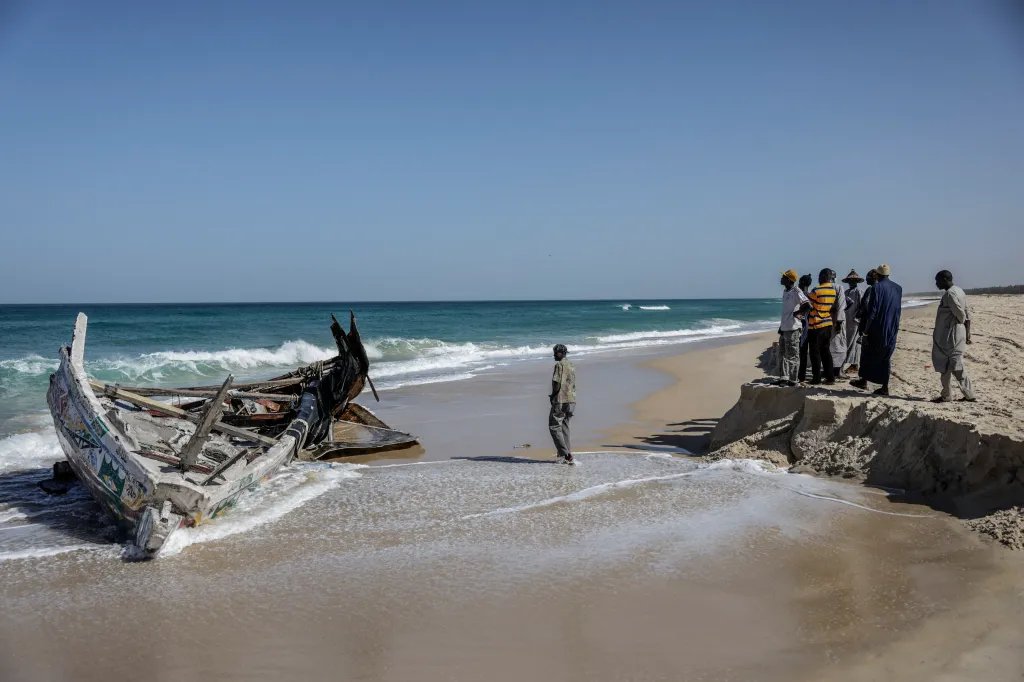
People inspect the wreckage of a wrecked pirogue on a beach in Senegal.

Death toll rises to 39 after migrant boat capsizes off Senegal

The death toll from the capsize off Senegal of a boat carrying migrants rose to 39 following the discovery of more bodies on Monday, the country’s emergency services said. The boat, which left Saint-Louis in northern Senegal and was headed to the Spanish coast, overturned on Sunday, offshore from the town of Kébémer, north of

World News Quick Take - Taipei Times

World News Quick Take – Taipei Times

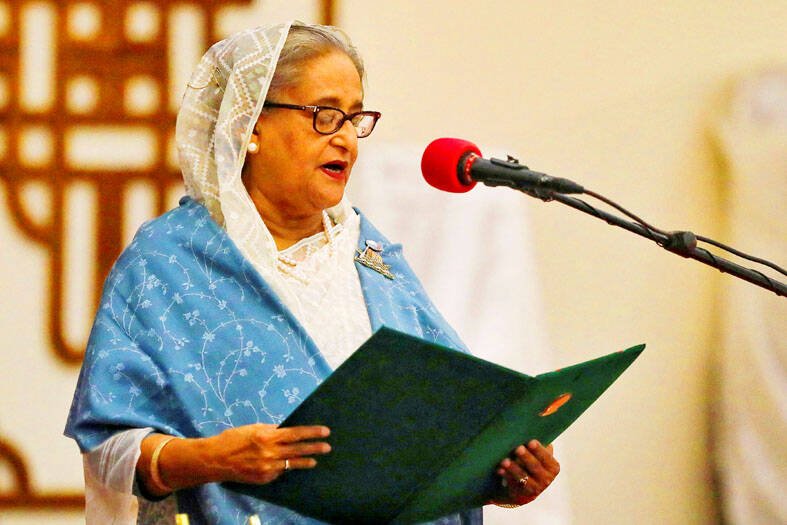
BANGLADESH Ousted PM seeks passport Former prime minister Sheikh Hasina yesterday requested a new passport to facilitate her return from exile two years after she was ousted in a mass uprising. The government has been seeking her extradition from India and earlier dismissed suggestions she needed new identification documents to return home. Hasina said she

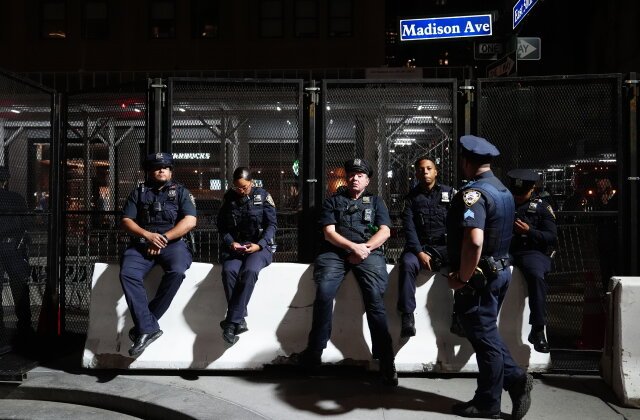
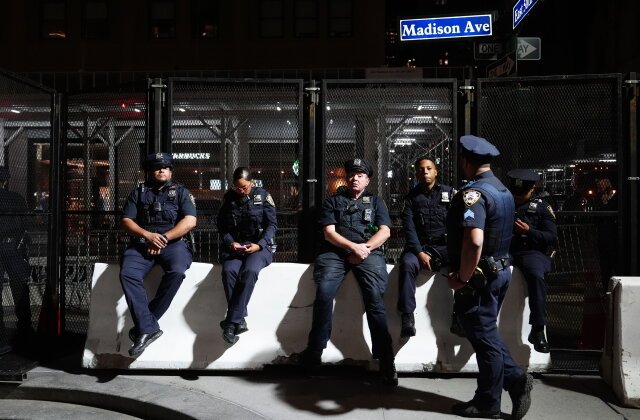
New York City police officers are on duty outside the Lotte Palace Hotel during a United Nations General Assembly leaders reception, late Tuesday, Sept. 22, 2026, in New York. (AP Photo/Julia Demaree Nikhinson)

Russia’s Top Independent Newspaper Closes Its Office After Three Decades, Citing Official Pressure

MOSCOW (AP) — Novaya Gazeta, Russia’s most celebrated independent newspaper, closed its Moscow offices Monday, citing relentless pressure from government officials. It was the last major independent media outlet critical of the Kremlin that remained active in Russia. Others closed or moved their operations abroad after President Vladimir Putin sent troops into Ukraine in February

New York City police officers are on duty outside the Lotte Palace Hotel during a United Nations General Assembly leaders reception, late Tuesday, Sept. 22, 2026, in New York. (AP Photo/Julia Demaree Nikhinson)

This Year Set to Be One of Four Hottest on Record, UN Report Says

GENEVA, Nov 9 (Reuters) – This year is ⁠on ⁠track to be one of ⁠the four hottest on record, driven by a ​powerful El Niño and perpetuating a warming streak of more than a decade, a ‌UN report showed on Monday. • Countries ‌are preparing to meet in Turkey from November 9 to 20 for ⁠the ⁠next round

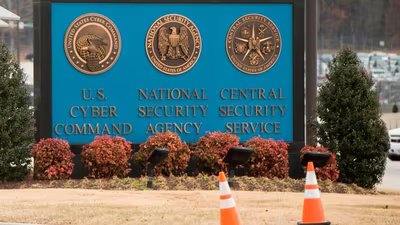
The National Security Agency told organizations that if they couldn’t fix their websites immediately, they should take them offline.

AI Saves the Day—and Could Bring Doom Tomorrow

The National Security Agency told organizations that if they couldn’t fix their websites immediately, they should take them offline. Not patch carefully. Not watch for suspicious activity. Pull the plug, according to the NSA’s Oct. 21 advisory. The National Security Agency told organizations that if they couldn’t fix their websites immediately, they should take them

Map

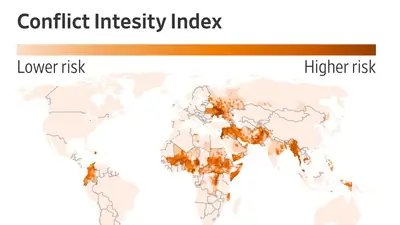
These Maps Show the Gangs and Guerrillas Ruling More Than 200 Million People

Violent gangs vying to control cocaine exports have destabilized once-peaceful Ecuador. In northern Africa’s Sahel region, religious insurgents and ethnic militias have chased government authorities from entire provinces. Map And in Southeast Asia, criminal syndicates run industrial-scale fraud centers and drug operations from ungoverned pockets of Myanmar and Cambodia. Around the world, guerrillas, cartels and

During the Cold War, the American intelligence agency experimented with turning a cat into a spy, hoping it could get close to unsuspecting targets and record their conversations. (Representative image)

When the CIA reportedly spent $20 million trying to turn a cat into a spy

It had a microphone in its ear, a transmitter beneath its skin and an antenna woven into its fur. It was also supposed to be one of the Central Intelligence Agency’s (CIA) most unusual surveillance tools. During the Cold War, the American intelligence agency experimented with turning a cat into a spy, hoping it could

The new majority may struggle to stop the war in Iran, which has driven up energy prices in the months since President Trump’s decision to attack.

Democrats Promised to Fix the Economy. What Can They Really Do?

COLUMBUS, Ohio—Tom Green had a wish list when he cast his vote in the Democratic Party’s midterm landslide last week: Tougher rules on AI data centers. Universal healthcare. Better job protections. The new majority may struggle to stop the war in Iran, which has driven up energy prices in the months since President Trump’s decision

Raigad: People light earthen lamps during Diwali celebrations, in Raigad, Maharashtra, Sunday, Nov. 8, 2026. (PTI)

From Ahmedabad to Karachi, Colombo and Caracas: Diwali celebrations around the world

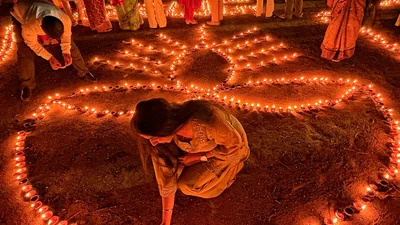
Diwali, the festival of lights, was celebrated across the world on November 8, with members of the Indian diaspora and local communities joining the festivities. From diya-lighting ceremonies and rangoli displays to cultural performances and community gatherings, celebrations were held in several countries. Raigad: People light earthen lamps during Diwali celebrations, in Raigad, Maharashtra, Sunday,

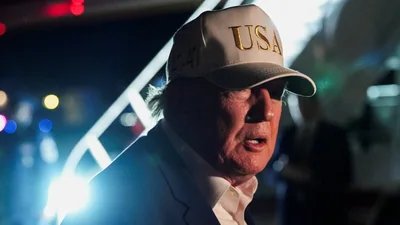
Trump was questioned about what factors he considered to be the most formidable barrier to ending the conflict. (Reuters)

‘I inherited that war’: Trump blames ‘hatred’ between Putin, Zelenskyy for Russia-Ukraine conflict

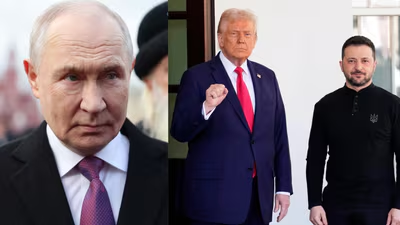
US President Donald Trump has expressed strong optimism that a resolution to the ongoing Russia-Ukraine war is near, pointing to the deep-seated animosity between Ukrainian President Volodymyr Zelenskyy and Russian President Vladimir Putin as the primary stumbling block hindering peace efforts. Trump was questioned about what factors he considered to be the most formidable barrier

0
Would love your thoughts, please comment.x
()
x