April 5, 2026, 5:06 a.m. CT
- Advocates propose mobile voting as a solution to modernize the U.S. election system and increase accessibility.
- Proponents suggest mobile voting could reduce political extremism by engaging more moderate voters.
- Other countries, including France and Estonia, have already successfully integrated mobile voting into their elections.
This article was originally published by the Students United News Network (SUNN) in the first citywide student-led newspaper in the USA, Nashville SUNN (NashvilleSUNN.com).
In the lead-up to the midterm elections, President Trump has been doubling down on his mission to end voting by mail.
“I’m going to lead a movement to get rid of mail-ballots,” he wrote in a Truth Social post, adding that his team was drafting an executive order that would push for major changes in the American voting system. Trump’s campaign is not new. Since his 2016 presidential victory, he has questioned the legitimacy of voting by mail, going so far as to call it “massive voter fraud.”

An outdated system
While many dismiss this criticism, there is widespread consensus that the U.S. voting system remains flawed, outdated and in need of reform. But significant reforms to the voting process are still miles away. One solution on the horizon seems inevitable and is already practiced in democracies overseas – one of opportunity and accessibility that includes all Americans who want their voices heard: mobile voting.
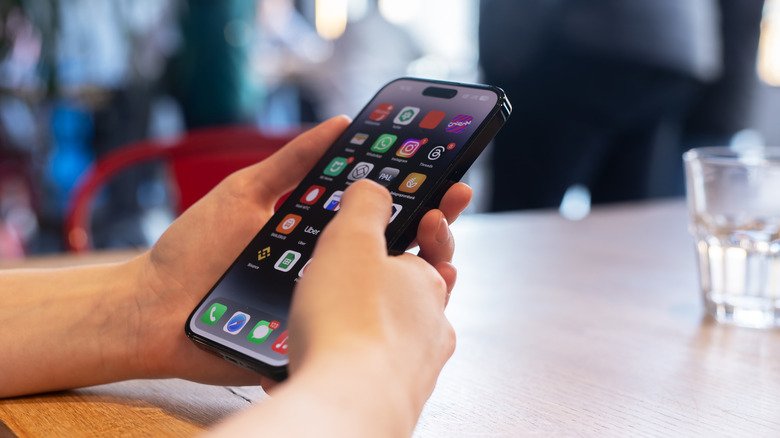
Voting by phone sounds simple, right? In an era where almost every aspect of our lives can be controlled by a phone or tablet, it’s hard to believe that voting itself – the most basic right and responsibility we have as participants in a democracy – remains stubbornly antiquated.

A democracy still relying on 20th-century tools
Mobile voting systems have not yet been widely introduced in any U.S. state, aside from a few scattered mobile voting pilot projects and programs for military members, who must follow strict guidelines to cast their ballots digitally. As the political climate becomes more polarized, we are still years away from creating a smarter, more accessible and user-friendly American voting system.
Think about that: Coders have built software that moves billions of dollars daily in and out of personal bank accounts, and that can manage practically the entire stock market via phone apps. Yet neither the U.S. government nor Silicon Valley has developed the technology – or the political will – to modernize U.S. voting.
As the adage goes: There should be an app for that.
What happens when voting goes digital
Over the last decade, early efforts to pilot mobile voting solutions in the U.S. have gained traction, but remain far from mainstream or realistic for the average American. For example, in 2018, the state of West Virginia allowed overseas military ballots to be submitted via a smartphone app, and the results were promising.
Researchers found that this policy increased voting participation by 3-5%. Mobile voting pilot programs in the U.S., audited by the National Cybersecurity Center, have not only proven to increase voter turnout significantly, but have also come back clean every time, suggesting that if the right measures are taken to protect voter security, there should be no concern about ballot legitimacy.

Could mobile voting reduce political extremism?
Meanwhile, advocacy groups like Mobile Voting highlight that more than 330 jurisdictions have piloted mobile voting programs since 2018, and that voting on personal devices has already been implemented in Australia, Canada, France, Estonia and the UK.
Advocates like Bradley Tusk, founder of Mobile Voting and a TED Talk speaker on the topic, make a convincing case that smart voting can help depolarize American politics by bringing a much larger group of voters to the table.
Voting in person at a polling station often involves risks – especially for working-class Americans – including missing work, lack of transportation or childcare and even being harassed. The ones who stick it out are the most passionate voters, and often the most extreme. Mobile voting removes the risk of taking off work or traveling to remote locations, so hardcore voters are no longer the sole main contributors.
This is especially true in the case of primary elections when the candidates who run for each party are chosen: “Politics is more extreme because only the most extreme voters turn out in primaries,” said Tusk. “And with politicians prioritizing reelection above all else, they shun compromise, feed this extremism and get rewarded for it.”
Tusk went on to explain that the way to balance the political scales and heal our polarized, often ineffective government is to get more of the general population to vote. “And the only way to do that,” he said, “is to meet the people where they are: on their phones.”
Tusk and his team developed the Mobile Voting app, which was piloted in West Virginia and other states that have historically voted absolutely blue or red. Not only did the pilot in West Virginia see a voter increase, but it also began to depolarize voting, leaving users very happy with the nuanced ease of casting their ballots.
Tusk has promised that if online voting is enacted, “our politicians and policies will shift to the center.” It’s a tempting offer.
According to a Gallup poll, 45% of independent Americans consider their political views “moderate” as opposed to the 30% and 20% of conservatives and liberals. Mobile voting could be the solution to the growing divide in American politics.

The risks and flaws are real
But the plan isn’t flawless. The cybersecurity threats are daunting and real. In a 2020 study, MIT researchers discovered flaws in an online voting app that leaked information. “Security vulnerabilities in a mobile voting application…pinpoint a number of weaknesses, including the opportunity for the hacker to alter, stop or expose [the vote],” they wrote.
With controversy from Russia’s involvement in the 2016 election and the surge of new meddling, inviting online democracy is a treacherous game.
“We all have an interest in increasing access to the ballot,” said Daniel Weitzner, who researches mobile voting security at MIT. “But in order to maintain trust in our elections system, we must assure that voting systems meet the high technical and operational security standards before they are put in the field. We cannot experiment on our democracy.”
Other democracies have already figured this out
The risks are real, but it seems that mobile voting is not viewed as much of a novelty or risk overseas as it is in the U.S.
In several countries, including France, Estonia and Brazil, mobile voting has become a normalized and convenient supplement to the election cycle for several years. In France’s most recent election, more than 1.1 million votes were cast entirely online across two rounds of voting, with all ballots declared legitimate.
The U.S. should not be lagging behind.
We ask again: How is it that we trust so many other important facets of our lives to technology and not this? Banking, healthcare, tax payments, even military strategy and communications, among other high-security and high-risk information, have long been digitized. Though there will always be some risk of fraud, our country’s expansive and highly developed cybersecurity system should have the capacity to help manage a legitimate, government-authorized mobile voting app.
Now is the time to develop it.

A voting system that speaks to young Americans
And here is one more reason why: Historically, the youth vote (ages 18-29) has had the lowest turnout among all voting blocs. Even in 2024, an election many claimed was decided by the youth vote, fewer than half (42%) of youth voters aged 18-29 cast a ballot, compared to 53% in 2020, according to CIRCLE at Tufts University.
Let’s be clear that neither of these numbers – 42% or 53% – is acceptable. The survival of our democracy relies on the participation of Gen Z – and Gen Alpha after it – and we should not have to state the obvious: We are digital natives.
We need a voting system that speaks our language.
Mobile voting is unprecedented, but it could open a new window for those of us who are daunted by the current political climate and hesitant to cast our ballots.
Democracy should meet people where they are
Phones are our comfort zone, so democracy should meet us there. This is a call to action to philanthropists, politicians, university researchers and big tech companies: Please turn your attention to mobile voting in America.
It’s time to make a safe, smart voting system not just a priority, but also a civil right.


Naomi Beinart is a high school senior who lives in New York. She has published articles in the New York Times, The Guardian, The Nation and others.
Aria is a junior at the University School of Nashville and a contributing writer for the Nashville SUNN. Pancake Pantry and Radnor Lake are her top Nashville spots; her favorite books are “All That Moves Us” and “The Poisonwood Bible.“
The Nashville SUNN (NashvilleSUNN.com) is the first citywide student-led newspaper in the U.S. and a publication of the Students United News Network.