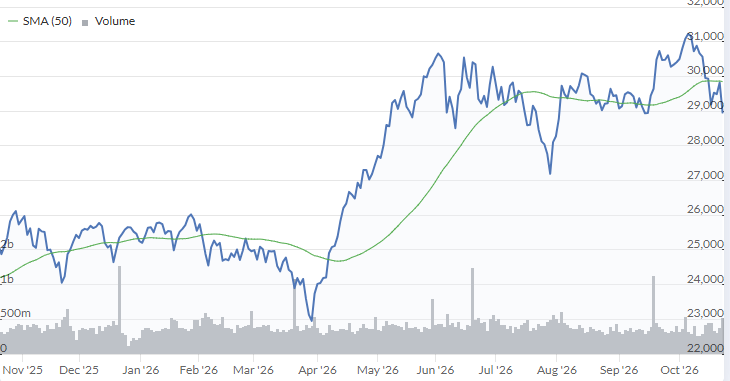
In mid-2025, Bumble’s founder Whitney Wolfe Herd returned to the company she had left fourteen months earlier and offered a blunt assessment of the industry she helped build. Today’s dating apps, she told Fortune, “are rooted in rejection and judgment [and] these are not healthy dynamics.” The stock market agrees. Bumble’s share price has collapsed more than ninety percent from its 2021 peak, erasing most of its US$13 billion valuation. As of 25 July 2025, the share price was US$8.62 with a market cap near US$880 million, but it has since declined over fifty percent to US$4.21, with the market cap now at around US$549–640 million. Match Group, owner of Tinder and Hinge, has shed tens of billions in market capitalisation and cut thirteen percent of its workforce. A 2024 Ofcom report found that Tinder lost 600,000 UK users in a single year; Hinge and Bumble also recorded significant declines. According to a Forbes Health survey, 79 percent of Gen Z users reported dating app fatigue. A 2025 Hims study found that 77 percent of Gen Z adults in relationships met their partner in person, not through an app. Evolutionary psychology offers a possible explanation of what has gone wrong.
In 1975, Amotz Zahavi proposed what became known as the handicap principle: that reliable signals of quality must be costly to produce because cheap signals can be faked. The peacock’s extravagant tail works as an honest advertisement of genetic fitness precisely because it is expensive and dangerous to maintain. Any bird can grow a few feathers, but only a genuinely fit bird can sustain a spectacular display. Zahavi’s insight seems to invert the logic of natural selection, which favours efficiency, not waste. But the logic holds up: only a signal that is difficult to fake can carry reliable information about the sender.
In his book The Mating Mind: How Sexual Choice Shaped the Evolution of Human Nature (2000), Geoffrey Miller argues that language, along with wit and storytelling, evolved under sexual selection, partly as a costly signal of cognitive fitness. Fluent, real-time verbal performance advertises mental abilities that are hard to fake. While both sexes value intelligence and verbal skill, research shows that women often value humour, creativity, and emotional nuance more heavily when evaluating mates, whereas men prioritise physical attractiveness to a greater degree. These patterns suggest that mental traits are partially shaped by mate choice. Dating apps short-circuit this entirely: the swipe evaluates a photograph and a bio, instead of the kind of sustained verbal interactions that our mate-choice psychology evolved to assess.
Approaching someone in a bar, workplace, or community event carries a potential cost: public rejection. That cost is the signal. The act of crossing the room to make an in-person approach therefore conveys important information about the approacher’s confidence and interest in a way that a swipe cannot. A rightward swipe communicates almost nothing about the sincerity of the person making it.
Research published by Gareth Tyson and colleagues at Queen Mary University of London confirms what signalling theory would predict. Analysing the behaviour of nearly half a million Tinder users, they found that men liked a large proportion of the profiles they viewed but received a match only 0.6 percent of the time, while women were far more selective in their swipes but matched at a rate of ten percent. The explanation is straightforward: when swiping costs nothing, men swipe indiscriminately. The researchers noted that many male users appeared to like profiles in a “relatively non-selective way” and filter them out only after a match (by failing to message or reply to messages).
Fitness indicators evolve to be condition-dependent—their cost scales with the actual state of the organism. A high-fitness individual can afford a spectacular display; a low-fitness individual cannot. Dating profiles are not condition-dependent in any meaningful sense. They can be assembled at peak conditions—on a good day, with flattering light, with time to craft the perfect bio—and then deployed indefinitely. They are, in effect, fossilised signals: snapshots of a moment rather than live performances of current fitness. When signals are free to produce, they cease to carry reliable information. In a signalling environment in which everyone can send the same costless message, the message stops meaning anything.
What Good Is Evolutionary Psychology? | Quillette
Without an understanding of the selection pressures that shaped our minds, much of human existence is frustratingly bewildering.

Dating apps filled a gap created by what the sociologist Ray Oldenburg, writing in 1989, called the decline of “third places”—the pubs, cafés, community centres, and other informal gathering spots where people historically met outside of home and work. Decades of suburbanisation, car-dependent planning, and the commercial displacement of local gathering places made it harder to meet potential partners through ordinary social life.
The corner bar, the church social, the bowling league, and the workplace canteen all served as informal matchmaking infrastructure—environments where repeated exposure, shared context, and low-stakes interaction allowed attraction to develop gradually. Crucially, these were not spaces designed for dating. They were spaces designed for living, and dating happened as a byproduct. That incidental quality was not a flaw. It was the very thing that made them work.
Third places served courtship not in spite of their inefficiency, but partly because of it. Encountering someone at a neighbourhood pub or bookshop and making the effort to speak to them—risking rejection, reading body language in real time, improvising conversation—produced exactly the kind of costly signal that apps strip away.
It is no accident that the alternatives now gaining traction are explicitly designed to reintroduce social cost. Speed-dating events and curated singles’ clubs, while delivering higher immediate engagement and satisfaction than apps for many, show only modest long-term success rates (around 4–6 percent of encounters lead to relationships); interest-based gatherings like book clubs and running groups similarly foster authentic interaction with lower pressure. Yet a return to organic third spaces may prove more sustainable: without the weight of explicit romantic expectations, connections can arise serendipitously. All these formats require participants to show up physically, risk face-to-face interaction, and invest time and effort that cannot be faked.
Despite unprecedented access to potential partners, people are going on fewer dates than ever. A 2025 study by DatingNews and the Kinsey Institute found that American singles averaged fewer than two in-person dates in the preceding year while almost half of all single men and a third of single women had not gone on any dates at all.
Here in Australia, the picture is strikingly similar. A 2025 Real Relationships Report based on a survey of 1,204 participants found that 51 percent said that dating had become harder than in the past, with women feeling this more acutely (57 percent). Cost-of-living pressures were a factor in this: 44 percent of Australians said they went out less frequently or had shifted to low- or no-cost activities. The Australian Financial Review’s Lucy Dean describes the current dating scene as an “endurance test.” Yet most singles, as Justin Lehmiller of the Kinsey Institute puts it, simply still want to meet someone “the old-fashioned way—person-to-person with real humans.”
When Men Behave Badly—A Review
A review of When Men Behave Badly: The Hidden Roots of Sexual Deception, Harassment, and Assault by David M. Buss, Little, Brown Spark, 336 pages (April 2021) Professor David M. Buss, a leading evolutionary psychologist, states in the introduction of his fascinating new book that it “uncovers the hidden roots

The dating app industry’s response has been to double down on the logic that created the problem. Bumble and Hinge are investing heavily in AI-driven features, insincerely promising smarter algorithms and better matches, though the main motivation for introducing AI to the process is clearly to cut costs. The companies do not make enough profit to employ staff and no longer have any interest in improving their products; user satisfaction is irrelevant. But even if the introduction of AI were designed to increase the number of matches, the real issue was never matching in the first place—it was signalling. Making the algorithm more efficient does not address the underlying information failure. It is like trying to fix inflation by printing more money.
In Australia, a 2024 YouGov survey found that seven in ten adults claimed to have never used a dating app; 52 percent of these alleged non-users said they were unlikely to ever try one. Among singles open to relationships, the most cited reason for avoiding the apps was a preference for meeting people in person (24 percent). That preference is finding an outlet: Eventbrite data reported in the Guardian Australia shows that speed dating events listed on the platform grew 35 percent from 2022–23, and more than 26,000 Australians attended speed dating events through the platform in 2023 alone.
These events restore the conditions under which genuine signals can be sent and read. When you show up in person—having bought a ticket, chosen what to wear, navigated to a venue—you have already made an investment before the first word has been spoken. And when you sit across from someone and improvise conversation in real time, you are doing something that no dating profile can replicate: revealing yourself under conditions of social risk. The discomfort is the point. The events that succeed are those that impose real costs on participants: financial investment, physical presence, the social risk of face-to-face interaction. These costs are features, not bugs. They filter for sincerity in a way that no algorithm can replicate.
None of this means that dating apps are useless, or that they will vanish entirely. For specific populations—lesbian and gay people and people in rural areas, for example—they remain valuable. But the broader lesson here is that courtship that costs nothing communicates nothing. The signals that matter—vulnerability, investment, the willingness to risk rejection—cannot be easily digitised. Romance has always depended on a certain productive inefficiency.
Quillette invites thoughtful responses to its essays.
Selected responses are published once per week as part of a curated Letters to the Editor feature. If selected, letters appear under the contributor’s real name and may be edited for clarity and length.
To submit a letter for consideration, please email [email protected].