War, a Trump-imposed deal or internal regime collapse: for Tehran, none of the options are good | Sanam Vakil

Forty-seven years on from the Iranian revolution, Iran is confronting a strategic reality it has never faced before – a simultaneous crisis of domestic legitimacy and a credible threat of external attack so severe that regime survival can no longer be taken for granted. Until now, Tehran has survived wars, sanctions, assassinations, mass protests and international isolation through a strategy of projecting strength abroad, repressing dissent at home and generating a permanent crisis to justify poor leadership and political failure.

Today, Donald Trump has mobilised an “armada” to the Middle East that includes the USS Abraham Lincoln carrier strike group, guided-missile destroyers, an expanded air presence and missile defence systems. This force projection suggests the US is no longer focused on containing Iran but rather compelling a final resolution of a long-running conflict. The choice at hand is either the acceptance of a US-imposed settlement or the destruction of the Islamic republic as it exists today.

Trump’s actions during his first term as president included abandoning the 2015 nuclear deal, reimposing sweeping sanctions and the assassination of Quds Force commander Qassem Suleimani in 2020, and foreshadowed a new approach towards a longstanding adversary. Now back in office, he seems intent on completing that project by forcing Tehran to either accept a deal on American terms or confront military strikes aimed at dismantling the regime itself.

For Iran, this is an unprecedented moment. Not since 1979 has the regime faced serious threats to both its legitimacy at home and its ability to deter enemies abroad at the same time. Inside the country, the system is exhausted. Years of economic decline, corruption, currency collapse and mass emigration have hollowed out the social contract. The protests since 2017, including the “Woman, Life, Freedom” uprising in 2022 and the mass demonstrations of the past month showcase a society that no longer fears the state. Protesters have grown bolder and angrier, even as the cost of dissent has risen sharply. In fact, the January crackdown was the most violent in the regime’s history, with more than 6,000 people confirmed dead and a further 17,000 recorded deaths still under investigation.

Externally, Iran has lost its footing, and its regional projection of power has crumbled. Since 7 October, Israel’s systematic campaign against Iran’s so-called axis of resistance has steadily eroded Tehran’s sense of security. Through open airstrikes across the region and in Iran itself, high-level targeted assassinations and cyber-operations culminating in last summer’s 12-day war, Israel has moved its shadow war into the open and, in doing so, has actively pushed Iran towards a direct confrontation with the US.

An F/A-18E Super Hornet launching from the flight deck of the USS Abraham Lincoln in the Arabian Sea, 28 January 2026. Photograph: Zoe Simpson/US Navy/EPA

At the same time, Iran has created the conditions of its own vulnerability. Its effort to build influence through militias across Iraq, Syria, Lebanon and Yemen was meant to deter attack by raising the cost of war. Instead, it has created multiple points of exposure. Its nuclear brinkmanship, once a source of leverage, has become the main justification for international pressure. And its revolutionary ideology, once a tool for mobilisation, now leaves it increasingly isolated in a region that has grown tired of ideological conflict.

The question looming for the days ahead is not whether confrontation will occur, but what form it will take.

The first scenario is forced compromise. Under intense pressure, Iran accepts a deal that limits its nuclear programme, allows intrusive inspections, places constraints on its missile capabilities and reduces its regional role, in return for sanctions relief and perhaps eventual US investment in the country. This may prevent immediate war, but it would come at a heavy political cost. Such an agreement would be seen inside Iran as a bargain for the sake of the regime’s survival.

The second scenario is controlled war. The US would coordinate strikes against the Iranian leadership, missile forces, air defences and remaining nuclear infrastructure, seeking to cripple the regime. This would probably trigger Iranian regional escalation ranging from attacks on US bases, shipping lanes and Israeli cities, and maybe even some proxy mobilisation across the Gulf. The goal in this scenario would be regime transformation, but the outcome would certainly unleash prolonged instability, elite fragmentation and a violent struggle over future leadership.

The third scenario is uncontrolled collapse. Under combined external pressure and internal unrest, the regime fractures, producing not liberal transition but a power vacuum. Competing security factions, economic breakdown and regional intervention could turn Iran into a long-term source of instability conjuring up images of Libya and Syria that would produce an outcome more perilous than the regime it replaces.

In all three scenarios, the outcome is dangerous for the Iranian people. Whether through forced compromise, limited war or regime collapse, none of the likely paths ahead point toward immediate stability or democratic transition. Moreover, all sides – Israel, the US and Iran – are locked into a logic of escalation over restraint.

This is what makes the current moment so dangerous. There are no real diplomatic brakes left. The systems and mechanisms that previously kept conflict contained no longer function. Europe has no role left to play in mediating with Iran. Russia is distracted by its war in Ukraine and reluctant to invest in any off-ramps. China is cautious and unwilling to lead. Regional states are trying to intercede and manage last-ditch diplomacy, but they are also bracing for the impact.

For Iran, and for the Middle East more broadly, the question is no longer whether the crisis can be defused, but how much damage will be done before it finally runs its course.
Visited 1 times, 1 visit(s) today

Related Article

$354K overseas travel bill for PM and Ditoka – FBC News

[Photo: FILE] More than $354,000 was spent on overseas travel by Prime Minister Sitiveni Rabuka and Foreign Affairs Minister Sakiasi Ditoka over 16 months. Ditoka accounted for $212,733 of the total, spending $70,883.80 more than the Prime Minister, whose overseas travel costs reached $141,849.20. Rabuka’s overseas engagements covered seven listed trips to Australia, India, Solomon

Why Sandisk Stock Bounced Back Friday

Sandisk (NASDAQ:SNDK) investors have had a rough week so far — but things are looking up. No. 5 in global NAND flash memory production behind Samsung, SK Hynix, Micron, and Kioxia, Sandisk stock shed 30% through Thursday’s close this week. But as of 10:40 a.m. ET Friday morning, the stock is up 4.4%. Missed Nvidia

VAWG figures

Met chief Mark Rowley defends proposal for police forces to be merged

Metropolitan Police Commissioner Sir Mark Rowley has defended his call to cut the number of police forces in England and Wales through mergers. The Scotland Yard chief said his proposals, set out in a major speech were the “opposite of Beeching” – in reference to the “Beeching Axe” of local railway services in the 1960s.

No public funds: Sara Duterte spending own money for Hong Kong trip

Daily Feed No government tab, no taxpayer treat. Vice President Sara Duterte is set to visit Hong Kong using her own money, with a Filipino community gathering on her itinerary. By Politiko Staff November 6, 2026 9:21 PM By Politiko staff Vice President Sara Duterte intends to use personal money to bankroll her trip to

Why SpaceX Stock Popped on Friday

Shares of Space Exploration Technologies (NASDAQ:SPCX) shed 12.5% of their market capitalization in the two days following the 2026 Midterm Elections, as investors worried over the implications a Democrat-controlled Senate and House of Representatives might have for companies controlled by Elon Musk. On Friday, things got a little better for SpaceX stock. While still underwater

The AI Boom Is Creating a New Set of Winners. These Stocks Stand Out

Quick Read Dell booked $130B in AI server orders with a record $95B backlog, and Hock Tan confirmed Broadcom secured supply to double AI revenue to $115B. Dell has gained 688% over five years, Credo is up over 1,100% since 2022, and Broadcom has returned 2,375% over the past decade. Building a portfolio and living

MercadoLibre Plunged After Earnings. Here’s Why I’m Not Selling.

Shares of MercadoLibre (NASDAQ:MELI) fell by 12% on Nov. 5, the day after the company’s third-quarter earnings came in below analysts’ expectations. That leaves the stock more than 40% below its all-time high. Of course, some of it was due to broader market pressure, as the Nasdaq Composite had its worst day in years, but

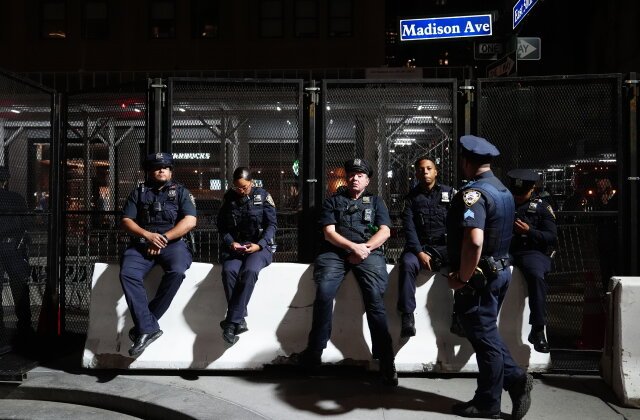
New York City police officers are on duty outside the Lotte Palace Hotel during a United Nations General Assembly leaders reception, late Tuesday, Sept. 22, 2026, in New York. (AP Photo/Julia Demaree Nikhinson)

Trump Discusses Middle East De-Escalation With Qatar’s Emir, and Other Mideast News

Meanwhile, Iran’s foreign minister held discussions with his Egyptian counterpart, part of an ongoing flurry of diplomacy as Iran’s neighbors in the region push for a negotiated settlement rather than a new round of war. Trump discusses de-escalation efforts with Qatar’s emir The telephone call between Trump and Qatar’s Emir Sheik Tamim bin Hamad al

Andy Burnham's 30-year political career has been occupied almost entirely with domestic affairs, and he has seemed content with that. (AFP)

Andy Burnham promises three foreign-policy overhauls

Andy Burnham was a foreign-policy novice when he became Britain’s prime minister in July. His 30-year political career has been occupied almost entirely with domestic affairs, and he has seemed content with that. On being elected the MP for Makerfield in Greater Manchester, he promised to apply a “Makerfield test” to every decision he makes.

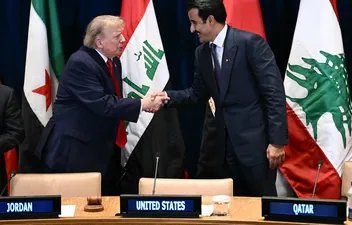
US President Donald Trump shakes hands with Qatar's Emir Sheikh Tamim Bin Hamad Al-Thani

Trump holds call with mediator Qatar’s Emir on de-escalation in Iran war

US President Donald Trump spoke with Qatar’s leader by phone about efforts to de-escalate tensions in the Middle East, part of a flurry of recent diplomatic efforts to prevent a renewal of all out war with Iran. US President Donald Trump shakes hands with Qatar’s Emir Sheikh Tamim Bin Hamad Al-Thani The US leader and

The shallow quake hit at 7:39 pm (1039 GMT) in the sea off the coast of the country's Kanto region. (REUTERS)

Magnitude 6.1 earthquake hits off coast of Tokyo

A magnitude 6.1 earthquake struck off the coast of Tokyo on Friday, Japanese authorities said. No tsunami warning was issued following the tremor. The shallow quake hit at 7:39 pm (1039 GMT) in the sea off the coast of the country’s Kanto region. (REUTERS) The earthquake hit at 7.39 pm (1039 GMT) in the sea

Investors haven’t panicked like this since 2024

Wall Street’s fear gauge just posted a bigger one-day percentage jump than anything it managed in March 2020. The VIX surged 70% Thursday to 28.18 for its biggest one-day change since December 2024, and bigger than any single session in March 2020. The selling pressure across tech stocks was just as brutal. The Nasdaq-100 erased

Turkey Arrests Former Minister Over Stock Market Fraud Scandal

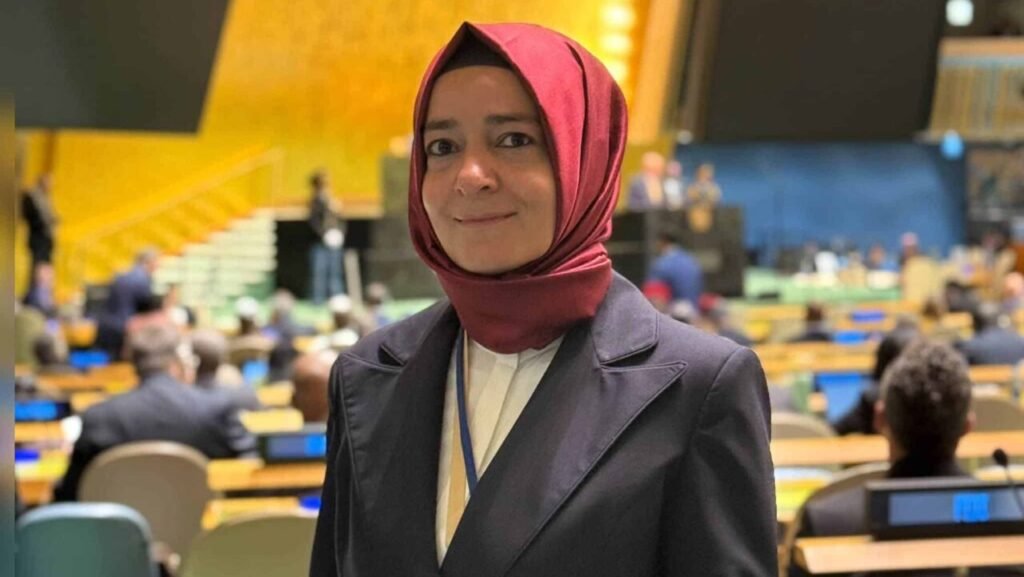
Fatma Betul Sayan Kaya. Photo: Sayan Kaya/Facebook. A court in Istanbul on Friday ordered the arrest of Fatma Betul Sayan Kaya, a former minister and deputy chair of Turkey’s ruling Justice and Development Party, AKP, over her alleged role in a major stock market financial fraud. The Istanbul Prosecutor’s Office accused Kaya of “being a

Kalshi Brings Single Stock Perpetuals to U.S

Kalshi, the next-generation financial exchange, announced the launch of regulated single stock perpetual futures (perps), becoming the first company in the United States to offer this product. As of  5 Novemebr 2026  traders on Kalshi can use perps to take positions on the price movements of over 50 major companies listed on the New York

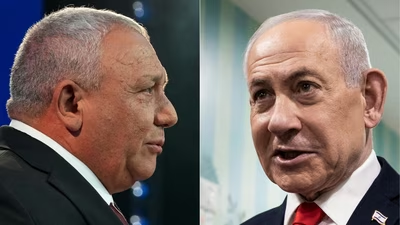
Gadi Eisenkot receives 67 recommendations, while Netanyahu gets 46 as Israel's president prepares to choose the next government leader. (Photo by Maya LEVIN and Jewel SAMAD / various sources / AFP) (AFP)

Israel president to name PM candidate on Sunday as Arab parties back Gadi Eisenkot over Netanyahu

Israeli President Isaac Herzog will announce on Sunday, November 8, which lawmaker he will ask to form the next government after opposition leader Gadi Eisenkot received more recommendations than Prime Minister Benjamin Netanyahu. Gadi Eisenkot receives 67 recommendations, while Netanyahu gets 46 as Israel’s president prepares to choose the next government leader. (Photo by Maya

0
Would love your thoughts, please comment.x
()
x