Trump’s protectionist trade policies allow China to swoop in

America’s top trading partners are responding to President Donald Trump‘s belligerent and unpredictable trade policies by trying to take their business elsewhere.

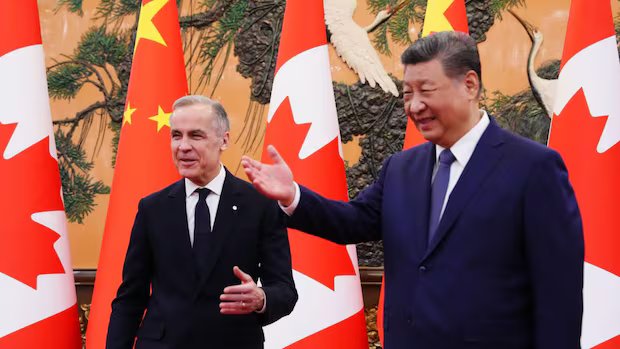
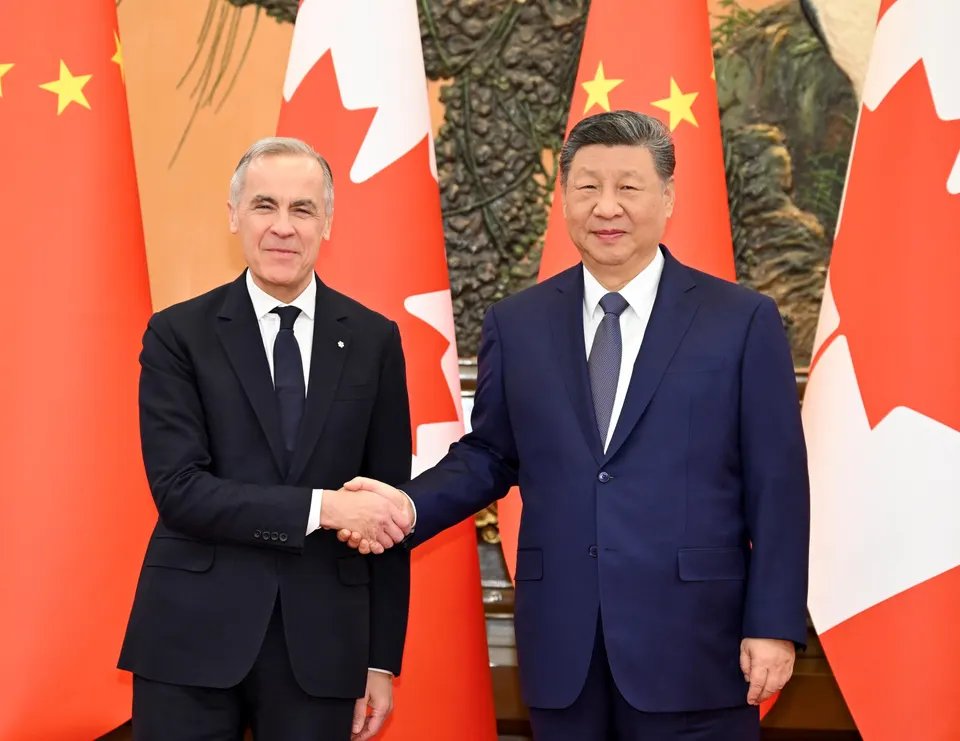
Canada broke with the United States Friday, slashing its 100% import tax on Chinese electric vehicles in return for lower tariffs on Canadian farm products, particularly canola seeds.

“It’s a huge declaration of realignment in Canada’s economic relations,” said Edward Alden, who studies trade issues as senior fellow at the Council on Foreign Relations. “The economic threat from the United States is now perceived by Canadians as far bigger than the economic threat from China. So this is a big deal.”

Canada has repeatedly been the target of Trump’s impulsive wrath. In October, for instance, he said he was imposing a 10% tariff on Canadian imports as a reprisal for Ontario’s provincial government airing an advertisement that criticized the president’s go-to diplomatic tariff tool. He didn’t follow through on the increase, but tariffs on on some key Canadian sectors like steel and aluminum remain.

But Friday’s deal with China is potentially perilous one for Canada’s prime minister, Mark Carney, who risks retribution from Trump on the eve of negotiations over the renewal of a North American trade pact that is crucial to Canadian businesses.


Trade partners seek alternatives to the U.S.

Canada is not alone in looking for alternatives to America’s massive market as Trump slaps massive tariffs on imports in an attempt to strong-arm other countries into moving production to the United States.The European Union is expected to formally sign a trade pact Saturday with the South American alliance known as Mercosur, which includes the region’s two biggest economies, Brazil and Argentina. The EU is also pursuing a trade deal with India.

China, pounded by U.S. tariffs since Trump’s first term, has diversified its exports away the world’s biggest economy to markets such as Europe and Southeast Asia. It seems to be working. China’s trade surplus with the rest of the world surged to a record $1.2 trillion in 2025, the Chinese government reported Wednesday, despite tumbling exports to the U.S.

Since returning to the White House in January, Trump has overturned seven decades of U.S. policy in favor of ever-freer trade. He’s imposed double-digit taxes on imports from almost every country on Earth as well as singling out specific industries, such as steel and autos, for levies of their own.

Trump says tariffs will raise money for the U.S. Treasury, protect American industries, bring investment into to the United States. On Thursday, in fact, Taiwan agreed to invest $250 billion in the United States in return for Trump reducing the tariff on its products to 15% from 20%.

The president’s use of tariffs has often been arbitrary and unpredictable.

He targeted Brazil, for instance, for prosecuting his friend, former Brazilian president Jair Bolsonaro. On Friday, he threatened to slap tariffs on countries that don’t support his efforts to wrest control of Greenland from Denmark.

Canada has its own complicated relationship with China

Friday’s deal in Beijing marks a turnabout in Canadian policy.

In 2024, Canada had followed the U.S. by imposing 100% tariffs on EVs from China, reflecting fears that inexpensive Chinese cars would overwhelm domestic North American automakers.

But the deal with China delivers benefits to Canada.

First, its canola farmers need export markets, and this pact lowers China’s tariff on canola from 84% to 15%. Canola farmers are hailing Canada’s new trade deal with China as great news that could restore exports for the major crop.

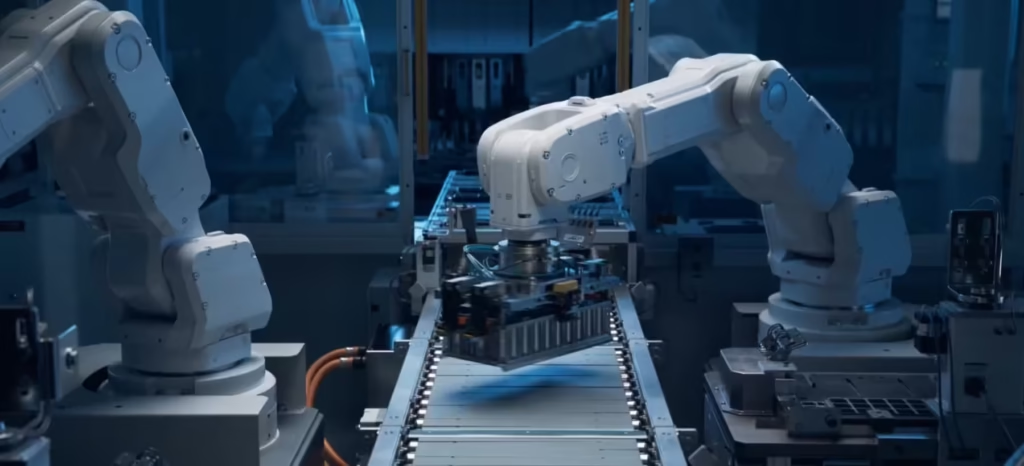
Second, the Trump administration, favoring fossil fuels over green energy, “is actively hostile to EV production in North America,” said economist Mary Lovely, senior fellow at the Peterson Institute for International Economics. America’s opposition “threatens to make the North American (auto) industry obsolete in the future, as China moves ahead with rapid quality improvements in batteries and electronics for EVs.”

“China’s strengths in electric vehicle sector are undeniable,” Carney said Friday. “China produces some of the most affordable and efficient energy efficient vehicles in the world. And in order for Canada to build our own competitive EV sector, we need to learn from innovative partners, access their supply chains, and increase local demand.”

But Carney’s economic rapprochement with Beijing amounts to a gamble.

“This was an extraordinarily difficult thing for Carney to do,” Alden said. “Relations between Canada and China have been extremely fraught.”

In 2018, China detained two Canadians in retaliation for Canada arresting an executive of the Chinese tech firm Huawei at the request of the United States. All three were released in a 2021 swap. Canada also launched an investigation three years ago into whether the Chinese interfered in Canadian elections in 2019 and 2021.

The deal has also drawn criticism already for exposing Canadian autoworkers to competition with low-price Chinese EVs. Ontario Premier Doug Ford, leading the province that is the center of Canadian auto production, blasted the deal.

“Make no mistake: China now has a foothold in the Canadian market and will use it to their full advantage at the expense of Canadian workers,” Ford posted on social media. “Worse, by lowering tariffs on Chinese electric vehicles this lopsided deal risks closing the door on Canadian automakers to the American market, our largest export destination.”

In response to the criticism, Carney noted that the deal is limited. China can only export 49,000 EVs to Canada at the reduced 6.1% tariff rate, rising to about 70,000 in five years.

Risks to a big North American trade pact

But the biggest risk to Canada comes from its prickly southern neighbor.

The U.S.-Mexico-Canada Agreement (USMCA) – a regional trade pact that allows many goods to cross North American borders duty free – comes up for renewal this year. Trump is almost sure to demand changes meant to shift manufacturing to the United States – and might threaten to pull out of the deal altogether, especially if he is inclined to punish Carney for reversing his policy with China.

That’s a scary thought for Canada, which sends 75% of its goods exports to the United States.

The Canada-China deal Friday “will make the talks more complicated. Trump will not be pleased with the Canadian action, will probably take some retaliatory measure, probably against the Canadian auto industry, and will certainly make it an issue in the USMCA talks,” said William Reinsch, a former U.S. trade official now with the Center for Strategic and International Studies.

On Friday anyway, Trump commended Carney: “If you can get a deal with China, you should do that.″ And Carney noted Friday that the China deal is preliminary, potentially giving him flexibility to seek changes if necessary to head off a conflict the U.S.

He also might be counting on getting a little help from U.S. businesses. American automakers depend on a network of plants across the U.S., Canada and Mexico and “will fight tooth and nail” to defend USMCA. American farmers also rely on the pact for access to the Mexican and Canadian markets. And U.S. tech companies like the way USMCA liberalized digital trade in North America.

For now, Lovely said, Carney’s deal with China, sends “a big signal that Canada is looking to other partners and has options that would allow it to walk away from the USMCA before it makes humiliating compromises to serve only American interests.”

Source link

Visited 1 times, 1 visit(s) today

Related Article

Y hotel nanshan shenzhen set to open in 2026

Y Hotel Nanshan Shenzhen Set to Open in 2026, Offering Business and Leisure Travelers a Premier Destination in China’s Greater Bay Area – Everything You Need to Know About Its Impact on Tourism

Home » HOTEL NEWS » Y Hotel Nanshan Shenzhen Set to Open in 2026, Offering Business and Leisure Travelers a Premier Destination in China’s Greater Bay Area – Everything You Need to Know About Its Impact on Tourism Published on January 17, 2026 ONYX Hospitality Group has announced an exciting partnership with Yee Fung Group

Text to Speech Icon

Why Donald Trump endorsed Canada’s deal with China

Listen to this article Estimated 5 minutes The audio version of this article is generated by AI-based technology. Mispronunciations can occur. We are working with our partners to continually review and improve the results. Donald Trump barely shrugged when asked about the deal Prime Minister Mark Carney forged with China this week. The U.S. president

Ontario premier, Trump officials criticize Canada deal letting in Chinese EVs

Updated Jan. 16, 2026, 5:39 p.m. ET A new Canadian trade deal with China allowing 49,000 Chinese electric vehicles into the country at a lower tariff rate was swiftly criticized by senior Trump administration officials as well as the leader of Canada’s main automaking province. “China now has a foothold in the Canadian market and

US Secures Historic Chip Deal Amid Tech War With China

US Secures Historic Chip Deal Amid Tech War With China

The United States has clinched a sweeping agreement with Taiwan that would reduce tariffs on the “Silicon Island” in exchange for up to a quarter‑trillion dollars in investments, a move that carries significant security implications for Taipei amid mounting pressure from China. The deal follows similar arrangements Washington struck last year with Japan, European countries

Iran China police chief

Iran’s Protest Crackdown Followed a China Playbook. There’s a Reason for That.

Western countries have condemned what rights groups and U.N. officials describe as a brutal crackdown on protesters in Iran, where tens of thousands of people took to the streets and security forces responded with lethal force. The U.S. this week imposed new sanctions on Iranian officials tied to the suppression, while the United Nations has expressed “horror”

Canada-China trade deal framed as a win for B.C.’s economy

Canada-China trade deal framed as a win for B.C.’s economy

Descrease article font size Increase article font size Prime Minister Mark Carney’s trade mission to China is being framed as a win for British Columbia’s economy. Carney announced a new deal with Beijing on electric vehicles and canola at the end of a high-profile trip on Friday. “The inroads Canada has made this week are

Canada's deal with China signals it is serious about shift from US

Canada’s deal with China signals it is serious about shift from US

Nadine YousifSenior Canada reporter Watch: Canada-China trade relationship “more predictable” than with US, says Carney Prime Minister Mark Carney’s new approach to Canada’s foreign policy can perhaps be distilled in one line: “We take the world as it is, not as we wish it to be.” That was his response when asked about the deal

Here's what you need to know about the Canada-China deal on EVs and canola

Here’s what you need to know about the Canada-China deal on EVs and canola

The federal government reached what Prime Minister Mark Carney is calling a “landmark” agreement with China on Friday. “It’s a partnership that reflects the world as it is today, with an engagement that is realistic, respectful and interest-based,” Carney told a news conference in Beijing. The deal comes after a decade of tense relations between

Text to Speech Icon

China trade deal offers relief to N.B. lobster, crab fishermen

Listen to this article Estimated 3 minutes The audio version of this article is generated by AI-based technology. Mispronunciations can occur. We are working with our partners to continually review and improve the results. Some New Brunswick fishermen are breathing a sigh of relief in the wake of a trade deal announced Friday between Canada

Chinese President Xi Jinping, centre, reacts during a meeting with Canada’s Prime Minister Mark Carney

Canada and China agree to deal on tariffs

By KEN MORITSUGU and ROB GILLIES, Associated Press BEIJING (AP) — Breaking with the United States, Canada has agreed to cut its 100% tariff on Chinese electric cars in return for lower tariffs on Canadian farm products, Prime Minister Mark Carney said Friday. Carney made the announcement after two days of meetings with Chinese leaders.

CHINA-BEIJING-XI JINPING-CANADA-PM-MEETING (CN)

Why Canada’s EV Tariff Deal With China Is A Cleantech Bet On Stability

Chinese President Xi Jinping meets with Canadian Prime Minister Mark Carney at the Great Hall of the People in Beijing, capital of China, Jan. 16, 2026. (Photo by Xie Huanchi/Xinhua via Getty Images) Xinhua News Agency via Getty Images For most of its modern history, Canada has operated under a quiet but powerful assumption: whatever

Nvidia logo and sign on headquarters by Michael Vi via Shutterstock

How to Play Nvidia Stock Amid the Current H200 Drama?

Nvidia logo and sign on headquarters by Michael Vi via Shutterstock It certainly doesn’t bode well for the global order when two of the world’s largest economies are displaying such blatant disregard for consistency in their respective policies. Whether it is on the geopolitical front or in the tech sector, it appears that the USA

Chinese President Xi Jinping meets with Canadian Prime Minister Mark Carney at the Great Hall of the People in Beijing, Jan. 16, 2026.

Canada agrees to cut tariff on Chinese electric vehicles in break with the U.S.

Breaking with the United States, Canada has agreed to cut its 100% tariff on Chinese electric cars in return for lower tariffs on Canadian farm products, Prime Minister Mark Carney said Friday. Carney made the announcement after two days of meetings with Chinese leaders. He said there would be an initial annual cap of 49,000

China-Linked APT Exploits Sitecore Zero-Day in Attacks on American Critical Infrastructure

China-Linked APT Exploits Sitecore Zero-Day in Attacks on American Critical Infrastructure

Jan 16, 2026Ravie LakshmananZero-Day / Cyber Espionage A threat actor likely aligned with China has been observed targeting critical infrastructure sectors in North America since at least last year. Cisco Talos, which is tracking the activity under the name UAT-8837, assessed it to be a China-nexus advanced persistent threat (APT) actor with medium confidence based

Jenny McCall

Canada to cut Chinese EV tariffs in reset; US reaches trade deal with Taiwan

President Trump’s most sweeping tariffs face a landmark test of presidential powers, as the US Supreme Court is set to rule on the implications and legality of Trump’s global duties on trade partners. The high court’s first two opportunities to issue a verdict this year — the latest on Wednesday — have come and gone

CHINA-BEIJING-XI JINPING-CANADA-PM-MEETING (CN)

Canada, China cut tariffs and announce new partnership as Trump brings old foes together

BEIJING — With U.S. ties at their lowest point in modern history, Canada is turning to one of the only countries with which it had even worse relations: China. Canada is forging a “new strategic partnership” with China, its second-biggest trading partner, Prime Minister Mark Carney said Friday during what he called a “historic” trip

How Nvidia’s China struggles could hurt its competitive edge

Nvidia’s (NVDA) China business continues to face geopolitical hurdles, which could pose longer-term competitive risks for the AI chipmaker. Ongoing US-China tensions have upended Nvidia’s sales in what was one of its largest markets. In the company’s most recent quarter, revenue from China, which includes Hong Kong, dropped 45% from a year ago to about

China starts construction of innovative nuclear project

China starts construction of innovative nuclear project

First concrete has been poured for the nuclear island of unit 1 at Phase I of the Xuwei nuclear power project in China’s Jiangsu province. The plant will supply both industrial heating and electricity by coupling a high-temperature gas-cooled reactor with two Hualong One pressurised water reactors.   Xuwei Phase I was among 11 reactors

0
Would love your thoughts, please comment.x
()
x