Iran’s Protest Crackdown Followed a China Playbook. There’s a Reason for That.

Western countries have condemned what rights groups and U.N. officials describe as a brutal crackdown on protesters in Iran, where tens of thousands of people took to the streets and security forces responded with lethal force. The U.S. this week imposed new sanctions on Iranian officials tied to the suppression, while the United Nations has expressed “horror” at the scale of the violence, urging that “the killing of peaceful demonstrators must stop.”

As death-toll estimates stretch into the thousands, Iran’s leadership has sought to justify its actions by labeling demonstrators as “terrorists” and blaming foreign powers for fomenting unrest. The government has cut internet access for more than a week, marking one of the country’s longest-ever blackouts, according to the cybersecurity watchdog NetBlocks.

International support appears to have played a role. Tehran’s longstanding security relationship with Beijing—spanning police training, “counterterrorism” cooperation and surveillance technology—offers insight into how Iranian authorities both prepared their aggressive approach to dissent internally and how they have characterized it publicly.

The Police Chief
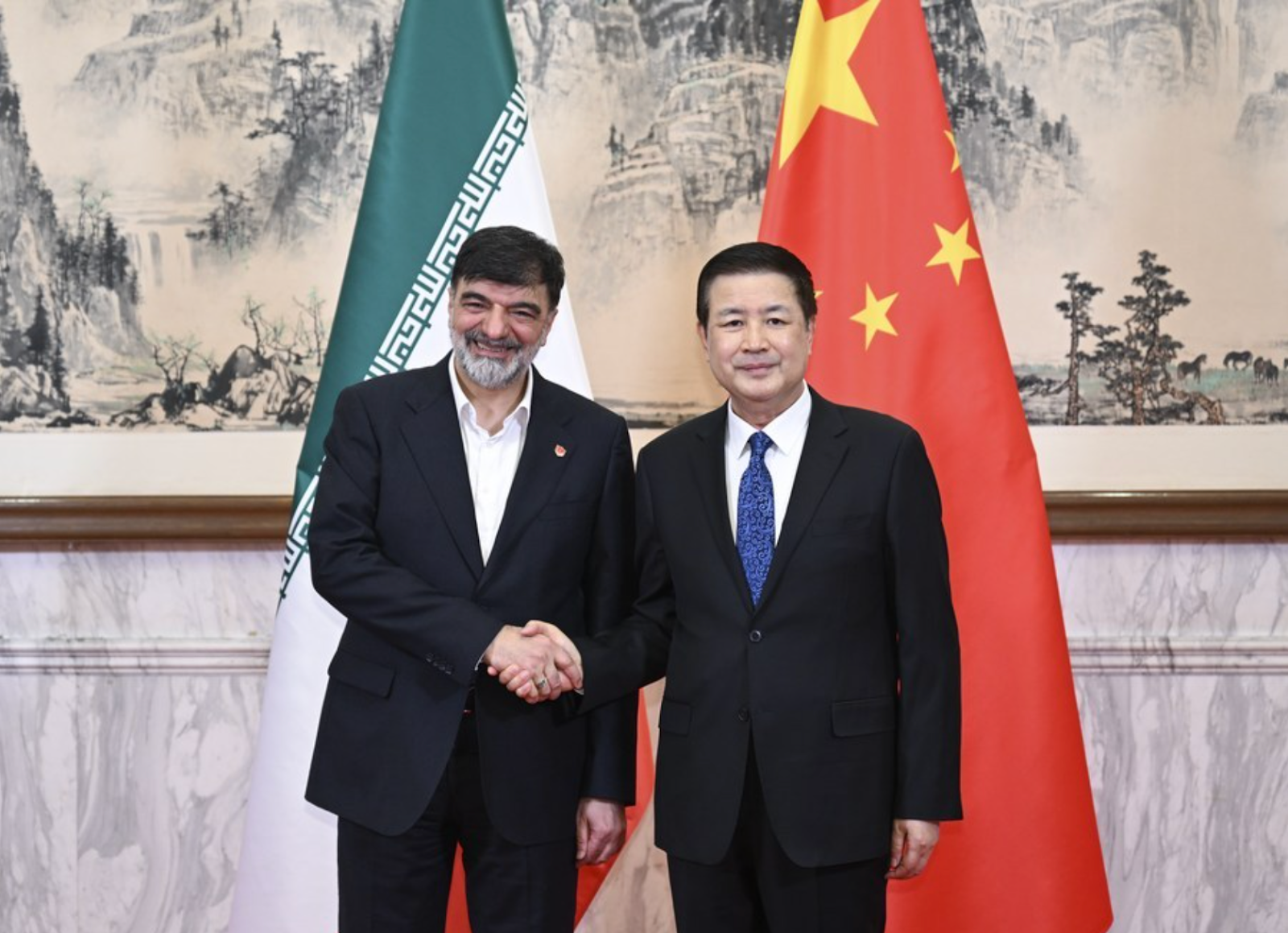
Iran China police chief

Iranian Police Chief Ahmad-Reza Radan, left, meets with Chinese Minister of Public Security Wang Xiaohong in Beijing in January 2024. (Xinhua)  

Ahmad-Reza Radan, Iran’s police chief and a vocal supporter of employing force against protesters, is leading the current state clampdown. His roles in previous ones led to Western sanctions.

  • The U.S. sanctioned Radan for human rights abuses in 2010, when he was deputy chief of the National Police, calling him “responsible for beatings, murder, and arbitrary arrests and detentions against protestors that were committed by the police forces.” It then sanctioned him again in 2011 for his role in repressing dissent in neighboring Syria.
  • The EU sanctioned Radan in 2020, citing the same repressive actions the U.S. cited in 2010.

While under Western restrictions, Radan has pursued closer security coordination with China. In 2024, he visited China and signed a “memorandum on law enforcement cooperation” with China’s minister of public security, Wang XiaoHong, pledging to “upgrade law enforcement and security cooperation” and “strengthen practical collaboration in areas such as counterterrorism” to contribute to regional stability, according to China’s Xinhua state news agency. Neither Xinhua nor IRNA, Iran’s own state news agency, released the memorandum’s full text.

  • The agreement with China followed a similar public security pact between Tehran and Moscow, signed in 2023. According to IRNA, that agreement called for “the expansion of security and law enforcement cooperation and the exchange of experiences in dealing with factors that foment insecurity.”

The Training Pipeline

The People’s Public Security University of China, the country’s top police academy, has run “Advanced Iranian Police Officers Training Programs” since 2015, organized by China’s Ministry of Public Security, according to Chinese school materials and state media reports reviewed by Kharon. Such Iranian cooperation appears to have deepened since, and in 2018, Iran’s National Police University signed a formal agreement institutionalizing more exchange and training programs.

The relationship remains active. On December 25, 2025, just days before Iran’s protests erupted, its ambassador to China visited the People’s Public Security University, pledging to continue “pragmatic cooperation in law enforcement and security,” according to a school press release.
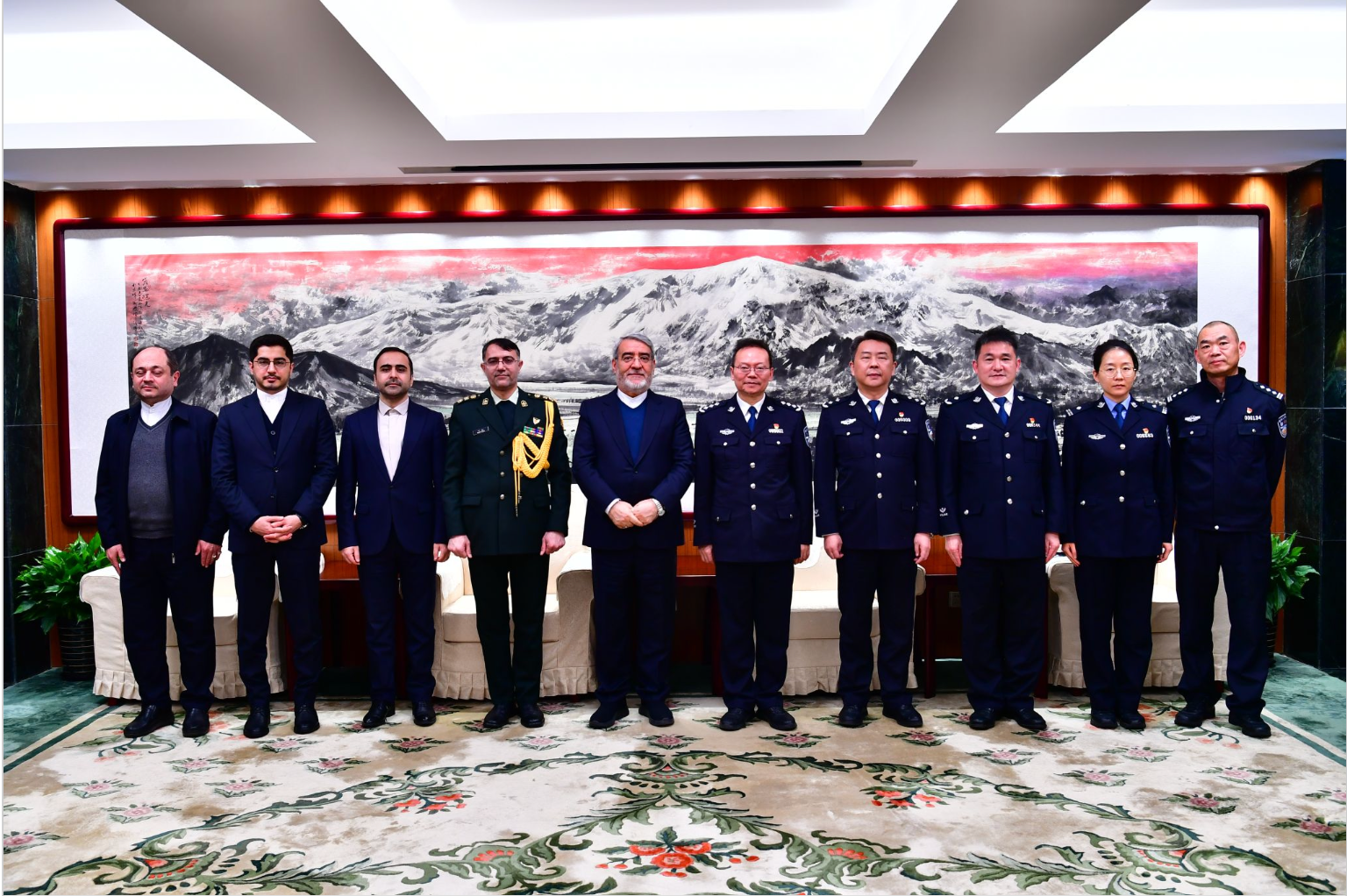
Iran China training

Iran’s ambassador to China, Abdolreza Rahmani Fazli, visits the People’s Public Security University of China. (People’s Public Security University of China)

What China teaches carries influence. The Carnegie Endowment for International Peace, a think tank based in Washington, D.C., reported in November that China uses such police trainings to export its domestic “stability maintenance” expertise, which it has most prominently applied in Xinjiang, also in the name of “counterterrorism.” The trainings, the Carnegie Endowment said, often come bundled with business opportunities for Chinese surveillance firms.

The China-Exported Surveillance Network

Tiandy Technologies, a Chinese provider of video surveillance tech, has built deep roots in Iran—and in China’s security establishment.

Its equipment, which flows through sales agents into a country where surveillance technology has reportedly been used to monitor the protests and track dissidents, offers one link between China’s security industry and Tehran’s monitoring capabilities.

Background: Tiandy Technologies says on its website that it has worked in China’s public security sector for more than 20 years, serving clients including the Ministry of Public Security, which awarded it a first-class science and technology award in 2018.

The U.S. added Tiandy to the Entity List in 2022, citing its roles both in surveilling Muslim minorities in Xinjiang and in “enabling the procurement of U.S.-origin items for use by the Islamic Revolutionary Guard Corps.” In 2023, the Wall Street Journal reported that U.S. officials were considering additional sanctions on Chinese surveillance companies, including Tiandy, as Tehran increasingly relied on monitoring technology to suppress protests. Tiandy’s products had been sold to IRGC units, the Journal said.
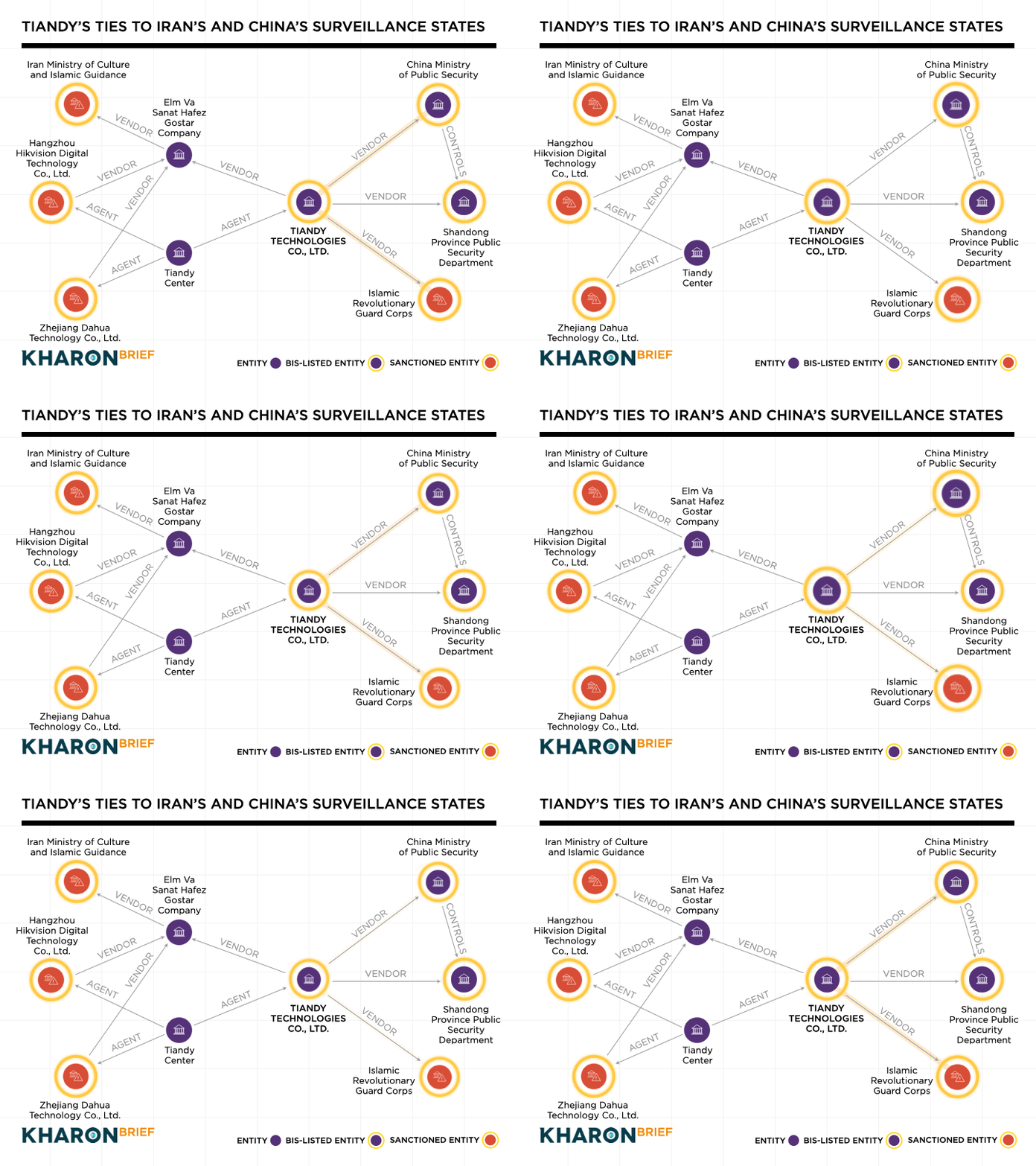
Iran China CV
Connecting the dots: Kharon research traced Tiandy’s Iran-facing sales network through Iranian entities tied to the brand:

  • Tiandy Center is a subsidiary of Iran-based Ati Negar Basir Elektronik Company and a self-described “distributor of Tiandy Products.” An archived version of its website from July 2025 listed 18 offices across Iran and advertised that if a company becomes a Tiandy representative in Iran, it can also represent other Chinese video-surveillance brands, including Hangzhou Hikvision Digital Technology Co., Ltd. and Zhejiang Dahua Technology Co., Ltd. The U.S. added both those companies to the Entity List in 2019, citing their roles in China’s repression and “high-technology surveillance” of minorities, and it later designated both as companies in China’s military industrial complex.
  • Elm va Sanat Hafez Gostar Company is another distributor of Tiandy products in Iran. According to an archived version of its website from last month, the company listed Iranian government entities as its customers, including the Iran Ministry of Culture and Islamic Guidance and the national traffic police. In addition to Tiandy products, Elm va Sanat Hafez Gostar also said it was a representative for Hangzhou Hikvision and Zhejiang Dahua.

A public pushback: The scope of Tiandy’s Iran operations drew scrutiny in spring 2024, when four Tehran City Council members complained about what they called a “secret” surveillance contract. In a letter to the council chairman, the members protested a deal between Tehran Municipality and several Chinese companies for facial recognition cameras, vans and security equipment, according to Persian-language media reports.

The letter, published by the news site Roydad24, said that Tehran Mayor Alireza Zakani had planned contracts, including a €400 million purchase of smart cameras, with “unnamed” Chinese companies that had no internet presence. According to the Independent, municipality documents identified one vendor as “Tidndy”—a name that yielded no search results but appeared to be a misspelling of Tiandy.

The Messaging

In response to Iran’s protests and crackdown, China has staked out a clear public position: for its security and trading partner’s “stability” and against U.S. intervention.

“We hope the Iranian government and people will overcome the current difficulties and uphold stability in the country,” a Ministry of Foreign Affairs spokeswoman said at a press briefing Wednesday. China opposes, she added, “external interference in other countries’ internal affairs.”

John Krzyzaniak contributed research to this report.

Read more from the Kharon Brief:
Source link

Visited 1 times, 1 visit(s) today

Related Article

Nvidia stock trims losses as chip sell-off eases amid AI financing concerns

Chip stocks pared losses Thursday after concerns over debt-heavy balance sheets triggered a broader AI-driven sell-off on Wall Street. The overall Tech (XLK) sector trimmed declines as investors rotated into defensive sectors and bought up Treasurys, pushing long-dated yields substantially lower. Shares of Nvidia (NVDA) and peer Advanced Micro Devices (AMD) fell roughly 1%, paring

The PNC Financial Services Group, Inc. Q3 2026 Earnings Call Summary

The PNC Financial Services Group, Inc. Q3 2026 Earnings Call Summary – Moby Strategic Execution and Market Expansion Our analysts just identified a stock with the potential to be the next Nvidia. Tell us how you invest and we’ll show you why it’s our #1 pick. Tap here. Performance was driven by robust client momentum

IBM Has Paid Dividends Since 1916. Here’s Why Retirees Should Pay Attention Now

Quick Read IBM’s $14.7B free cash flow covered dividends at a 42% payout ratio in 2025, but one-cent annual raises since 2020 deliver little real income growth. Cisco raised its dividend 2% backed by $14B in operating cash flow; Oracle froze its payout while burning cash on $28B in capital spending. Just released. Our analysts

Dell Stock Nosedives After Barclays Downgrade

This article first appeared on GuruFocus. Dell Technologies (NYSE:DELL) shares slid about 7% Thursday morning, extending Wednesday’s selloff after Barclays questioned whether AI-server demand can justify the stock’s rally. Barclays analyst Tim Long lowered Dell to Equal Weight from Overweight and cut his price target to $574 from $603. He also downgraded Hewlett Packard Enterprise

DraftKings Is Down 44% in 2026: Is DKNG Stock Dead Money or Due for a Bounce?

Quick Read DraftKings has cratered 44% in 2026 to $19.14 as exchange-based prediction markets steal sports betting share without the licensing costs that burden DKNG. Flutter stock’s 65% collapse dwarfs MGM’s softer 20% drop, exposing pure-play sportsbook operators as the hardest-hit names in gambling. Whether DraftKings’ share of betting handle stabilizes against exchange platforms is

Is American Airlines Stock’s Drop A Chance To Buy?

Image from Pixabay American Airlines (AAL) stock has lost 24.4% since July 16, against a 2.7% gain for the S&P 500. The carrier trails Delta and United on profit, and executives cut their 2026 earnings outlook again in July, citing higher fuel costs. Yet the airline is chasing higher-spending travelers with more premium seats. Investors

Han Hye-jin takes same-day business-class trip to Hong Kong to eat dumplings

Model and broadcaster Han Hye-jin drew attention for her unusual travel scale, using even business class for a same-day trip to Hong Kong. On the 16th, a video titled “I went on a same-day trip to Hong Kong and lost my phone” was posted on Han Hye-jin’s YouTube channel. That day, Han Hye-jin set out

UK's hard-right Reform party hit by fresh scandal as racist views caught on camera

UK’s hard-right Reform party hit by fresh scandal as racist views caught on camera

Published on 15/10/2026 – 11:27 GMT+2 Britain’s hard-right anti-immigration Reform UK party was hit by a fresh scandal on Thursday after party councillors and candidates were filmed in an undercover investigation using racist language. ADVERTISEMENT ADVERTISEMENT In one excerpt from the 90-minute programme “Undercover: A Year in Reform” by ITV News, black children were referred

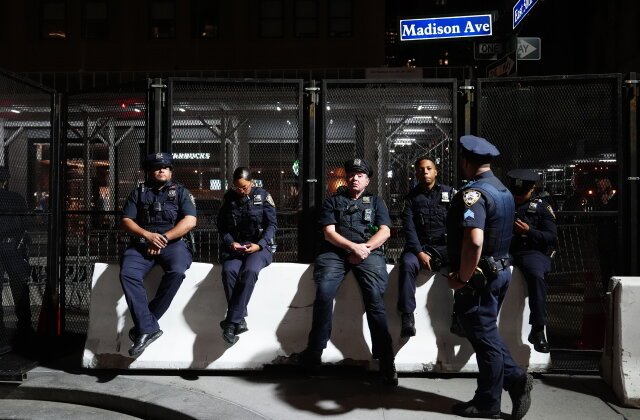
New York City police officers are on duty outside the Lotte Palace Hotel during a United Nations General Assembly leaders reception, late Tuesday, Sept. 22, 2026, in New York. (AP Photo/Julia Demaree Nikhinson)

Russian Investigators Question Novaya Gazeta Editor After Raiding His Home

Oct 15 (Reuters) – The editor-in-chief of Russian ⁠independent ⁠newspaper Novaya Gazeta was ⁠taken in for questioning by investigators in Moscow on ​Thursday, the outlet said, after authorities searched his home. The TASS state ‌news agency, citing law enforcement ‌sources, said Sergei Sokolov was being questioned in a case ⁠regarding the “unlawful ⁠use of personal

Paychex Builds Fortress of Steady Dividend Growth While Stock Struggles

Quick Read Paychex (PAYX) raised its quarterly dividend 10% to $1.19, delivering a 4.4% yield backed by $2.56B in operating cash flow that covers payouts at a 63% ratio. ADP pairs big dividends with buybacks, while Paycom funds $345M in repurchases with new debt, making Paychex the only one centering capital returns on dividend growth.

POLITICS Polls

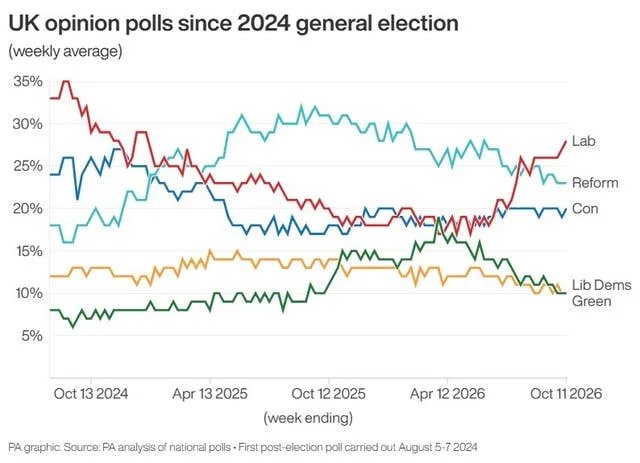
Labour to end local coalitions with Greens if they do not condemn Zionism policy

Labour has said it will end its power-sharing agreements with the Green Party on local councils if they do not reject the “Zionism is Racism” policy adopted earlier this month. All Labour council groups who are currently in coalition, or other power-sharing arrangements, with the Greens at council level have been asked to write to

Why CoreWeave stock panic matters to Nvidia, explained in under 30 seconds

Nvidia (NVDA) CEO Jensen Huang is unlikely to ignore the building pressure on CoreWeave’s (CRWV) stock price and bond values. The simple reason why is that he can’t look the other way given how intertwined Nvidia is with the most well-known — and debated — neocloud. For one, in January of this year Nvidia announced

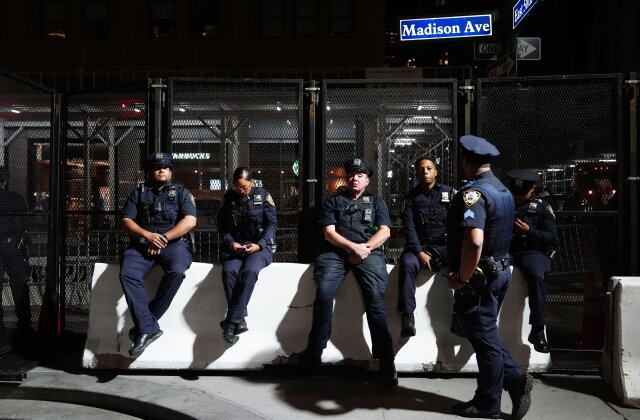
New York City police officers are on duty outside the Lotte Palace Hotel during a United Nations General Assembly leaders reception, late Tuesday, Sept. 22, 2026, in New York. (AP Photo/Julia Demaree Nikhinson)

New China-North Korea Bridge Opens After More Than a Decade of Delay

BEIJING (AP) — A new bridge linking China and North Korea opened Thursday after more than a decade of delay, signaling deeper ties between the two countries. China’s official Xinhua News Agency reported that a ceremony for the launch of the New Yalu River Bridge was held in the morning. An online video from state

0
Would love your thoughts, please comment.x
()
x