INTERNATIONAL STOCK MARKETS: The Global Ripple Effect

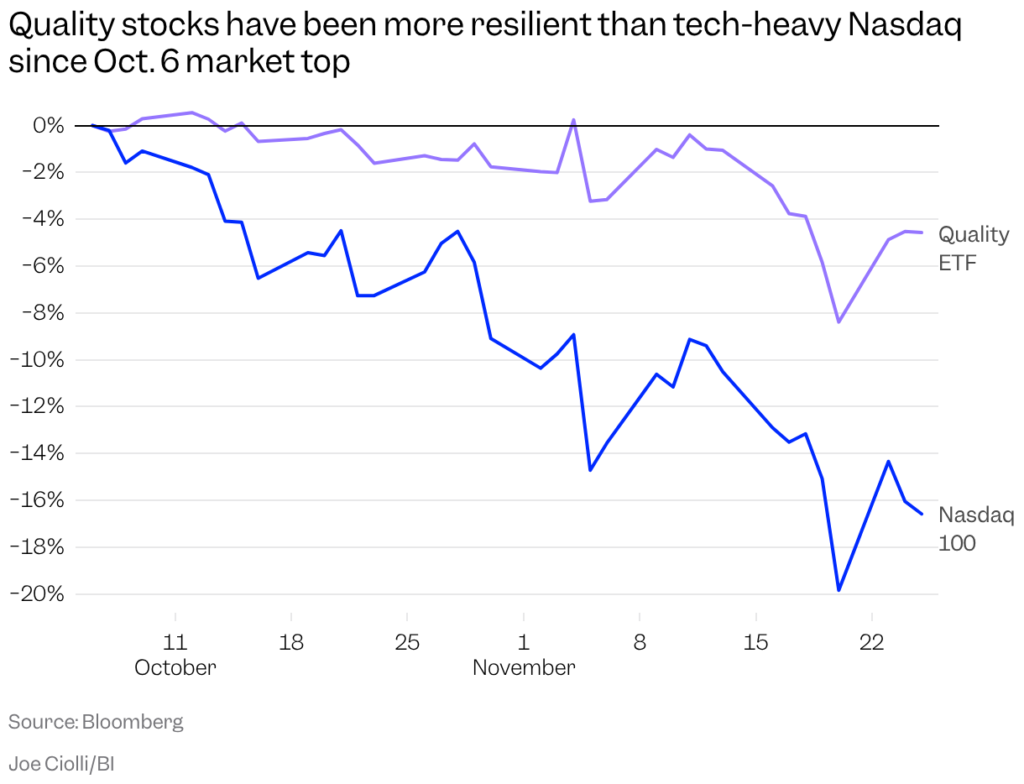
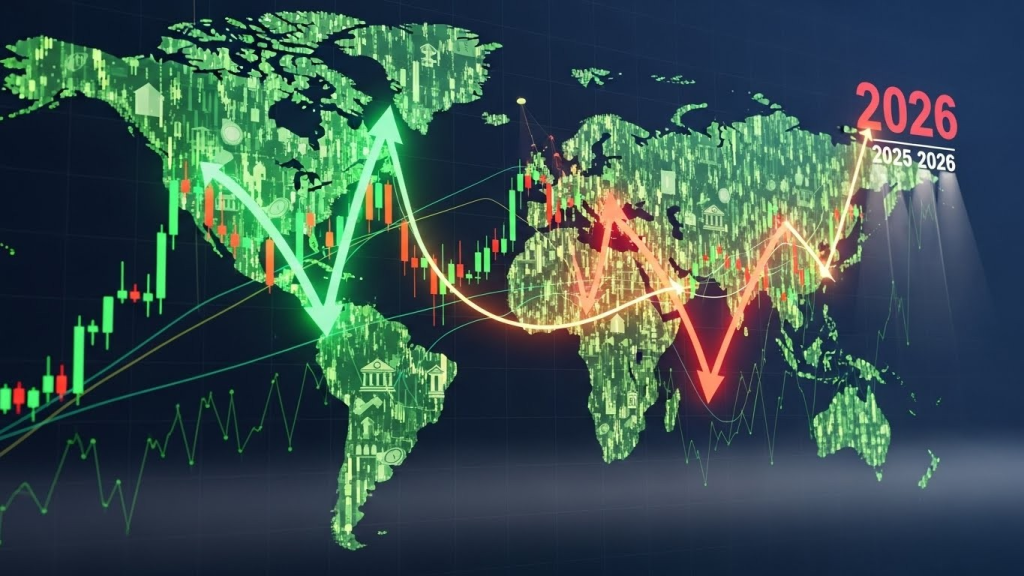
By Dr. David Edward Marcinko; MBA MEd http://www.DavidEdwardMarcinko.com SPONSOR: http://www.MarcinkoAssociates.com *** *** How a U.S. Stock Market Correction Impacts International Markets The United States sits at the center of the global financial system. Because the U.S. economy is the largest in the world and its stock exchanges account for nearly half of global equity market capitalization, movements on Wall Street rarely stay within American borders. When the U.S. stock market enters a correction—defined as a decline of 10 percent or more from a recent peak—the shockwaves quickly travel across oceans, affecting international markets, currencies, and economic policies worldwide. The most immediate impact of a U.S. market correction is financial contagion, driven by investor psychology and algorithmic trading. Global financial markets are deeply interconnected, operating around the clock across different time zones. When major U.S. indices like the S&P 500 or the Nasdaq Composite experience a sharp sell-off, panic and risk aversion often spread to Asian markets as they open, followed by European exchanges a few hours later. Institutional investors, hedge funds, and sovereign wealth funds hold globally diversified portfolios. To cover margin calls or reduce overall risk exposure during a U.S. downturn, these large players frequently liquidate their holdings in foreign equities. Consequently, international stock markets often fall in tandem with Wall Street, even if the underlying domestic economies of those countries remain fundamentally healthy. Beyond immediate market sentiment, a U.S. correction significantly alters global capital flows, particularly in emerging markets. During periods of market stress, international investors tend to seek safety, a phenomenon known as a “flight to quality.” Paradoxically, even when a financial downturn originates in the United States, investors often pull capital out of riskier emerging economies—such as Brazil, India, or South Africa—and move it into U.S. Treasury bonds or cash held in U.S. dollars. This sudden outflow of foreign capital causes stock prices in developing nations to plummet while simultaneously weakening their local currencies against the dollar. A depreciating currency makes it more expensive for emerging-market governments and corporations to service debt denominated in U.S. dollars, creating a cycle of financial strain that extends far beyond the equity markets. Developed economies in Europe and Asia face distinct but equally serious challenges. Many multinational corporations listed on European and Japanese exchanges rely heavily on the U.S. consumer market for a substantial portion of their revenue. A steep decline in U.S. stock prices erodes household wealth among American consumers, who hold a high percentage of their net worth in equities. As Americans feel less wealthy, they tend to cut back on discretionary spending. This reduction in U.S. demand directly hurts the earnings outlook for foreign exporters, from German automakers to Taiwanese semiconductor manufacturers, placing sustained downward pressure on their respective stock markets. Furthermore, a U.S. market correction complicates monetary policy for central banks around the globe. If the Federal Reserve responds to a severe market downturn and slowing economic growth by cutting interest rates, other central banks are often forced to adjust their own policies to prevent their currencies from appreciating too rapidly, which would harm their export competitiveness. Conversely, if the U.S. correction is triggered by persistent inflation and rising U.S. interest rates, foreign central banks may feel compelled to hike their own rates to defend their currencies against capital flight, even if their domestic economies are sluggish and in need of stimulus. Major International Indices (Nov 20, 2026 Close) Nikkei 225 (Japan): 56,436.65 (-5.06%) Hang Seng (Hong Kong): 22,410.80 (-3.79%) S&P/TSX Composite (Canada): 33,189.85 (-2.47%) DAX (Germany): 24,802.78 (-2.60%) CAC 40 (France): 7,927.75 (-1.89%) FTSE 100 (UK): 10,346.34 (-1.02%) S&P/ASX 200 (Australia): 8,592.60 (-1.58% / -2.60% per Yahoo) Shanghai Composite (China): 3,533.79 (-1.22%) Despite these widespread negative effects, a U.S. market correction can occasionally create long-term opportunities for international markets. When U.S. equities become overvalued prior to a correction, a downturn prompts global asset managers to re-evaluate their geographic allocations. Once the initial panic subsides, investors often look for undervalued assets outside the United States, directing fresh capital into European, Asian, or emerging-market stocks that offer more attractive valuations and stronger growth prospects. In conclusion, a U.S. stock market correction acts as a powerful catalyst across the international financial landscape. Through immediate sentiment contagion, shifts in global capital flows, reduced consumer demand, and central bank policy dilemmas, Wall Street’s downturns inevitably test the resilience of foreign markets. While no major economy is fully insulated from American market volatility, the ultimate severity of the global impact depends on the underlying economic health of individual nations and their ability to manage external financial shocks. EDUCATION: Books SPEAKING: Dr. Marcinko will be speaking and lecturing, signing and opining, teaching and preaching, storming and performing at many locations throughout the USA this year! His tour of witty and serious pontifications may be scheduled on a planned or ad-hoc basis; for public or private meetings and gatherings; formally, informally, or over lunch or dinner. All medical societies, financial advisory firms or Broker-Dealers are encouraged to submit an RFP for speaking engagements: CONTACT: Ann Miller RN MHA at MarcinkoAdvisors1738@outlook.com -OR- http://www.MarcinkoAssociates.com Like, Refer and Subscribe (©) Copyright USA. All rights reserved. SEND IN YOUR ME-Ps & TOPIC IDEAS, TODAY! Risk Management, Liability Insurance, and Asset Protection Strategies for Doctors and Advisors: Best Practices from Leading Consultants and Certified Medical Planners� HOSPITALS: http://www.crcpress.com/product/isbn/9781466558731 CLINICS: http://www.crcpress.com/product/isbn/9781439879900 ADVISORS: www.CertifiedMedicalPlanner.org FINANCE: Financial Planning for Physicians and Advisors INSURANCE: Risk Management and Insurance Strategies for Physicians and Advisors *** The views expressed in content distributed by Newstex and its re-distributors (collectively, “Newstex Authoritative Content”) are solely those of the respective author(s) and not necessarily the views of Newstex et al. It is provided as general information only on an “AS IS” basis, without warranties and conferring no rights, which should not be relied upon as professional advice. Newstex et al. make no claims, promises or guarantees regarding its accuracy or completeness, nor as to the quality of the opinions and commentary contained therein.

Source link

Visited 1 times, 1 visit(s) today

Related Article

Should You Buy Nvidia After Its Sharp Decline? Warren Buffett’s Long-Held Investment Philosophy Provides a Clear Answer

The past six weeks have been tough for Nvidia (NASDAQ:NVDA) and its shareholders. In October, growing concerns about how businesses will finance future build-outs for artificial intelligence (AI) started weighing on semiconductor stocks. In early November, the mid-term election results showed a clear rebuke of massive data centers and the potential for increased regulations to

Should You Buy Tesla Stock Before December?

Merger talks might jolt Tesla stock by year-end, or they might now. By Prosper Junior Bakiny – Nov 26, 2026 at 5:15PM EST Key Points SpaceX and Tesla committees are reportedly weighing a merger. If a deal moves ahead, it will come with significant uncertainty. Tesla’s own business looks somewhat promising, but the valuation remains

Stocks Are Plunging Right Now. Here’s What History Says Investors Should Do.

Watching stocks plunge can make even the most seasoned investors nervous. Indeed, the S&P 500 (SNPINDEX: ^GSPC) and Dow Jones Industrial Average (DJINDICES: ^DJI) closed in correction territory on Nov. 20. From there, the Nasdaq Composite (NASDAQINDEX: ^IXIC) surged 6.5%, and the S&P 500 jumped 4.7% on Nov. 23. Image source: Getty Images. Missed Nvidia

How Apple Avoided the Stock Market Crash With 31% Gains

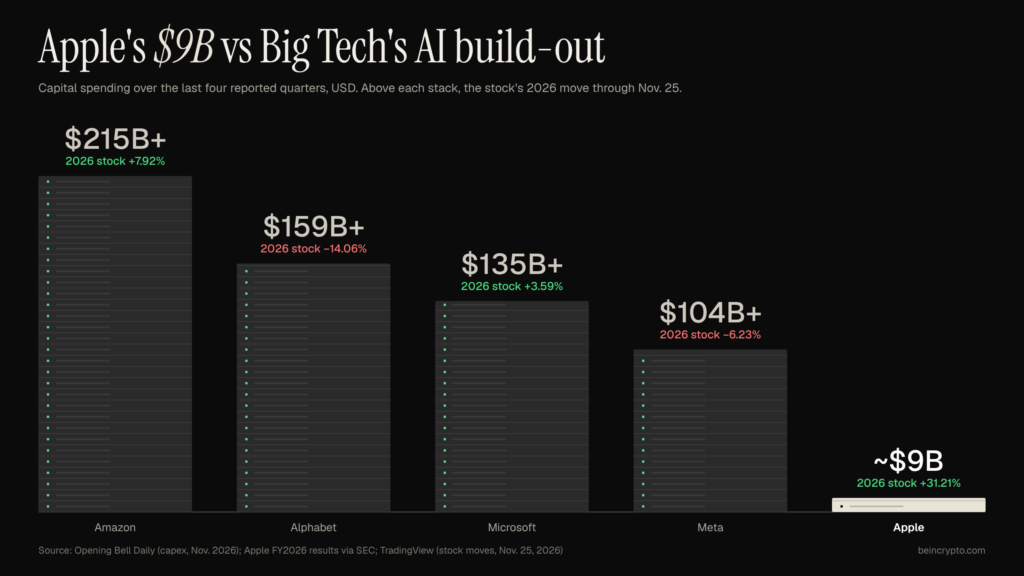
Most US tech stocks erased their entire 2026 gains this month. Yet, Apple (AAPL) stock has gained 31% this year. That is four times more than Amazon.  The Magnificent Seven are the largest US tech companies and a core holding in S&P 500 index funds. Five of them remain deep in the red after the

‘Room to Spare,’ Says Investor About Oracle Stock

For most of this year, the big question around Oracle (NYSE:ORCL) was whether it could pay for its data center ambitions. The company now says it can. In a Nov. 20 statement, it said all the funding for its OpenAI contract is in place. That message, along with Jensen Huang’s reinstatement at Nvidia, sent the

3 Dividend Stocks That Could Benefit From the Black Friday Shopping Rush

Quick Read Walmart and Target raised guidance and cover dividends from operating profit, with Target yielding 3% versus Walmart’s 1%, the group’s lowest starting income. Target’s comparable sales rose 6% and traffic grew 5%, but tariff refunds inflate this year’s earnings and will not repeat. TJX lifted its quarterly dividend from $0.26 in 2021 to

3 Glorious AI Stocks to Buy Hand Over Fist If the Stock Market Crashes

A crash would put these dominant businesses on sale, and one already looks cheap. By John Ballard – Nov 25, 2026 at 2:42PM EST Key Points Market crashes are a good time to buy essential, profitable companies with the cash to keep investing through a downturn. Alphabet’s reach, TSMC’s pricing power, and Amazon’s rising profitability

5 Most Oversold Semiconductor Stocks to Buy for 2027

The semiconductor sector has experienced heightened volatility in 2026, with several stocks retreating significantly from their 52-week highs. These deep pullbacks reflect heightened profit-taking and valuation concerns. They have also been exacerbated by shifting investor sentiment after the US midterm elections and uncertainty surrounding artificial intelligence (AI) spending. The Philadelphia Semiconductor Index (SOX), which tracks

South Korea stock market crash derails young investors’ home and marriage plans

Young investors nursing steep losses are delaying marriage, home purchases and plans to expand their families as housing prices keep rising. An illustration shows a distressed retail investor rethinking marriage and homeownership as he faces falling stock prices.CHATGPT Korea’s stock market crash is wrecking not only portfolios but also ordinary lives — upending lives as well

Michael Burry Makes Surprising Pivot on Stock Market — TradingView News

Michael Burry (Trades, Portfolio), the hedge fund investor famous for predicting the 2008 housing market collapse, has unwound his Nasdaq-100 put options and indicated that his portfolio is now more long than short, marking a notable shift in positioning from one of Wall Street’s most prominent market skeptics. The development is particularly interesting for technology

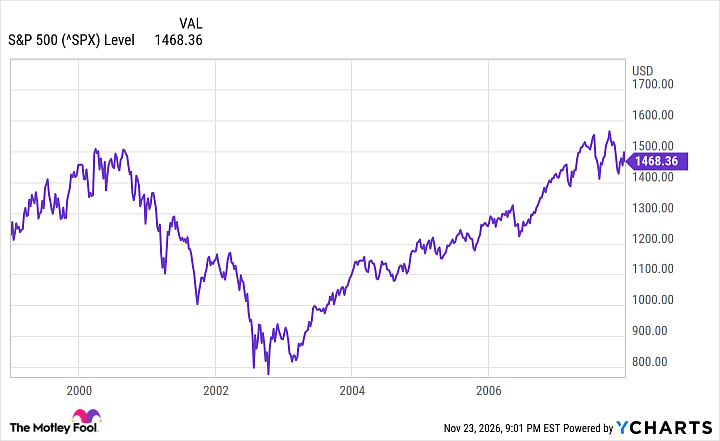
Warren Buffett Told Savers to “Rejoice When Markets Decline.” After the 2000-2002 Bear Market, the S&P 500 Doubled in 5 Years.

Given enough time, the stock market’s track record for recovering losses remains perfect. By James Brumley – Nov 26, 2026 at 6:29AM EST Key Points Although nerve-wracking at the time, pullbacks are long-term buying opportunities. Even some of the recent exaggerated sell-offs are great buying opportunities, setting up prolonged bullish periods. Just don’t hold out

Wall Street is in chaos. Don’t let it ruin your Thanksgiving.

Thanksgiving has arrived. And with it, the official start of the holiday season. I know a lot of you are going to sit down with your families today, carve up the inflationary turkey, have a few stiff drinks, and probably check your portfolios somewhere between the mashed potatoes and protein-packed dessert. And I will say

What to watch for as volatility in markets spikes

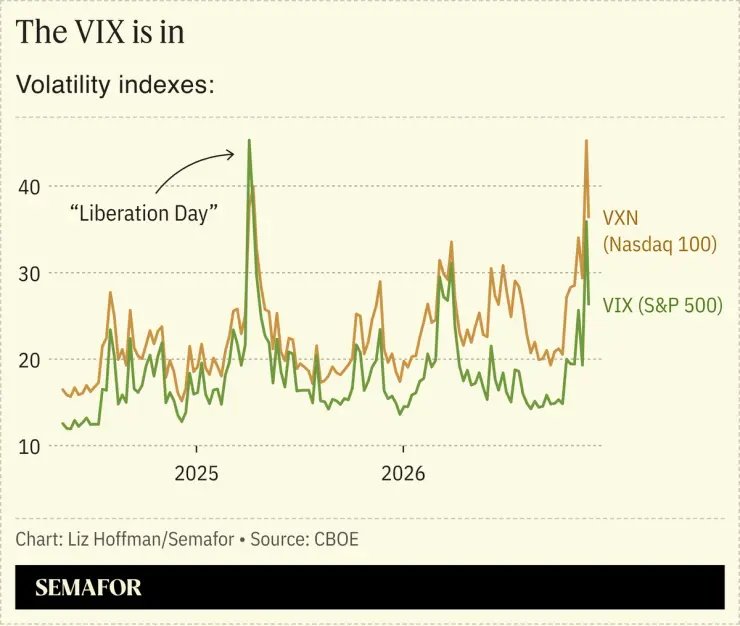
Volatility is spiking. Stocks are swinging more wildly in both directions on headlines that would have elicited shrugs a year ago. The VIX index, which measures twitchiness in S&P 500 stocks, hit a post-“Liberation Day” high this week, and its tech-stocks cousin is even higher. The amount of money Goldman Sachs could potentially lose on

Should You Buy the Invesco QQQ ETF With the Nasdaq-100 Plummeting? Here’s What History Says.

The stock market might be presenting long-term investors with a major buying opportunity. By Anthony Di Pizio – Nov 25, 2026 at 7:22AM EST Key Points The technology-heavy Nasdaq-100 index flirted with bear-market territory last week following sharp declines in some of America’s most prominent artificial intelligence stocks. Although sharp sell-offs can be unsettling, they

President Trump Just Hit Stock Market Investors With Bad News at a Bad Time

President Trump’s latest tariff proposal could keep inflation and interest rates elevated, creating another headwind for the stock market. By Trevor Jennewine – Nov 26, 2026 at 5:12AM EST Key Points President Trump has proposed new tariffs targeting 14 major trading partners at a time when the stock market is already under pressure. Economists have

4 Things Stock Market Investors Can Be Thankful for After Rough Stretch

The turbulence of the past few weeks has made it tough to feel good about markets. Nvidia’s turmoil has collided with lingering AI worries to create a downward spiral for stocks. Even Monday’s epic rally proved to be a short-lived head fake, with selling resuming across Tuesday and Wednesday. But Thanksgiving is upon us, and

Prediction: This Is What Nvidia Stock Will Be Worth by 2028

Nvidia (NASDAQ:NVDA) stock has gotten slammed over the past few weeks. It all started with co-founder and former CEO Jensen Huang resigning from his position. While he’s back in the CEO role, news of investigations into Nvidia’s export controls are also weighing down the stock. When the outlook is uncertain, that’s normally the best time

0
Would love your thoughts, please comment.x
()
x