Young investors nursing steep losses are delaying marriage, home purchases and plans to expand their families as housing prices keep rising.
Korea’s stock market crash is wrecking not only portfolios but also ordinary lives — upending lives as well as portfolios. Young Koreans who have lost years’ worth of savings are putting weddings on hold, giving up on buying homes and scrapping plans for their growing families.
Financial constraints and difficulties buying a home ranked as the two leading reasons young households delayed or avoided marriage in the Ministry of Land, Infrastructure and Transport’s 2025 housing survey. The two factors received scores of 3.21 and 3.19, respectively, on a four-point scale.
“A third of the money I had painstakingly saved from my paychecks is gone. I don’t even know if I’ll be able to propose to my girlfriend anymore,” a 37-year-old retail investor surnamed Kim said on Wednesday — the day when the Kospi closed at 4,697.51, a dismal number compared to this year’s record close of 9,114.55 on June 22.
He had poured his entire life savings of 300 million won ($223,400) into stocks in May amid the market rally that began early this year. He has since lost 100 million won. He has been dating for three years and was planning to propose with the fruits of his investment.
“I had planned to grow my savings through stock investments and pool the money with my girlfriend’s savings to buy at least a small apartment,” Kim said. “But apartment prices have gone up even further since then, and my savings have only shrunk.”
As difficult as the market is for everyone, the toll is heavier on young investors facing major life decisions that usually cost a fortune.
The proportion of households headed by people in their 20s and 30s that held stocks, bonds or investment funds nearly doubled from about 20 percent in 2019 to 37 percent in 2024, according to a report released last year by the Korea Capital Market Institute.
The increase coincided with a surge in apartment prices during the Moon Jae-in administration from 2017 to 2022.
As young Koreans increasingly came to believe that salaries and savings alone could not keep pace with rising housing prices, many turned to stocks and other financial investments in hopes of eventually affording a home.
Strict mortgage restrictions and government efforts to boost the stock market gave young Koreans even more incentive to invest in equities this year.
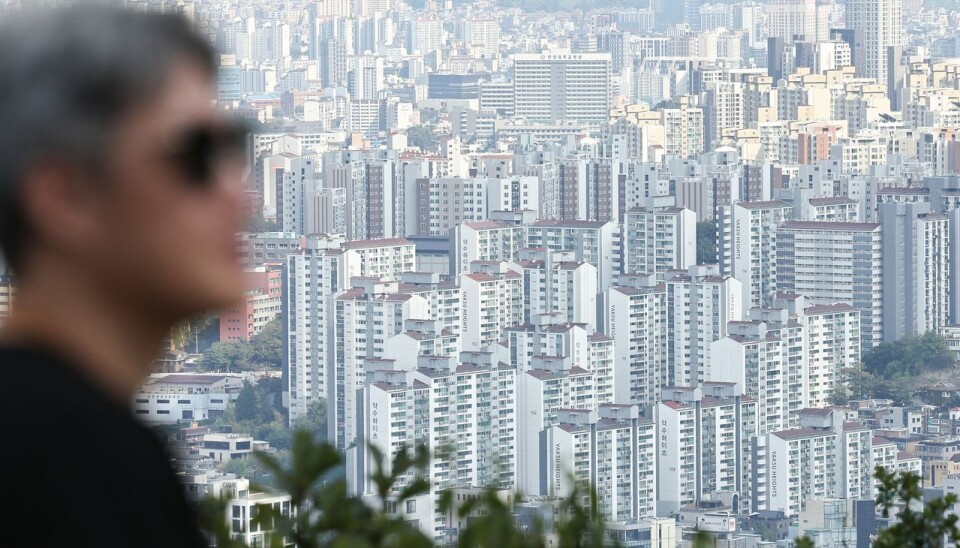
Even as their investments have plunged in value, however, housing prices have continued to climb. The price surge has spread to outlying parts of Seoul and neighboring Gyeonggi, where prospective homebuyers in their 30s had relatively affordable options.
“We had been looking at several neighborhoods because we wanted to move into a slightly bigger home once the baby was born,” a 36-year-old retail investor surnamed Ju said. “But my wife and I both suffered heavy losses in the stock market, so we gave up on moving. All three of us will have to continue living in our current apartment.”
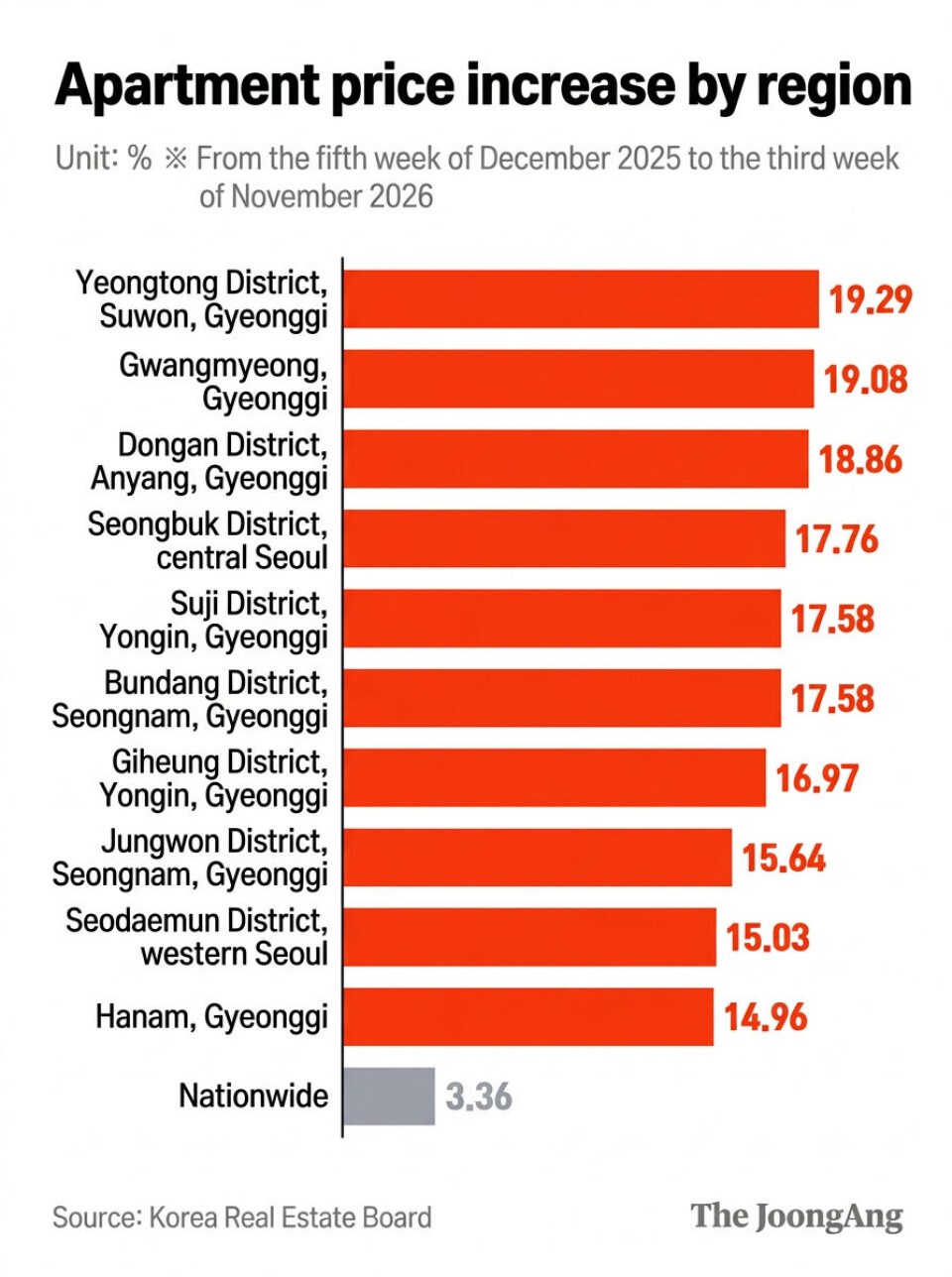
In fact, apartment prices in Yeongtong District in Suwon, Gyeonggi, jumped 19.29 percent from the beginning of this year through the third week of November, according to the Korea Real Estate Board.
Prices in Gwangmyeong and Dongan District in Anyang, both in Gyeonggi, soared 19.08 percent and 18.86 percent, respectively. Apartment prices in Seongbuk District in northern Seoul climbed 17.76 percent. These areas ranked among those with the highest price increases nationwide.
“Many young people turned to stock investments to catch up with soaring housing prices, but the stock market crash has pushed their dreams of homeownership even further out of reach,” said Kim Jung-sik, a professor emeritus of economics at Yonsei University. “Young people who borrowed money to invest, in particular, have suffered a significant setback in their efforts to build wealth.”
BY KIM JUN-YOUNG [lee.jiwon10@joongang.co.kr]