Gallipoli has 4 lessons for Strait of Hormuz crisis

Canberra, The Iran war reminds us small strategic moves can mushroom into expanding military commitments. The United States decided to blockade Iranian ports by controlling access to and from the vital Strait of Hormuz, as a response to Iran’s asserting control over it – which it had long threatened to do if attacked.

Gallipoli has 4 lessons for Strait of Hormuz crisis

In its list of conditions to end the war, Iran is for the first time demanding recognition of its sovereignty over the waterway – considered the world’s most critical energy corridor.

The Strait of Hormuz is one of the world’s key maritime choke points: strategic corridors where large volumes of global trade pass through extremely limited space.

A heavy price has often been paid for assuming this type of operation will be over quickly and easily.

America’s allies might wisely consider this history now – particularly as the April 25 anniversary of the disastrous Gallipoli campaign, which aimed to open the way to the Black Sea during World War I, approaches.

Gallipoli was about controlling sea routes

By early 1915, Europe’s most powerful states – including Britain and its empire – had been at war for months, with no end in sight. Keeping Britain and France’s ally, Russia, in the fight meant delivering it a steady stream of munitions and other critical war materials.

The only realistic route lay through the Ottoman controlled Dardanelles, the straits linking the Mediterranean and Black Seas, between the peninsula of Gallipoli and Asia minor.

And since the Ottoman Empire was already at war with Britain, France and Russia, this would necessitate Allied forces attempting to destroy Turkish resistance to force a way through.

After months of discussion, the Allies settled on a purely naval operation: no need for army support. It was mostly the brainchild of Winston Churchill, then First Lord of the Admiralty.

If the cream of the Royal Navy needed to stay in home waters to contain the threat of a powerful German navy in the North Sea, obsolescent warships could carry the day. This “side show”, the Allies concluded, could be called off at any time.

Other leading government ministers and admirals, including the prime minister and secretary of state for war, supported Churchill’s plan – or appeared to. Privately, some had deep reservations.

Why did it fail?

When sailing in open water, naval forces are safe from most land-based weapons. However, when they are constrained in limited waters, such as maritime choke points, they become extremely vulnerable to attack from land . An expensive warship can be damaged or destroyed by much cheaper land-based artillery.

British decision-makers underestimated Turkish defences and ignored disagreeable intelligence. With the outbreak of World War I, Turkish forces had set about reinforcing heavy artillery on both shores of the straits and laid mines in the waters.

When the Anglo-French fleet attempted to clear a path with minesweepers, the Turkish batteries rained fire on them, driving them off. Then, when the old battleships advanced to knock the guns out, they too came under artillery fire and rapidly fell prey to unswept sea mines, losing nearly one third of the armada.

As historian Jörn Leonhard wrote, “With just one minelayer, the Turkish navy had successfully sealed the mouth of the Dardanelles.”

Things got much worse. With British prestige now at stake, the Allies escalated their efforts. On April 25, 1915, Allied ground troops intervened in an attempt to finally crush the coastal defences.

As historian John H. Morrow Jr insightfully describes: “There they would remain for the next eight months, through bloody attacks and counter-attacks, as both sides launched ferocious and suicidal assaults against each other. The troops now mown down by shell or machine-gun and rifle fire fell in frenzied hand-to-hand combat, as men bit, punched, bludgeoned, and stabbed each other to death, all to no avail.”

Though outnumbered, Turkish forces held superior positions and proved a formidable opponent. There were roughly 483,000 Allied and Turkish military casualties. The Allies were forced to withdraw.

4 lessons of Gallipoli

1. Beware of the allure of the dominant personality. Complex strategic decisions require broad consultation and a base in evidence that considers all crucial factors. Of course “they should have known better” at Gallipoli. But those decisions were considerably more thought out than the strategy employed so far in the US attack on Iran, which has been labelled by some as erratic.

2. Don’t fall unto the trap of underestimating your enemy. “Gunboat diplomacy” did not work in 1915 and so far it is not working in 2026. It is possible that US president Donald Trump was seduced by the ease of US military actions against Venezuela. But Washington has significantly underestimated Tehran’s resolve and strategic position.

3. Mission creep: Once initial resources prove inadequate, powerful states are likely to scale up, not scale down, their efforts – the definition of the dreaded “mission creep”.

4. War is costly in terms of human life. This is a point often forgotten when calculating for a perceived easy win. Gallipoli led to horrific military casualties. The current war has left mostly civilian casualties. And if the conflict escalates, even if ostensibly at sea to control merchant shipping, further civilian casualties will occur.

Furthermore, we are yet to comprehend the scale of the harm being caused due to the wider economic costs of disrupting crucial energy and fertiliser supplies, not least to disadvantaged areas of the world.

Australians have options in the Iran war

–

Naval forces at maritime choke points are more vulnerable than ever. The proliferation of cheap, land-based systems such as drones and missiles means traditionally much weaker states – and even non-state actors – can effectively contest seaways against the most costly, sophisticated militaries.

We should be as critical of the current Iran war as we are of the Gallipoli campaign today. It is unlikely to be solved quickly, and not at all by military means alone.

The difference between 1915 and 2026 is that Australia is no longer automatically drawn in by the interests of others. Now, a sovereign Australia has the right to make its own decisions.

GSP

This article was generated from an automated news agency feed without modifications to text.
Source link

Visited 1 times, 1 visit(s) today

Related Article

Latest and Breaking News on NDTV

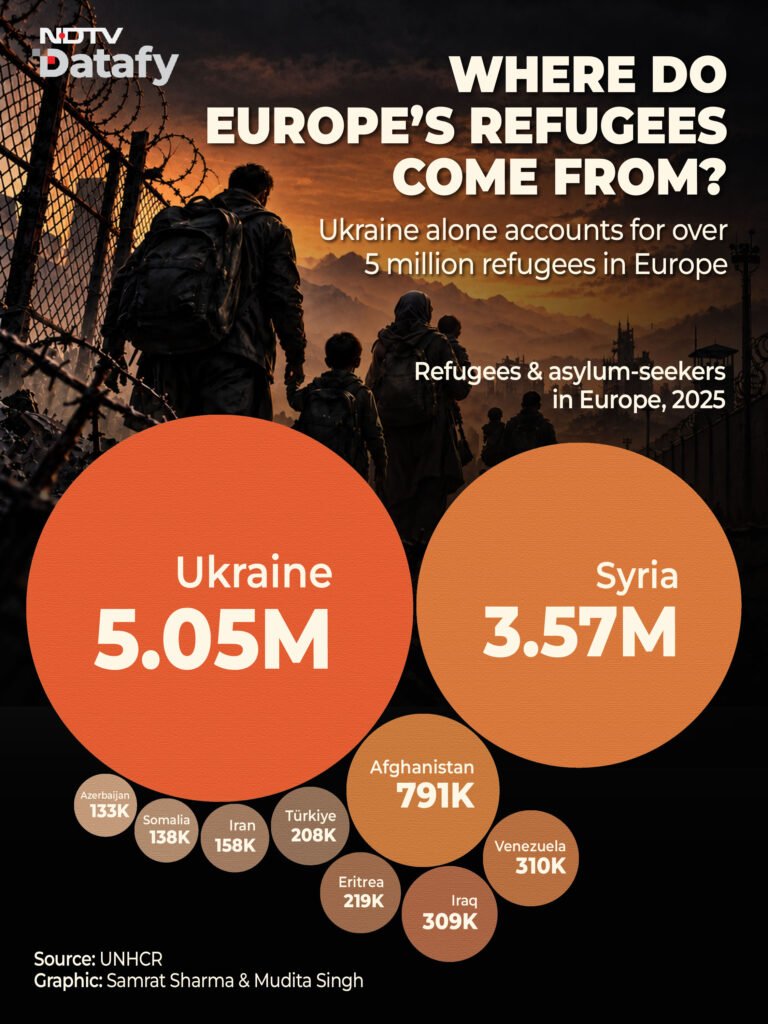
How Ukraine War Triggered Europe’s Biggest Migration Wave Since World War II

New Delhi: Europe is witnessing waves of protests across several countries, including France, Spain, Portugal, Italy and Albania, with the high cost of living, housing shortages and economic pressures emerging as common themes. While US President Donald Trump has linked the unrest in France to migration and Islam, Europe has mostly been dealing with the

Tropical Storm Vance has formed in the Pacific Ocean

Tropical Storm Vance has formed in the Pacific Ocean

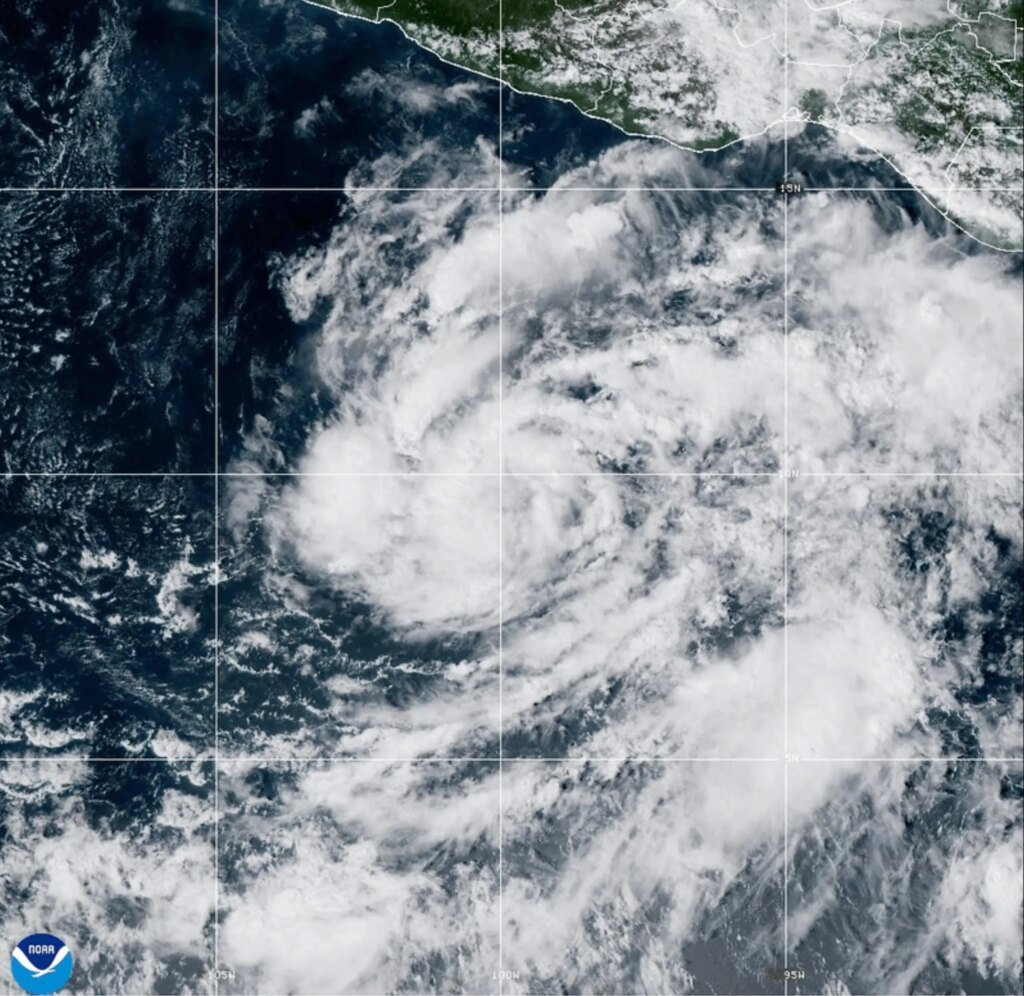
This satellite image from the National Oceanic and Atmospheric Administration shows Tropical Storm Vance strengthening in the Pacific Ocean on Wednesday, Oct. 21, 2026. (National Oceanic and Atmospheric Administration via AP) (Uncredited, National Oceanic and Atmospheric Administration) MIAMI – Tropical Storm Vance formed Wednesday in the Pacific Ocean, the National Hurricane Center said. The center

​Europe stands by Ukraine – but how long can that last? | World news

​Europe stands by Ukraine – but how long can that last? | World news

Europe woke up last Friday to another belligerent outburst from Donald Trump – this time berating Ukraine’s wartime leader Volodymyr Zelenskyy again. Just a few days after his diesel deal with the Kremlin, the US president said Zelenskyy was more difficult to deal with than Vladimir Putin and blamed Ukraine’s leader for rocketing oil prices

Data compiled from the International Monetary Fund’s (IMF) World Economic Outlook 2026 and World Trade Organization (WTO) trade statistics tracks economic performance around leadership changes in five countries.

Regime change doesn’t translate into economic recovery: Data

Regime change doesn’t translate into economic recovery or chart a country’s growth path, recent data from South Asia shows. Economic indicators in some South Asian countries have shown signs of gradual improvement following major political upheavals, but they have yet to fully recover, with persistent challenges regarding GDP growth, inflation and trade. Data compiled from

President Donald Trump speaks in the Oval Office of the White House, Tuesday, Oct. 20, 2026, in Washington. AP/PTI(AP10_21_2026_000003A) (AP)

Donald Trump, human wrecking-ball | World News

“INEVER MEANT to start a war…I just closed my eyes and swung,” sings Miley Cyrus in “Wrecking Ball”, a break-up ballad that seemed to play on every American radio in 2013. Though melodically a bit relentless, the pop song deserves a revival as a guide to the second-term statecraft of President Donald Trump. President Donald

The Chinese national flag is pictured at half mast to mourn the death of China's former premier Zhu Rongji at the Red Building of Peking University, the site of early Chinese Communist Party revolutionary activities, in Beijing on August 18, 2026. (AFP FILE)

China’s universities are rich. But they’re getting squeezed

In its competition with China, America sometimes commits self-sabotage. Under Donald Trump, cuts in federal support for universities have been particularly damaging. To convey their anguish, some American scientists have drawn attention to the advantage that their country’s strategic rival may gain from these retrenchments. China had been handed the future “on a silver platter”,

Add image caption here

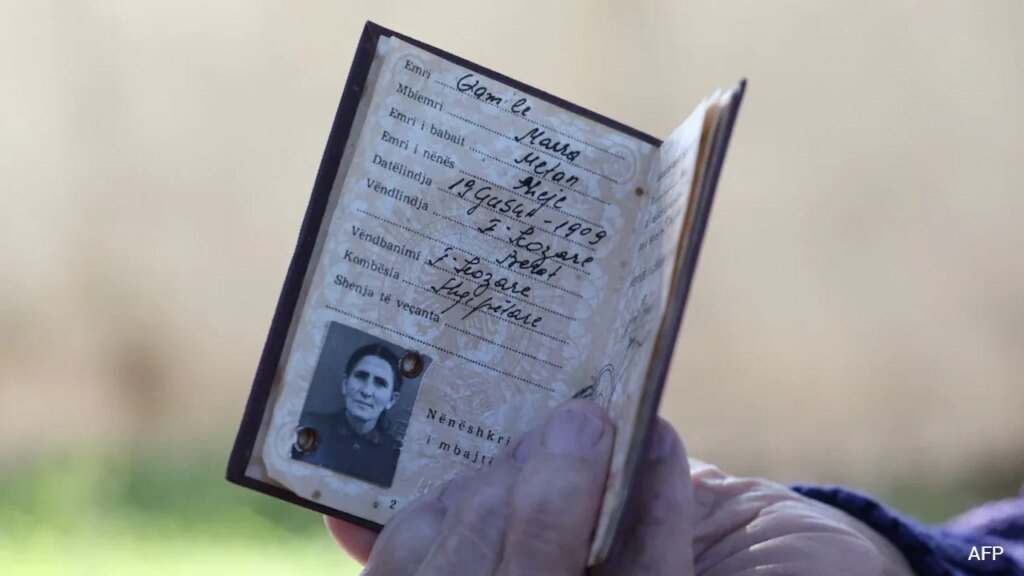
At 117, Albanian May Be World’s Oldest Woman Qamile Marra: Life Is Beautiful

Albania: At 117, Qamile Marra is not particularly concerned with proving she may be the world’s oldest woman — or even persuading Albanian pension officials that she is not dead. For a woman born under Ottoman rule, who turned 36 a fortnight before the end of World War II and outlived Albania’s communist dictatorship, her

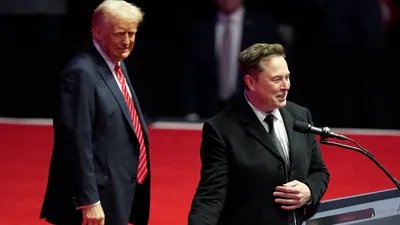
Elon Musk with US President Donald Trump. (AP/File)

Elon Musk behind Starlink slowdown order that disrupted Ukraine’s drones: Report

A slowdown in SpaceX’s Starlink satellite network that disrupted Ukraine’s drone operations was triggered by an order from company’s CEO Elon Musk, The Wall Street Journal reported on Tuesday, citing unnamed US officials and other sources. Elon Musk with US President Donald Trump. (AP/File) The move reportedly restricted Ukraine’s access to the satellite service, affecting

Anthropic Recorded Net Loss Of Over $80 Billion In 1st Half Of 2026: Report

Anthropic Recorded Net Loss Of Over $80 Billion In 1st Half Of 2026: Report

That compares to a net loss of $13 billion during the same period a year earlier, according to report.  AI startup Anthropic recorded a net loss of more than $80 billion in the first half of this year, the Wall Street Journal reported on Tuesday, citing a draft initial public offering prospectus. That compares to

Restrictions In Paris To Remain In Place On Tuesday After Curfew Brings Calm

Restrictions In Paris To Remain In Place On Tuesday After Curfew Brings Calm

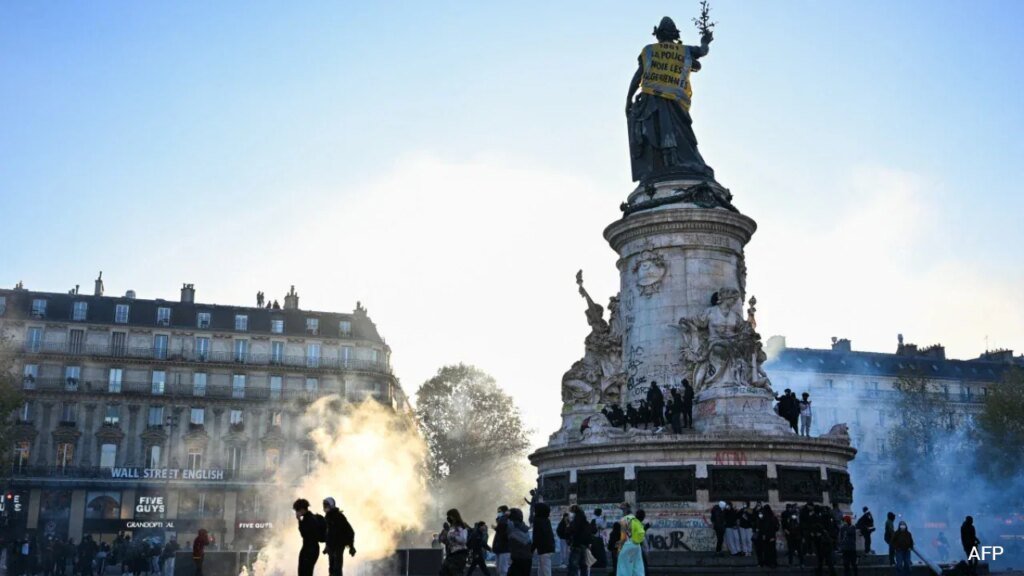
A ban was also issued for any public gatherings from 1800 GMT Tuesday in les Halles Paris police ordered a new curfew for parts of the city for Tuesday overnight, after one the previous night that authorities said resulted in calm being restored following weekend riots and looting. The fresh curfew runs from 2100 GMT

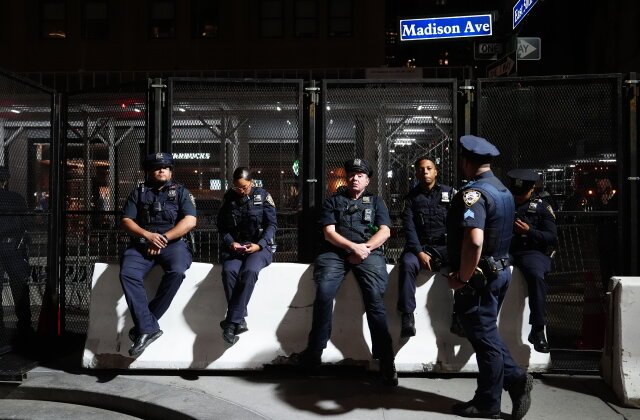
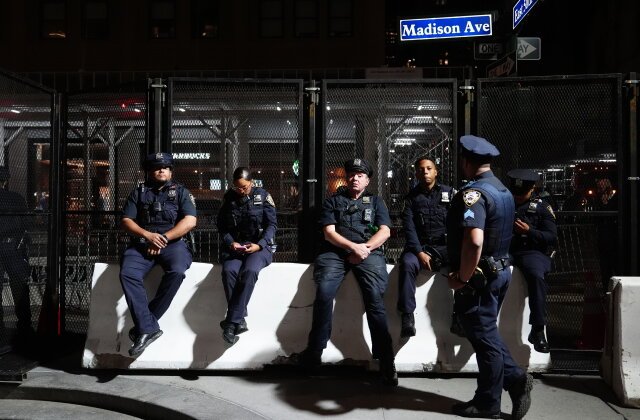
New York City police officers are on duty outside the Lotte Palace Hotel during a United Nations General Assembly leaders reception, late Tuesday, Sept. 22, 2026, in New York. (AP Photo/Julia Demaree Nikhinson)

Curfews Bring Calm to Paris as France Cracks Down on Weekend Rioters

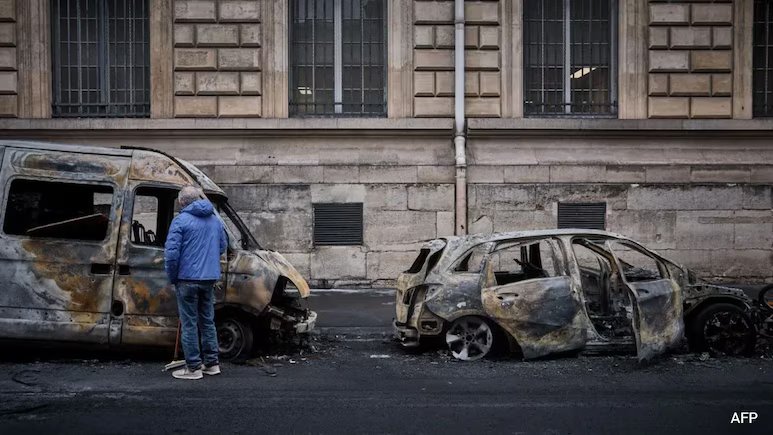
At least 2,400 people were arrested after rioters in cities across France on Saturday clashed with police, set cars on fire, stormed public buildings and engulfed a historic city hall in flames, during nationwide protests against rising living costs and poor conditions in schools. On Sunday evening, small groups set fire to trash bins, bicycles

Latest and Breaking News on NDTV

Reform Or Regime Change? What Global Movements Tell Us About Protest Goals

Whenever thousands of people take to the streets in any corner of the world, the primary fear in the corridors of power is of a coup or regime change. The recent downfall of Sheikh Hasina in Bangladesh, the flight of the Rajapaksa family in Sri Lanka, and the political reshuffle in Nepal have further strengthened

Trump 'Frustrated' Over Claims He Is Causing 'Harm' To Ukraine: Marco Rubio

Trump ‘Frustrated’ Over Claims He Is Causing ‘Harm’ To Ukraine: Marco Rubio

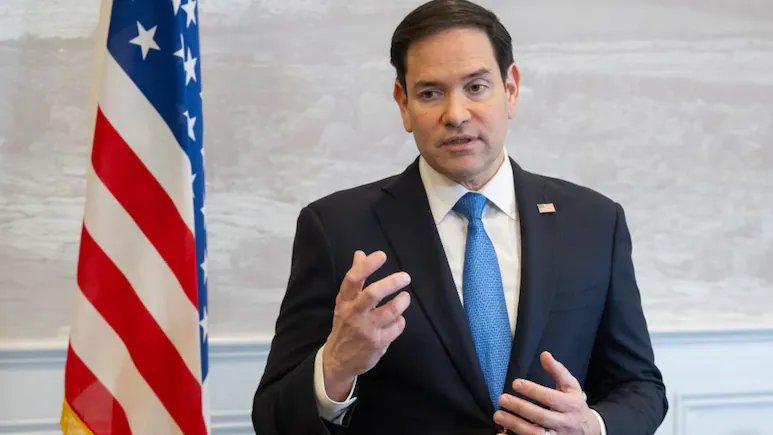
Rubio is on a visit to India US Secretary of State Marco Rubio said Tuesday that President Donald Trump was “frustrated” by accusations that he had deliberately harmed Ukraine, including claims he ordered intelligence sharing to be halted. “The president is frustrated because, first of all, he doesn’t like to be blamed for things that

Blow to Reform UK motion refugee motion voted down

Blow to Reform UK motion refugee motion voted down

County Hall Chichester. Image: LDRS A call from Reform UK councillors in West Sussex for the county council to withdraw from all voluntary refugee resettlement schemes has been voted down. The motion was tabled by group leader Tim Charters (Southgate & Gossops Green) during a meeting on Friday (October 16), and seconded by Callum Johnson (Ref,

WOL.com Announces Global Launch of Its Real Time World News Platform

WOL.com Announces Global Launch of Its Real Time World News Platform

WOL.COM launches Online World News The platform delivers timely updates about World, Business, Technology, Politics, Lifestyle, and Culture, with a focus on accuracy and international reach ATLANTA, GA, UNITED STATES, October 19, 2026 /EINPresswire.com/ — WOL.com today announced the worldwide launch of its digital news platform providing real time global coverage through a modern, mobile

Trump Says Zelensky Should Get "Somebody Else" To Negotiate To End War

Donald Trump Says Volodymyr Zelensky Should Get Somebody Else To Negotiate To End War

Trump also told reporters that Russia has been “fine” with regards to Ukraine. US President Donald Trump on Monday said he thought someone other than Ukrainian President Volodymyr Zelenskiy should negotiate on Kyiv’s behalf as it seeks to end the war with Russia. “Maybe it’s time for Zelenskiy to get somebody else to negotiate,” said

0
Would love your thoughts, please comment.x
()
x