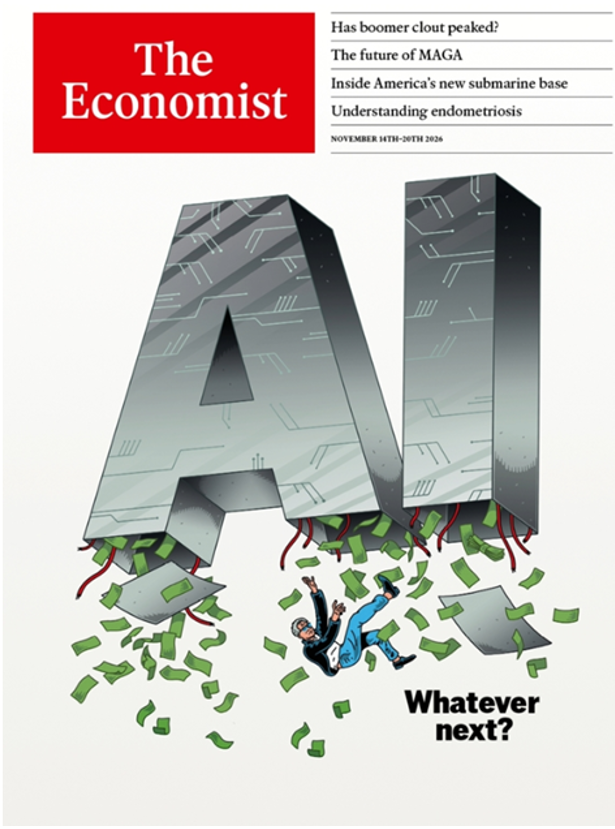
Recent volatility in overseas technology shares has shown once again how quickly changes in global risk appetite can travel across markets. Concerns about inflation, the cost of financing artificial intelligence investment and the returns on large-scale computing projects have prompted investors to reassess valuations. When tech stocks are crowded trades, leveraged positions and defensive selling can amplify that repricing.
For Chinese equities, this is a near-term test of sentiment, not a verdict on the market’s long-term fundamentals. External shocks can push prices down and raise the risk premium investors demand. They do not, by themselves, erase the domestic sources of corporate growth or reverse the institutional changes underway in China’s capital market. The distinction between price volatility and a change in underlying value is essential to a measured assessment.
China’s latest economic data point to resilience alongside structural change. GDP expanded 4.6 percent year-on-year in the first three quarters, while growth in the third quarter was 4.5 percent, 0.2 percentage point faster than the second quarter. In the same period, value-added output by large industrial enterprises rose 5.3 percent. High-tech manufacturing grew 14.3 percent and equipment manufacturing 10.2 percent, both outpacing the broader industrial sector. Information transmission, software and information technology services expanded 10.4 percent.
These figures do not mean every listed company will benefit equally, or that the economy has no constraints. They do show that activity is shifting toward sectors with stronger links to technology, productivity and services. For investors, the relevant question is whether that transition can translate into sustainable revenue, margins and cash flow. A growing sector creates an opportunity set; it does not guarantee returns for every company in it.
Investment trends reinforce the case for looking beyond headline growth. In the first three quarters, investment in high-tech industries increased 4.9 percent year-on-year, including faster growth in information services and selected aerospace, electronics and communications equipment industries. Such investment can expand demand for equipment, software and technical services, while building capabilities that support future production. Its value will depend on whether projects are commercially viable and whether firms can turn research and equipment into productivity gains.
Policy is increasingly directed at that conversion. An October opinion issued by the Communist Party of China Central Committee and the State Council — the nation’s Cabinet — calls for upgrading traditional industries, expanding emerging industries, planning for future industries, integrating the digital and real economies, and advancing the “Artificial Intelligence Plus” initiative. A State Council executive meeting later in the month stressed application-led innovation, stronger links between supply and demand, joint research, pilot testing and the development of practical use cases.
The economic mechanism matters more than the policy label. New technologies strengthen listed companies when they solve production problems, lower costs, improve products or create services customers will pay for. Pilot applications and links between research institutions and manufacturers can shorten the route from invention to revenue. At the same time, traditional industries remain a large part of China’s industrial base. Their digital and low-carbon upgrading can improve productivity across a broader range of firms than a narrow focus on frontier sectors alone.
The capital market has a role in this process — it can direct patient funding toward companies with credible development paths, while giving investors a fair share of the value created. That requires continued reform on both sides of the market. More adaptable listing and financing channels can accommodate tech firms at different stages of development. Mergers and acquisitions can help companies consolidate capabilities and integrate supply chains. Long-term institutional investors can provide more stable capital, while stronger disclosure, governance and investor protections help ensure that financing supports durable growth.
China’s market-stabilization framework has also broadened. The People’s Bank of China — the nation’s central bank — introduced tools in 2024 to support share repurchases and holdings by listed companies, and to facilitate liquidity management by securities, fund and insurance institutions. Policies encouraging long-term funds to invest in equities have sought to widen the sources and channels of patient capital. These measures can help markets absorb temporary liquidity pressure. They cannot remove risk, and they should complement sound corporate fundamentals rather than substitute for them.
At an Oct 10 meeting on market and financial conditions, the China Securities Regulatory Commission heard proposals on market stability, long-term capital, shareholder returns, listing reform and stronger cross-border risk monitoring. This agenda recognizes that resilience is built through several connected channels: credible rules, diverse financing, stable investors and companies able to reward shareholders. A stabilizing mechanism is most effective when it gives markets time to assess fundamentals, not when it obscures the need for better performance.
That performance remains the decisive test. The long-term appeal of A-shares ultimately rests on whether listed companies can grow earnings, allocate capital efficiently and return profits to shareholders. Dividend and repurchase programs can strengthen that relationship when they are supported by cash generation and disciplined capital allocation. Tech-sector growth can broaden the market’s opportunity set when it is accompanied by commercially proven products and improving profitability. Neither a low valuation nor a policy signal can replace this evidence.
Investors should therefore distinguish between a temporary rise in global risk aversion and a lasting deterioration in domestic prospects. They should also distinguish promising themes from companies with clear paths to earnings. Diversification across resilient businesses and sectors can help manage uncertainty. Any allocation decision should reflect an investor’s own objectives and tolerance for loss. The most useful focus is on balance sheets, cash flow, governance, innovation capacity and the delivery of policy-supported projects.
External uncertainty is likely to remain a feature of the investment environment. Global interest-rate expectations, the returns on AI infrastructure and shifts in risk appetite can continue to affect valuations across markets. China also faces the practical challenge of converting industrial investment and technological advances into broad-based productivity and household income growth. These risks argue for careful analysis, not for assuming that each overseas correction changes the domestic outlook in the same direction.
For the A-share market, the central issue is whether economic upgrading, capital-market reform and corporate performance reinforce one another. If tech investment reaches productive use, if long-term capital supports capable firms, and if companies deliver transparent earnings and shareholder returns, short-term external turbulence need not define the market’s longer-term trajectory. That is the basis for confidence — and the standard by which it should be judged.
The writer is managing director, chief economist and head of the research institute at China Galaxy Securities.
The views do not necessarily reflect those of China Daily.