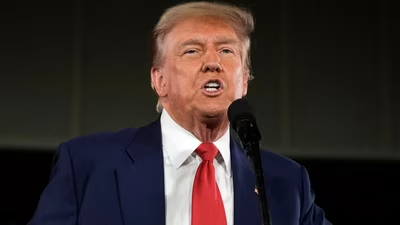
Americans have decided to rein in Donald Trump. Although the final tally is yet to come in, it is clear that Trump and his Republican Party will lose control of both legislative chambers – the House of Representatives and the Senate. Since his re-election in 2024, Trump has had a free hand, as the opposition Democratic Party did not have the numbers to block any of Trump’s legislations. The consequences have been severe for the world at large, from inchoate and inconsistent tariff regimes to costly and bloody wars in Gaza and Iran that have resulted in moral outrage.

Domestically, an uptick in inflation largely due increasing prices in petrol and energy and tariffs combined with near zero real wage growth had led to noticeable frustration among American voters. The economic pessimism that we are seeing around the world hit incumbent Republicans very hard. According to an NBC News exit poll, 75% of voters viewed the economy as “not so good” or “poor.” Trump, who had noticeably built support among White working class and middle class voters, looks increasingly out of touch with them. The same NBC News exit poll found nearly 70% of voters feel the system favours the wealthy. The Republicans’ commanding lead among White voters seems to have diminished significantly as well, with a New York Times/Siena exit poll suggesting a double digit shift towards Democrats among them.
On the one hand, a shift away from the Republican Party is not surprising. Since 1946, the president’s political party has only gained seats twice in the House of Representatives in the midterm elections, in 1998 after Bill Clinton’s unpopular impeachment trial and in 2002, in the wake of the September 11, 2001 attacks. But the scale is significant. If the current trends hold, the Republicans will lose 44 seats in the House of Representatives — making it the largest reversal since 2010 during Barack Obama’s first term. This is all the more stark given that the Republicans had a threadbare majority in the House (220 out of 435 seats), meaning that the Democrats could have a commanding 70 to 80 seat lead over the Republicans in the House of Representatives when the final tally is announced. Moreover, with the Republicans losing six to seven Senate seats to the Democrats, they will face the biggest reversal in the Senate since the Obama years. All this means that the Democrats will have quite a bit of breathing room in blocking Trump legislations that must pass through both chambers of the American Congress.
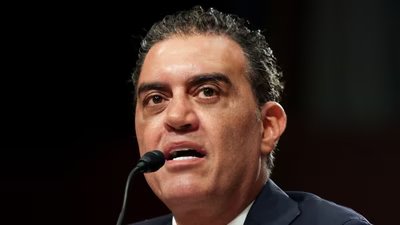
The scale of this rebuke to the Republicans informs our understanding of American politics in key ways. Consistently Red states that lean heavily Republican, such as South Carolina and Kansas, flipped to the Democrats in the Senate. Perhaps most notably, Democrat Jeremy Talarico won his Senate seat in Texas by nearly 10 percentage points on a platform built around progressive economic ideas and anti-corruption dubbed the “New American Dream.” And in Michigan, Democrat Abdul El-Sayed similarly ran on a progressive economic platform, while fending off a barrage of controversial opposition advertisements and the late defection of legislator Haley Stevens, to become the first Muslim senator elected in American history. Elsewhere, Keisha Lance Bottoms from the Democratic Party became the first ever Black female to become a governor in America, cementing the transition of the state of Georgia from a traditionally red state to a blue state. Perhaps most surprising is that at least five candidates aligned with the Democratic Socialists of America (DSA) and endorsed by New York mayor Zohran Mamdani were elected to the House of Representatives. In many cases, the path to victory for these candidates involved defeating traditional Democratic Party machinery and wealthy donors in earlier primaries.
In so much of the world, the Opposition is fighting a right-wing populist like Donald Trump. What lessons does the triumph of the Democratic Party provide for global oppositions? First, while Republicans kept on trying to push the Democrats into culture wars on Muslims, gender, or woke-ism in general, the progressive wing of the Democratic Party focused its appeal on bread-and-butter issues — economic inequality, lack of health care, rising costs. While it is true that many progressive candidates took stands against the wars in Gaza and Iran supported by America, or on issues of immigration and gender, they understood that their core appeal lay in enumerating economic grievances. Second, even in a country like America in which capitalism and a free market defines its culture, structural inequalities in the economy have become so severe that Americans are willing to look to state intervention. This, more than anything, is redrawing the red-blue map in the country.
We cannot overstate the global significance of this result. On the heels of Benjamin Netanyahu stumbling somewhat in Israel, the taming of Donald Trump may have a positive impact on global stability. Perhaps misadventures in Iran and Gaza will invite some more introspection by the West. Perhaps balancing Trump’s capriciousness on trade policy will stabilise global markets.
Most of all, this result shows why maintaining free, fair, and trustworthy elections is so important in a democracy. Citizens have time and again shown the ability to rebuke and remove repugnant leaders when given the opportunity to do so.
Neelanjan Sircar is an associate professor at Ahmedabad University. The views expressed are personal