Both parties agreed on this tumultuous midterm election’s essential point. President Trump wanted voters to “pretend I’m on the ballot.” With his approval at 38%, Democrats happily agreed.
The results were catastrophic for Republicans. They lost almost everywhere, including places where defeat was once unimaginable.
Republicans dropped from 53 in the Senate to no more than 46, with losses in Iowa, Kansas, Ohio, South Carolina and Texas as well as Georgia, North Carolina and Maine.
In the House, Democrats are expected to have around 258 seats, a pickup of at least 43. Many Republicans in supposedly safe districts narrowly escaped defeat.
Democrats gained at least five governorships, giving them a majority for the first time in 16 years. The entire statewide GOP ticket in Texas lost. Democrats also picked up at least 500 state legislative seats, and flipped at least 11 chambers, including the state Houses in Georgia, North Carolina and Texas. They will take full control of the legislatures and governorships of Michigan, Minnesota, Pennsylvania, Wisconsin and possibly Arizona.
This midterm will be remembered decades from now. Republican losses were massive and consequential. What explains the scope of the GOP defeat?
The national environment was toxic. In the NBC News exit poll, nearly half of voters said the cost of living was a “crucial” consideration in their vote. Another 40% said it was a “major” factor. Nearly two-thirds said Mr. Trump’s policies made the economy worse while 62% said they raised prices.
With numbers like that, Republicans were going to have a tough night. But the president made things much worse. Nearly 2 of 3 voters said he had the wrong priorities. Sixty-two percent said he put his personal interests above the country’s while 90% said government corruption was a “crucial” or “major” factor in their vote.
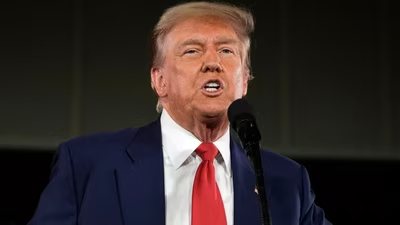
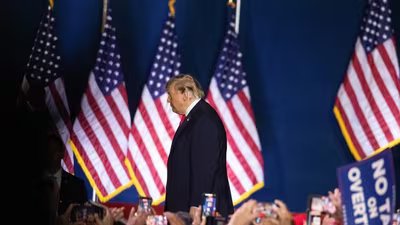
Mr. Trump’s frequent rallies made him the center of attention. He dominated coverage with wild accusations, sloppy insults, and over-the-top bragging. He weirdly focused on the physiques of male candidates. No discipline, no forward-looking message, no substantive line of attack. Just whatever came to his mind as he rhetorically meandered for more than an hour at each rally. He called it “the weave.” It was really a mess.
Mr. Trump also repeated President Joe Biden’s mistake of telling voters not to believe their own experience. They were witnessing, he claimed, “the most successful economy” in “a Golden Age of America.” This angered—even enraged—voters concerned their paychecks were growing slower than prices.
The president thought promising every adult $5,000 if they voted Republican would swing the election. It backfired. Most Americans took it as a thinly veiled bribe he knew he couldn’t deliver.
Republican losses would have been smaller if Mr. Trump spent more time being president and less as campaigner-in-chief. Disciplined messaging focused on economic concerns might have improved his standing and lifted more GOP hopefuls.
Then there was candidate quality. Plenty of Republican candidates were awful, especially those handpicked by Mr. Trump. The most prominent of these losers was Texas Attorney General Ken Paxton. His Senate campaign cost nearly $500 million, and it wasn’t even close. He lost by 12 points and became the first Republican nominee to lose a Texas U.S. Senate seat since 1988.
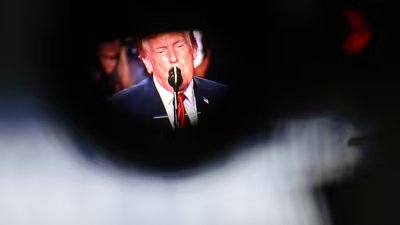
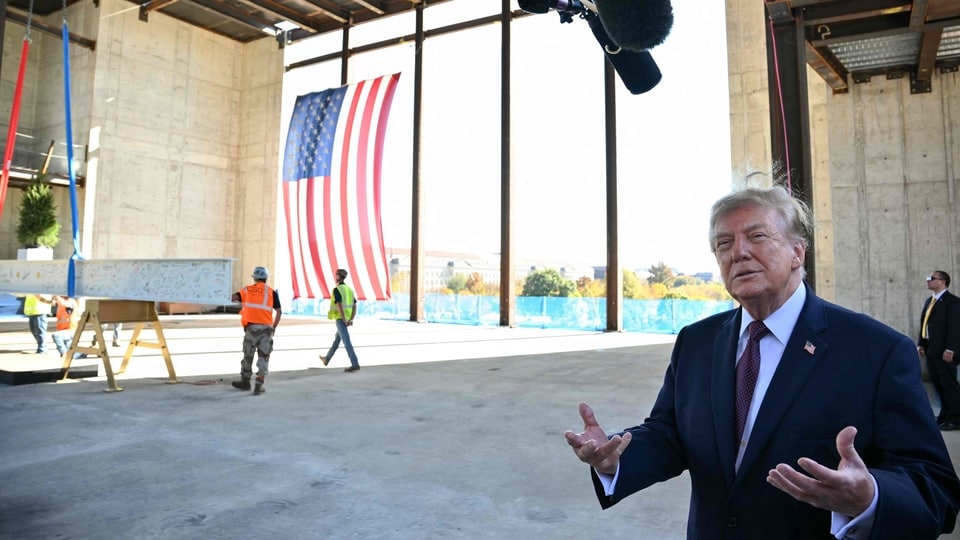
Mr. Trump ended the midterm with remarks at the Lincoln Memorial Reflecting Pool. The event was poorly staged and strangely disconnected. He focused on the pool’s renovations, how he changed the White House lawn with a better quality of grass and other physical upgrades in Washington. He had charts and photos of his handiwork. No wonder voters believe the GOP is unconcerned about the cost of living and the economy.
Apart from the outcome, the president got what he wanted from the midterms. He was the center of attention and chose his party’s nominees in key contests. He escaped the White House, drawing comfort from the adulation of true believers who packed his rallies.
This midterm defeat, one of the worst in a half-century, leaves the Trump presidency crippled. There’s no chance of confirming a conservative Supreme Court justice in the next two years, and maybe the next six. Republicans who have been afraid to break with the president will now do so, if only for self-preservation. The president will dodge responsibility and blame others. He’s already proclaimed on X, “I wasn’t on the Ballot and if I was, we would have won IN A LANDSLIDE.” Not true.
Mr. Trump can’t escape blame so easily. He and his policies and candidate choices burned the Republican Party to the ground.
Mr. Rove was senior adviser and deputy chief of staff for President George W. Bush and is author of “The Triumph of William McKinley” (Simon & Schuster, 2015).