China Turns May Day Into Tourism Boom With Nationwide 2026 Travel Push

China has launched its 2026 May Day Culture and Tourism Consumption Week to boost travel and spending during the holiday. With thousands of events, subsidies, and industry participation, the initiative highlights how May Day has evolved from a labor holiday into a key driver of domestic tourism and economic growth.

As millions of travelers prepare for one of the busiest holiday periods of the year, China has launched an expansive national campaign to turn the upcoming May Day break into a powerful engine of consumption.

At a press briefing in Beijing on Monday, the Ministry of Culture and Tourism announced the start of the 2026 May Day Culture and Tourism Consumption Week, a coordinated effort that blends public festivities, travel incentives and industry participation to stimulate domestic demand.

The campaign, which runs from late April through the end of the holiday, reflects a broader shift in how China—and much of the world—has come to view May Day. Once rooted primarily in labor rights and political expression, the holiday has increasingly become a cornerstone of leisure travel and consumer activity.

A Holiday Reimagined
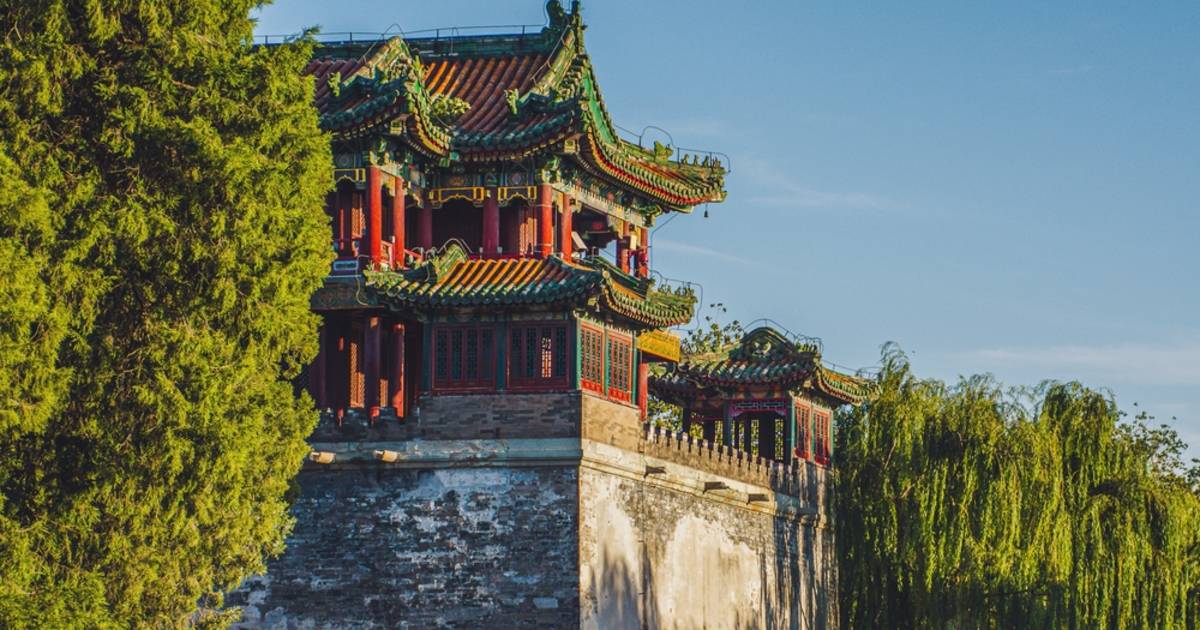
Internationally recognized as May Day, or International Workers’ Day, the holiday has taken on a dual identity in China. While its historical significance remains, the modern observance is defined as much by packed train stations and fully booked hotels as by its political origins.

Over the past two decades, the May Day holiday has evolved into a peak travel period comparable to China’s “Golden Week” vacations. For many families, it marks the first extended فرصة of the year to travel during the spring season, when mild weather and blooming landscapes draw visitors to parks, historic towns and rural destinations.

Officials say this transformation presents an opportunity.

“Holiday consumption has become an important driver of economic vitality,” a ministry spokesperson said at the briefing, emphasizing the role of tourism in supporting growth.

A Nationwide Effort

This year’s campaign is notable for its scale and coordination. Authorities expect to organize approximately 13,700 cultural and tourism-related activities across the country, ranging from outdoor festivals and flower-viewing excursions to performances and educational tours.

To encourage spending, more than 284 million yuan (about $41.6 million) in vouchers and subsidies will be distributed to consumers.

The initiative brings together an unusually broad coalition of participants. Major banks are offering discounts tied to tourism purchases, while state-owned enterprises and technology companies are rolling out targeted promotions. Travel platforms and industry associations are also coordinating hundreds of events and special offers.

Even sectors not traditionally associated with tourism are joining the push. An energy company has introduced incentives for self-driving यात्राएँ, while a telecommunications provider is promoting rural travel packages designed to improve connectivity for visitors venturing beyond major cities.

Spring Travel, Tailored Experiences

Central to the campaign is a focus on seasonal experiences. A newly released nationwide “flower-viewing map,” developed by meteorological authorities, highlights peak blooming periods across regions, guiding travelers toward destinations at their most picturesque.

Local governments are also emphasizing family-friendly outings and so-called “study tours,” which combine travel with cultural and educational activities for students.

The goal, officials say, is not only to increase the volume of travel but also to diversify it—encouraging tourists to explore lesser-known destinations and engage more deeply with local culture.

Economic Stakes

The timing of the campaign underscores the importance of domestic consumption to China’s economic strategy. With external demand facing uncertainty, policymakers have increasingly turned inward, promoting services and experiences as new sources of growth.

Tourism, in particular, occupies a central role. It supports a wide network of industries—from transportation and hospitality to retail and entertainment—making it a key lever for broad-based economic activity.

Analysts say the May Day holiday will serve as an early indicator of consumer confidence in 2026.

“If travel demand is strong, it sends a signal that households are willing to spend,” said one Beijing-based economist. “That has implications far beyond the tourism sector.”

Balancing Tradition and Modernity

Even as the holiday becomes more commercialized, its cultural significance has not disappeared. Instead, it has been woven into the experience economy, with performances, exhibitions and heritage events forming a core part of the offerings.

In that sense, China’s May Day campaign reflects a broader global trend: traditional holidays are being reimagined not as static commemorations, but as dynamic opportunities for economic and cultural engagement.

For travelers, however, the meaning may be simpler.

It is, above all, a chance to leave home, enjoy the fleeting beauty of spring—and, in doing so, participate in an increasingly important pillar of the modern economy.



Source link

Visited 1 times, 1 visit(s) today

Related Article

OpenAI-Microsoft shift, China blocks Meta AI deal — TradingView News

OpenAI-Microsoft shift, China blocks Meta AI deal — TradingView News

Global markets and technology sectors saw significant developments on Monday, as OpenAI and Microsoft reworked their partnership to allow broader cloud distribution, China moved to block Meta Platforms’ planned acquisition of Manus, US officials weighed Iran’s latest proposal amid ongoing tensions, and oil prices surged on supply concerns linked to disruptions in the Strait of

China’s AI ambitions face limits as Meta-Manus deal unravels — TradingView News

China’s AI ambitions face limits as Meta-Manus deal unravels — TradingView News

China’s order for Meta Platforms to unwind its $2 billion acquisition of artificial intelligence startup Manus is less about a single deal and more about a broader tension shaping the country’s tech strategy: how to build global champions without losing control. The episode highlights a recurring dilemma for Beijing. While policymakers want domestic firms to

China blocks Meta’s $2B acquisition of AI startup Manus

China blocked US tech giant Meta from acquiring the AI firm Manus on Monday. China’s National Development and Reform Commission (NDRC) said in a one-line statement that it would “prohibit foreign investment in Manus in accordance with laws and regulations, and requires the parties involved to withdraw the acquisition transaction.” The announcement will force Meta

image.png

Nexteer Showcases Full-Stack Steer-by-Wire Technology at Auto China 2026

Gasgoo Munich- The 19th Beijing International Automotive Exhibition kicked off on April 24, with Nexteer Automotive showcasing a suite of technologies in Hall W1, including Steer-by-Wire and Brake-by-Wire systems. Its Electro-Mechanical Braking (EMB) system has completed full development and rigorous validation, and is now officially market-ready. Image credit: Nexteer (same below) The EMB system made

UPI

China to block Meta’s $2B acquisition of AI startup Manus

Meta, led by chairman and CEO Mark Zuckerberg (pictured), will be required to unwind its $2 billion takeover of Manus. File Photo by Will Oliver/UPI April 27 (UPI) — The Chinese government is moving to block Meta’s $2 billion acquisition of Manus, a Singaporean artificial intelligence company originally founded in China. China’s National Development and

White House Accuses China of Large-Scale Theft of US Artificial Intelligence Technology

White House Accuses China of Large-Scale Theft of US Artificial Intelligence Technology

On the eve of U.S. President Donald Trump’s visit to China, the UK’s Financial Times revealed on Thursday, April 23 that the White House is accusing China of stealing American artificial intelligence (AI) technology on an “industrial scale” and is warning that it will intensify crackdowns to curb such activities. According to the report, Michael

PLA Navy destroyer Hangzhou (DDG-136), a Soviet-designed Project 956E vessel operated by China, shown prior to its deep modernization. (Photo: Open source)

China Rebuilt Its Soviet-Era Destroyer—By Removing Everything Russian — UNITED24 Media

China has completed a deep modernization of a Soviet-designed Project 956E destroyer, replacing nearly all original Russian weapons and systems with domestically produced alternatives. We bring you stories from the ground. Your support keeps our team in the field. DONATE NOW According to Defense Express on April 27, the upgraded vessel—identified as the destroyer Hangzhou—was publicly displayed during events marking the

The logo of Meta is seen during the Viva Technology conference in Paris, France, 12 June, 2025. (Reuters)

China blocks Meta from buying Manus amid AI tensions with US

The logo of Meta is seen during the Viva Technology conference in Paris, France, 12 June, 2025. (Reuters) China has blocked Meta’s attempt to buy one of the world’s most high-profile artificial intelligence startups. The unwinding of the $2 billion acquisition of Manus, which is based in Singapore but was founded in China, comes as

Tech companies in Taiwan

The U.S.-China trade relationship: What’s behind the competition?

U.S. consumers have benefited from lower prices, many favor more cooperation with China, according to a CFR-Morning Consult poll conducted in January 2026. U.S. companies have also profited immensely from access to China’s market. In a 2019 study, economists Xavier Jaravel and Erick Sager found that increased trade with China boosted the annual purchasing power

The Instagram, Facebook, and WhatsApp apps can be seen on a smartphone display in front of the logo of the internet company Meta. Jens Büttner/dpa

China blocks AI start-up’s deal with Meta

The Instagram, Facebook, and WhatsApp apps can be seen on a smartphone display in front of the logo of the internet company Meta. Jens Büttner/dpa China has blocked the takeover of the AI start-up Manus by the US tech giant Meta. China’s National Development and Reform Commission announced on Monday that the authority responsible for

China launches May Day holiday consumption week with 284 mln yuan in vouchers

China launches May Day holiday consumption week with 284 mln yuan in vouchers

China on Monday launched a nationwide consumption week featuring 284 million yuan (about 41.5 million U.S. dollars) in travel and culture vouchers, aiming to boost tourism ahead of the May Day holiday. The campaign, organized by the Ministry of Culture and Tourism, runs through May 5, the final day of the five-day public holiday. To

China blocks Meta’s $2 billion Manus AI deal amid tech concerns — TradingView News

China blocks Meta’s $2 billion Manus AI deal amid tech concerns — TradingView News

China has moved to block Meta Platforms Inc.’s planned $2 billion acquisition of agentic AI startup Manus, in a surprise decision that effectively unwinds a deal already close to completion. The intervention marks a significant escalation in Beijing’s oversight of strategic technology transactions, particularly those involving artificial intelligence and cross-border investment. Regulator orders cancellation of

Macau to showcase Greater Bay Area strengths at APEC tourism meetings, says MGTO chief

Macau to showcase Greater Bay Area strengths at APEC tourism meetings, says MGTO chief

The upcoming APEC tourism meetings in June will provide Macau with an opportunity to showcase the strengths of the Greater Bay Area and tell China’s story on the international stage, according to Maria Helena de Senna Fernandes. Speaking ahead of the 13th APEC Tourism Ministerial Meeting and the 67th Tourism Working Group Meeting, Fernandes said

China bars foreign investment in Manus AI project as scrutiny on AI exports grows · TechNode

China bars foreign investment in Manus AI project as scrutiny on AI exports grows · TechNode

China’s National Development and Reform Commission (NDRC) today announced that, in accordance with laws and regulations, it has issued a decision prohibiting foreign investment in the acquisition of the general-purpose AI agent project Manus. It also requires the relevant transaction parties to immediately withdraw and cancel all related acquisition activities. This decision marks a key

(L-R) Priscilla Chan, Meta CEO Mark Zuckerberg, Lauren Sanchez, Amazon executive chair Jeff Bezos , Alphabet CEO Sundar Pichai, and SpaceX CEO Elon Musk, among other dignitaries, attend the United States Capitol on January 20, 2025 in Washington, DC. (Pool photo by Shawn Thew)

Rise of “Silicon Valley Right” Reshaping Tech Landscape – Zhang Monan

After the 2024 presidential election in the United States, a rising political right wing in Silicon Valley formed a “tech-political complex” with the Trump administration. Centered on tech acceleration and tech nationalism, it is pushing for military-civil integration, technological blockades against China and deregulation of the technology sector. (L-R) Priscilla Chan, Meta CEO Mark Zuckerberg,

Beijing’s United Front and the Quiet Transfer of Western Technology

Beijing’s United Front and the Quiet Transfer of Western Technology

The military modernization and technological ambitions of the People’s Republic of China dominate headlines in Washington. Hypersonic missiles, AI breakthroughs, and an expanding navy are the visible symbols of competition with the Chinese Communist Party. But if the United States is serious about long-term competition, it should prioritize — or at least pay equal attention

A Mercedes-Benz crest is seen on one of the German automaker's cars at the Beijing Auto Show in Beijing

foreign carmakers seek edge with China partners

The days when foreign firms saw such partnerships largely as a necessary entrance fee to the world’s largest auto market are long gone. Legacy overseas brands are now seeking out collaboration, hoping the domestic market’s blistering pace and technological innovation will rub off and boost their competitiveness in China and increasingly, abroad. VW-XPeng’s China Electronic

0
Would love your thoughts, please comment.x
()
x