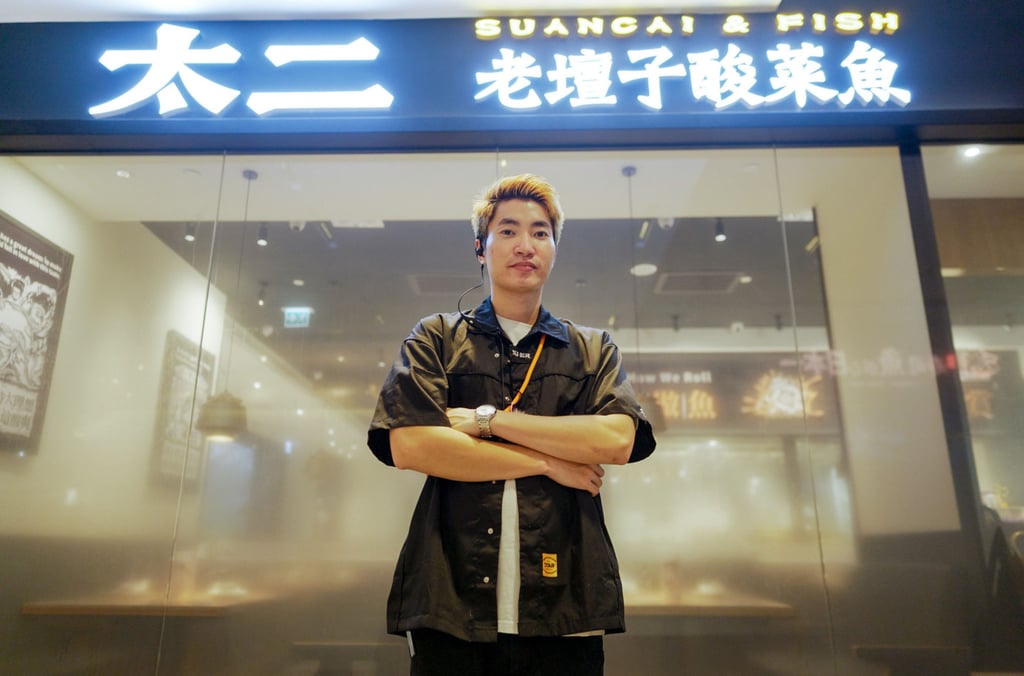
The Tai Er Chinese Sauerkraut Fish restaurant chain, with its signature Suancai fish, Sichuan-style fish poached in a rich broth made from fish stock and pickled Chinese cabbage, is among the most popular.
Tai Er, established in 2015, moved into the Hong Kong market in 2023 and now has five branches across the city, despite a downturn in the food and drink sector.
The Post spoke to customers, teenager Maisy Chan and her mother King Leung, who is a homemaker in her forties, on a visit to one of its branches, at the Airside shopping centre in Kai Tak.
The pair said they were introduced to Suancai fish on regular trips to the mainland after coronavirus pandemic restrictions were lifted.
They have eaten the dish in Hong Kong about once a month since then.
“The fish is tender and the seasoning is just right for me,” Leung said as she tucked into a meal that cost HK$278 (US$36) for a portion big enough for one to two people.
“There used to be news about gutter oil years back,” she said. “Now, having eaten on the mainland and seen with my own eyes, I am more confident [in the quality of food from the mainland]”.
Olivia Ding from Inner Mongolia, who has lived in Hong Kong for more than a decade, was also in for a fish fix.
She said she had noticed the increasing popularity of Suancai fish restaurants in the city and put it down to an increased number of mainlanders in the city.
“Cantonese cuisine or dishes from local cha chaan teng are lighter in flavour – diners might be bored after a while and would crave dishes that are stronger in flavour every now and then,” the education professional, in her thirties, said.
Since the launch of the Top Talent Pass Scheme in 2022, 74,587 applications have been approved, the majority from the mainland.
The number of mainlanders who arrived in the city on one-way permits reached 44,000 between mid-2023 and mid-2024.
When I tried it out of curiosity, I was pleasantly surprised. It’s very healthy
Also among the customers was John Bugg, an Australian who has lived in Hong Kong for 15 years.
He said he has been sinking his teeth into the dish about once every two months.
“When I tried it out of curiosity, I was pleasantly surprised. It’s very healthy,” the semi-retired finance professional in his fifties said.
The chain has recently designed a new, non-spicy version of the Suancai fish to cater to city tastes.
The Hong Kong adaptations differ from the normal hot and sour flavour of the dish.
Branch manager Wyman Zheng Huiwen said he believed the recipe could help attract more customers in Hong Kong.
He said many restaurants from the mainland had spotted a market in Hong Kong, which had encouraged many well-known restaurants to set up in the city.
Mainland chains selling a variety of hand-crushed versions have gained popularity in recent years and some have opened up in the city.
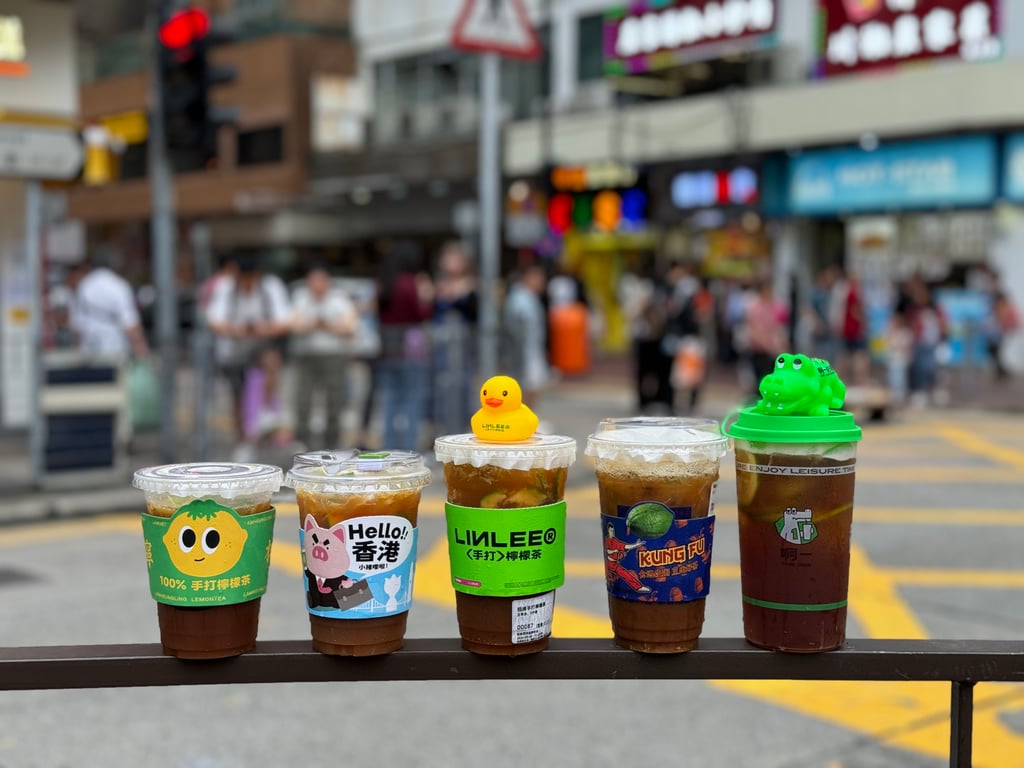
Lam Heung Ling – Lin Xiang Ning on the mainland – a brand founded in Guangdong opened six branches in Hong Kong last year. Its signature lemon tea combines crushed, partially ripe lemons with slow-brewed black tea.
Yui Lau, in his thirties, told the Post outside a Causeway Bay branch that he first tried the drink a few months ago after he noticed its increased profile in the city.
“Brands from the mainland are getting a lot of exposure, so it’s getting more attention. [Hongkongers] are also heading north [to spend], so people’s perceptions have entirely changed compared to a few years ago,” Lau said.
Hong Kong has seen a wave of mainland food and drink chains that cover a variety of dishes, including different types of hotpot, or regional cuisines from areas such as Hunan in recent times.
Kathy Lee, the head of research at Colliers Hong Kong, said some regarded Hong Kong as a stepping stone for international expansion or had plans to become a listed company in the city.
But she said not all big names from the mainland were doing well.
Lee added that Hongkongers’ taste for travel and the yet-to-recover tourist numbers in the city, as well as the high rents, contributed to obstacles faced by chains.
“The business environment is, after all, different between Hong Kong and the mainland,” she said.
“If businesses wanted to duplicate their business model on the mainland direct to Hong Kong, it might not work.”