How do you measure Canto-pop’s success? You could count the songs: more than 1,000 new tracks were released in 2025. You could witness the queues of fans camping overnight outside radio stations to see the stars. Or, given that you’re in commercially savvy Hong Kong, you could count the money: large-scale concerts in 2023-24 alone contributed an estimated HK$2.2bn (€242.8m) to Hong Kong’s economy.
New venues are opening, new festivals are launching and DJs are remixing old classics for a new generation of clubgoers: the genre is more relevant than it has been in decades. “Growing up in the 2010s, Canto-pop wasn’t considered ‘cool’,” says Kiri T, a singer, songwriter and producer signed to Warner Music. “American pop culture and the English language held such cachet in this city that I felt almost uncomfortable claiming the Canto-pop label and singing in my native language. But recently there’s been a shift. The attention is turning inward.”

Born Kiri Tse Hiu-ying, the 31-year-old is among the dozens of artists whose profile is rising. Her career began in high school, when she signed a Canto-pop label deal as a songwriter. She has been releasing music professionally for more than 10 years but her latest album, A Kiridiculous Distance, has a stronger Cantonese focus than ever. Her track “You Gotta Screw Up At Least Once” was one of the top five most-played of 2025.
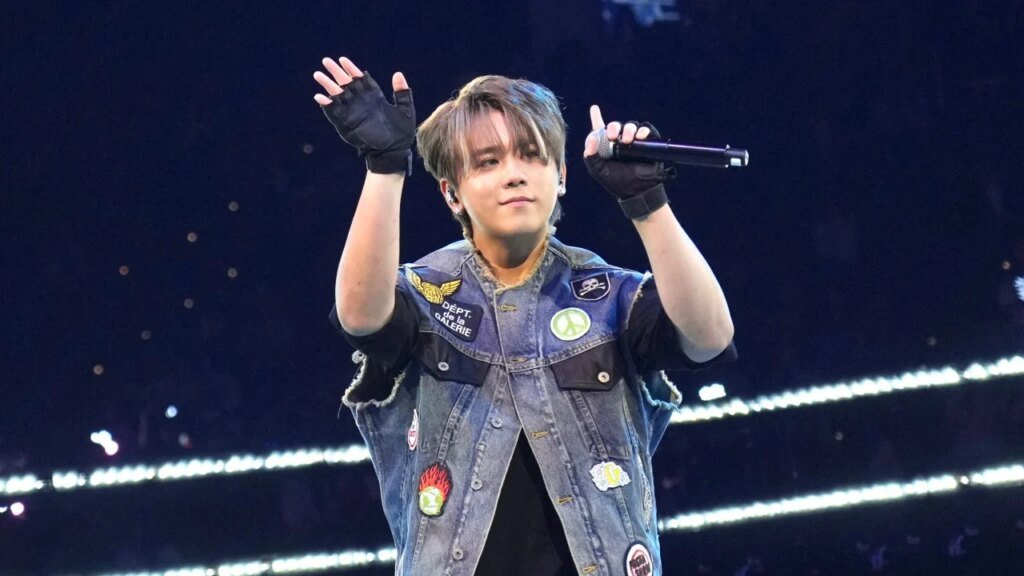
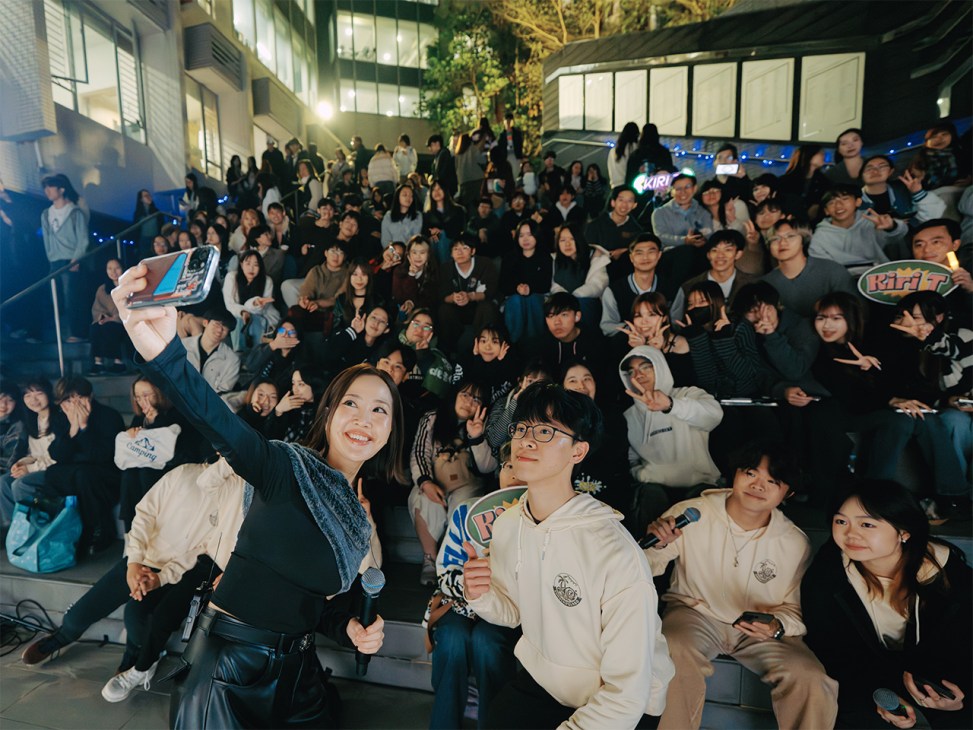
We join Kiri T for an open-air campus performance at the Chinese University of Hong Kong. For this new wave of artists, university shows have become an opportunity to meet fans and go on a mini-tour within Hong Kong without the pressure of filling a stadium or playing a full set. This time, it’s short and sweet – she’s onstage for only two songs. The courtyard is full of students fresh from late lectures and die-hard fans holding placards. They dance under clear skies and sing along, eyes closed, to melancholic lyrics about identity and belonging.
The last time that the city listened this closely to its own voice was Canto-pop’s golden age. The genre reached the public from the 1970s and sales soared in the 1980s and 1990s as stars such as Leslie Cheung, Anita Mui and Beyond filled the Coliseum for weeks at a time. It was a regional force and a symbol of Hong Kong itself: on the up. At its 1998 peak, annual record sales hit HK$1.6bn. But then came a precipitous decline. “The post-handover period [after the UK returned Hong Kong to China in 1997] was buffeted by the Asian financial crisis, piracy and creative fatigue,” says Wong Chi-Chung, a DJ, a music journalist and a lecturer at the Hong Kong Design Institute. The centre shifted from idols to indie acts, a fragmented ecosystem that he calls “HK pop”. In the meantime, Mando-pop and K-pop surged in popularity. “Public engagement couldn’t compare to the golden age.” By 2017, annual sales had fallen to HK$200m. “Canto-pop has always been a way to feel ‘Hong Kong-ness’,” says Wong. Its popularity rises and falls with the city’s identity. At its best, it unites residents of all ages, the diaspora and even some mainland listeners through anthemic melodies. “Hong Kong has been in need of that,” he adds, especially after the 2019 anti-government protests and the coronavirus pandemic. “There was a hunger to recentre around a shared cultural identity.”
Jessica Ho, the executive music director at Commercial Radio 2 and host of 903 Music, has seen tastes change at first hand. “When newer artists come in for our afternoon programme, there are crowds of fans waiting in the lobby, sometimes having queued outside for up to a week,” she says. “That’s a level of excitement that we haven’t seen since the 1980s.”
Nonetheless, challenges remain: some universal, some specific to Hong Kong. The pressure to release new music isn’t always a boon to quality and the culture of live music and supporting up-and-coming artists isn’t as strong here as it is in Europe. This tension is amplified by the role of generative AI in music, with platforms such as Suno able to create complete tracks that many see as a threat to artists.

A few days before Kiri T’s performance at the Chinese University of Hong Kong, we visit her at a Kowloon recording studio. “I can’t tell you much about this song but it’s for an upcoming long-form project,” she says. She savours a pineapple bun and a hot drink. “To warm up the vocal cords,” she explains.
Though Kiri T has her own concerns about the future of her industry, she sees Cantonese, a complex language with nine tones, as a unique safeguard. “Cantonese is so legato [smooth]; AI just makes it sound choppy,” says Kiri T. “You could generate 10 English dance tracks and they’ll sound legit but in Cantonese it still sounds wrong. It really makes me treasure Canto-pop: it’s full of emotions, inherently human, and it’s a luxury to be able to sing it.”
Seven songs to start your Canto-pop playlist:
1. ‘Some Days’ by Moon Tang
2. ‘Big Cars’ by Jace Chan
3. ‘Love Me Down’ by Marf
4. ‘Rain or Shine’ by Manson Cheung and Kay Tse
5. ‘The Death of a Lovestruck Brain’ by On Chan
6. ‘Flower of Life’ by Pandora
7. ‘You Gotta Screw Up At Least Once’ by Kiri T
This article is from Monocle’s newspaper The Hong Kong Correspondent, which is available to purchase now. In its pages, we meet the entrepreneurs going against the grain, survey fresh projects that are reshaping Central and give you a taste of what the fashionable Hong Konger is wearing about town. Plus: Monocle’s favourite places to eat, drink and be merry.
Purchase your copy today.