If Anthropic’s first day of trading was a test, it would have passed with flying colors.
With a $2 trillion debut at market open, the AI giant has clearly convinced Wall Street it can transform the way people work – and turn a massive profit doing it.
Now comes the hard part. Anthropic will have to prove its Claude AI agent will continue to grow at a breakneck pace against the backdrop of skyrocketing computing costs and increased competition. Meanwhile, some of the businesses that have fueled its rise are starting to slow their AI spending, says one economist who monitors AI enterprise spending.
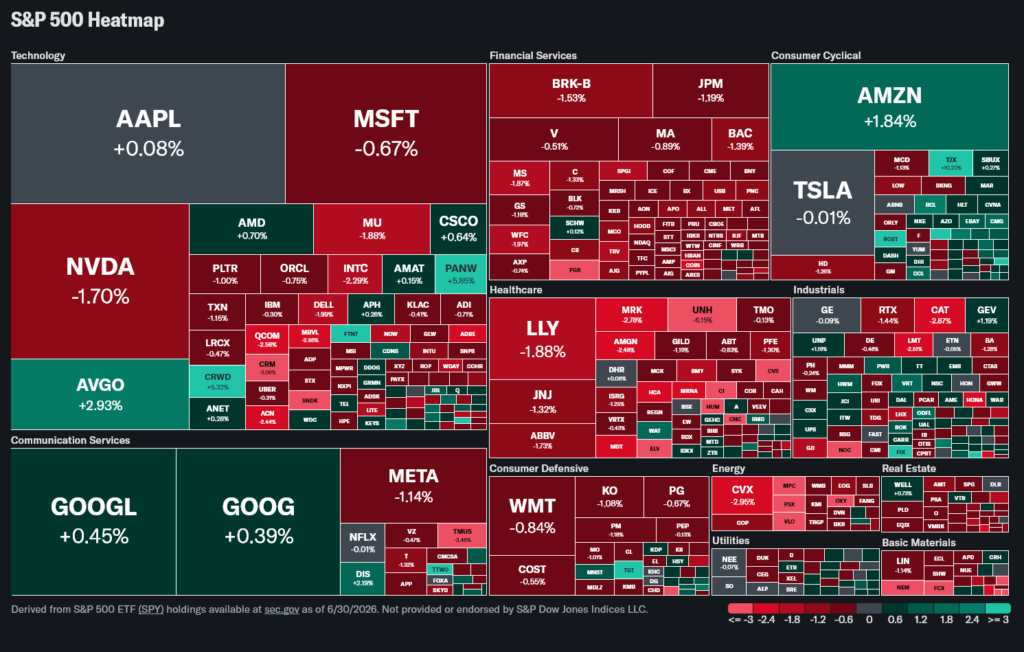
As a public company, Anthropic will face even more pressure to grow each quarter. The world’s largest publicly traded AI companies – Nvidia, Google and Amazon – have seen their shares stumble even when their quarterly numbers fall in line with Wall Street’s expectations.
The billions being spent on infrastructure, along with the rapid development of AI models and growing adoption among consumers and businesses, have set sky-high expectations across the industry. Anthropic investors will be looking for massive sales growth each quarter to offset the nearly trillion-dollar computing expenses the company expects to pay in the years ahead.
“It’s not easy,” said Ken Mahoney, president of financial planning firm Mahoney Asset Management who closely follows the tech industry. “You go from hardly any scrutiny to everything you do, there’s an analyst revaluating.”
Anthropic’s early bet on building AI tools for businesses has made it a darling of the AI market. That set the stage for the company to make a record-breaking debut; it began trading at $111.50, a 34% jump from its IPO price, and closed 17% higher at $97.17 a share.
Businesses are spending on AI at a rapid clip; the enterprise AI market grew fourfold in just a year from $33 billion in 2025 to $177 billion in 2026, according to Menlo Ventures, a venture capital firm that has invested billions in Anthropic and backed early-stage companies building with Claude.
Anthropic’s revenue reached $17 billion in the third quarter of 2026, signaling a roughly twelvefold year-over-year increase, the company said in a filing with the Securities and Exchange Commission. It has roughly 14,000 customers, about 250 of which contribute $10 million or more in revenue on a yearly basis.
The company’s Claude Code agent emerged as an early favorite among software engineers, and Anthropic swiftly sought to replicate that success with its Claude Cowork service focused on office work. More customers have adopted Claude Cowork eight months after it was released early access, compared to Claude Code in a similar time period after its launch, Anthropic said.”
Once a business is hooked on Anthropic’s products, it’ll be hard to convince them to switch, said Lauren Cassidy, chief investment officer of Founder ETFs.
“They’re going to just continue to embed them in more and more applications, and that makes it a very sticky business,” Cassidy said.
The big question now is whether Anthropic can sustain and boost its growth.
Unlike its biggest competitors, Anthropic lacks a strong presence in the consumer AI market. Claude monthly active users have grown enormously compared to Meta AI, Google Gemini and ChatGPT. But OpenAI’s app, Claude’s most direct rival, still has a much larger pool of users, according to market intelligence firm Sensor Tower. ChatGPT has 1.4 billion monthly active users, the firm said, compared to Claude’s 124 million.
ChatGPT also beats Claude on time spent per week and in-app spending, likely an indication that ChatGPT users are increasingly paying for subscriptions, said Abe Yousef, a senior analyst for SensorTower.

That may not be a big deal today. But if Meta’s Muse and OpenAI’s ChatGPT increasingly become the main place people spend their day, will that eventually lead them to using it more for work?
The competition is also likely to accelerate. OpenAI, expected to go public next year, is currently Anthropic’s biggest challenger. It accounts for about 40% of AI spending among American businesses compared with Anthropic’s nearly 45% according to Ramp.
Enterprise spending on AI, while growing, is also very concentrated within the tech and finance industries, according to Ara Kharazian, lead economist at AI finance company Ramp.
That’s a mixed bag for Anthropic; it means there’s plenty of room to expand Claude’s reach, but also that Anthropic’s business could depend on spending trends among a relatively small group of companies. The tech and finance companies that have been shelling out for AI are already starting to pull back their spending, Kharazian said.
OpenAI has recently cut prices of some of its to remain competitive with Anthropic and other rivals. And some companies are turning to open models that allow businesses to more cheaply build AI agents that can run on their own hardware, which could be more secure for processing sensitive data.
Oracle and other companies offer services that allow businesses to orchestrate various AI services through one platform, according to Cassidy. The system might use Claude Cowork for one query related to managing files but Grok for another that requires an answer pulled from social media.
“Then the market share gets diversified away from Claude exclusively, and it gets spread where the model is also trying to optimize for cost,” Cassidy said.
Claude Code helped make Anthropic an enterprise juggernaut. Now, the pressure is on Anthropic and other tech giants to figure out what comes next.
“The coding agents powered this growth,” Kharazian said. “And we kind of need to figure out what the next front is going to be.”