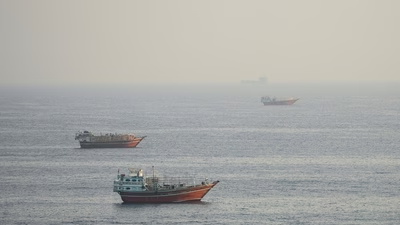
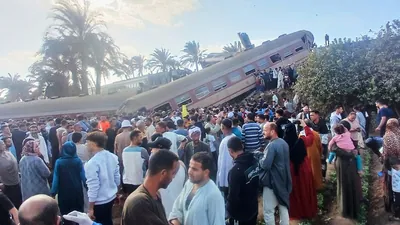
Violent gangs vying to control cocaine exports have destabilized once-peaceful Ecuador. In northern Africa’s Sahel region, religious insurgents and ethnic militias have chased government authorities from entire provinces.
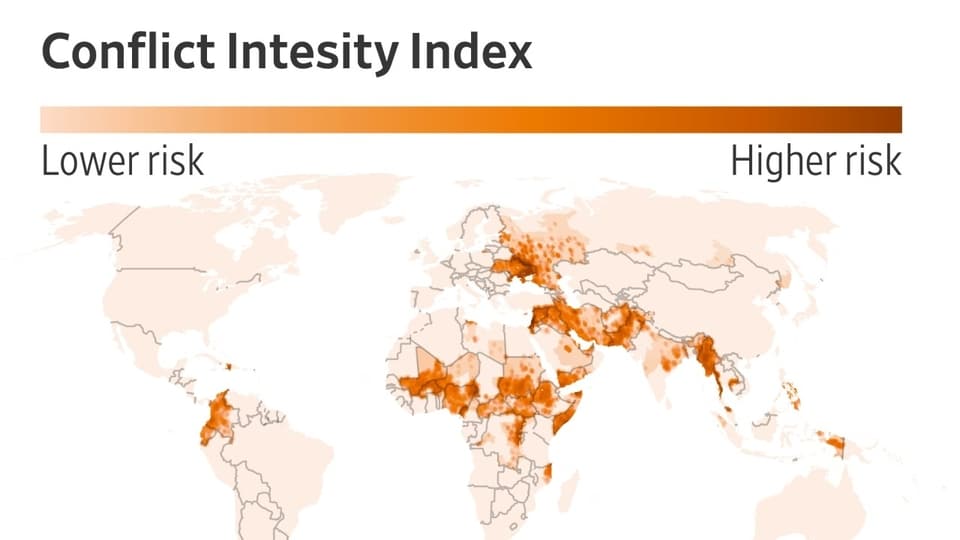
And in Southeast Asia, criminal syndicates run industrial-scale fraud centers and drug operations from ungoverned pockets of Myanmar and Cambodia.
Around the world, guerrillas, cartels and syndicates are challenging traditional concepts of nationhood as they use violence and coercion to exert dominance over territory and people. More than 200 million people across 60 countries live in areas controlled or contested by armed non-state groups, according to International Committee of the Red Cross estimates.
“We are in a moment of global instability and precarity that limits the effectiveness of national state action,” said Diane E. Davis, a Harvard University professor who has studied sovereignty in Latin America.
These groups administer cities, extort businesses and enforce their own legal codes. Harnessing technologies such as Starlink satellite internet, encrypted messaging platforms, cheap drones and cryptocurrencies, they project force and move illicit wealth globally with impunity.
These non-state actors make no pretense of seeking membership in the United Nations, or even trying to topple an existing government. Their actions undermine principles that date to 1648 and the Peace of Westphalia, when Europe pioneered the concept of state sovereignty to halt fighting between fragmented, overlapping and often-contested Church, feudal and other political authorities.
The phenomenon of control by these non-state actors is sometimes known as “stationary banditry,” an activity more akin to farming than the traditional image of criminals as hunting prey. To hold land in Burkina Faso, an al Qaeda affiliate oversees logging operations. In Colombia, the Clan del Golfo cartel is known for drug trafficking and vicious reprisals, but it also provides public services including road maintenance.
Cocaine’s new highway through Ecuador
Once one of Latin America’s safest countries, Ecuador has devolved in recent years into a primary battleground for global drug syndicates. Gangs like Los Choneros and Los Lobos have exploited voids left by Ecuador’s weak state institutions, targeting judges, prison directors, mayors and presidential candidates.
Rather than operating entirely in the shadows, Ecuadorean criminal organizations control logistics corridors, manage infrastructure around the river port city of Guayaquil and tax local commerce, operating more like feudal fiefs than opportunistic street gangs.
Their expansion is underwritten by international demand and modern logistics. By piggybacking cocaine shipments onto commercial containerships bound for Europe and North America, Ecuadorean gangs funnel illicit revenues into untraceable cryptocurrency assets to buy military-grade weaponry.
As they fight to control the drug trade, Ecuadorean gangs—some managed from prisons—have unleashed the kind of violence seen in Mexico’s drug war, but with even more bloodshed. The country’s homicide rate hit 51 per 100,000 people last year, far higher than in Colombia, Mexico or Brazil.
Control often shifts from one gang to another: The port city of Manta was once the stronghold of Los Choneros, for example, but police say Los Lobos might be stronger there now.
The cartel state of Mexico
As in Ecuador, across swaths of Mexico, state authority has been supplanted by sophisticated criminal conglomerates.
In all, organized crime groups control about one-third of Mexico’s territory, according to U.S. government estimates. Groups such as the Sinaloa Cartel and the Jalisco New Generation Cartel manage the transport of cocaine and fentanyl into the U.S. and run Mexican city halls, municipal budgets and public works, extorting businesses and public-transport providers.
To protect multibillion-dollar supply chains that import precursors (chemicals used to manufacture drugs) from Asia and smuggle drugs worldwide, they brandish weaponry that rivals the arsenals of national armies, including automatic machine guns that can fire 4,000 rounds a minute.
A rebel-run Yemen
In Yemen, a grinding civil war has deepened poverty in the Middle East’s poorest country and opened new threats to the global oil trade, exemplifying the risks of state collapse in a part of the world that gets little international attention.
The Houthis, a cultural and religious group from the nation’s north, have chased Yemen’s government out of the capital city and seized control of state institutions to generate revenue and settle scores with enemies, including Saudi Arabia. The Houthis enjoy support from Iran and have deployed weaponry that in the past only a state would possess, becoming in 2023 the first non-state actors to possess and deploy antiship ballistic missiles.
Their attacks on commercial tankers in the Red Sea have prompted a wholesale rerouting of shipping traffic away from the Suez Canal. The Houthis more recently have struck deep into Saudi Arabia, taking aim at oil pipelines and commercial airports, in a display of brazen behavior designed to diminish Riyadh’s regional credibility and limit its use as a base of operations for the U.S. in the Middle East.
Militants storming the Sahel
Violence across the Sahel represents the failed hopes for a regional democratic realignment following popular uprisings of the Arab Spring. The Sahel today is the world’s most unstable region.
The collapse of central governance in Libya following the 2011 ouster of Moammar Gadhafi—aided by the U.S. and its European allies—created a power vacuum across North Africa, especially in the Sahel, a multination belt on the Sahara’s southern edge. Clan-based militias, warlords and foreign-backed armed factions have divided the territory into competing zones of control.
As Islamist militants poured out of Libya into nations such as Mali, they ignited long-simmering tensions.
Groups like al Qaeda affiliate Jama’at Nusrat al-Islam wal-Muslimin (JNIM) now administer vast rural territories across Mali and Burkina Faso, staking claim to timber, gold mining and local agriculture operations to fund regional insurgencies.
Myanmar’s thriving militias and scam empires
The 2021 Myanmar military coup that ousted the civilian government of Aung San Suu Kyi supercharged decades-old opposition to the state by ethnic groups and plunged the Southeast Asian nation into a full-scale civil war. In China’s shadow, Myanmar has since emerged as a leading nexus for global organized crime.
Clionadh Raleigh, founder of a risk monitor called Acled, said hundreds of groups are vying for power in Myanmar and many “have longstanding opposition to each other, as well as the state.”
One such group, the United Wa State Army in territory bordering China’s Yunnan province, provides security and infrastructure while running illicit businesses. The borderlands have become one of the world’s top producers of opium as well as a hub for massive, industrial scam compounds where forced laborers commit cyberfraud that extorts billions of dollars globally. The illicit capital then moves through cryptocurrencies, beyond the reach of international banking regulators and law enforcement.
The new global disorder has stymied Washington and other Western powers, who in their response have at times set aside traditional principles of nation-building, democracy and jurisprudence. The Trump administration in June assassinated an alleged leader of the Venezuelan syndicate Tren de Aragua and has without warning destroyed suspected drug-smuggling boats in the Caribbean and Pacific.
“The notion of the democratic peace or the developed peace no longer holds,” said Raleigh. “A democratic system is just not priority number one at this point.”
Write to James T. Areddy at James.Areddy@wsj.com and Emma Brown at Emma.Brown@wsj.com